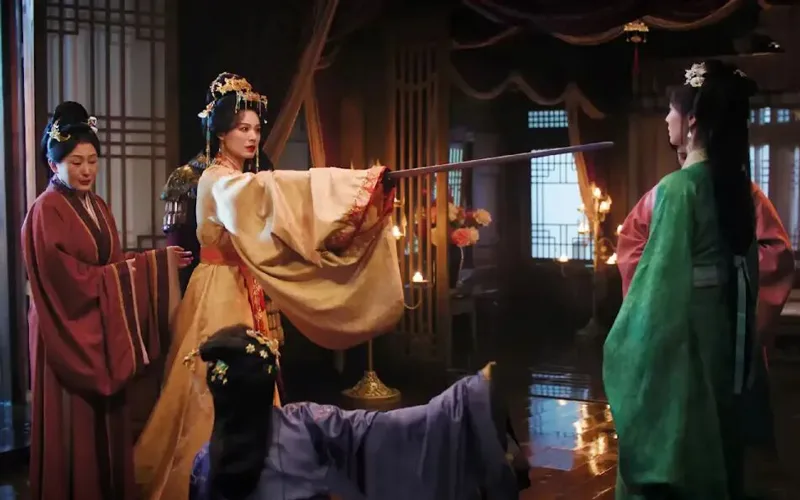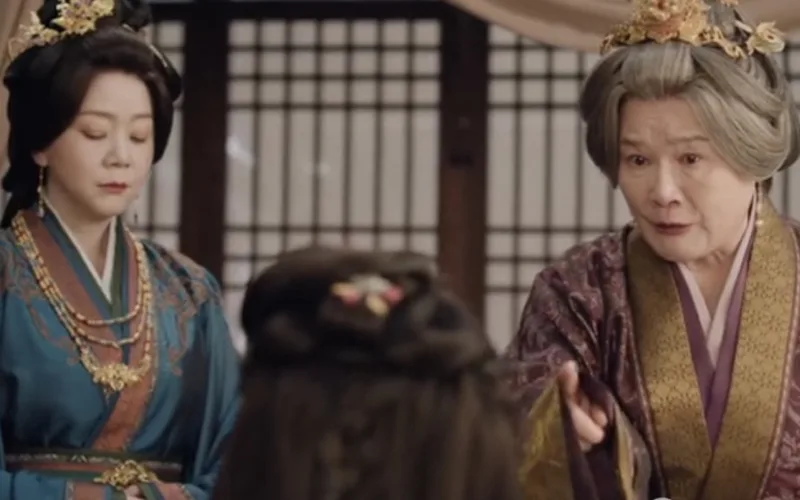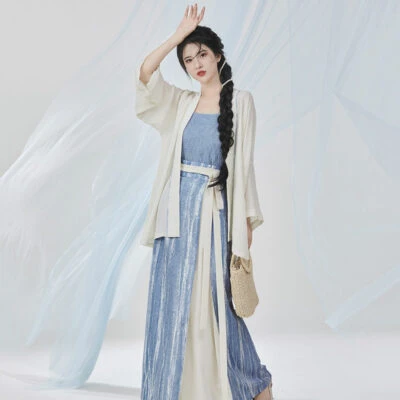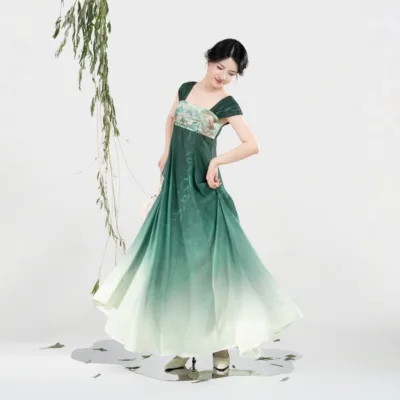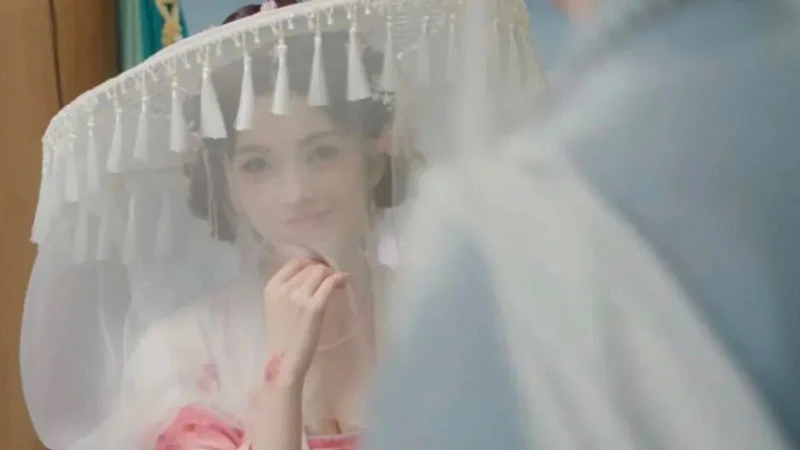
In the fantasy drama Whispers of Fate (水龙吟), the entrance of actress Chen Yao (陈瑶) was not just seen but felt. It was not her lines or a dramatic action that first defined her character, but a piece of historical fashion: a wide-brimmed hat with a sheer veil. This single item, known as a Weimao (帷帽), immediately established an aura of mystery, elegance, and unapproachable grace. It is a prime example of how costume design can serve as powerful, non-verbal storytelling, conveying a character’s status and disposition before a single word is spoken. This particular hat has become a recurring visual motif in Chinese historical dramas, captivating audiences with its poetic blend of concealment and revelation.
The Weimao’s Evolution
The Weimao has a rich and practical history. Its predecessor was the Mili (幂篱), an earlier form of face-covering headwear. The primary distinction lay in their dimensions and materials. The Mili was often made of bamboo and featured a long veil or netting designed to cover the entire body, offering protection from wind and sand during travel. It was used by both men and women for its utilitarian function. The Weimao, typically constructed from cloth or silk, had a shorter veil that only reached the neck or upper body, making it less cumbersome.
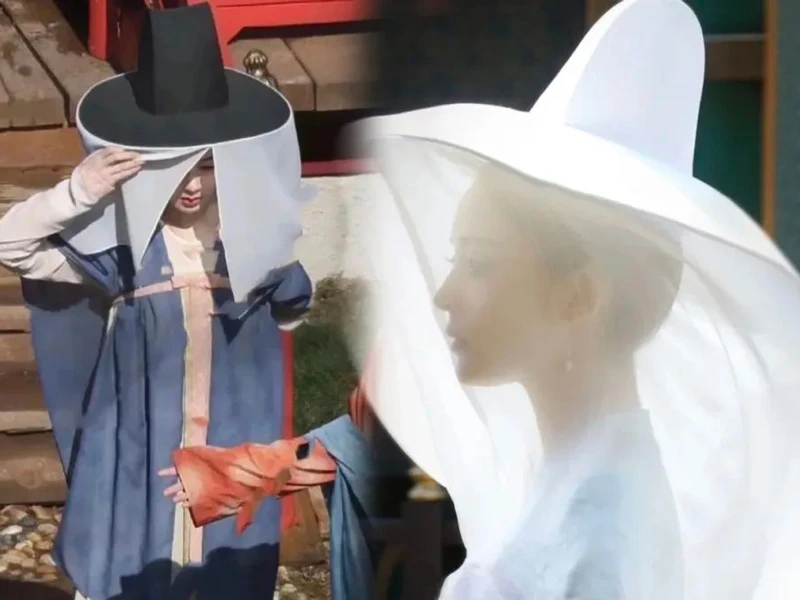
During the early Tang Dynasty, the Mili was the standard for women traveling outdoors. However, fashion began to shift. Historical records from the New Book of Tang (新唐书·舆服志) note that by the Yonghui (永徽) era, the Weimao was gaining popularity for its comparative convenience. This change was significant enough to attract the attention of the court. Emperor Gaozong (高宗) even issued an edict criticizing the trend of women abandoning the Mili for the Weimao, viewing it as a departure from proper decorum. His intervention, however, could not stop the tide of fashion.
The widespread adoption of the Weimao reflected broader social changes. As Tang society grew more cosmopolitan and open, influenced by Central Asian cultures, women began to participate more freely in public life. The shorter veil of the Weimao represented a gradual move away from strict concealment. It offered a compromise between social etiquette and personal freedom, allowing a woman to be present in public spaces while still maintaining a degree of privacy and mystique.
More Than a Veil
Beyond its practical use, the hat carried deep social meaning. For women of high status, it was a mobile boundary, a way to navigate public spaces while shielding themselves from the direct gaze of commoners. It was a symbol of modesty and social standing. In the murals of Consort Yan’s tomb, a servant is depicted holding a Mili, ready for her mistress to wear. This scene was not just about utility; it was a visual testament to the noblewoman’s high rank and the propriety expected of her.
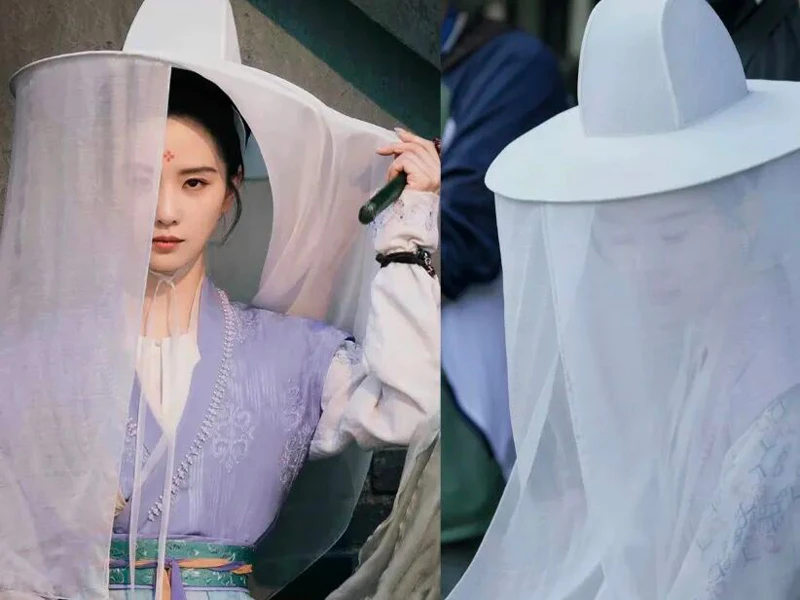
The design of these hats was not always austere. Historical accounts mention extravagant versions, such as a “Seven-Treasure Mili” adorned with precious gems, created by a prince of the Sui Dynasty for his consort. This illustrates that these items were also canvases for displaying wealth and aesthetic taste. They were functional objects that could be transformed into luxurious accessories, reflecting the wearer’s personal style and affluence.
Their cultural impact was so profound that they sometimes appeared anachronistically in art. The renowned painter Yan Liben (阎立本), in his work Wang Zhaojun Departs the Frontier (昭君出塞图), depicted a woman accompanying Wang Zhaojun wearing a hat that resembled a Weimao or a Fengmao (风帽), a style from a much later period. This artistic liberty was so influential that for generations afterwards, such hats were mistakenly referred to as “Zhaojun caps,” demonstrating how a powerful image can reshape historical perception.
Modern Dramatic Flair
In contemporary film and television, the historical Weimao and Mili have been heavily adapted for visual effect. The modern version most familiar to audiences is the “beaded curtain” hat. This style, often seen in Wuxia and Xianxia genres, features strings of beads or pearls instead of a fabric veil. While visually striking, this design sacrifices the original hat’s practical functions of providing anonymity and protection from the elements.
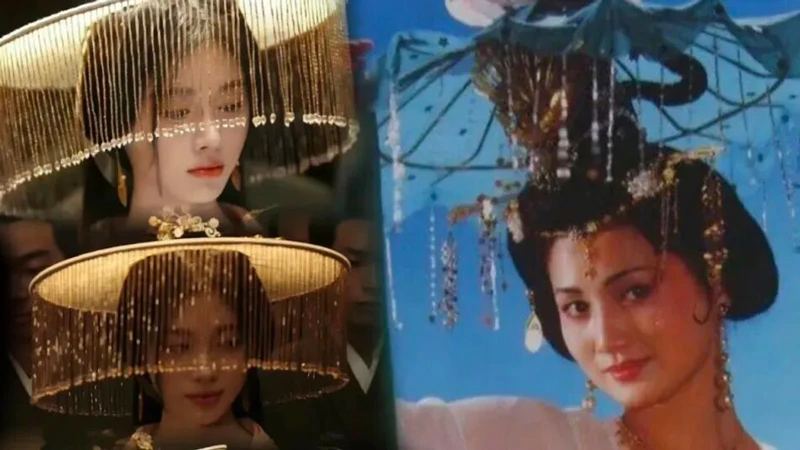
This transformation highlights a key difference in purpose. The historical hat was about social codes and environmental adaptation. Its modern counterpart is primarily about creating a captivating visual and establishing a character’s otherworldly charm. It functions as a cinematic tool to build anticipation for a character’s reveal, using the movement of the beads or veil to create a sense of fluidity and mystery that enhances the actor’s performance.
Chen Yao’s entrance in Whispers of Fate perfectly demonstrates this modern application. The Weimao was not used to block wind or sand, but to frame her face and build narrative tension. It was a “beautifully useless” object in the practical sense, yet incredibly effective for storytelling. Its success lies in its ability to connect modern viewers with a romanticized, aesthetically-driven vision of the past, proving that in visual media, emotional impact often trumps historical literalness.