Who Predicted a Street Aunt Would Outshine the Leads in Pursuit of Jade (逐玉)?
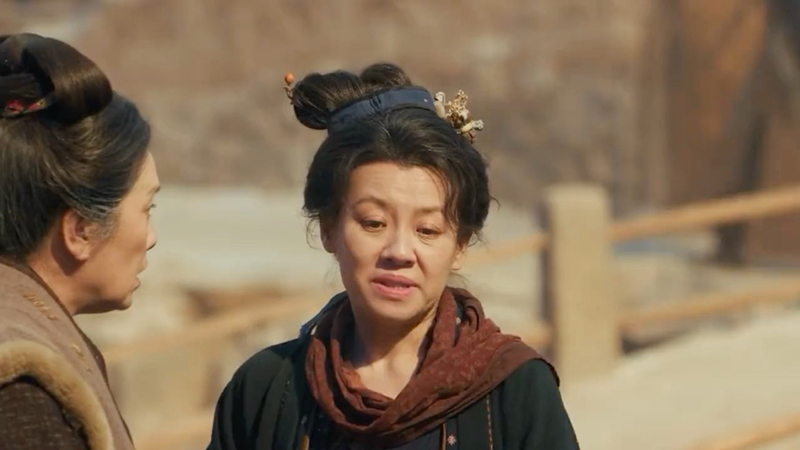
In the competitive landscape of Chinese ancient-costume dramas, where youth and beauty often reign supreme, Pursuit of Jade has delivered an unexpected twist. While the show’s marketing focused on its glamorous young stars, it is a middle-aged market vendor with limited screen time who has become the internet’s favorite topic. Zhao Daniang (赵大娘), portrayed by the accomplished actress Liu Lin (刘琳), has emerged as the drama’s true standout, sparking widespread discussion about the nature of performance and the changing desires of the audience. Her character, rooted in the grit and warmth of everyday life, offers a refreshing contrast to the polished but often hollow leads, proving that genuine connection can outweigh sheer star power.
Upon its debut, the series posted impressive viewership numbers across major platforms, igniting debates about the authenticity of its ratings. Amidst the controversy over inflated statistics and narrative gaps, one element remained universally praised: Liu Lin's embodiment of Zhao Daniang. Her scenes, though brief, are dissected and celebrated online, with viewers skipping past the main plotlines just to watch her interactions. This phenomenon highlights a powerful shift—audiences are no longer satisfied with superficial charm; they crave the Yanhuo Qi (烟火气), or the "fireworks of everyday life," that Liu Lin brings so effortlessly to the screen.
The Heart of the Drama
Zhao Daniang is a character defined by her contradictions. She is brusque yet tender, shrewd yet warm-hearted. Liu Lin captures this duality without a single false note. In the now-viral snow rescue scene, where she finds the injured male lead Xie Zheng (谢征), her physicality tells the whole story. She plants her hands on her hips, her voice dripping with mock irritation, but her eyes betray a deep, maternal worry. This silent communication resonated so strongly that over 120,000 bullet comments flooded the screen, with a majority praising her ability to convey a "tough exterior, soft heart" dynamic so authentically. It is acting that feels less like a performance and more like a window into a real person's soul.
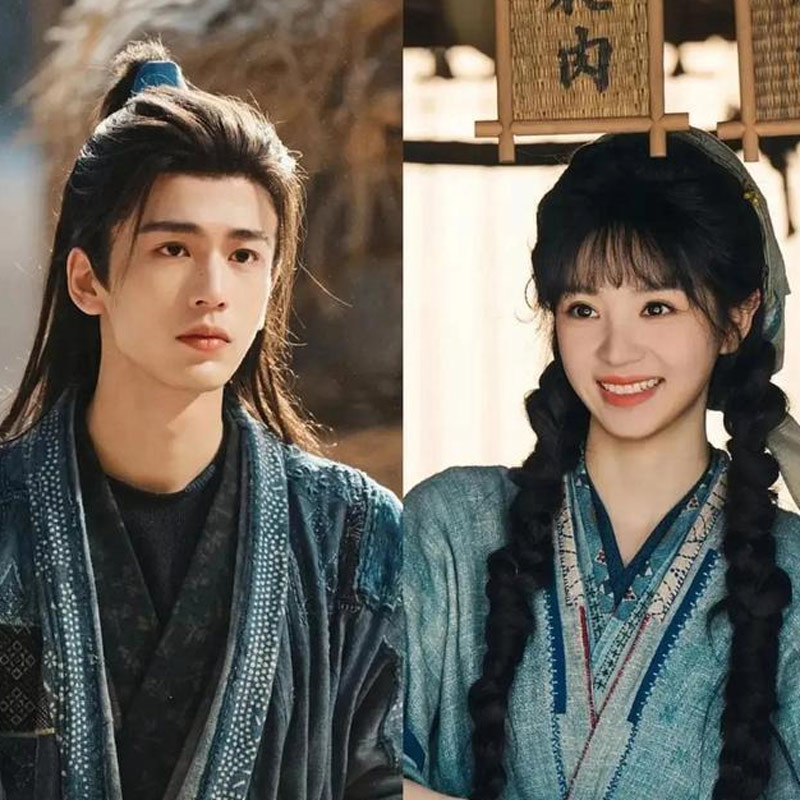
Her dialogue, too, carries the weight of lived experience. When playfully pushing the young leads together, she delivers a line that has since become a social media mantra: "A forced melon isn't sweet? It doesn't need to be sweet—just thirst-quenching is enough." This witty, grounded philosophy on relationships cuts through the idealized romance of the main plot, offering a dose of practical wisdom that modern viewers find both hilarious and profound. Liu Lin delivers it with a knowing smirk, making it clear this woman has seen enough of life to know that practicality often trumps perfection. It is a moment that transforms a simple piece of advice into a commentary on contemporary love.
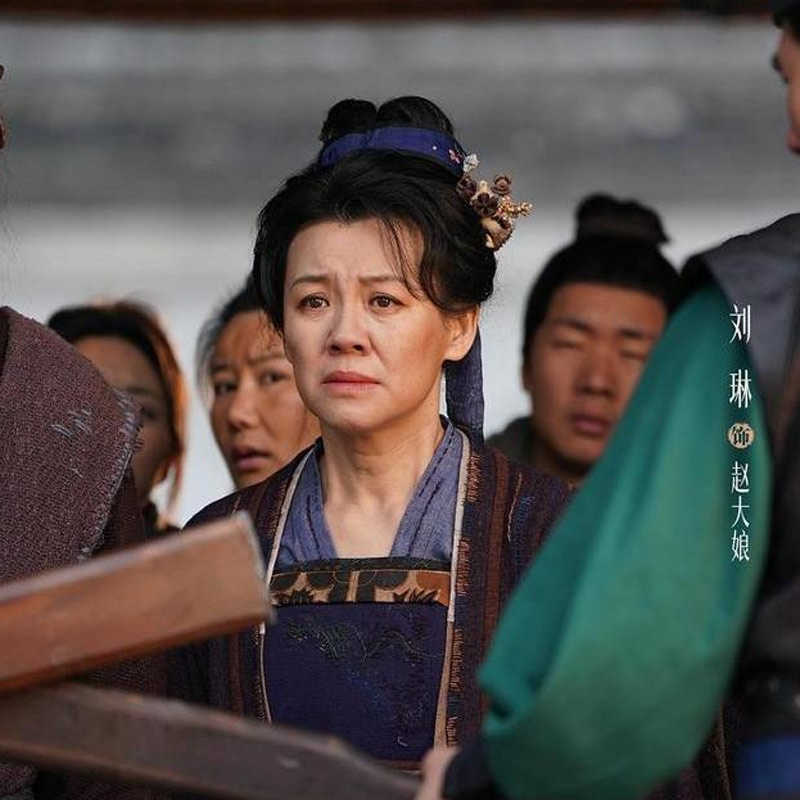
Liu Lin’s genius lies in her restraint. In the farewell scene with her on-screen husband, she avoids theatrical weeping. Instead, she relies on the slightest tremble in her voice and the glistening of her eyes to convey a lifetime of shared moments and the agony of parting. This subtle approach makes the pain feel intimate and real, drawing the audience into her grief rather than simply displaying it for their consumption. It is a technique she has honed over decades, visible in past roles like the naive Jiang Dehua (江德华) or the unsettling Zhou Chunhong (周春红), each character rendered with such distinct detail that they become unforgettable, proving that a role's size is irrelevant to its impact.
A Shift in Audience Taste
The adoration for Zhao Daniang is not an isolated incident but a symptom of a larger cultural movement. Viewers are increasingly turning away from the polished, aspirational figures that once dominated entertainment, seeking instead the comfort and familiarity of ordinary people. This craving for authenticity explains the popularity of street food vlogs and neighborhood-focused reality shows. Zhao Daniang, with her dialect and her no-nonsense attitude, is a perfect avatar for this trend. She reminds us that heroism can be found in a warm meal, a sharp word of advice, or a protective gesture, offering a sense of stability that the drama's chaotic main storyline often lacks.
This phenomenon serves as a powerful critique of the entertainment industry's long-held "traffic first" logic. For years, casting decisions have prioritized an actor's follower count over their skill, leading to a glut of technically proficient but emotionally vacant performances. Liu Lin's success with Zhao Daniang directly challenges this model. She does not possess the massive social media followings of her younger co-stars, yet her work generates more genuine engagement and discussion. It suggests that the market is maturing, with audiences beginning to demand a return to craft and emotional truth over manufactured hype and perfect cheekbones.
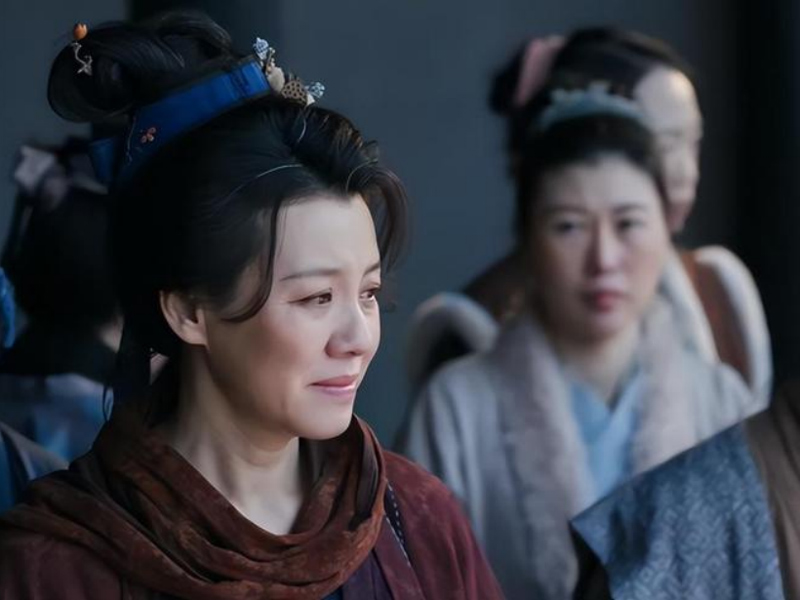
Liu Lin herself remains unfazed by the sudden spotlight. She has built a career on choosing complex, human roles rather than chasing leading-lady status. Her focus is entirely on the internal logic of her characters, a dedication that shines through in every scene. This quiet professionalism, in an era of constant self-promotion, inspires respect. As the industry grapples with the lessons of Pursuit of Jade, her approach offers a blueprint for the future. It suggests that the path to a sustainable and respected career lies not in the pursuit of fleeting fame, but in the relentless pursuit of truth within a character, no matter how small the part may seem on paper. Zhao Daniang's resonance is a victory for that philosophy.
