With over 1.55 billion views, 6.15 million followers, and a Douban (豆瓣) score that has climbed from 7.8 to an impressive 9.0, Tale of Herding God (牧神记) has taken the Dong Hua (动画) world by storm. This dark fantasy series, a collaboration between Bilibili and the renowned animation studio Xuanji (玄机) Technology, has achieved what few others can: it has only gotten better with time. In a market flooded with yearly series, how did this particular show convince so many viewers to jump on its bandwagon?
The Everyman Hero: Why We See Ourselves in Qin Mu (秦牧)
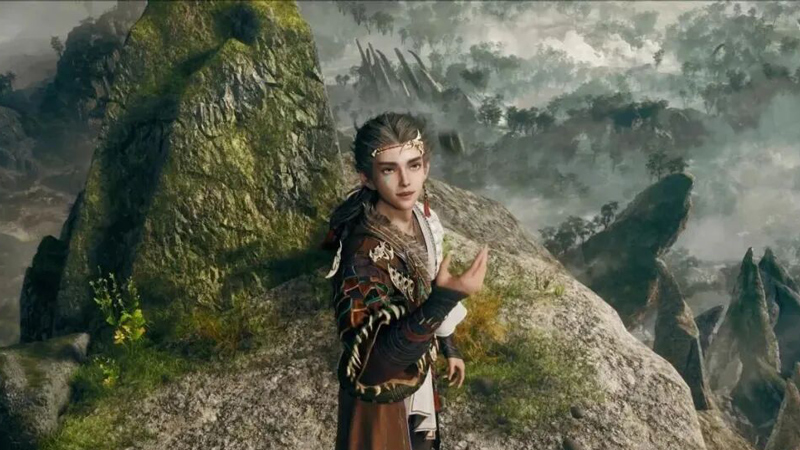
In a genre often dominated by protagonists born with silver spoons in their mouths—be it latent godly powers or royal bloodlines—Tale of Herding God takes a refreshingly different path. Its central character, Qin Mu, is not a "chosen one." He is an orphan found in the Great Ruins, raised by nine disabled outcasts in a village called Cripple's Village. He possesses no special physique and stumbles upon no instant power-ups. In a world brimming with gods and demons, he is, by all accounts, utterly ordinary.
Yet, it is precisely this ordinariness that makes him so compelling. Qin Mu represents the struggle of every person who refuses to be defined by their starting point. He has no magical shortcuts; he must rely on relentless effort and sharp wit to survive. His nine teachers do not gift him power; they teach him the philosophy of standing tall in a world that wants him on his knees.
The series' core message—"Better to stand on your own two feet than to beg the gods on your knees"—resonates deeply because it champions self-determination over divine providence. It moves the narrative from a god-centered fantasy to a human-centered one, telling us that true strength comes from an indomitable spirit, not a blessed lineage. This philosophical core is the bedrock of the show's emotional impact.
The Xuanji Signature: A Masterclass in Animated Storytelling
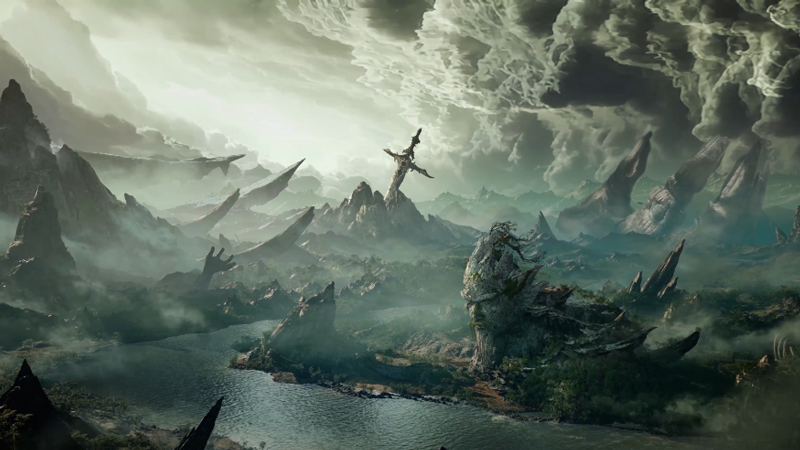
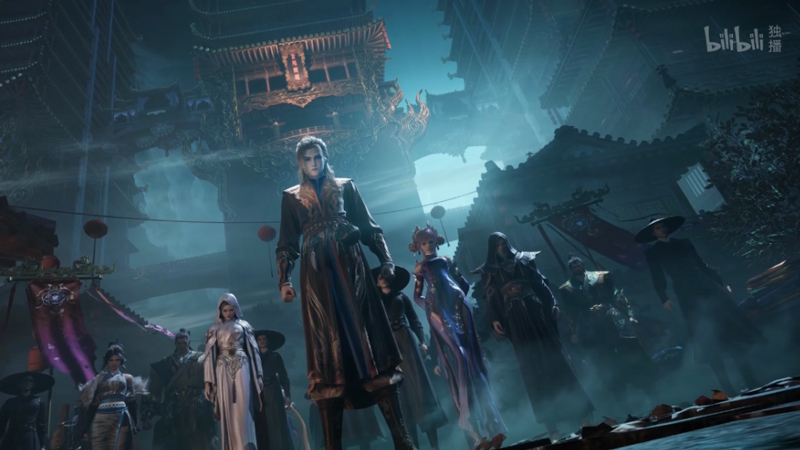
If the story is the soul of Tale of Herding God, its production quality is the formidable body that brings it to life. Xuanji Technology, a veteran in the industry, has poured an astonishing level of detail into every frame, creating a viewing experience that feels more like a cinematic event than a weekly series. The first pillar of this quality is its commitment to a "dark aesthetic." While many fantasy animations opt for bright, flashy visuals, this series plunges viewers into a world of shadows and intricate gloom.
The environment itself tells a story, from the stone huts of Cripple's Village, which subtly incorporate elements of the ancient Liangzhu (良渚) culture, to the mural designs in the Loulan (楼兰) Golden Palace, which echo the tones and compositions of the Dunhuang Mogao Caves. This creates a uniquely identifiable world steeped in a subtle, Chinese-style horror aesthetic that is both beautiful and unsettling.
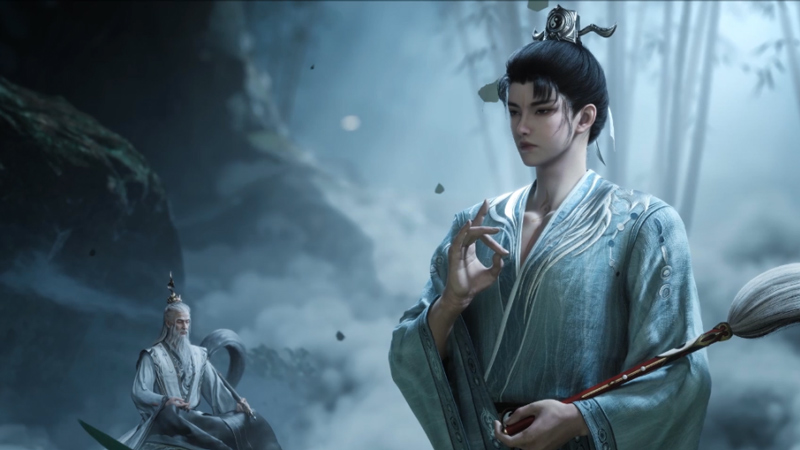
The second pillar is what fans call "OCD-level polishing." Xuanji treats its yearly installments like feature films. The fight scenes are not just action sequences; they are works of art. The ink-wash painting-style visual effects during Qin Mu's confrontation with Dao Zi (道子) is so fluid that every single frame is worth pausing to admire. The butcher character's blade, the "Heavenly Knife," is rendered with meticulous detail, showing wear marks on the metal and the subtle reflection of characters on its polished surface. These are details the average viewer might miss on a first watch, but they build a world of such tangible density that it rewards multiple viewings.
The final pillar is the team's thoughtful approach to cultural heritage. They don't just talk about promoting Chinese culture; they actively integrate it. In a move that deeply moved the fanbase, the production team collaborated with inheritors of Suzhou embroidery. They used this ancient, delicate technique to physically recreate the costumes of the character Si Youyou. By bridging the gap between traditional craftsmanship and the digital world of animation, the show brings cultural heritage to young audiences in the most vivid and engaging way imaginable.
Beyond the Screen: The Power of a Listening Team
In the world of Chinese animation, it's not uncommon for production teams to finish a project and move on, leaving fan feedback unaddressed. The team behind Tale of Herding God breaks this mold entirely, earning a reputation as "pro-level internet surfers" who are genuinely responsive to their audience. This "we hear you" attitude has become one of the show's most endearing qualities. When early viewers felt the background music was lacking, the team didn't just tweak a few tracks; they released a full 39-song original soundtrack, even incorporating instruments like the Ma Tou Qin (马头琴) and throat singing to perfectly match the desert scenes.
When some felt the pacing was a tad slow in the beginning, the team actively adjusted the narrative structure, moving more exciting scenes forward to enhance the weekly viewing experience. This creates a unique sense of co-creation between the makers and the audience. Viewers no longer feel like passive consumers; they feel like they are growing alongside the show. This willingness to listen, adapt, and respect the audience's perspective has been instrumental in transforming initial anticipation into the devoted fandom it enjoys today, proving that in the modern entertainment landscape, a dialogue with your viewers is worth its weight in gold.
