What if the most exquisite blue in Chinese history came not from a mine, but from a bird? For centuries, a shimmering, almost otherworldly hue adorned the hair of noblewomen, a secret whispered from the wings of a kingfisher. This is the story of Diancui (点翠), a craft as breathtaking as it is controversial. Imagine a crown that seems to ripple with the living light of a tropical sky, a hairpin that holds a fragment of iridescent life. This was not just jewelry; it was a captured moment of nature's brilliance, fused with human artistry.
The legend of this "feather luxury" begins not in a workshop, but on the banks of a stream, watching a flash of blue dart through the air. The Chinese article paints a vivid picture of this lost art, from the haughty concubines of the Qing court who wore fortunes on their heads, to the silent sacrifice of millions of birds. Let's unfold the layers of this intricate, beautiful, and deeply complex tradition.
The Living Gem: Nature's Palette
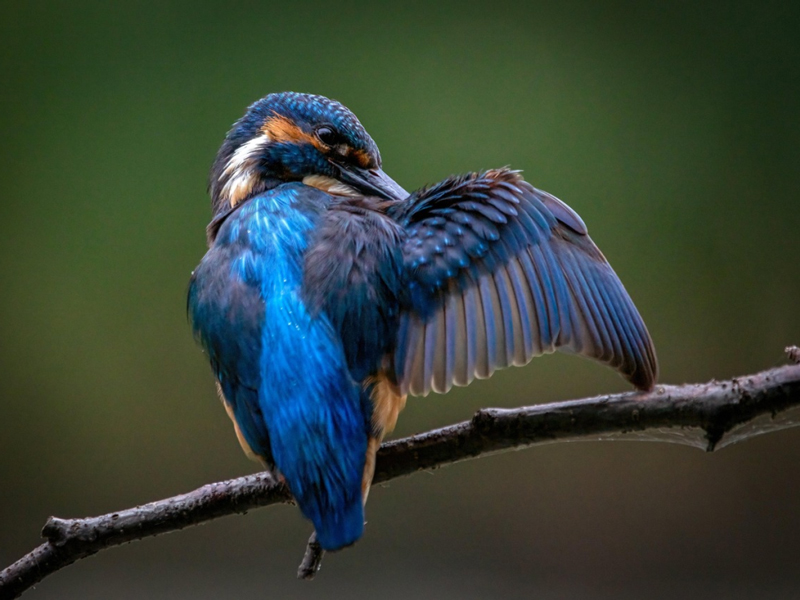
The magic of Diancui lies in its primary material: the plumage of the kingfisher, or Cui. Unlike paint or dye, these feathers possess a unique structural color. The microscopic structure of the feather barbs scatters light, creating a phenomenon called iridescence. This means the color is not static; it shifts and dances. In the soft light of dawn, it might appear a deep, velvety blue. Under the bright sun, it can flash with hints of turquoise or even violet. Ancient artisans prized this quality above all else.
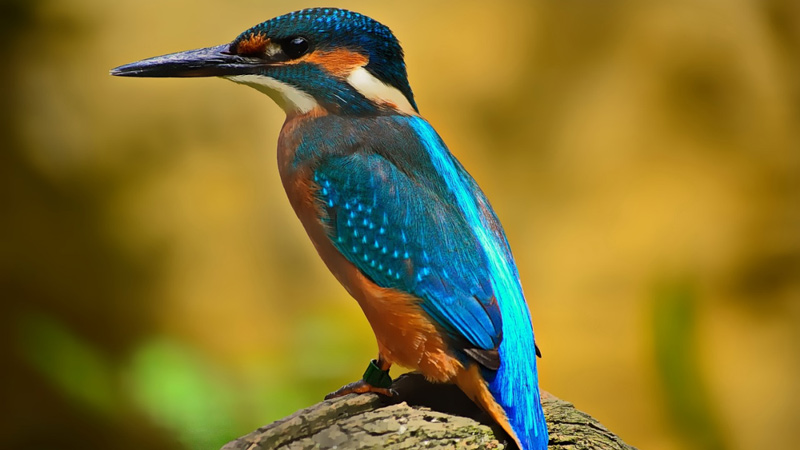
The book The Splendor of Pearls and Feathers (珠翠光华) noted that the finest feathers were a brilliant kingfisher blue or a snowy purple, colors so vivid they would never fade. They categorized them into "soft kingfisher" from the bird's back, perfect for smooth, flowing surfaces, and "hard kingfisher" from the wings, used for sharper outlines and details. This wasn't just decoration; it was a way to bring the ephemeral beauty of a living creature into a permanent, wearable form.
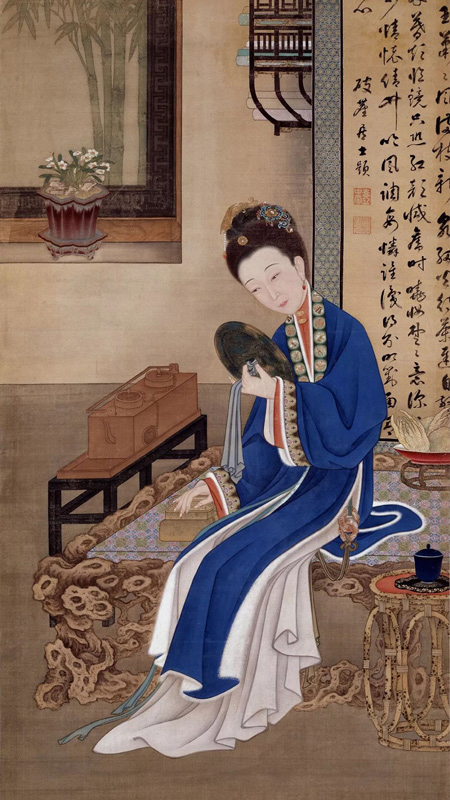
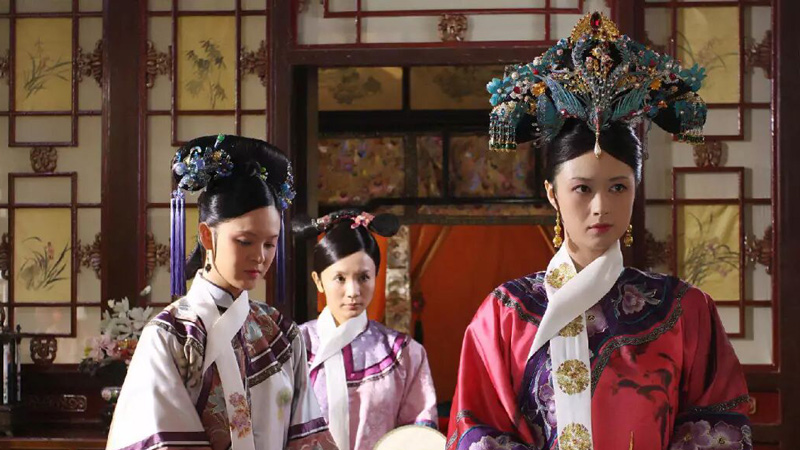
This "living gem" found its perfect home amidst the elaborate hairstyles of ancient Chinese women. Poetry from the Tang and Song dynasties is filled with imagery of "kingfisher hairpins" nestled in clouds of black hair. The very word for a woman richly adorned, "head full of pearls and kingfisher feathers," literally means "head full of pearls and kingfisher feathers." It was the ultimate symbol of status and refinement. A lady's beauty was enhanced by the subtle, moving light at her temples, a secret flicker of color that drew the eye. This wasn't mere vanity; it was a cultural expression of harmony, blending the natural world's most exquisite detail with the human form. The feathers did not just sit on the hair; they seemed to become a part of it, an extension of the woman's own grace and vitality.
An Empire Adorned: The Golden Age of Feathers
By the Ming and Qing dynasties, Diancui had reached its zenith. It was no longer just a craft; it was an institution. The imperial court's passion for it was insatiable. The Qing dynasty's Imperial Household Department established a special "Fur and Feather Treasury" to collect kingfisher plumes from across the empire. In the "Silver Treasury," three master artisans were exclusively designated as "Kingfisher Artisans," their sole duty being to create featherwork for the emperor and his court.
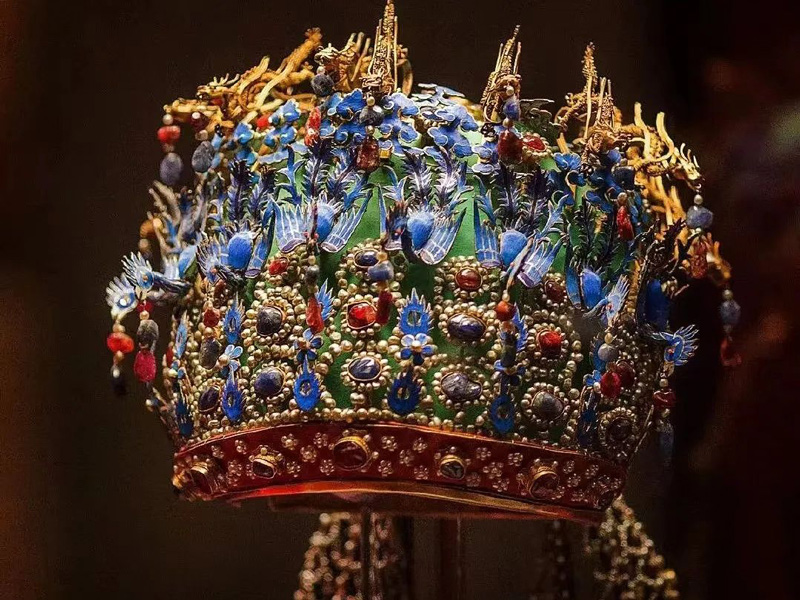
The pinnacle of this era's achievement can be seen in the Nine-Dragon and Nine-Phoenix Crown of Empress Xiaoduan (明孝端皇后九龙九凤冠), housed in the National Museum of China (中国国家博物馆). Forged on a gold filigree frame and adorned with thousands of kingfisher feathers, it stands as a monument to imperial ambition and artisanal skill. It was a statement of power made from the most delicate of materials.
Creating such a masterpiece required a demigod of craftsmanship. A true Diancui master was a triple threat: a skilled goldsmith, a precise feather-worker, and a delicate carver. The process was painstaking. First, a base of gold, silver, or copper was crafted and etched with intricate patterns of clouds or flowers. The real magic began when the artisan, using a brush sometimes moistened with their own saliva for better adhesion, would place the tiny, pre-trimmed feathers onto the metal's surface with a glue made from fish bladders or deer antlers. This demanded perfect vision, a steady hand, and immense concentration.
After placement, special treated paper was used to gently press the feather down, ensuring it bonded perfectly. Finally, the edges were often secured with gold wire or tiny pearls, framing the ethereal blue with the solidity of precious metal. The last step, known as "scraping green," involved using an agate knife to burnish the feather, making its blue color even more vibrant and brilliant.
The Price of Beauty: From Extinction to Revival
For all its beauty, Diancui carried a dark secret. The most vivid color came only from feathers taken while the bird was alive. A single kingfisher yields only about twenty-eight usable feathers. Stripped of their plumage, the birds were left defenseless, often dying from exposure or an inability to hunt. For a single, magnificent phoenix crown, thousands of birds could be sacrificed. This "feather luxury" was built on what many now call the "Kingfisher's Lament." The practice continued for centuries, a stark reminder that beauty often has a hidden cost. The shimmering blue that graced the heads of empresses was, in a very real sense, paid for in blood and feathers. The very longevity of the jewelry—its ability to last a thousand years without fading—was a testament to the life that had been cut short to create it.
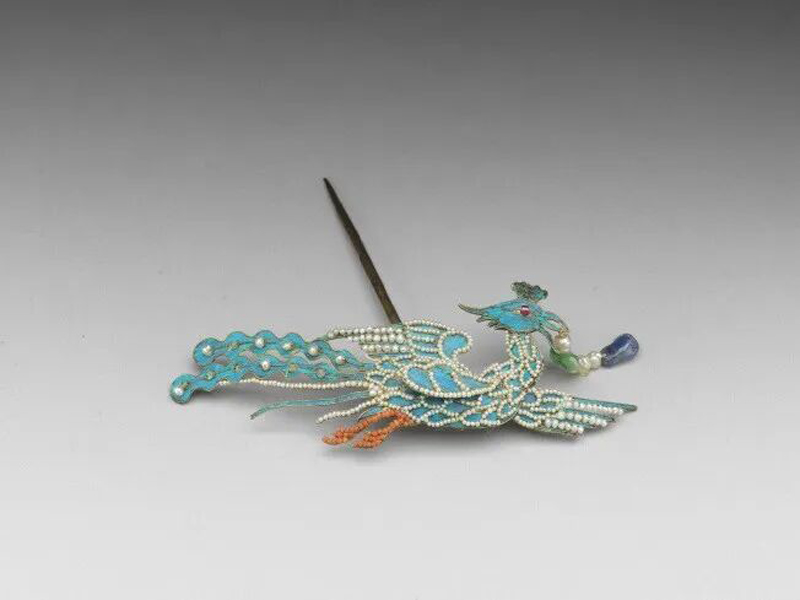
The end came swiftly. By 1933, the last workshop specializing in kingfisher plumes in China had closed its doors. Changing fashions, the introduction of Western jewelry techniques like enamel work, and a growing awareness of the cost led to its decline. The art of Diancui became a near-silent echo. Then, in 2013, the kingfisher was finally listed as a protected species in China. The "Kingfisher's Lament" was over. But the story doesn't end there.
Today, a new generation of artisans in places like Beijing and Jiangsu is breathing life back into the tradition, but with a crucial difference. They are reviving the ancient techniques while replacing the kingfisher feathers with ethical alternatives: the shimmering plumes of peacocks, dyed goose feathers, or even fine silk. These new materials can mimic the iridescent beauty of the original with remarkable fidelity. The soul of Diancui—the "delicate, skillful, and beautiful"—lives on, proving that true artistry can evolve. The "kingfisher's lament" has transformed into a song of renewal, where the memory of a thousand years of blue is honored with a conscience.