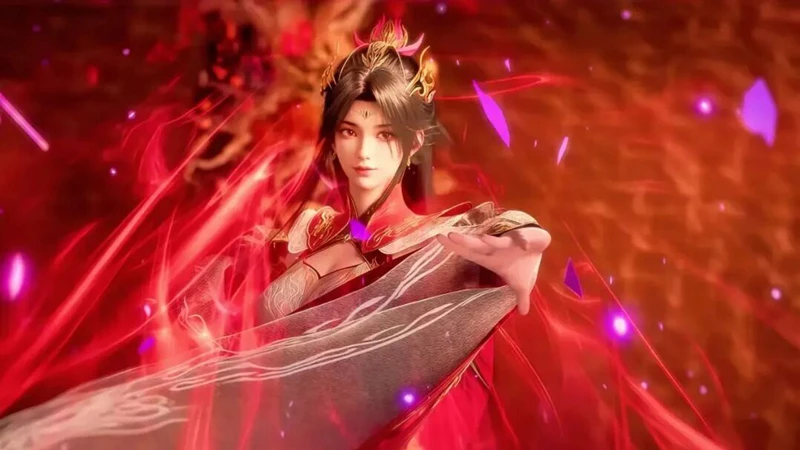
The return of a new season often brings anticipation, but seldom does a single moment arrive with the weight of an era’s longing. In the latest episodes of The Great Ruler 2 (大主宰2), that moment crystallized in a single, resonant word: “Father.” Spoken by Xiao Xiao (萧潇), the daughter of the legendary Xiao Yan (萧炎), this greeting did more than advance a plot. It served as a keystone, locking into place a narrative arch spanning two epic tales.
For viewers who have journeyed from the Doupo Continent (斗破大陆) to the vast Da Qian World (大千世界), it was a payoff years in the making, mending a lingering regret from the adaptation of Battle Through the Heavens (斗破苍穹). The scene was not merely a reunion; it was a cathartic release, finally giving voice to a character and a relationship that had lived silently in fans’ imaginations.
The Power of a Name
Within the complex hierarchy of the Da Qian World, names carry immense power. Xiao Yan, once a cautious youth from the Jia Ma (加玛) Empire, now stands as the Flame Emperor, master of the Wujin Realm (无尽火域)and a supreme Tian Zhizun (天至尊). His title commands awe, his mere glance can shake the heavens. Yet, the invocation of “Father” cuts through all that majesty in an instant. It reveals the man beneath the myth. His response to Xiao Xiao’s unauthorized arrival—a gentle chiding about her promise to her mother—holds no real anger, only boundless affection. The mightiest warrior in the realm is, in this moment, simply a dad.
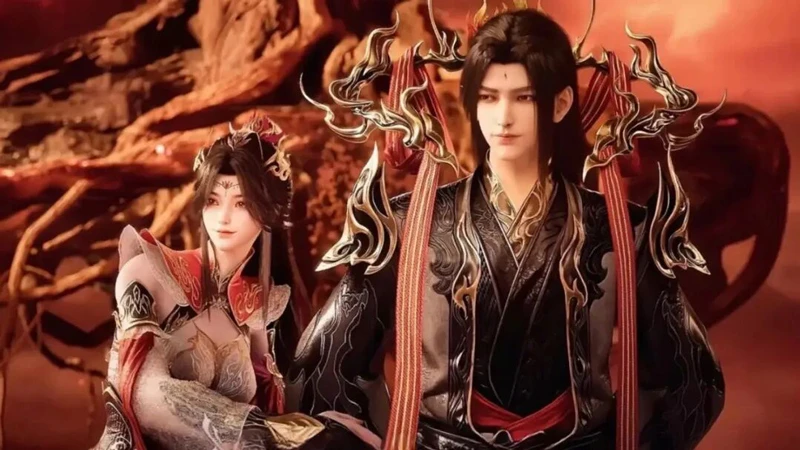
This dynamic introduces a compelling vulnerability. Even the Flame Emperor must adhere to the rules set by his wife, Medusa Cai Lin (美杜莎彩鳞). This blend of devoted father and somewhat henpecked husband does not diminish him; instead, it breathes life into a character who could easily remain an untouchable icon. It grounds epic fantasy in recognizable, human warmth. His pride is palpable when he jokes about her exhausting her teacher’s resources, a universal parental cocktail of exasperation and adoration.
The significance of the moment is deeply intertextual. In previous adaptations, Xiao Xiao’s character was muted, a silent figure that left fans of the source material feeling a profound absence. Her first spoken word here, directed at the series’ most iconic hero, feels like a reclamation. It corrects a historical narrative oversight, fulfilling a promise made in another story. This is fan service of the highest order, not through spectacle alone, but through emotional validation.
Xiao Xiao’s Arrival
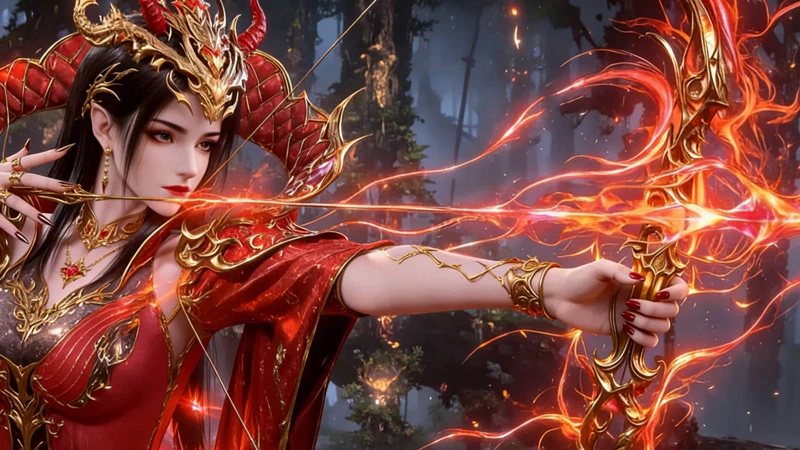
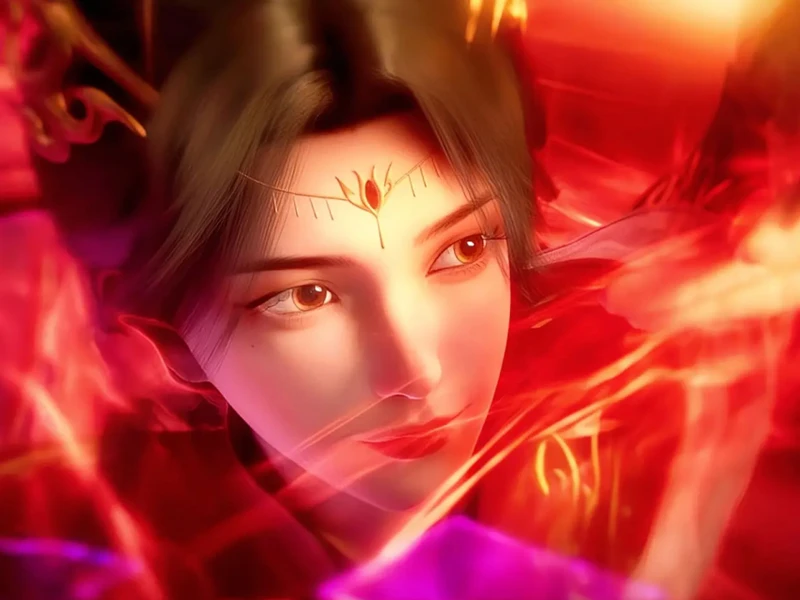
Xiao Xiao enters the scene not just as a daughter, but as a force in her own right. Born to two supreme powers, she manifested the strength of a Dou Zong at birth. Her arrival in the Longfeng Tian Secret Realm (龙凤天秘境) is marked by decisive action, swiftly dispatching a young master from the Snake Hall. Her confidence is magnetic, a blend of innate talent and the unshakable knowledge of who her family is. She embodies the concept of legacy, carrying the combined prowess and prestige of her lineage into a new generation.
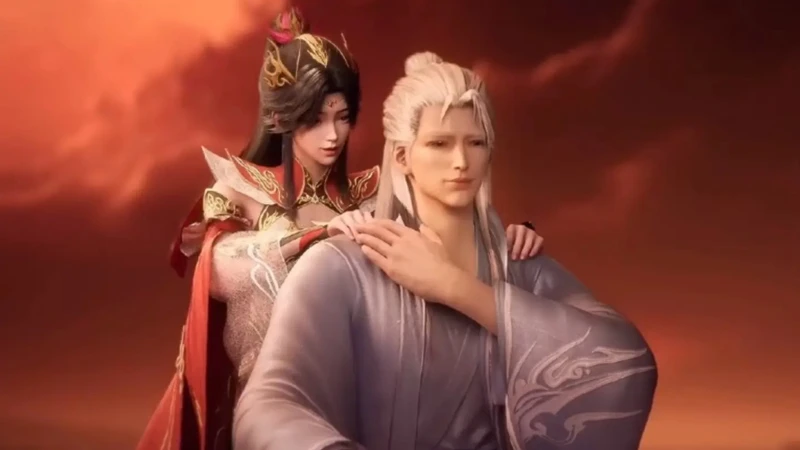
Her confidence stems from more than just bloodline. That single word, “Father,” is also a summoning. It calls upon the entire protective might of the Wujin Realm. In the perilous Da Qian World, her identity is both her sharpest weapon and her most impregnable armor. It grants her a unique status, allowing her to move with an authority that even other prodigies cannot claim. She is the most protected, and perhaps the most dangerous, young figure across the realms.
However, the narrative wisely avoids painting her as merely privileged. Her journey is poised for independence. The call to aid the Luo Shen Clan (洛神族), prompted by her father’s sense of old debt, is clearly framed as her starting line. It is the moment she must step out from the direct shadow of her legendary parents and carve her own path. This sets the stage for her character arc, transforming her from a beloved symbol into an active protagonist of her own legend.
A New Narrative Chapter
The emotional resonance of the reunion is masterfully leveraged to propel the story forward. It is not an endpoint, but a powerful catalyst. Xiao Yan’s decision to send Xiao Xiao on a mission serves multiple purposes: it honors his past, tests his daughter’s mettle, and integrates the Wujin Realm’s politics with the broader conflicts of the Da Qian World. The personal becomes seamlessly geopolitical.
This moment also demonstrates the strength of a connected fictional universe. The Great Ruler 2 benefits immensely from its shared foundation with Battle Through the Heavens. It allows for depth of character that would take seasons to build from scratch. The audience’s pre-existing investment in Xiao Yan transfers directly into concern for his daughter, making her journey instantly compelling. The writers trust the viewers to carry this emotional baggage, rewarding long-term loyalty with profound narrative payoff.
Ultimately, the success of this story beat lies in its synthesis of scale and intimacy. It understands that the true stakes of a world-spanning saga are often felt in the smallest interactions. A father’s smile, a daughter’s teasing complaint—these moments of vulnerability make the cosmic battles meaningful. By healing a old wound for its audience, The Great Ruler 2 secures their investment for the new adventures to come. Xiao Xiao’s story is now fully begun, and it is one we are prepared to follow.