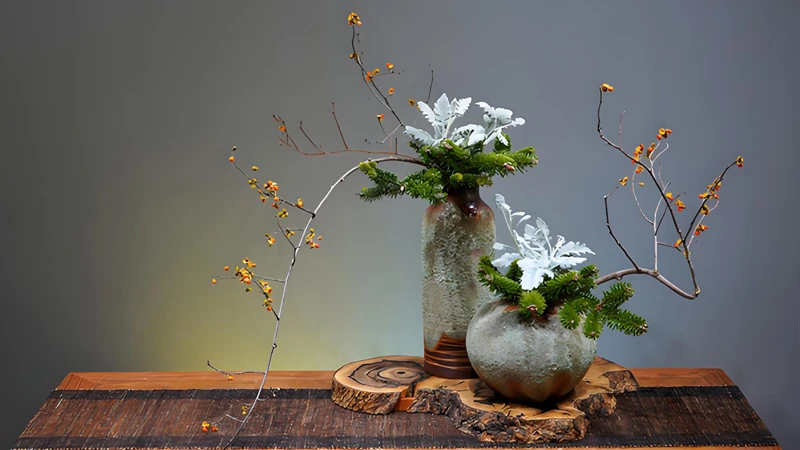
Chinese flower arrangement, known as Chahua (插花), is far more than mere decoration; it is a profound cultural art form and one of the esteemed “elegant pursuits” deeply intertwined with traditional Chinese humanistic philosophy. This ancient practice transcends aesthetics, serving as a medium for spiritual expression and philosophical contemplation.
At the heart of this art lie the six canonical vessels, which are vase, Pan, vat, bowl, Tong, and basket; each possessing distinct symbolic meaning and formal characteristics. More than simple containers, these vessels are foundational elements that interact with carefully selected flora to create intricate miniature landscapes. Each combination conveys a unique spirit and atmosphere, reflecting nuanced artistic intentions—from the scholarly pursuit of quiet refinement to the imperial celebration of grandeur.
Thus, the evolution of these vessels and their stylistic applications offers a fascinating lens through which to observe the flow and transformation of Chinese social and cultural values across dynasties.
The Essence of Traditional Chinese Flower Arrangement

1. Tong Hua (筒花)
1.1 Form Follows Beauty
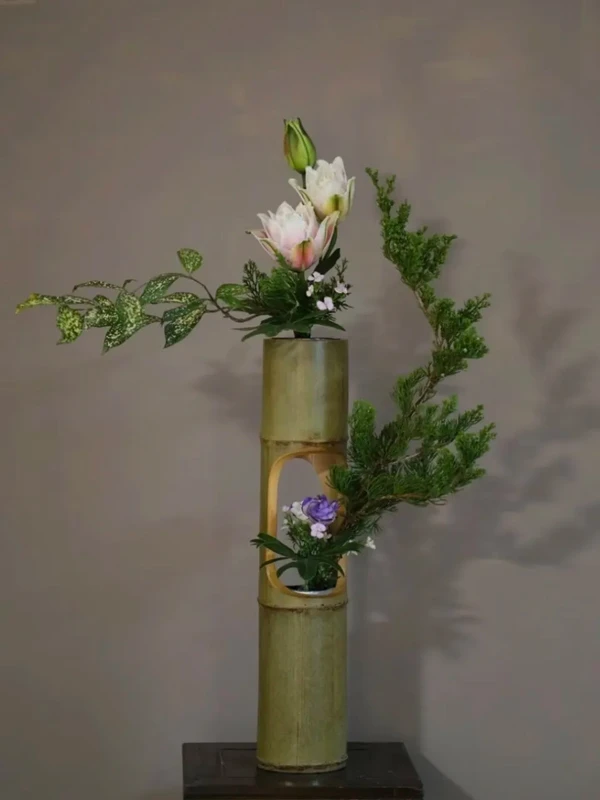
Tong Hua, a distinct Chinese floral art, blossomed during the Five Dynasties and flourished in the Song and Jin periods. Its core lies in cylindrical vessels, simple yet elegant arrangements, and a deep appreciation for natural lines. This art form transcended mere decoration, becoming integral to courtly life and scholarly pursuits.
1.2 Vessels and Vision
The defining feature is the cylinder: uniform openings and bases crafted from bamboo, porcelain, wood, or metal. Shapes vary,such as round, square, hexagonal and triangular. This form naturally supports flexible designs, favoring cascading or horizontal compositions. Tong Hua artists select stems with inherent grace, emphasizing subtle curves and bends. These lines are not forced but highlighted, creating arrangements radiating quiet refinement. The vessel itself dictates the flow, allowing stems to express their innate character.
1.3 Imperial Spark
Emperor Li Yu (李煜) of the Southern Tang dynasty was pivotal. He pioneered large-scale displays called Jin Dong Tian (锦洞天). Each spring, his palace transformed. He placed cylinders everywhere, including beams, windows, pillars and steps, and these cylinders are overflowing with blooms. This unprecedented, immersive exhibition broke conventions. It showcased Tong Hua on a grand stage, moving it beyond intimate settings and fueling its popularity. His vision celebrated the freedom inherent in the cylinder’s shape.
1.4 Scholarly Refinement
The Song dynasty saw Tong Hua reach new artistic heights. It became essential in palaces, temples, and especially within the Four Arts of the cultured elite: flower arranging, tea ceremony, incense appreciation, and painting. Emperors like Huizong (徽宗) depicted scholars engaged in tea and Tong Hua in works like the ”Literary Gathering”. Bamboo cylinders, embodying rustic simplicity, resonated deeply with scholarly ideals of humility and natural beauty. Scholars focused on revealing the inherent spirit of each stem, their arrangements mirroring a quiet, contemplative life in harmony with nature.

2. Pan Hua (盘花)
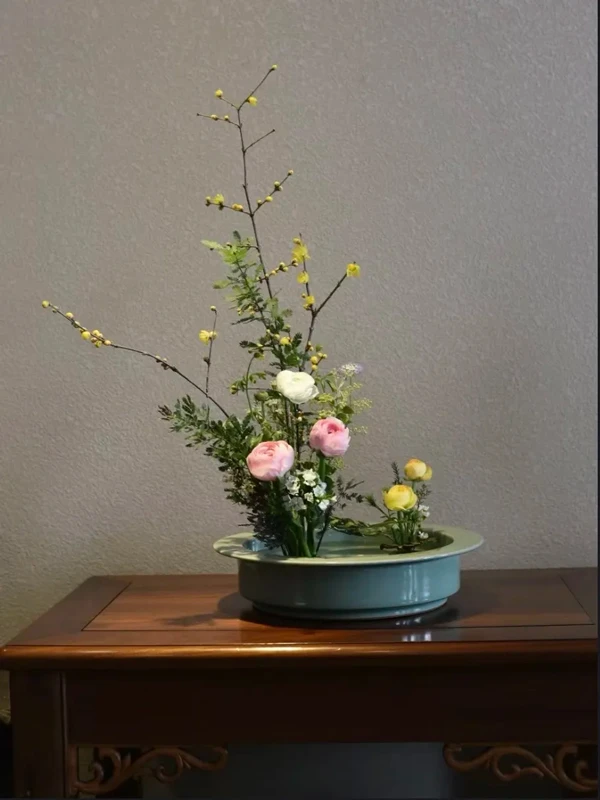
In Han Dynasty China, over two millennia ago, artisans shaped clay into broad basins. These vessels, evoking ponds and lakes, became the first homes for deliberate floral arrangements. People placed stems within them, capturing nature’s vitality in miniature landscapes. This practice, using wide basins as foundations, blossomed into the distinct art of Pan Hua.
2.1 Buddhist Roots
By the Six Dynasties era, Pan Hua intertwined with Buddhist offerings. It became integral to temple ceremonies. Buddhist teachings on life’s equality and balance found a visual echo in these compositions. Their harmonious forms and colours reflected spiritual ideals . This sacred connection deepened Pan Hua’s meaning and propelled its artistic growth.
Monks and devotees used these floral displays not merely as decoration, but as meditative aids. The careful selection and placement of each bloom mirrored the pursuit of inner peace. The wide basin, holding water and life, symbolized the vastness of spiritual potential. Its integration marked a significant evolution beyond simple horticulture.
2.2 Artistic Independence
Pan Hua gradually shed its solely religious role. During the Tang and Song dynasties, it flourished as a refined secular art. Scholars and artists, deeply connected to the natural world, drew inspiration from it. They fused Pan Hua with poetry, calligraphy, and painting, creating a unique cultural expression . The basin became a painter’s surface, the flowers its living pigments.
This era saw Pan Hua elevated to a respected discipline. Practitioners developed sophisticated theories of composition and symbolism. The art moved from altars to scholars’ studios and elegant homes, appreciated for its aesthetic beauty and philosophical depth. Its principles resonated with the period’s celebration of nature and artistic refinement.
2.3 Form and Flexibility
The defining feature of Pan Hua is the broad, shallow basin. Its expansive water surface allows great compositional freedom. Artists arrange diverse botanical elementswithin it, these elements are blooms, foliage, branches, and fruit. This variety offers rich textures, colours, and forms. Skilful combination reveals the arrangement’s unique character.
Circular and oval shapes dominate the basins, embodying concepts of wholeness and unity. The wide opening invites creativity, enabling arrangements that suggest expansive vistas or intimate corners of nature. The water acts as both foundation and reflective element, enhancing the visual impact. Placement is key, with each element contributing to the overall balance.
2.4 Nature’s Rhythm
Beyond form, Pan Hua honours the inherent beauty of plants and the changing seasons. Masters keenly observe natural growth patterns and seasonal shifts. They seek to replicate these dynamics within the basin, crafting pieces that pulse with life . The art becomes a dialogue with nature’s cycles.
An arrangement might capture the delicate freshness of spring buds, the lush abundance of summer, or the stark elegance of winter branches. This sensitivity to seasonality imbues Pan Hua with authenticity and emotional resonance. It transforms the basin into a microcosm, reflecting the larger world’s transient beauty and enduring spirit.

3. Vat Flower
3.1 Chinese Vat Arrangements
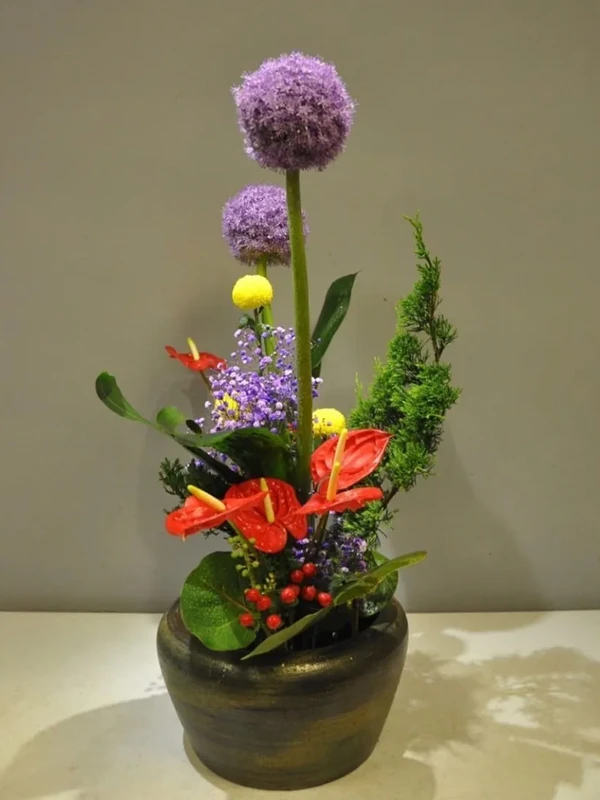
Chinese vase arrangements, known as vat flower, transform sturdy vessels into dynamic displays of nature. Unlike slender vases, the robust gang offers profound spatial depth, demanding a distinct approach to composition. Its substantial belly creates a unique canvas where floral elements interact with volume and void. This tradition elevates humble containers into platforms for expressing natural harmony through deliberate contrasts.
3.2 Form and Space
The gang’s defining feature is its powerful volume. Arrangers leverage this mass to showcase striking juxtapositions: dense floral clusters against slender stems, solid forms beside open space. One-third of the vessel’s interior remains clear water, creating an understated reflective surface that enhances depth. This reserved space isn’t empty; it frames the composition, adding tranquility and visual breathing room.
Consider an arrangement pairing tall, delicate Agapanthus with compact white roses. Their interplay establishes height variation, textural difference, and density contrast. Leaves and berries weave through this structure, adopting varied angles – upright, tilted, cascading. This orchestrated diversity yields a refreshing yet balanced whole, proving complexity thrives within defined parameters.
3.3 Practical Elegance
Scale makes vat flower remarkably versatile. Smaller pieces grace intimate settings like studies or living rooms, bringing nature indoors without overwhelming. Conversely, grand installations can reach two meters, commanding attention in ceremonial halls or public spaces. The vessel anchors the display, its inherent stability supporting elaborate creations.
This adaptability stems from the art’s core focus on spatial relationships. Whether miniature or monumental, the principles of mass, line, and negative space govern the design. The gang provides the stage; the arranger choreographs living elements within it, ensuring harmony regardless of dimensions.
3.4 Roots in Compromise
Historical insights reveal vat flower’s evolution. Qing Dynasty scholar Shen Sanbai (沈三白) noted a societal preference for potted plants over cut flowers, viewing the latter as inferior unless meticulously curated. This perception positioned vase arrangements as a secondary choice for those lacking gardens.
Consequently, many “vase flowers” evolved into Penjing (盆景)-inspired creations. Arrangers sometimes used soil instead of water, cultivating multiple plants together within the gang to mimic miniature landscapes. This adaptation blurred lines between arrangement and living Penjing, yet retained the essential focus on sculptural form and spatial balance that defines true vat flower. The vessel remained central, a crucible for cultivated beauty.
https://youtu.be/WdHXPzoEylw

4. Vase Flower
4.1 Quiet Power
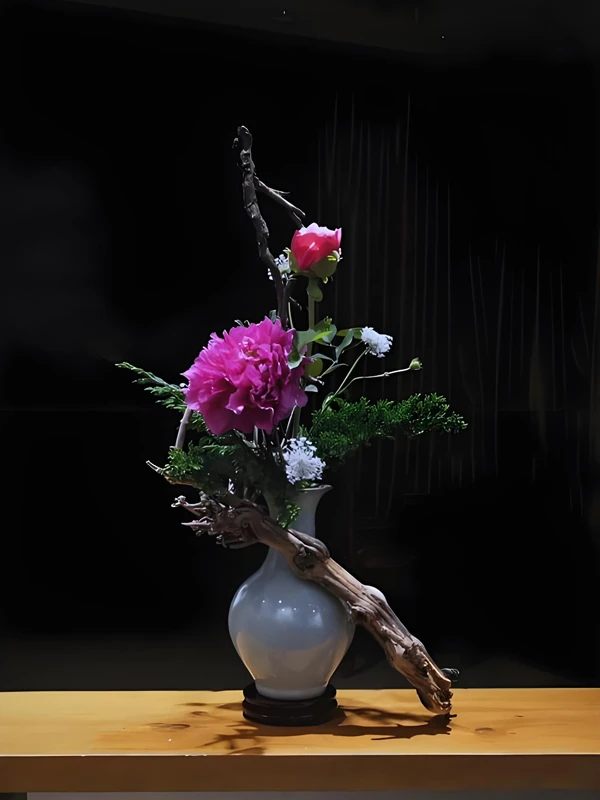
Chinese vase arrangement evolved from Buddhist altar offerings, traceable to the Southern Dynasties, blossoming later into a refined pursuit among scholars. By the Ming era, it became central to intellectual life. Scholars gathered around floral displays, appreciating beauty, cultivating character, exchanging ideas, and showcasing talent. These gatherings served as spiritual feasts and outlets for those facing political setbacks or unfulfilled aspirations. The period witnessed an explosion of theoretical works dedicated to the art.
4.2 Scholar’s Spirit
Mid-Ming society saw growing economic prosperity and cultural activity. The flourishing commodity economy elevated material culture, making flowers more accessible. Philosophically, the School of Mind gained prominence, encouraging introspection and self-cultivation among the literati. This atmosphere fostered a calmer, more restrained approach to vase arrangement. Scholars used it for personal refinement, imprinting the practice with a distinct aesthetic: subtle elegance. The focus shifted to achieving profound meaning with minimal stems. Selection became paramount—seeking flowers and vessels embodying purity and understated grace. Overall, the palette remained muted and restrained.
4.3 Late Flourish
Late Ming society experienced continued commercial growth and material abundance. Merchants gained social standing, blurring lines with the gentry. While some philosophical schools ossified, others, like Wang Gen’s, emphasized the practical philosophy of everyday life. Influential manuals on vase arrangement were widely circulated and embraced, establishing clearer conventions. The free-spirited nature of mid-Ming arrangements gave way to a pursuit of classical elegance and lofty refinement. Attention returned to line and, notably, color. Chen Hongshou’s (陈洪绶) work exemplifies this shift. His painting New Year’s Offerings features striking crimson camellias. This single vibrant hue dramatically elevates the composition’s energy compared to the more subdued palette seen in Tao Cheng’s (陶成) earlier Seasonal Offerings.

5. Basket Flower
5.1 Tradition and Vitality
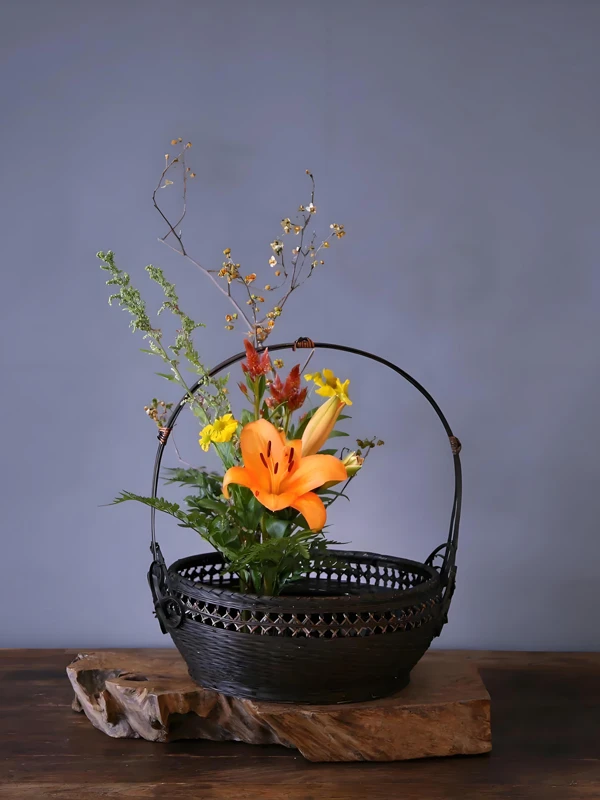
Basket flower represents a refined aspect of Chinese floral art, emerging in the Song Dynasty from Tang-era Buddhist offerings. This practice involves delicate arrangements in handled baskets, focusing on balance and natural expression. It embodies cultural values of harmony and growth, serving as more than mere decoration. Artists prioritize lightness and spatial flow to convey life’s beauty.
5.2 Core Techniques
The basket’s handle introduces vertical depth, demanding careful placement to avoid clutter. This ensures airiness, allowing each element to breathe freely. Breaking the rim is a signature move, where blooms extend past the edge, mimicking wild growth. Such methods highlight vitality and prevent rigid lines.
Light materials like sea flowers and jasmine pair well with bamboo or wood baskets. Their delicate nature complements the structure, fostering a sense of unity. Artists select these to emphasize movement and grace.
Arrangements must feel effortless, as if nature shaped them. This approach honors tradition while inviting modern interpretations, making each piece unique.
5.3 Placement Styles
Variations include upright, tilted, sideways, and hanging setups. Upright positioning radiates stability, ideal for formal settings. A slight tilt at forty-five degrees adds dynamic charm.
Sideways orientations suit expressive or abstract designs, offering fresh angles. Hanging baskets create floating illusions, enhancing display flexibility.
Each style adapts to different spaces and moods. This diversity showcases the art’s versatility and enduring appeal across contexts.
5.4 Symbolic Essence
This art signifies eternal life and joy, rooted in Chinese heritage. It stands among the six primary floral forms, reflecting deep philosophical ideals.
Connections to the I Ching’s Heng hexagram underscore themes of continuity and balance. The hexagram teaches persistence through change.
Through such meanings, basket flower becomes a medium for personal and communal well-being. It transforms spaces into sanctuaries of peace.

6. Bowl flowers
6.1 Order in the Bowl
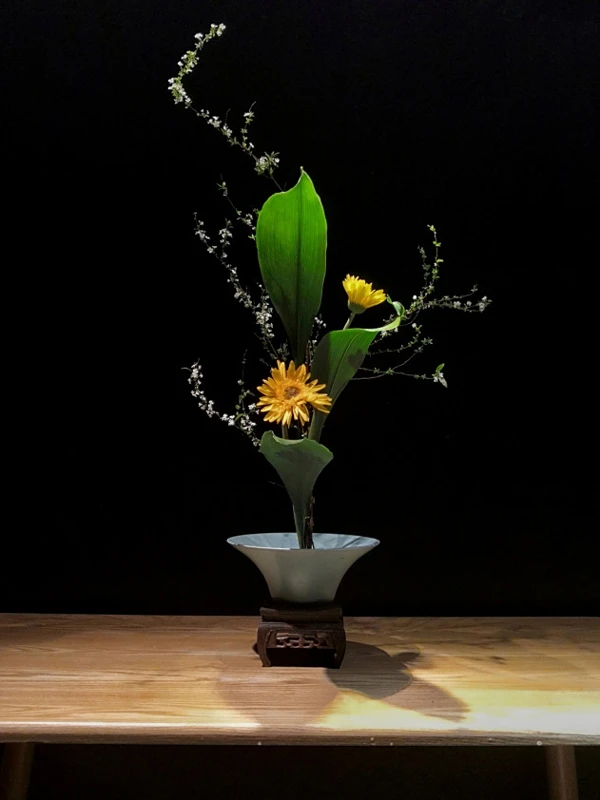
Bowl flowers follow strict principles: one central stem rises vertically while supporting branches spread below. Sturdy blooms like bamboo or gladiolus anchor this form. Placement begins by marking the “heavenly center,” where the primary stem stands unwavering.
Balance governs every choice. Secondary stems tilt at precise angles, and the angle is 45 degrees forward, to stabilize the design. Colors contrast with the bowl to heighten focus.
Each element aligns with tradition. Stem heights approximate a hand’s width, reflecting dignity and order. This structure embodies Confucian ideals of harmony.
6.2 Roots to Rooms
Historically, bowl arrangements mirrored societal values. Their symmetry conveyed ethics through botany, making them fit for ceremonies or daily reflection.
Today, both styles grace modern homes. A bowl centerpiece enlivens dining tables; a basket welcomes guests in entryways. Their presence blends aesthetics with tranquility.
Learning these arts offers more than skill. Handling stems and selecting vessels becomes meditation—a quiet dialogue with nature’s rhythms and cultural whispers across centuries.
https://youtu.be/C_s7znSPGPY
In Conclusion
The art of Chinese flower arrangement, with its profound emphasis on the harmonious pairing of floral materials and vessels, transcends mere decoration to embody a deep philosophical and aesthetic pursuit. It serves not only as a medium for capturing spiritual insights through the ephemeral beauty of flowers but also as a subtle reflection of historical and cultural evolution.
The six classical vases, like six eternal blossoms in the garden of history, continue to whisper the timeless fragrance of tradition across ages. This enduring practice reminds us that while dynasties change and styles evolve, the essence of cultural heritage remains perpetually in bloom, offering endless inspiration and connection to the past.