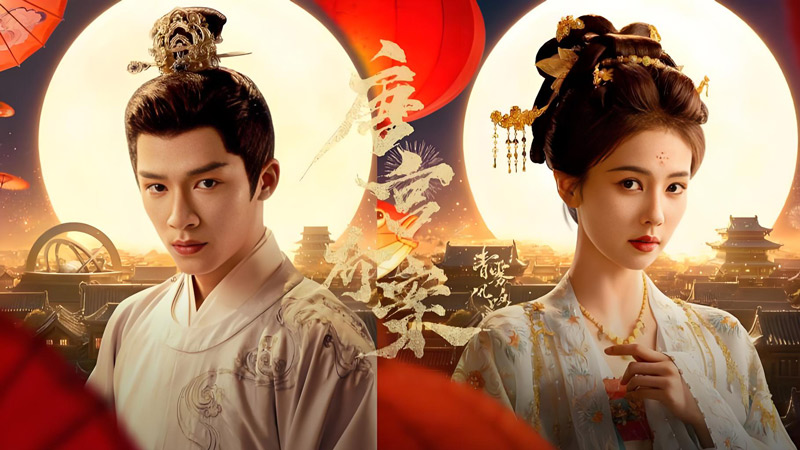
At 2 a.m., with the city silent outside the window, the haunting image of that blue-tinted fog refused to fade. Two days ago, Unveil: Jadewind (唐宫奇案之青雾风鸣) premiered, and clicking on it with the casual skepticism reserved for another formulaic period drama, the cold, eerie color palette of the opening credits unexpectedly struck a chord. It wasn’t the bizarre murder that resonated, but the suffocating sense of a gilded cage within the Tang palace—a feeling that felt intimately familiar to the modern soul.
When Extravagance Masks a Silent Scream
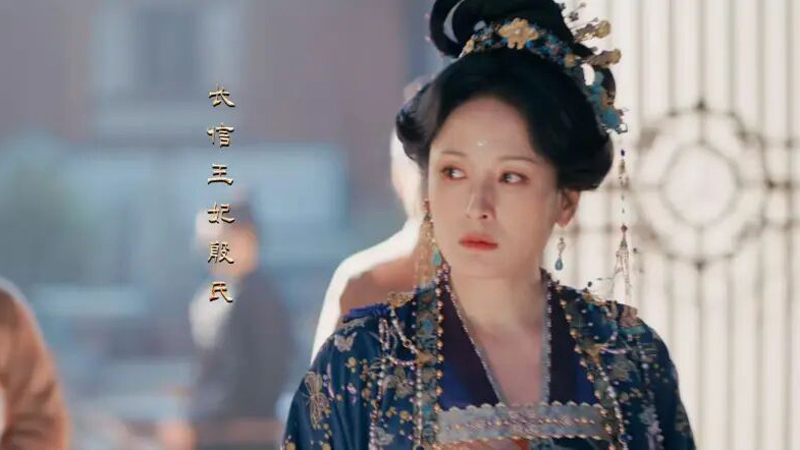
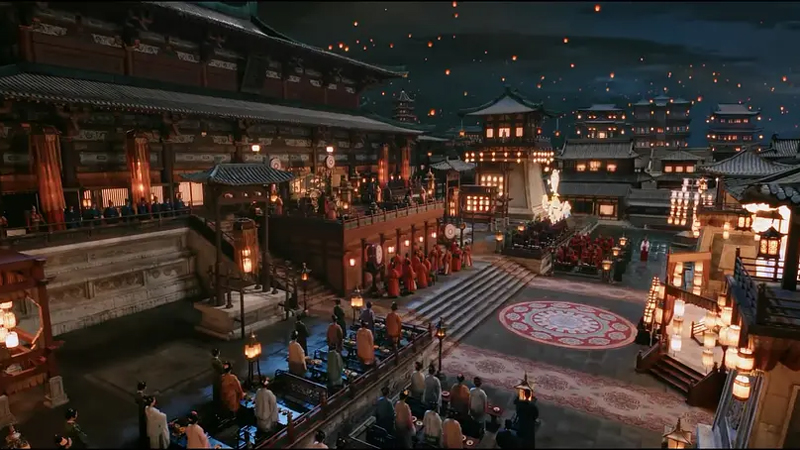
The show’s genius lies not in its “mystery,” but in its “pain.” It uses breathtaking visuals to wrap a story about being trapped. One image from the Lantern Festival night lingers: the “Blissful Death.” Envoys from all lands pay tribute, the drumming and singing are deafening, and Chang’an (长安) is a magnificent illusion. In this peak of revelry, the Ning Yuan (宁远) Princess collapses silently.
Yet, the laughter continues, the toasting hands don’t pause. Her death is a pebble dropped into the deep sea, swallowed without a ripple by the wave called “Prosperous Era.” It’s a terrifying mirror to modern life—dying a little inside from exhaustion and emptiness while the world celebrates a curated, busy life on social media.
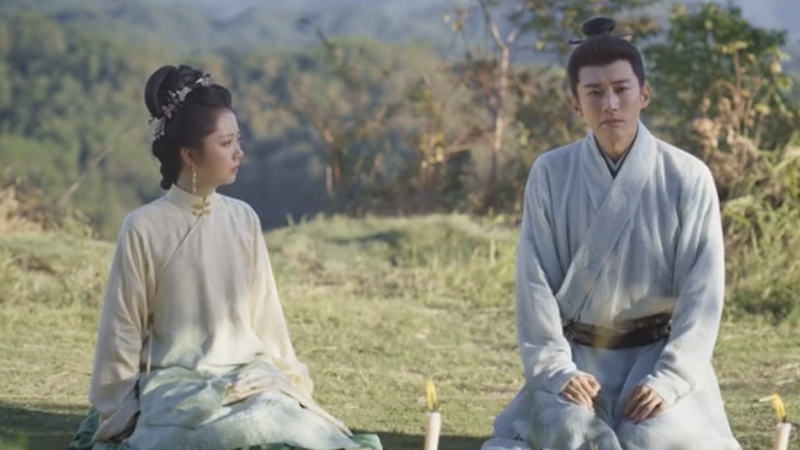
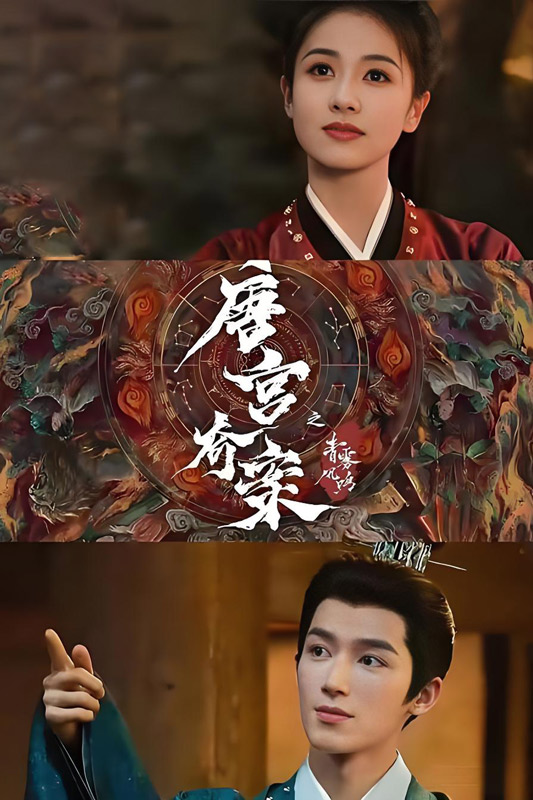
Then there’s the gaze of Li Peiyi (李佩仪), played by Bai Lu (白鹿). Unlike the typical coquettish or tragic heroine, she stands like a sheathed cold blade. While everyone murmurs, “That’s a princess’s fate,” she kneels by the body, her fingers tracing a blood-stained jade pendant. Her whisper cuts deep: “The fog in these palace walls is too heavy. It blocks even the path for wronged souls. Since the heavens won’t light the way, I’ll carve an opening with my sword.” She isn’t just solving a crime; she’s declaring war on a massive “system” on behalf of all the voices that have been erased.
In stark contrast, Xiao Huaijin (萧怀瑾), the astronomer played by Wang Xingyue (王星越), understands celestial fate. But on a rainy night, when he discovers the stars contradict human justice, he doesn’t acquiesce. He simply holds an umbrella over Li Peiyi, shielding her from the storm. That silent act is more deafening than any confession of love.
The Struggle Within a System We All Recognize
Watching Li Peiyi and Xiao Huaijin stumble through the fog, it becomes clear why this show strikes a chord. It strips away the “costume drama” cloak to reveal a core of modern existential anxiety. The Tang palace is a high-pressure workplace, a giant social machine. Everyone has a place: the princess must marry for alliance, the guard must obey, the astronomer must accept destiny. This is our reality. At 30, if you’re unmarried, you’re considered difficult; if you quit your job to chase a dream, you’re deemed unstable. We live within countless “shoulds” and expectations, slowly losing sight of who we really are in the fog.

A line from Li Peiyi to a senior court lady trying to stop her resonates deeply: “If I live as an ornament in this palace, even if gilded, I am dead. I would rather be the wind that sweeps through the hall—even if just for a moment, I will have lived.” It strikes an emotional chord. All the struggles in the city—the commutes, the difficult clients, the rent—aren’t they for that fleeting freedom like the “wind through the hall”? To prove we are more than just a cog in a machine, but living, breathing individuals?
Carrying a Lantern Instead of Waiting for Dawn
Unveil: Jadewind is not a simple, satisfying drama; it’s a cool one. It doesn’t let the protagonists win effortlessly. Instead, they face repeated setbacks and wounds, yet choose to confront the truth. Li Peiyi’s sword and Xiao Huaijin’s stars represent two things we all possess: courage and conscience.
In reality, we may not be able to wield a sword to solve crimes or read the stars. But when faced with the suffocating “fog” in our own lives, we can choose not to be numb, not to look away. What’s healing about this series isn’t the ending, but the process of “seeking.” It suggests that anxiety and confusion are okay.
As long as you’re still moving, still searching, still fighting for that small feeling of unwillingness, you haven’t been consumed by the pervasive “mist.” If life feels a bit suffocating lately, watching this show isn’t just about seeing a strange case. It’s about seeing that person walking forward with a lantern in the fog—and realizing they look a lot like you, stubbornly persevering.