Imagine a life confined to inner chambers, where stepping outside was a rare luxury. For women in ancient China, this was often the reality, yet their world was far from dull. Behind closed doors, they engaged in sophisticated games that blended skill, strategy, and social interaction. These activities were not mere pastimes; they were vital expressions of culture and intellect. From throwing arrows to botanical duels, these games offered a glimpse into a vibrant subculture. They provided mental stimulation and a sense of community in otherwise restricted lives. This exploration reveals how creativity thrived within boundaries, shaping a unique aspect of feminine history.
1. Touhu (投壶)
Touhu emerged during the Spring and Autumn Period as a ceremonial activity among nobles. By the Tang and Song dynasties, it had become a favorite among women in their quarters. Participants stood at a set distance, aiming to toss arrows into a decorative pot. The pots used by women were often exquisite, made from celadon or lacquer adorned with mother-of-pearl. The arrows, crafted from thornwood, required precision and a steady hand.
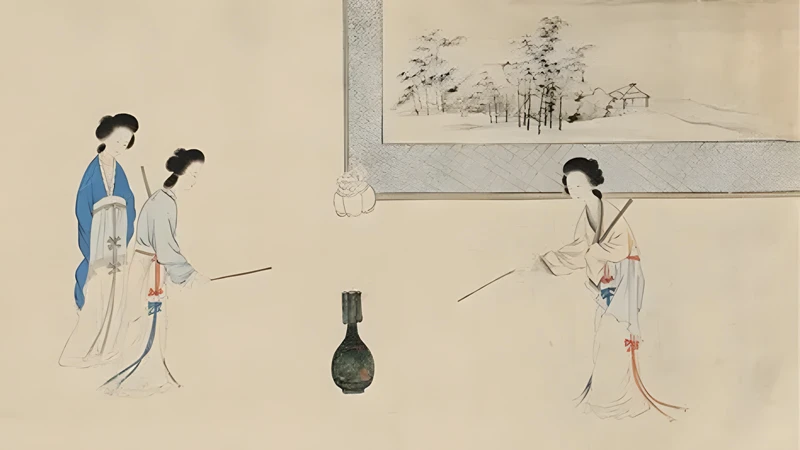
The game was as much about grace as it was about accuracy. Women performed with slow, deliberate movements, one hand gathering sleeves while the other lightly tossed the arrow. This embodied the ideal of composed elegance expected of them. Scoring terms like “first hit” or “continuous hits” added competitive excitement. The sound of an arrow clinking into the pot would draw applause, turning the event into a social spectacle.
Beyond entertainment, Touhu reinforced social bonds and practiced etiquette. It was common during festivals, accompanied by incense and classical music. This game allowed women to demonstrate poise and focus, qualities highly valued in their society. It transformed simple play into an art form, reflecting their resourcefulness in finding joy indoors.
2. Doucao (斗草)
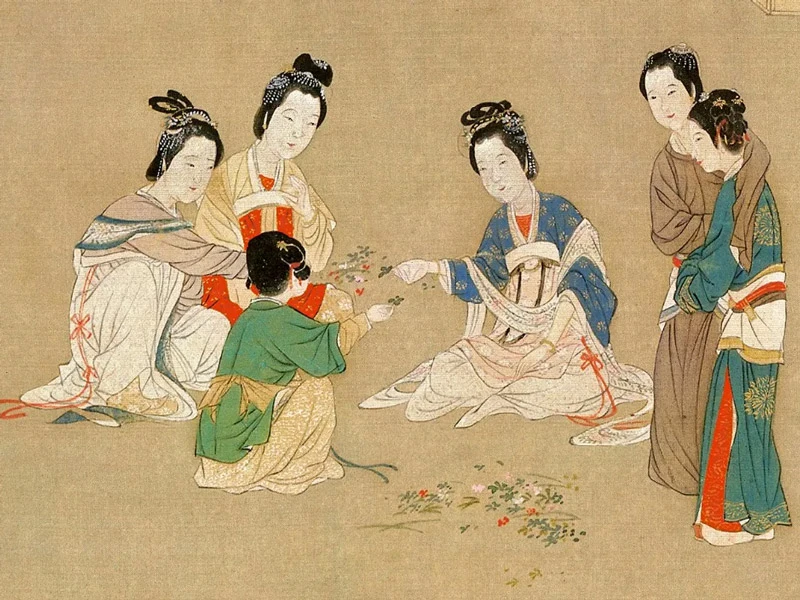
Doucao dates back to the Wei and Jin dynasties and was immensely popular. It involved two styles: a literary version and a physical one. In the literary form, participants gathered plants and took turns naming species. If no one could match a name, the caller won. This required extensive knowledge of flora, making it an intellectual challenge among friends.
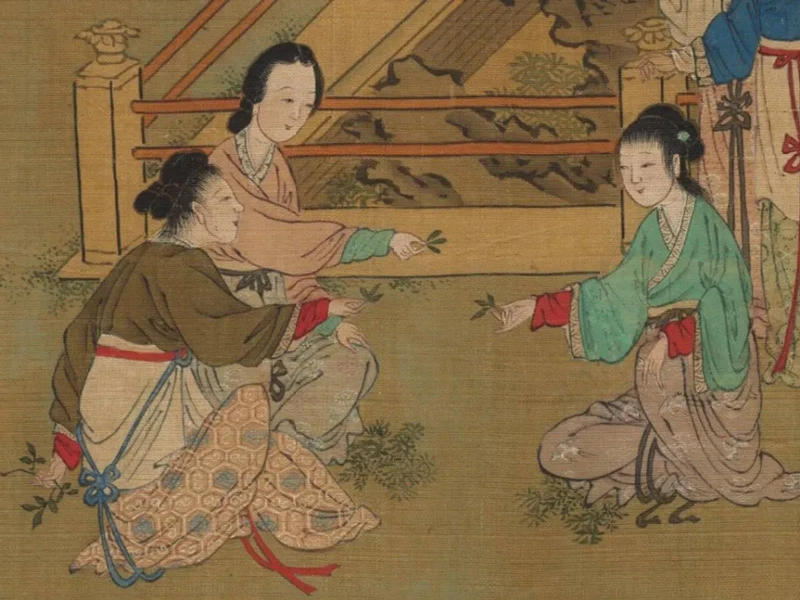
The physical version, or “martial fight,” was simpler and more accessible. Two people would hook grass stems together and pull; the one whose stem broke lost. This direct contest needed no special expertise, just enthusiasm. It encouraged outdoor activity during seasons like spring, when women collected blossoms for these games.
Historical texts like Kaiyuan Tianbao Yishi (开元天宝遗事) describe “flower battles” in Chang’an (长安), where women adorned themselves with blooms to compete. These events were visually stunning, with participants showcasing rare flowers. Doucao was not just play but a celebration of nature and camaraderie, offering a temporary escape from daily routines.
3. Shuanglu (双陆)
Shuanglu was a board game that tested wits during the Tang and Song eras. Each player had fifteen pieces called “horses,” moved based on dice rolls. The dice determined how many steps a piece could advance, with doubles allowing extra moves. Strategy involved blocking opponents and attacking lone pieces to send them back to the start.
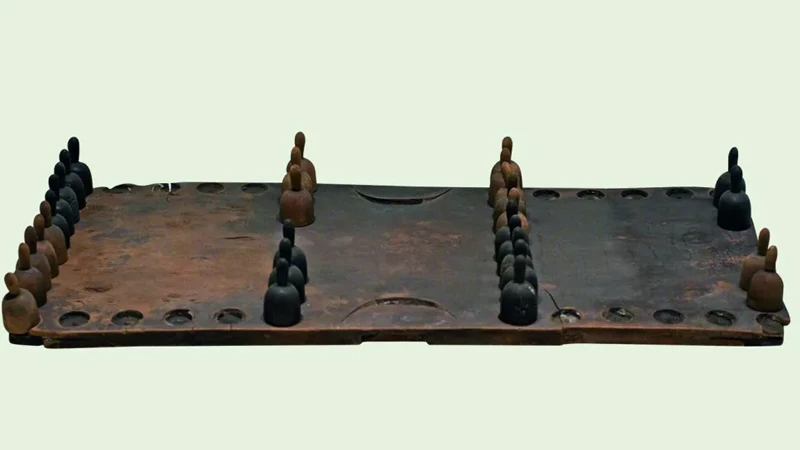
Key mechanics included creating “block points” with multiple pieces to hinder rivals. Once all pieces reached the inner board, players could remove them by matching dice points to positions. The first to clear all pieces won. This required foresight and adaptability, as every roll could shift the game’s dynamics.
For women, Shuanglu was a mental exercise that sharpened decision-making. It was often played in gatherings, fostering friendly rivalry. Unlike mere chance, it emphasized planning and tactics, reflecting the intelligence cultivated in seclusion. It proved that their chambers could be arenas for profound strategic thinking.
4. Yezixi (叶子戏)
Yezixi or “leaf game,” was a card-based diversion with roots in the Tang dynasty. It used forty cards divided into suits like coins and strings, each bearing intricate designs. Players drew and revealed cards to compete, similar to modern poker. The game involved bluffing and calculating odds, making it a test of mental agility.
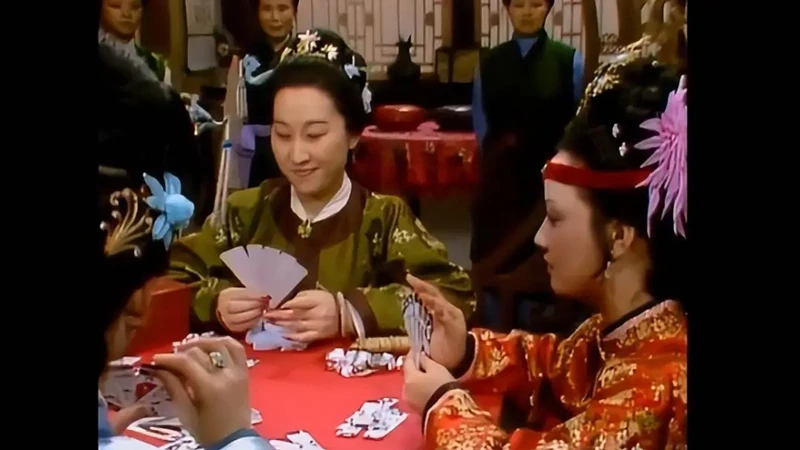
Historical records, such as Ouyang Xiu’s (欧阳修) Return to the Fields (归田录), note its popularity among scholars and nobility. It was a social activity where women gathered with friends or family, often betting on snacks like nuts for fun. The atmosphere was lively yet refined, with servants providing refreshments.
This game offered a rare freedom, allowing women to engage in lighthearted competition. It strengthened relationships and provided a creative outlet. Yezixi showcased how even in confinement, they devised ways to enjoy complexity and connection, leaving a legacy of playful ingenuity.