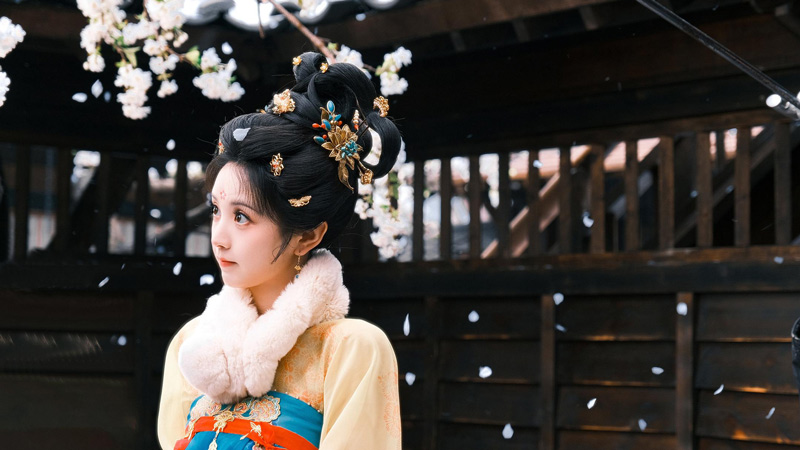
In traditional Zhi Guai (志怪, tales of the supernatural) stories, fox spirits deceive scholars, white snakes give up immortality for human love, and demon hunters and demons are sworn enemies. But when these same elements are reimagined today, they can completely overturn old assumptions.
So how fresh is the setup of Moonlit Reunion (子夜归), the latest Tencent Video drama?
By day, the male lead is just another disgruntled office worker, demoted after angering his boss. By night, he becomes a sharp-witted demon hunter who even teams up with a cat spirit to solve cases. The female lead, meanwhile, can be a playful tabby leaping across rooftops one moment, and with a change of clothes transforms into a glamorous county princess adored throughout Chang'an.
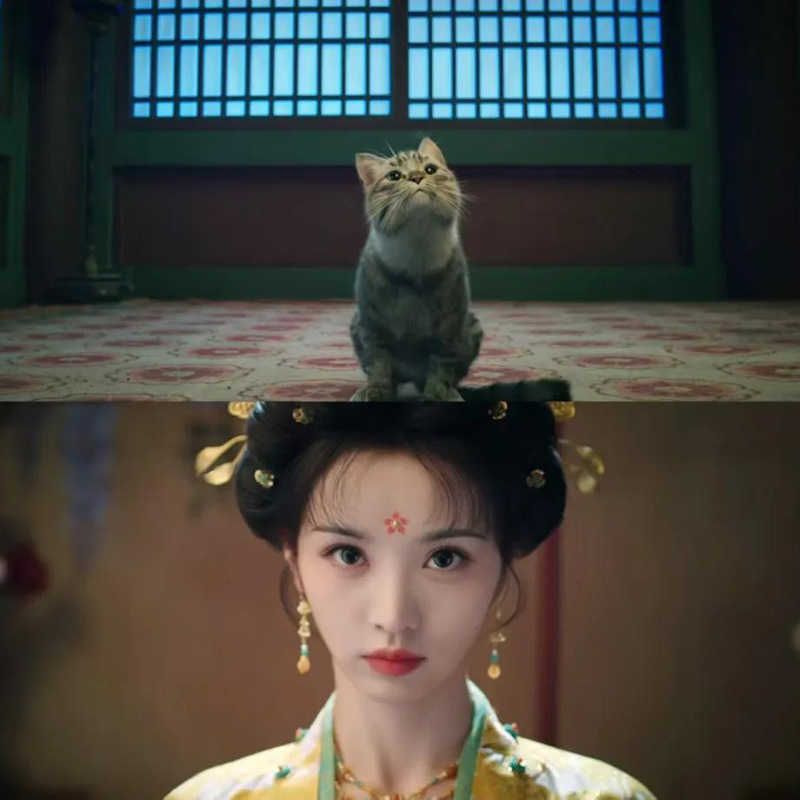
When darkness falls, the bustling capital transforms into a sanctuary for spirits. Yet instead of bloody predator-prey battles, the nocturnal city dazzles with lights and order, forming a poetic contrast to the daytime metropolis.
Directed by Lü Haojiji and produced by Ningmeng Pictures, Moonlit Reunion stars Xu Kai and and premiered exclusively on Tencent Video on August 18. The series presents a bold vision of a "dual Chang'an"—one world in daylight, one in shadow—woven together through mystery, romance, and fantasy. Love, betrayal, and the extraordinary lives of mortals and demons alike unfold on this canvas.
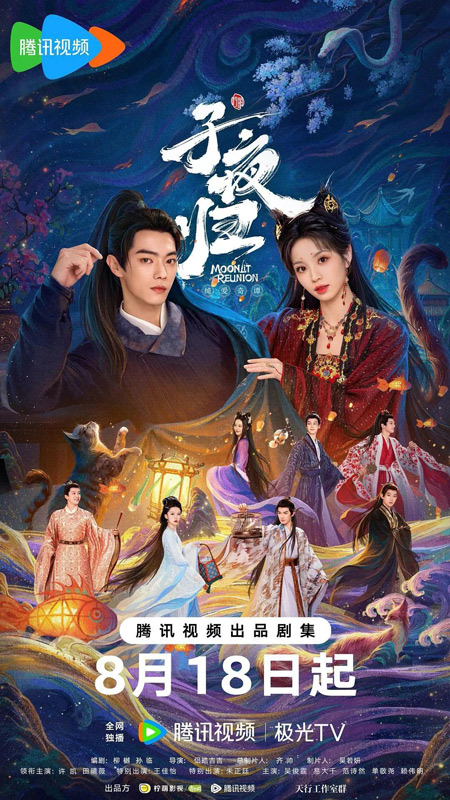
At its core, Moonlit Reunion reinterprets zhiguai traditions through a fresh blend of fantasy, romance, mystery, and comedy. From the "fish-and-cat" couple with undeniable chemistry, to interwoven investigations across the human and demon realms, to dazzling visuals and intricate costume design, the show offers audiences a striking sensory feast.
Simply put: Moonlit Reunion is one of those rare period dramas that's "easy on the eyes" in every sense.
Demon Hunting to Human-Demon Coexistence
If three words could sum up Moonlit Reunion, they would be: vivid, witty, and visually lush.
It avoids both the overly grounded historical realism of palace dramas and the archaic "four seas and eight realms" fantasy tropes of old-school xianxia. Instead, it uses fantastical case files as an entry point to build a world where humans and demons coexist, and where currents of danger run beneath the city's splendor. By day, Chang'an displays the height of human civilization; by midnight, it reveals its hidden demon market.
In this world, not only cats, snakes, and rats can take human form—even earrings and lantern shadows can awaken consciousness and walk as humanlike beings. Some follow instinct and cultivate their own way of survival; others are drawn to human emotions and desires, eager to taste the bittersweet joys and tragedies of mortal life.
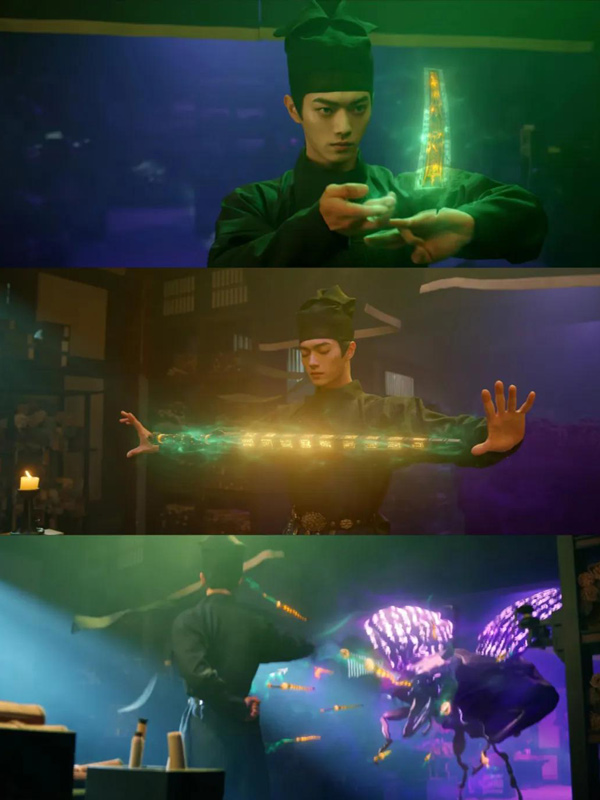
At the center of this strange ecosystem are the two leads—living double lives, straddling the line between human and demon, and serving as the key bridge between both realms.
By day, the male lead Mei Zhuyu (played by Xu Kai) works at the Xuanjian Bureau, slogging through complaints from colleagues and endless orders from superiors. He embodies the weary, dutiful "office drone" of ancient Chang'an. But by night, he transforms into a Heavenly Master of the Changxi Palace, a demon hunter with razor-sharp instincts and flawless combat skills—feared nemesis of the supernatural.
The heroine Wu Zhen (played by Tian Xiwei) lives a double life as well. Outwardly, she is the flamboyant and domineering Princess of Qinghe County, the younger sister of the Empress. Among the capital's spoiled heirs and playboys, she reigns supreme—once literally kicking a flirtatious young marquis down the stairs for his insolence.
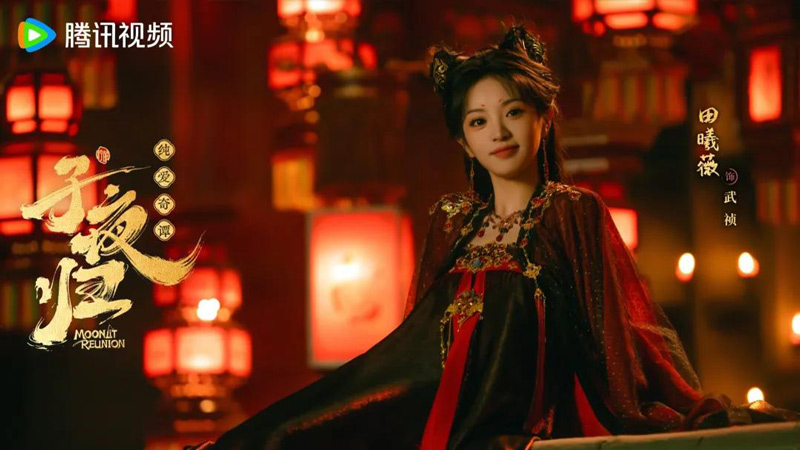
Yet her hidden identity is even more striking: she is the "Cat Lord" of Chang'an's demon market, a powerful guardian who keeps order in the underworld of spirits. Agile and sharp, she believes that "every living being under heaven has its own way of survival." Half-human, half-demon, she shifts seamlessly between forms, her wide eyes and cat ears lending her an adorable charm that perfectly matches the show's colorful fantasy tone.
A county princess and a demon hunter hardly make for a natural match. Their pairing crackles with contrasts—authority versus humility, royal glamour versus quiet integrity. At first glance, their romance seems sparked by Wu Zhen's bold pursuit, a spoiled noblewoman whimsically falling for a handsome but powerless "working man." Yet beneath the surface, their bond is built on rivalry, respect, and mutual recognition.
For instance, while the world sees Mei Zhuyu as powerless and out of place, Wu Zhen admires his refusal to bow before privilege or play courtly games. She respects his moral clarity—his determination to defend the weak and punish corruption.
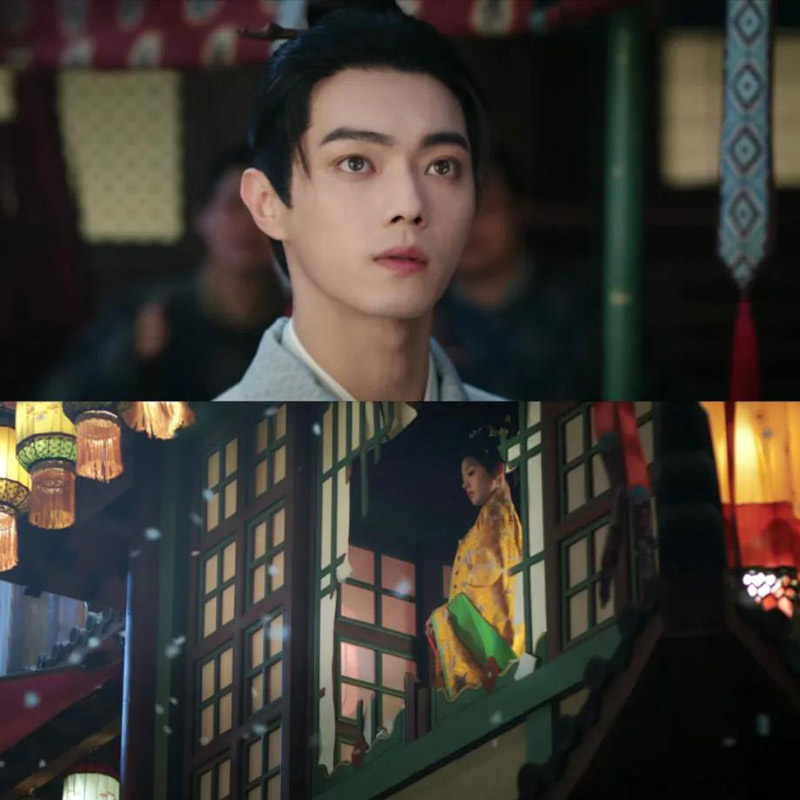
And when the supposedly arrogant county princess declares, "So what if I am royalty? So what if others are born into high gates? This vast world is not made only of those who live for ambition," both characters gain surprising depth.
As a demon hunter, Mei Zhuyu disregards the gossip surrounding Wu Zhen and sees her instead as a kindred spirit worth trusting. Their growing understanding and affection weave moments of pure romance into the show's larger arc of mystery and demon hunting.
But the bigger question lies ahead: how will the series unravel the centuries-old conflict between humans and demons? And how will it reconcile a Heavenly Master and a cat spirit—sworn enemies on paper, yet bound by shared values at heart? This tension promises to be one of the show's most compelling threads.
Dual Chang'an: Daytime Street & Night Demon Market
Every Chinese viewer carries a personal vision of Chang'an, the ancient capital immortalized in poetry and legend.
Through careful use of light and shadow, creators can evoke images reminiscent of Wang Wei's verse, "Palaces open in the ninth heaven, all nations bow in ceremonial robes", capturing both the grandeur and the simplicity of everyday life in a peaceful city. Achieving this blend of historical authenticity and aesthetic beauty has long been a dream for many filmmakers.
Earlier this year, Tencent Video's The Litchi Road (长安的荔枝) created a distinct "Tang Dynasty Splendor" visual signature. The show meticulously incorporated traditional Tang-era patterns such as tortoise shell motifs (龟背纹) and linked pearl designs (联珠纹), while costumes featured popular styles like floral forehead ornaments (花钿) and high hairdos (高髻). Streets, inns, and weathered wooden doors were recreated with careful attention to historical details, resulting in a tangible, "lived-in" sense of Tang urban life, combining heritage aesthetics with realism.
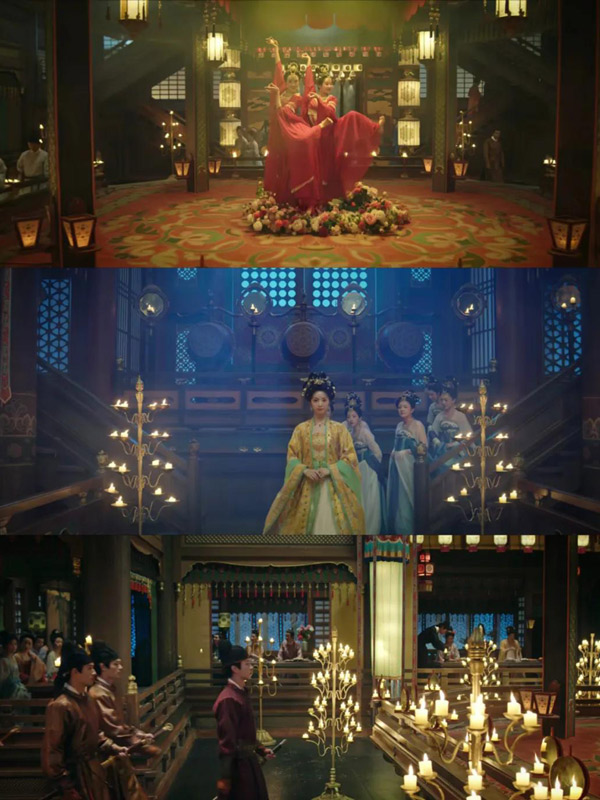
In contrast, Moonlit Reunion opts for a fictional dynasty but borrows Tang-inspired aesthetics to depict the luxury of aristocratic life. The residence of the Duke of Yu is lavishly arranged; Zhuque Street (Vermilion Bird Street, 朱雀街) glows with lanterns; and the movement and leisure of royalty reflect elegance and status, conveying the privileges of the imperial class.
The show's dual-world concept—the daytime city versus the nocturnal demon market—reveals director Lu Haojiji's distinctive visual style. He favors bold, vivid colors and a classical aesthetic, reimagined through modern visual sensibilities. Light and color are deployed with striking contrasts to expand the visual language of historical fantasy series.
Daytime scenes are bathed in warm, bright tones. Sunlight illuminates bustling crowds along Zhuque Street, complemented by the rich colors of aristocratic costumes, evoking a sense of prosperity, celebration, and urban vitality. At night, the demon market adopts cooler, clashing colors; dark alleys, supernatural creatures, and spectral elements merge with dramatic lighting, generating an intense sense of fantasy and suspense.
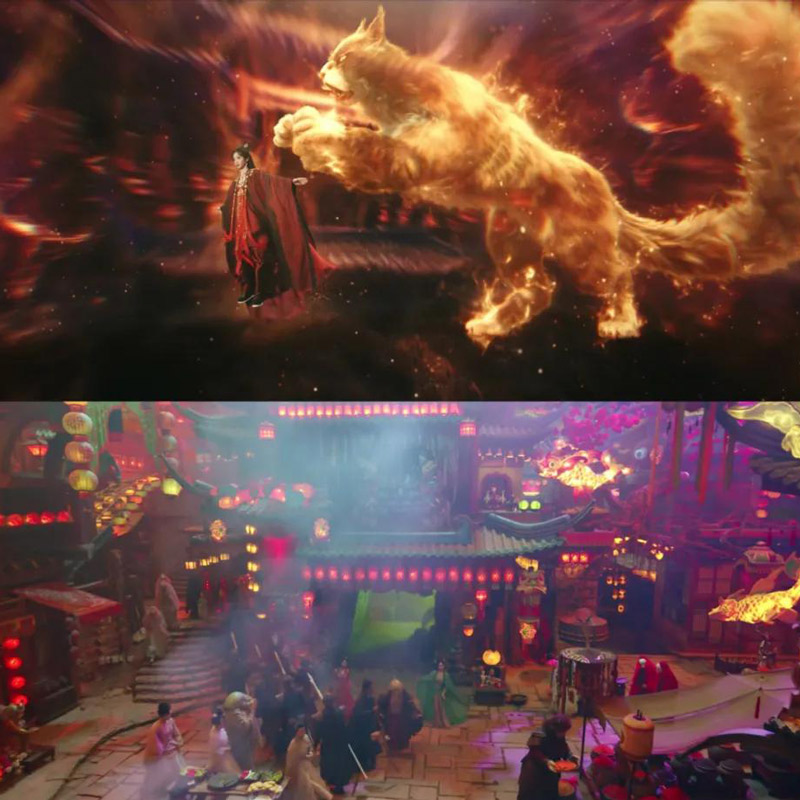
This interplay of day and night continually deepens the sense of space and immersion, giving viewers a dreamlike visual experience.
Beyond aesthetics, the show also explores the broader theme of "humans and demons sharing paths." Conflicts and eventual cooperation between the two species suggest reconciliation across differences, reflecting the traditional Chinese philosophy of "harmony without uniformity " (和而不同)—a celebration of cultural inclusivity and coexistence.
As of now, the series has only been on air for two days, leaving much more intrigue and spectacular storytelling yet to unfold.
Three Key Words: Why Tencent Costume Dramas Always Stand Out
This year has once again solidified Tencent Video's dominance in the historical costume drama genre. While competition is fierce, the platform consistently delivers content that resonates deeply with audiences. The secret to their success isn't a single trick but a strategic mastery of three core principles: crafting grounded male-oriented stories, ensuring relevance to contemporary reality, and delivering a powerful subversion of female roles.
1. Grounded Male-Oriented Stories: Beyond Wish Fulfillment
Tencent understands that modern viewers, especially male audiences, crave more than sheer power fantasy. They seek relatable protagonists and narratives that blend intellectual intrigue with visceral action. At the beginning of the year, Guardians of the Dafeng (大奉打更人) masterfully exemplified this. It wove together investigation, political intrigue, and cultivation into a tightly paced narrative. The genius of its premise—a modern office worker transmigrating into a historical setting—lies in the compelling clash of contemporary mindset against ancient feudal structures, creating both humor and genuine tension.
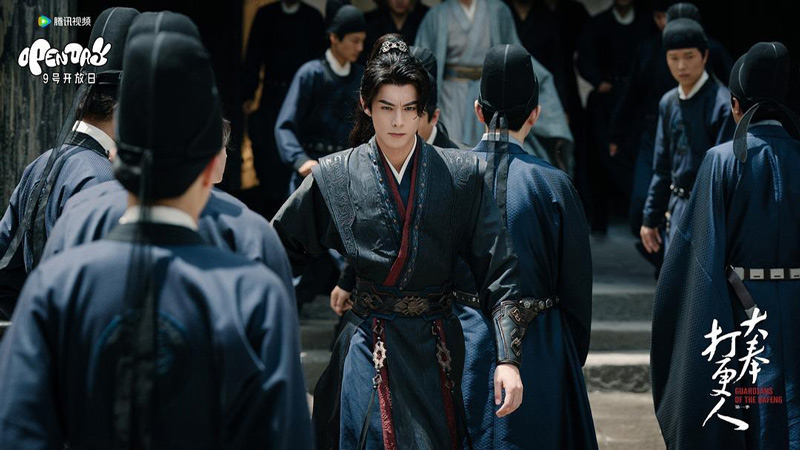
This success builds upon the solid foundation laid by predecessors like Joy of Life (庆余年). By securing simultaneous broadcast on CCTV, Da Feng Da Geng Ren achieved a powerful "web-and-TV synergy," breaking out of the niche online sphere to capture a broad, mainstream audience. This strategy proves Tencent’s commitment to high-quality, engaging historical narratives that are accessible to all, reinforcing their undisputed lead in this segment.
2. Relevance to Contemporary Reality
The most impactful historical dramas use the past to comment on the present, and Tencent’s offerings are masterclasses in this art. The Litchi Road stands out by adopting the perspective of an ordinary, low-level official tasked with an impossible mission: delivering fresh lychees for the emperor. This seemingly simple plot becomes a thrilling lens to expose governmental corruption, bureaucratic inefficiency, and the immense public hardship hidden beneath a prosperous dynasty.
The show transcends a simple critique of feudalism. At its heart, it conveys a profoundly modern spirit of perseverance and problem-solving against all odds. It teaches viewers about the value of knowing where to stand and fighting for what's right, even in the face of potential failure. This resonates strongly with contemporary audiences navigating their own complex social and professional landscapes, transforming a historical tale into a deeply human and relevant story.
3. Subversion of Female Roles
Perhaps Tencent's most significant contribution to the genre is its progressive and varied portrayal of female characters. The platform has moved far beyond the traditional "palace schemer" or "innocent maiden" tropes, offering a spectrum of agentic, complex women.
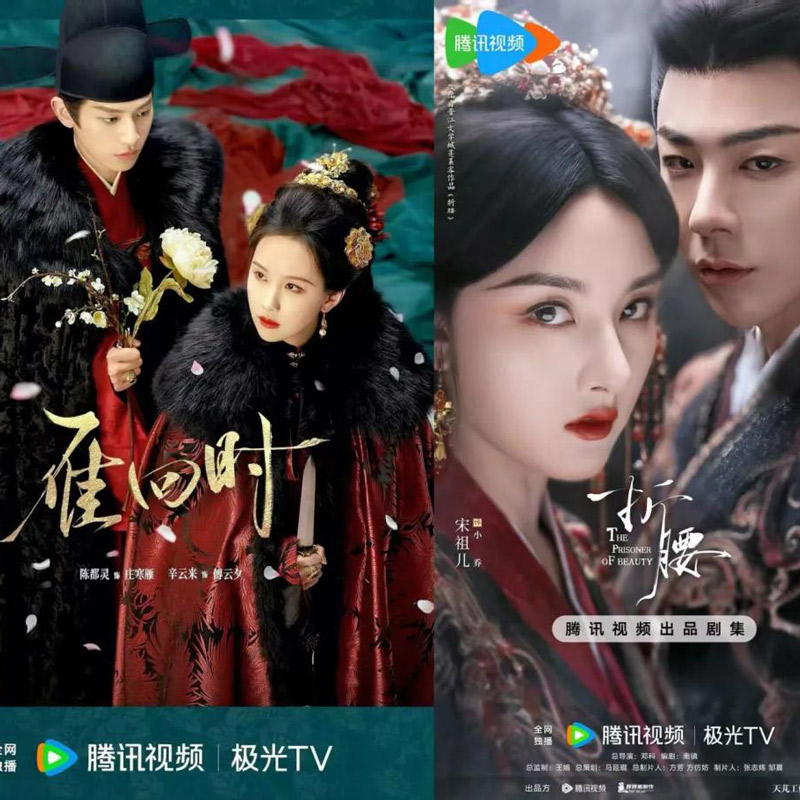
The Glory (雁回时) centers on women's growth and resistance. It adopts a narrative of "breaking conventions through unconventional actions," subverting tired palace-conflict tropes. The heroine, Zhuang Hanyan's evolution from a solitary "lone goose" to a resilient avenger, mirrors modern struggles for autonomy and justice, winning massive acclaim among female viewers.
Similarly, The Prisoner of Beauty (折腰) underscores female independence and intelligence, aligning with modern values. Its "rival-turned-lover" romance plot successfully garnered attention, heightening emotional tension. Furthermore, grand-scale battle scenes and meticulously crafted fuhua dao (costumes, makeup, and sets) elevate the entire production value.
This innovation continues with other 2025 releases. Legend of The Female General (锦月如歌), for instance, layers revenge plots with mutual support between strong female leads, delivering a passionate, hot-blooded story uniquely tailored to women. Its heroine, a brilliant general wronged and stripped of her identity, fights not just for love, but to reclaim her name and power on the battlefield. Meanwhile, a show like The Legend of Zang Hai (藏海传) features a strong female lead, Xiang An Tu, who stands steadfastly by the male protagonist, not as a passive supporter but as a crucial balance and partner in his quest for justice.
From Tencent Video's 2025 lineup, it is clear that their strategy involves more than just expanding diverse genres and fully developing IPs. There is a emphasized commitment to content depth and social value, weaving in relevant societal topics and giving voice to ordinary people. Coupled with production quality that leads industry aesthetic standards and meticulous control over every episode, these strategies ensure that costume dramas remain Tencent Video's most stable and proficient genre, consistently exceeding expectations and setting the benchmark for the entire industry.