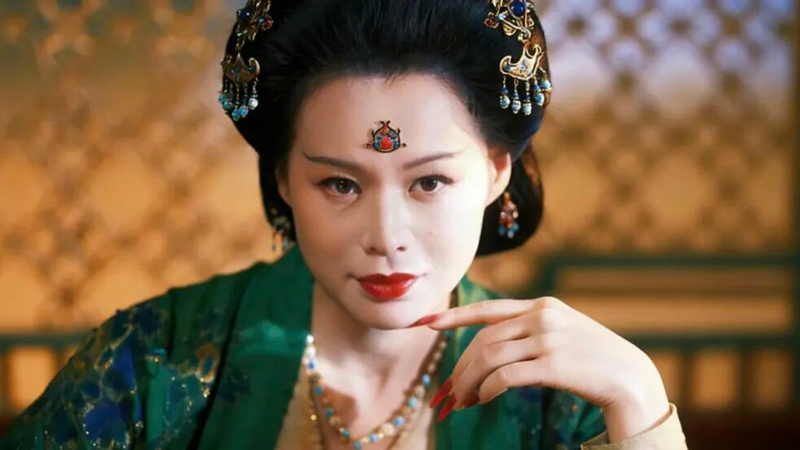
When sneak peek images from the set of the historical drama Shang Gongzhu (尚公主) circulated online, one element dominated the conversation: Hu Xing'er's (胡杏儿) breathtaking appearance. Playing the role of a senior princess, her character is adorned in a Tang Dynasty-inspired ensemble that feels both ancient and strikingly fresh.
This particular style, known among enthusiasts as the "Tianbao loose hair" (天宝披发) and paired with a luminous lotus crown, has not only highlighted her acting versatility but also ignited interest in the sophisticated fashion of one of China's most illustrious eras. What secrets does this look hold, and how does it connect to the past while feeling so novel today?
The Tianbao Loose Hair
The "Tianbao loose hair" is a masterclass in historical illusion. Contrary to its name, it is not merely hair left down. Instead, it is an intricate updo where the hair is gathered and secured at the crown, then artfully draped to cascade down the back, creating a silhouette of effortless flow. This hairstyle flourished during the Kaiyuan (开元) to Tianbao periods of the Tang Dynasty, a time noted for its cultural openness and aesthetic experimentation. Its rarity in contemporary television makes Hu Xing'er's portrayal a visual revelation.
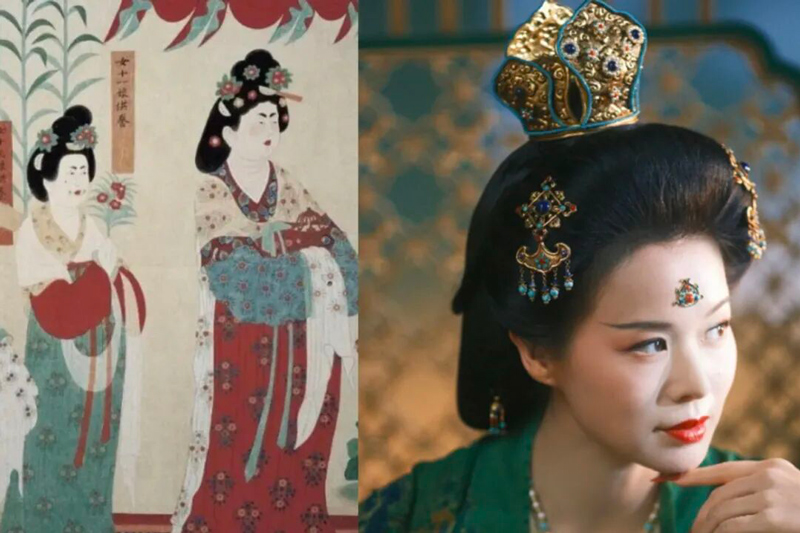
The design finds a direct reference in historical art, such as the renowned Dunhuang (敦煌) murals, specifically within the Painting of the Governor's Wife Worshipping Buddha (都督夫人礼佛图). There, noblewomen are depicted with similar hairstyles, confirming its authenticity and social status during that epoch.
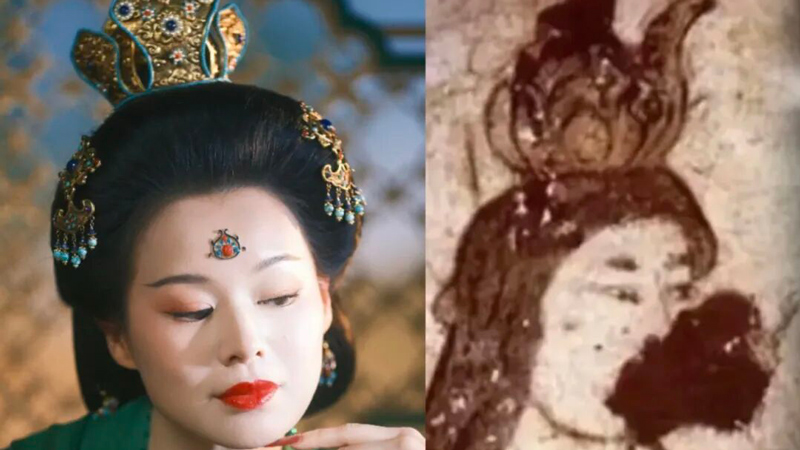
This hairstyle's execution is precise. It typically involves a central part, with hair symmetrically framing the face before being drawn back. The key detail is the additional bun or ornament at the top of the head, which provides structure and elegance. In Shang Gongzhu, this foundational style is elevated with deliberate craftsmanship, avoiding a costumed feel for one of genuine historical recreation. The choice to use this specific look signals a production willing to dig deeper into sartorial history, moving beyond common clichés of ancient China.
Accompanying the hairstyle is the exquisite lotus crown. This headpiece, shaped like an open lotus bloom, carries profound symbolism. Originally integral to Taoist ceremonial dress, it was adopted by Tang court women reflecting the dynasty's spiritual leanings. Its transformation into a high-fashion accessory illustrates how religious motifs permeated daily life and style. The crown does more than adorn; it confers an air of serene authority and grace, perfectly suiting the character of a poised princess. Its presence in the drama is a subtle nod to the intricate ways power, faith, and beauty intertwined in Tang society.
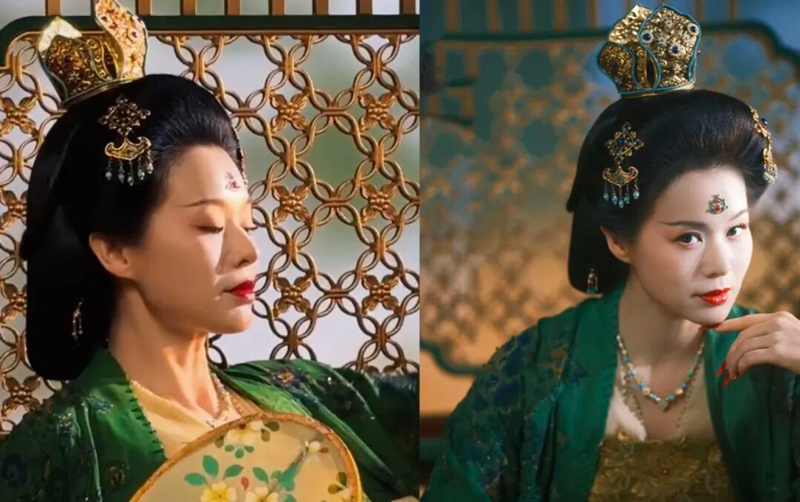
Style and Substance
Hu Xing'er's ability to carry this look stems from her distinct facial features. She has a round face with a pronounced, wider jawline—a structure that conveys both softness and strength. This bone foundation has allowed her career to evolve seamlessly from her early days in Hong Kong television to compelling roles in mainland productions.
For instance, her performance as Lü Yu (吕鱼) in Schemes of a Beauty leveraged her warm, approachable quality, while a more recent role in Blossoms in Adversity (惜花芷) showcased how her maturing features can project formidable authority, reminiscent of characters like Wang Xifeng from The Dream of Red Mansions (红楼梦). Her makeup in these roles often includes a subtly lifted eyebrow tail, a clever technique that accentuates her expressive eyes and adds a layer of charismatic defiance.
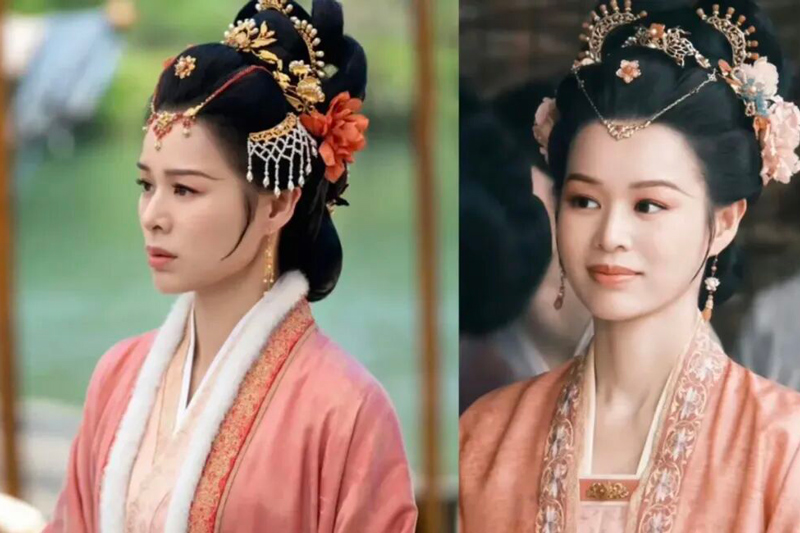
For viewers with a similar face shape—round with a broad jaw—achieving a harmonious and elegant look in daily life or for themed events is entirely possible. The goal is balance: softening angular lines while enhancing natural contours. It begins with skin preparation. A lightweight, dewy foundation is preferable to a heavy, matte one. A thick base can flatten the face and amplify its roundness, whereas a sheer layer that evens out skin tone maintains a fresh, realistic texture. The focus should be on creating a flawless canvas that looks like skin, not makeup.
Strategic contouring is the most effective tool for redefining a wider jawline. Using a large, fluffy brush, apply a neutral-toned powder or cream contour product slightly darker than your skin. Start at the temples, sweeping color down along the natural hollow of the cheeks, and gently blend along the jawbone's edge. The motion should be soft and diffused, avoiding harsh lines. This creates natural-looking shadows that visually slim the face and integrate the jawline smoothly into the overall facial structure. The result is enhanced dimension without an obvious "made-up" effect.
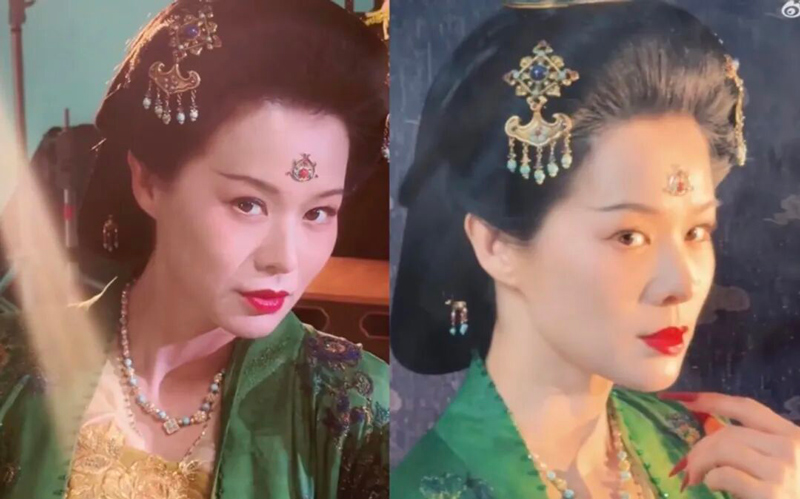
Eyebrow shape dramatically influences face perception. Straight or overly flat brows can make a round face appear broader. Arched shapes, like soft arcs or delicate willow-leaf brows, introduce vertical lift and elegance. Following Hu Xing'er's example, a brow with a gentle peak and a tapered end draws the eye upward, balancing the width of the jaw. Color should complement hair tone—deep brown for black hair, lighter shades for dyed hair. Eye makeup can further shift focus; using matte, earthy eyeshadows to create depth in the crease and a thin, precise eyeliner can make the eyes sparkle. When eyes become a focal point, attention naturally drifts away from facial width, achieving a polished and intentional beauty.