When winter's chill embraced ancient China, a unique sense of joy permeated the air. Unlike the vibrant energy of spring or the abundant harvests of autumn, the colder months offered a distinct pleasure. As snow blanketed the landscape in a pristine white, people found warmth and security indoors, their minds filled with delightful winter fantasies. What did they do to pass the time?
The ancients left behind a legacy of elegant and amusing pastimes that transformed the season into a period of celebration and reflection. From dynamic sports on ice to quiet moments appreciating nature's beauty, their activities were both meaningful and joyful, providing a fascinating glimpse into a world where winter was not merely endured but enthusiastically welcomed.
Ice Games
Among the most popular winter sports was Bingxi (冰嬉), a term encompassing various ice activities. Records of these games date back to the Sui and Tang dynasties, but they truly flourished later. By the Ming dynasty, Bingxi had become part of military training, with a special office established to oversee it. The Qing dynasty marked the peak of these ancient ice sports. Emperors encouraged Bingxi to strengthen the Eight Banners army, believing it enhanced their physical prowess and combat effectiveness.
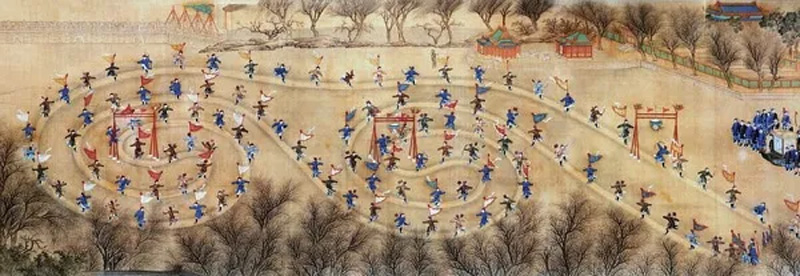
Emperor Qianlong (乾隆) was particularly fond of Bingxi. Each year, from the winter solstice through the coldest days, a grand ice ceremony was held on Taiye Lake (太液池). The emperor himself often attended, turning the event into a public spectacle. The painting Bingxi Tu (冰嬉图) by Zhang Weibang (张为邦) and Yao Wenhan (姚文瀚) captures this vibrant scene, showing crowds enjoying various games on the ice. One favorite was the ice sled, where people sat on small beds pulled across frozen surfaces, a practice noted in Shen Kuo's (沈括) Dream Pool Essays (梦溪笔谈).
Another thrilling activity was ice Cuju (蹴鞠), a ball game played on skates that gained popularity in the Qing era. Li Shengzhen's (李声振) poetry describes players competing fiercely on the ice, their movements swift and graceful. Archery on ice was equally challenging, requiring skaters to shoot arrows at targets while gliding at high speeds. This demanded exceptional balance and skill, far surpassing the difficulty of shooting on stable ground. These ice games not only provided physical exercise but also added excitement to winter life, blending sport with artistry in a way that captivated all who participated.
Snow Views
Snowfall in ancient China often inspired a deep appreciation for nature's tranquility. Zhang Dai's (张岱) essay Snow Over the West Lake (湖心亭看雪) paints a vivid picture of a solitary journey to a pavilion amidst a snow-covered landscape. He describes a world where sky, clouds, mountains, and water merge into a single white expanse, with only faint traces of a causeway and a small boat visible. This scene exemplifies how snow viewing was not just a visual treat but a spiritual cleanse, offering a sense of peace and vastness that soothed the soul.
Literati like Gao Lian (高濂) found elegance in the sounds of winter. In his work, he writes of listening to snow falling on bamboo groves, the gentle taps creating a serene melody that felt like nature's own music. Similarly, the Shishuo Xinyu (世说新语) recounts a story of Wang Huizhi (王徽之) setting out on a snowy night to visit a friend, his boat cutting through the silent river as he marveled at the falling flakes. These moments highlight how snow encouraged introspection and a connection to the environment, turning simple observations into profound experiences.
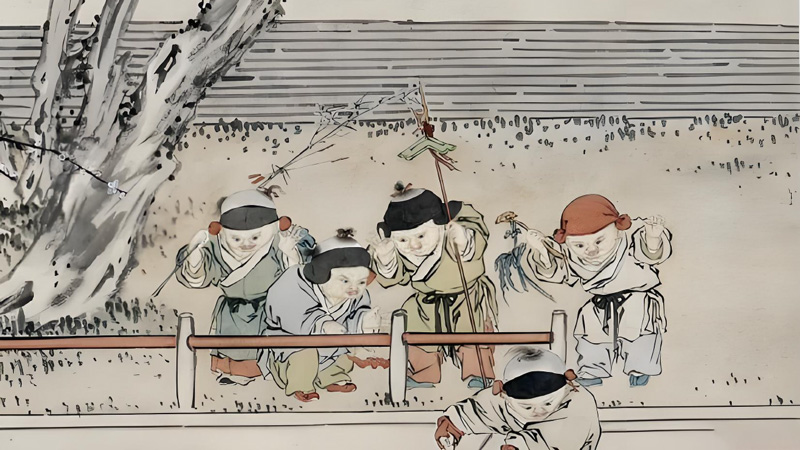
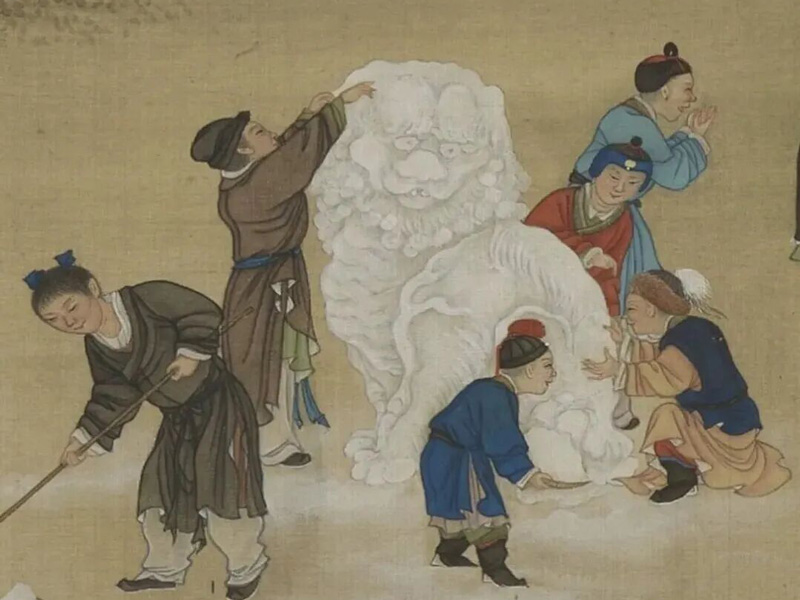
Indoors, snow days were perfect for social gatherings. Bai Juyi's (白居易) poem Asking Liu Shijiu (问刘十九) invites a friend to share wine by a warm stove as snow approaches, capturing the cozy camaraderie of winter. Wealthy families hosted feasts and built snow lions or lanterns, as recorded in Dreams of Splendor of the Eastern Capital. The Twelve Monthly Paintings (十二月月令图十二月) from the Qing dynasty show children crafting these snow sculptures, blending creativity with play. Whether admiring snow from a window or shaping it into art, people found ways to make the season's beauty a central part of their lives.
Plum Quests
Venturing into snow-covered landscapes to find plum blossoms was a cherished winter tradition. The plum tree, blooming bravely in the cold, symbolized resilience and purity. In The Dream of Red Mansions (红楼梦), a character is depicted standing on a snowy slope with a spray of red plum blossoms, an image that has become iconic. This "search for plums in snow" combined physical activity with aesthetic pleasure, as people trekked through frosty forests to witness these hardy flowers.
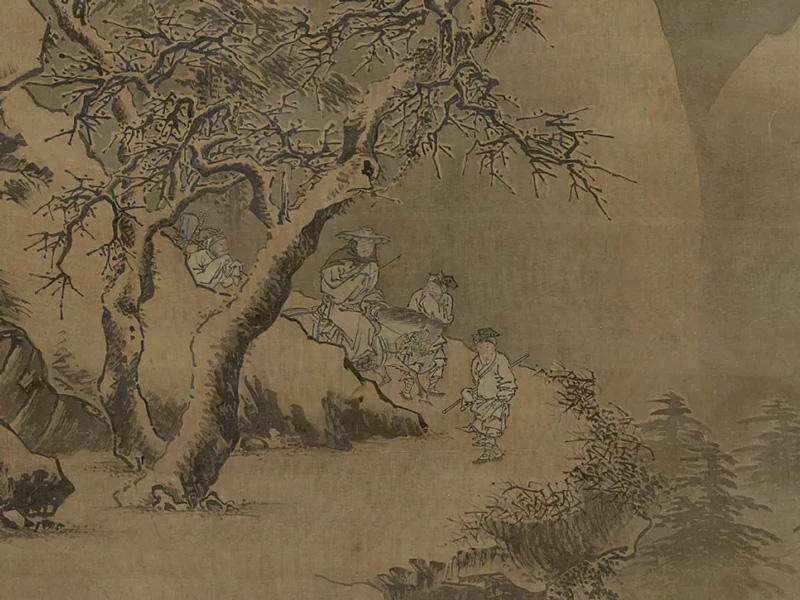
The Ming dynasty painting Searching for Plums in Snow (踏雪寻梅图轴) by Wang E (王谔) shows a group hiking in mountainous terrain, their determination mirroring the plum's enduring spirit. Poets like Meng Haoran (孟浩然) were known to travel great distances in snow to seek inspiration from plum blossoms. Legend says he once compared his poetry with Wang Wei's (王维) and, feeling inferior, asked for advice. Wang Wei suggested that true understanding comes from observing nature directly, leading Meng to embark on journeys that deepened his appreciation for the flower's character.
Song dynasty poet Lu Meipo (卢梅坡) expressed in Snow and Plum Blossoms (雪梅) that without snow, plums lack vitality, and without poetry, the scene feels ordinary. This interplay between the natural world and artistic expression elevated plum viewing to a higher pursuit. The quest was not just about finding flowers but about embracing the harmony between human creativity and winter's stark beauty. It offered a chance to reflect on life's challenges and joys, making each outing a personal and cultural milestone.