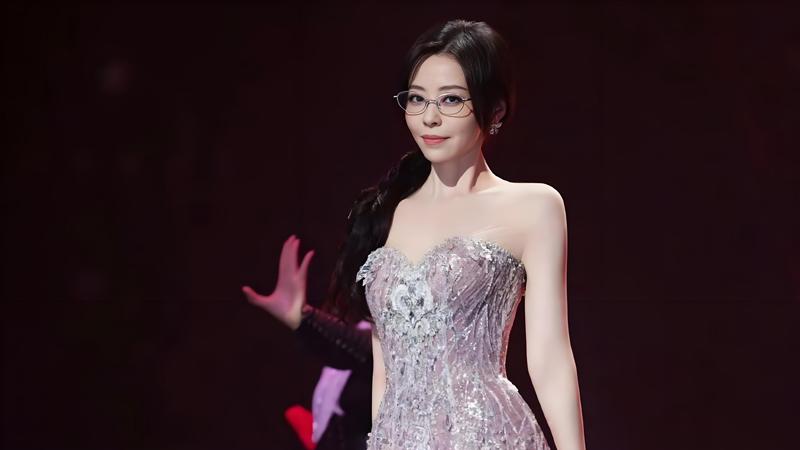
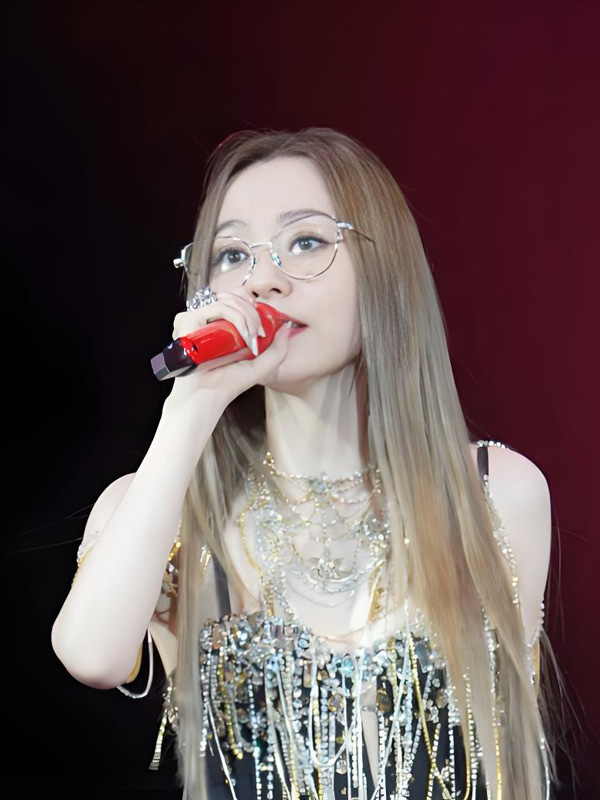
Zhang Liangying’s (张靓颖) gold-rimmed glasses and hip-swaying performance of viral song Ninety Thousand Words ignited both social media frenzy and artistic debate. The acclaimed singer’s deliberate shift toward internet culture—once considered territory for online influencers—challenges rigid hierarchies in entertainment. As her concert footage spawned millions of imitations, critics questioned whether such "influencer-style" acts diminish a star’s prestige. Yet this moment reveals deeper currents: the evolving symbiosis between high-artistry stages and algorithm-driven platforms.
The Viral Alchemy of Performance
Zhang’s transformation began with a televised appearance where her "forbidden charm" aesthetic—strict blazer, sharp eyewear—contrasted dramatically with the song’s provocative choreography. Audiences hailed it as "dimensional mastery," recognizing how her technical precision elevated a trending track. Professional vocal control and decades of stagecraft lent the routine an unreplicable depth.
Within hours, amateur recreations flooded Douyin yet consistently fell short. Her background as a classically trained vocalist created an unbridgeable gap. Fitness discipline and movement economy allowed subtle gestures to convey complexity where influencers relied on exaggeration.
When Zhang transplanted the act to her Hefei concert, multi-angle smartphone recordings amplified its reach. This demonstrated a new paradigm: staged artistry fueling online trends, which in turn drew audiences back to live performances. The loop between professional and amateur spaces tightened.
Critics who dismissed it as pandering overlooked its construction. Every hip sway and gaze held calculated intention, refined through rehearsals absent from influencer workflows. The performance’s spread wasn’t dilution—it was adaptive precision.
Identity Crossroads in Digital Light
Zhang’s journey reflects China’s entertainment evolution: from 2005’s Super Girl folk idol to Grammy-attending "international diva" singing Dream It Possible (我的梦) for Huawei. Her latest pivot deliberately shatters that cultivated image. Industry voices noted the friction: "Audiences expect consistency, but survival demands reinvention."
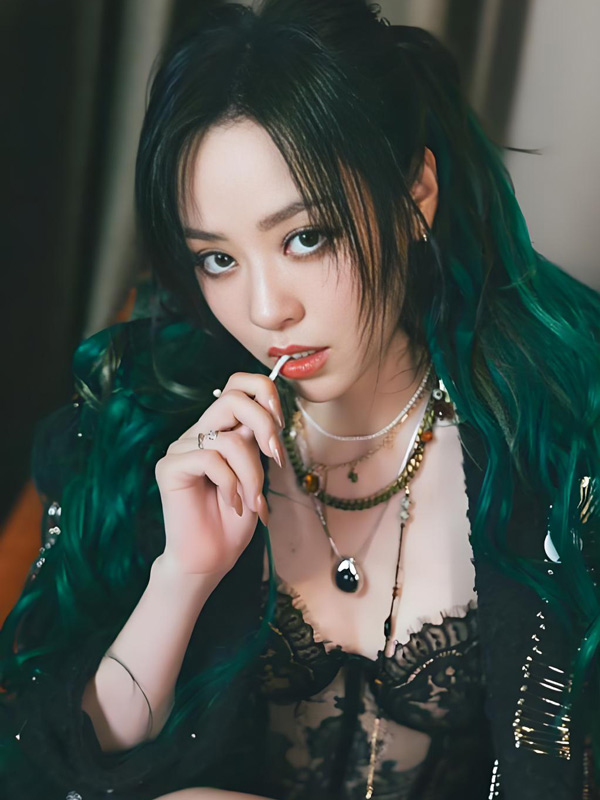
Fan communities dissected her social media response—"This honest person’s going all out"—as manifesto. They framed the shift not as descent but dimensionality: an artist claiming freedom beyond genre or format. Comparisons emerged to veteran actress Yan Ni (闫妮), whose late-career charisma bloomed through similar risk-taking.
The backlash exposed generational divides. Traditionalists perceived influencer aesthetics as unserious, ignoring how platforms now dictate cultural relevance. Zhang’s team strategically leveraged this tension; controversy became visibility. Data confirmed her gamble: streaming metrics for her catalog surged 300% post-performance.
Underlying the discourse was an unspoken hierarchy. Those labeling the act "beneath" her implied that viral content inherently lacks artistry—a stance increasingly disconnected from audience behavior.
Rewriting Value in the Algorithm Age
Entertainment’s economic foundations have inverted. Physical album sales and broadcast ratings once defined stardom; now, shareable moments and engagement metrics are survival. Zhang’s team understood this: the performance was engineered for screenshot moments and reaction videos.
Critics citing "career panic" missed the structural shift. When Douyin commands 750 million daily users, artists must either bridge that space or fade. The "devalued status" argument crumbles upon scrutiny. Her concert ticket prices held firm after the controversy, while luxury brand collaborations expanded. Commercial resilience proved that influencer-style visibility, when executed with elite skill, amplifies rather than diminishes worth.
This recalibration extends beyond individuals. Music festivals now book viral creators alongside Grammy winners; film studios cast Douyin personalities. The old gates have collapsed. What endures is audience connection—and Zhang’s swaying hips achieved that precisely because they defied categorization.
Rehearsing Tomorrow’s Spotlight
Zhang declared she’ll "keep this madness at fifty," signaling permanent integration of digital-native expression. Her trajectory suggests a blueprint: absorb internet culture’s energy while filtering it through professional rigor. The concert-to-clip pipeline must flow both ways.
Success hinges on avoiding pastiche. Her team studied influencer tropes—the exaggerated gestures, repetitive hooks—then subverted them. Where amateurs used the song for attention, she revealed its latent theatricality. This alchemical approach sustains relevance.
Industry hierarchies will keep evolving. Ten years ago, appearing with influencers damaged credibility; today, it signals cultural fluency. The new elite artist masters both concert halls and hashtag campaigns, treating neither as inferior.
Zhang’s glasses didn’t obscure her artistry—they focused it. In refracting light between stage and screen, she illuminated a path forward: where influence isn’t taken from stars, but co-created with audiences. The performance’s true legacy lies in making borders between "high" and "viral" obsolete.