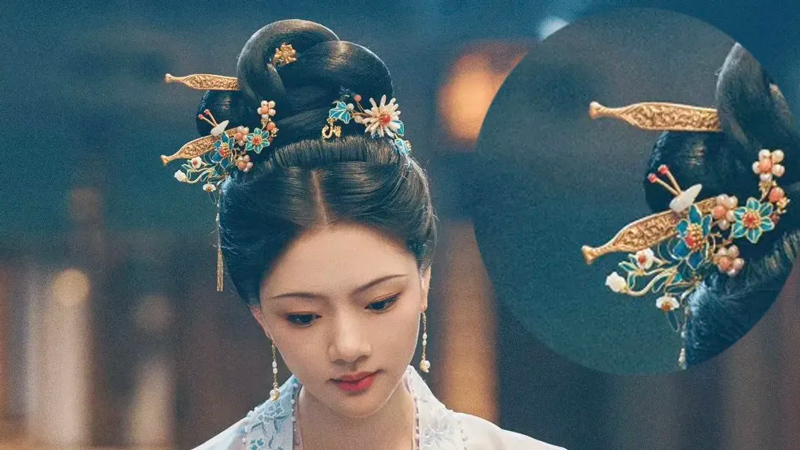
Have you ever spotted a tiny spoon dangling from a character’s hair in a historical drama and wondered about its purpose? This intriguing accessory, far from being a random prop, is a traditional Earpick Hairpin, a brilliant testament to ancient Chinese ingenuity. Blending everyday utility with elegant adornment, this object reveals a practical and artistic approach to life that resonates across centuries.
More Than Decoration
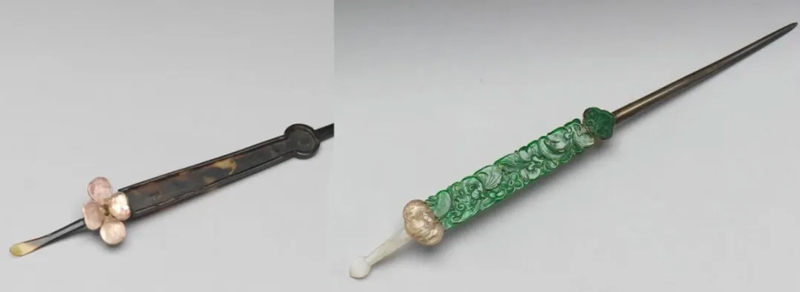
The Earpick Hairpin first appeared during the Shang Dynasty and gained widespread popularity from the Song to the Qing dynasties. Crafted primarily from gold, silver, or bronze, and occasionally from jade, it featured a spoon on one end for cleaning ears and a pointed stem on the other to secure it in the hair. This design allowed the wearer to use it conveniently and then return it to its place as a hair ornament.
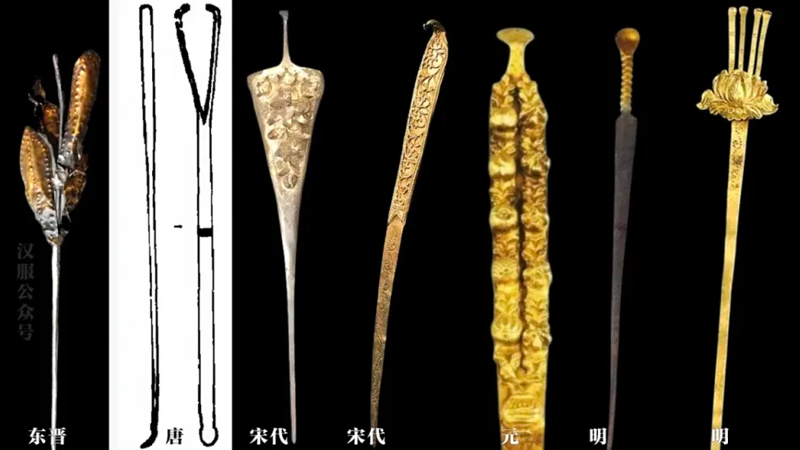
Decoration soon became as important as function. Artisans employed techniques like openwork carving and filigree, sometimes adding jewels or enamel, to transform these tools into exquisite pieces of art. Variations emerged, including hairpins with multiple spoons or additional prongs, clearly intended more for show than daily use, showcasing the wearer’s status and taste.
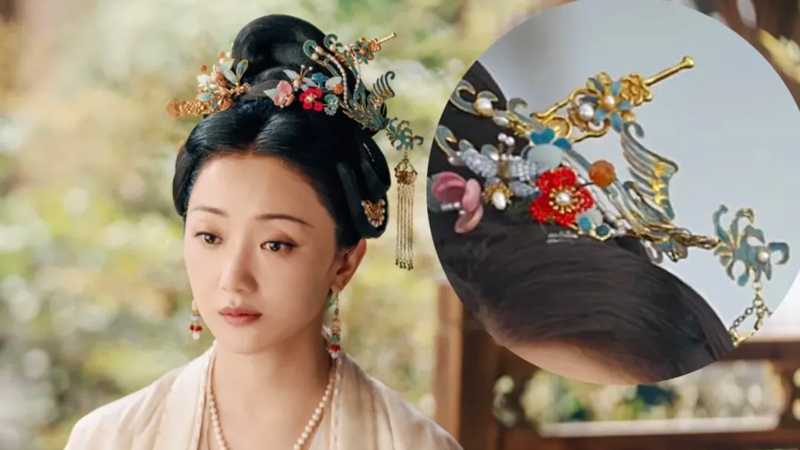
The innovation did not stop there. The Tang Dynasty saw the creation of a dual-purpose tool: one end was an earpick, and the other was a tweezer for shaping eyebrows. This multifunctional approach highlights a timeless desire for efficient, compact design in personal grooming, proving that ancient inventors were masters of practical elegance.
Tool to Symbol
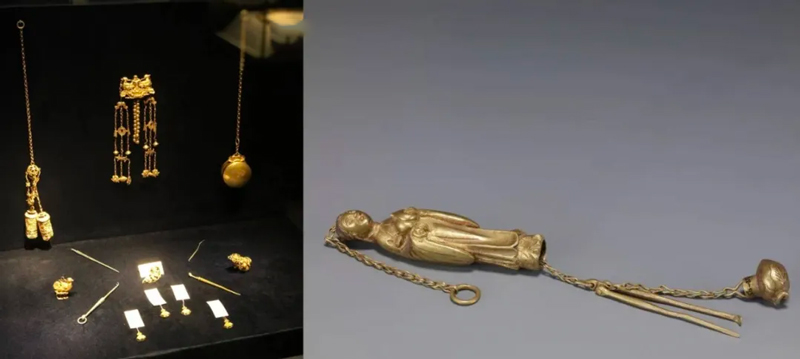
Beyond simple grooming, these objects took on greater cultural significance. In the Ming Dynasty, a more elaborate set of tools known as the "Traditional Seven Things" became popular. Similar to a modern multi-tool, it included small symbolic items like scissors, a scent pouch, and a purse, often worn at the waist by both men and women.
A simplified version, the "Three Things," consisted of an earpick, tweezers, and a toothpick. These were not for the hair but were carried as part of traditional attire, reflecting a culture that valued preparedness and subtle luxury in everyday life. They were personal artifacts that spoke of refinement and self-sufficiency.
Some hairpins even served as instruments of emotion or defense. A Dream in Red Mansions (红楼梦) describes a hairpin, sometimes called a "Ten-Foot Green," that was about 20-25 centimeters long. In one famous scene, the maidservant Qingwen (晴雯) uses it to threaten another girl. Furthermore, an inscription on a hairpin excavated in Sichuan—"Together till white hair, long companion to your dark locks"—suggests it was a powerful token of love and commitment.
Echoes in Modern Culture
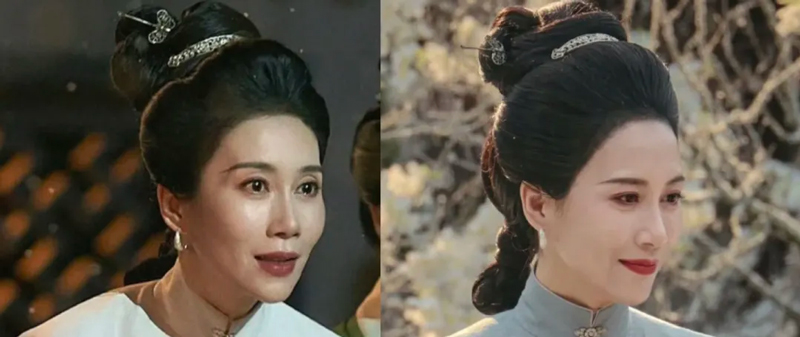
Today, the charm of the Earpick Hairpin endures in popular media. Historical dramas like The Sword and the Brocade (锦心似玉), and the iconic Empresses in the Palace have featured this accessory, carefully replicating its design to enhance authenticity and visual storytelling.
These appearances have sparked curiosity among modern audiences, leading many to discover the rich history behind the prop. It represents a cultural revival where ancient wisdom meets contemporary interest, showing that traditional designs still captivate and inspire.
This blend of beauty and purpose offers a refreshing perspective. In an age of mass production, the story of the Earpick Hairpin reminds us of the value of thoughtful, multifunctional design. It challenges us to appreciate the intelligence embedded in historical artifacts—where even the simplest object could be a work of art, a practical tool, and a bearer of deep meaning.