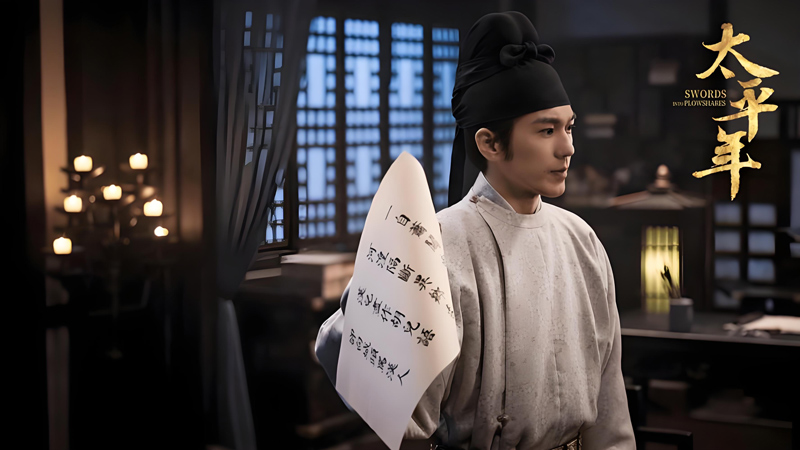
As the credits roll on the latest episodes of the historical drama Swords into Plowshares (太平年), viewers are left with a lingering heaviness, a profound emotional residue that transcends typical period-piece entertainment. The show’s stunning visual tapestry, depicting the brutal yet poetically rendered era of the Five Dynasties and Ten Kingdoms period, is merely the gateway.
The true power lies in its exploration of a chilling historical paradox: why would a powerful, prosperous kingdom voluntarily dismantle itself? The story of the Qian (钱) family and their fateful decision to surrender the realm of Wuyue (吴越) to the rising Song (宋) dynasty in 978 AD is not just ancient history. It feels like a stark, uncomfortable mirror held up to the fundamental human yearning for peace, posing questions about power, legacy, and the cost of stability that resonate deeply today.
A World Drenched in Blood
The drama opens a window to an era modern minds can scarcely comprehend. The 53 years of the Five Dynasties and Ten Kingdoms were an unending nightmare of chaos. With regimes rising and falling like waves, warlords proclaimed themselves emperor based solely on military strength. The phrase "the Son of Heaven should be the one with the strongest army" was a grim reality, not a cynical quote.
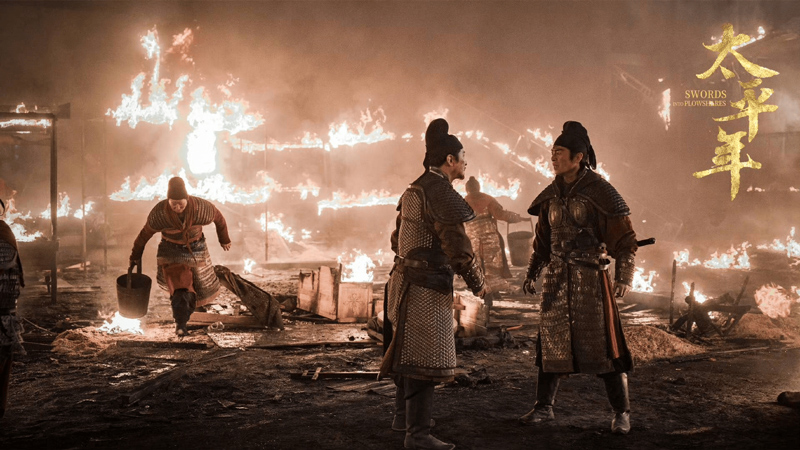
Historical records detail horrors that make fictional depictions seem tame. An emperor, fearing desecration, ordered his own beheading. Mercenaries like Zhang Yanze (张彦泽) treated conquered cities as personal hunting grounds, their cruelty plumbing depths that erased the very concept of humanity. In this world, morality was obliterated. Kinship meant nothing; fathers betrayed sons, brothers slaughtered each other for a fleeting grasp at power. For the common people, life was expendable—mere "talking livestock" or, in the direst times, a resource.
This is the backdrop against which Swords into Plowshares is set. The show’s meticulous recreation of battlefields and desperate refugees captures a visceral truth. The true chill comes not from the CGI-enhanced scenes, but from the knowledge that this was the pervasive, suffocating reality for millions.
An Oasis of Order
Amidst this continental bloodbath, the southeastern kingdom of Wuyue existed as a stunning anomaly. Under the rule of the Qian clan, it became a parallel world of stability and prosperity. Its founder, Qian Liu (钱镠), rose from salt trader to king, never forgetting the people's basic need for safety. His core directive to his descendants was simple: protect our borders and bring peace to our subjects.
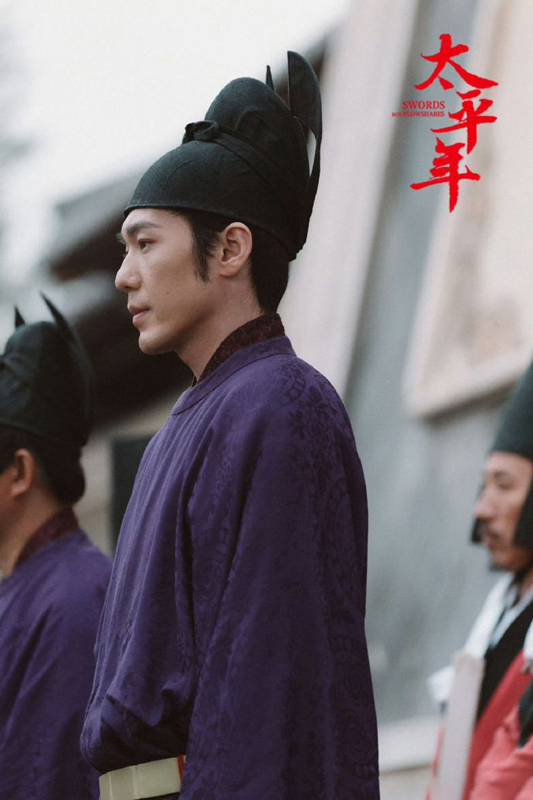
By the time of his grandson, Qian Hongchu (钱弘俶), the ruler depicted in the drama, this philosophy was deeply ingrained. While northern potentates stripped their lands bare to fund endless wars, he rejected advisors who suggested harsher taxes to fill his coffers. He saw governance as stewardship, not exploitation. Under his rule, the capital at Hangzhou flourished. Its seawalls held back the tides, its fields yielded bountiful harvests, and its streets offered refuge, not terror.
This stark dichotomy is the drama’s central visual and thematic engine. On one screen, a scene of northern famine and despair; on another, the serene, smoke-wisped mornings of Wuyue. The kingdom was a living testament to what could be achieved when a ruler prioritized his people’s welfare over personal ambition, making its eventual fate all the more poignant.
The Weight of a Crown
The year is 978 AD. The Song dynasty, under Emperor Taizong (太宗), has largely reunified China. The independent existence of Wuyue is an anachronism. Qian Hongchu is summoned to the Song court in Kaifeng, where he receives lavish honors—a privilege laced with unspoken threat. He is trapped in a psychological prison of impossible choices, a tension the drama masterfully cultivates.
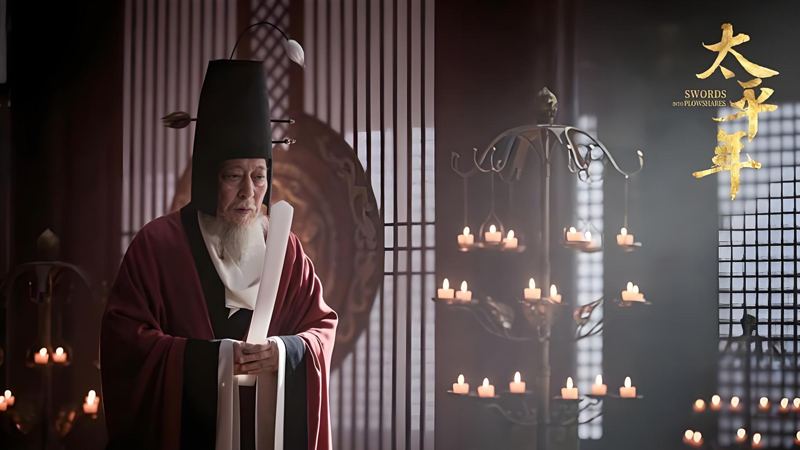
Resistance meant certain war. Wuyue's army, while capable, was no match for the Song juggernaut. The conflict would instantly incinerate seven decades of carefully nurtured peace, transforming Hangzhou’s canals into rivers of blood and fulfilling none of his ancestors' vows. The other path was surrender. It meant willingly dissolving his kingdom, betraying his heritage, and facing the eternal judgment of history as the man who gave away his birthright. His personal safety, and that of his family, was also uncertain.
The pivotal moment comes not on a battlefield, but in a quiet room. His advisor, Cui Renji, cuts through the paralyzing deliberation with a blunt truth: "The court's intention is clear. If you do not swiftly offer the territory, disaster will follow!" The statement hangs in the air, a verdict. Qian Hongchu's subsequent decision to present the maps of Wuyue's thirteen prefectures was an act of breathtaking political and personal sacrifice.
A Legacy Measured in Peace
So, did he lose? By the traditional metrics of kings and conquerors, absolutely. He relinquished sovereignty, title, and autonomous power. Yet, from a broader historical and human perspective, his choice was a monumental victory. He traded a crown for the uninterrupted peace of millions. The Song assimilation of the Jiangnan region was accomplished without siege, slaughter, or ruin. The vibrant life of Hangzhou did not skip a beat.
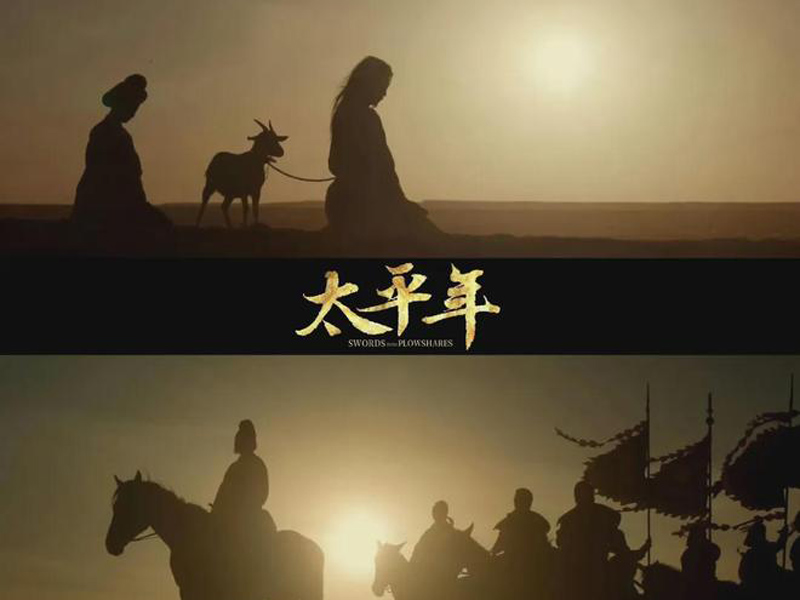
This is why Swords into Plowshares strikes such a chord today. In a world often feeling fragmented and uncertain, the narrative transcends its historical setting. It speaks to the value of stability, the immense responsibility of leadership, and the courage it takes to choose collective survival over symbolic glory. Qian Hongchu understood the emptiness of clinging to power at all costs and held fast to a principle older than any throne: the people are the foundation.
His legacy is etched into the very stones of Hangzhou. The Qianwang Temple (钱王祠) that stands today is not merely a memorial to a lost kingdom. It is a tribute to a conscious, difficult choice that privileged human lives over dynastic permanence. A "peaceful year" is never a given; it is a fragile construct, purchased through foresight, compromise, and sometimes, heartbreaking surrender. The drama reminds us that across a millennium, the deepest desire remains unchanged: the simple, profound wish to live in safety, to watch one's family thrive, and to enjoy a quiet day in the sun.
