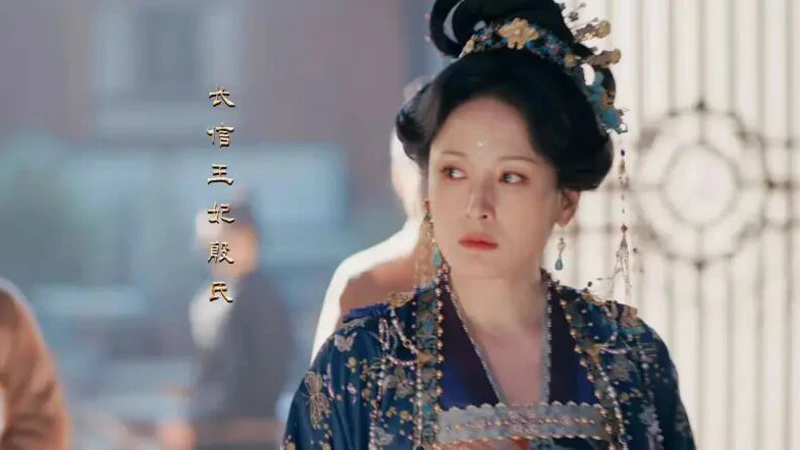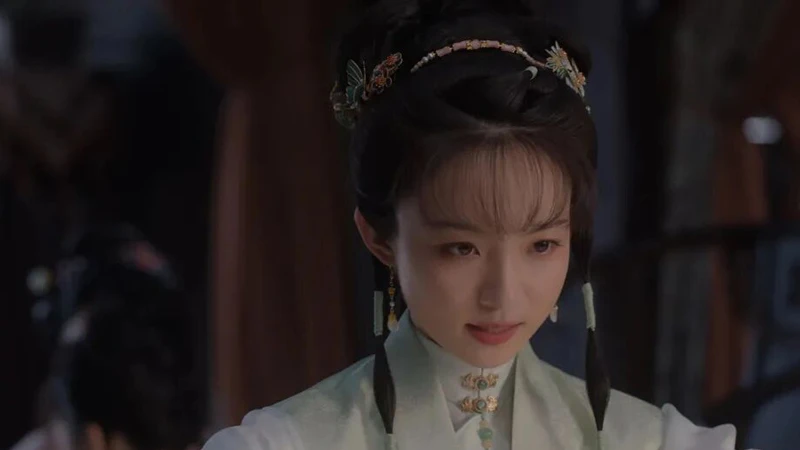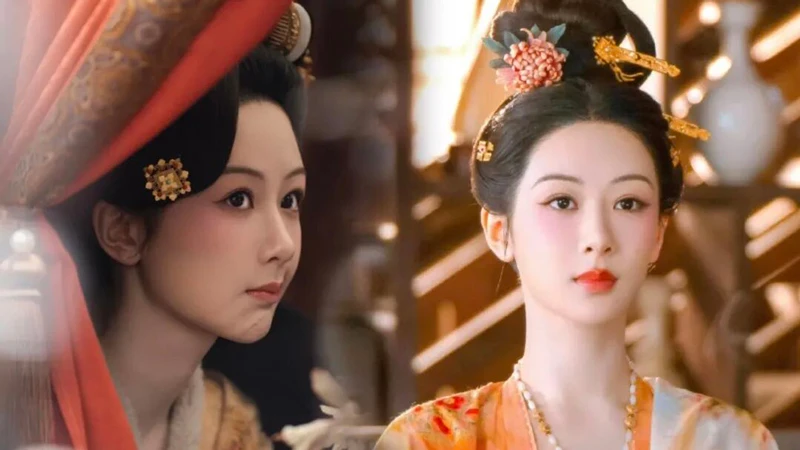
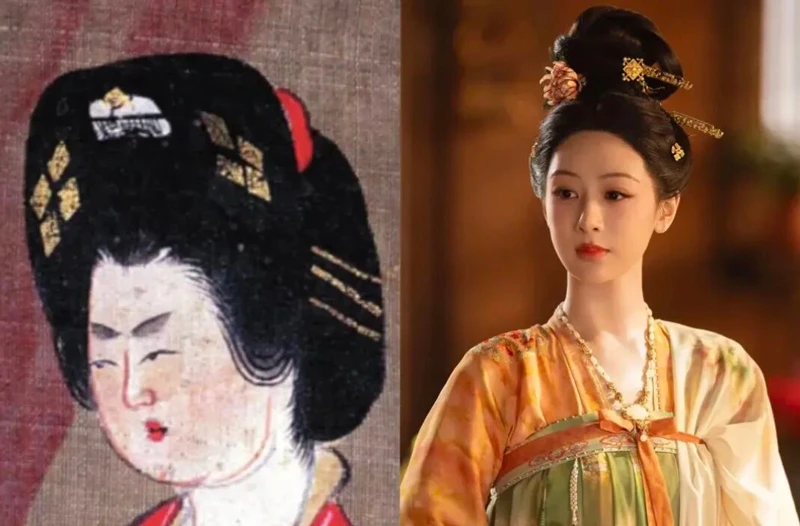
Have you ever been watching a historical Chinese drama and noticed something strange on a character’s head? In the series Flourished Peony (国色芳华), the actress Yang Zi, who plays the character He Weifang (何惟芳), is often seen wearing a curious square-shaped hair ornament. It looks so modern and geometric that viewers might mistake it for a pixellated mosaic. This is no costume designer’s error, but a revival of an ancient tradition. This distinctive accessory, also spotted on characters of noble birth, is a real historical artifact known as a Sheng (胜). Its journey from a practical tool to a sacred symbol and finally a fashionable hairpin is a fascinating story woven through centuries of Chinese culture.
Mythical Origins
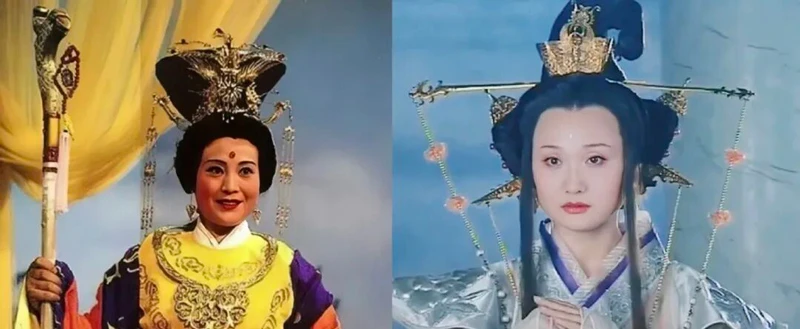
The story of the Sheng begins not on a dressing table, but in the realm of myth. Its earliest association is with the powerful goddess Xiwangmu (西王母), the Queen Mother of the West. Ancient texts like the Classic of Mountains and Seas (山海经·西山经) describe her appearance: she resembles a human but has a leopard’s tail and tiger’s teeth, with disheveled hair and a Sheng upon her head. She was a deity who governed celestial punishments and disasters. Later interpretations, however, linked her to weaving and the fate of women, making the Sheng a fitting symbol of her domain.
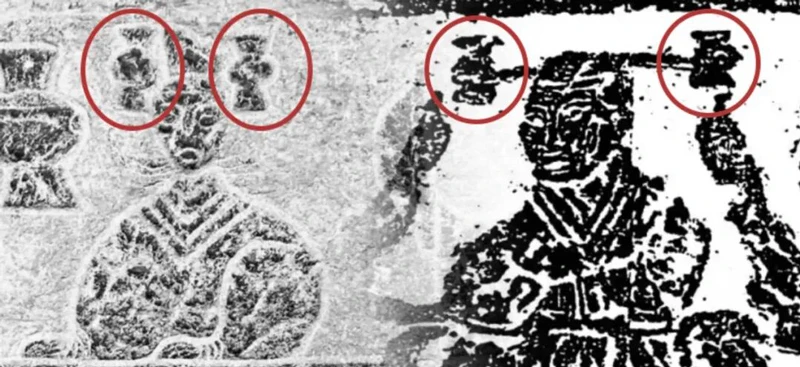
Why would a goddess wear such an item? The answer lies in its original, earthly function. The word Sheng referred to a crucial part of a Han Dynasty-era loom, specifically the warp beam. This component held the vertical threads taut, making the entire process of weaving possible. It was the backbone of the loom. By wearing this object, Xiwangmu was symbolically connected to the craft of weaving, a vital part of women’s work and survival in ancient society.
The symbolic meaning of the word itself also contributed to its use. Sheng carries connotations of “bearing” or “withstanding,” much like the loom part withstands tension. This evolved to represent virtues like dignity and integrity. To wear a Sheng was to align oneself with these admirable qualities. Over time, these ornaments were crafted from precious materials, leading to names like “Jade Sheng” and “Gold Sheng,” signifying both status and sacred protection.
From Tool to Adornment
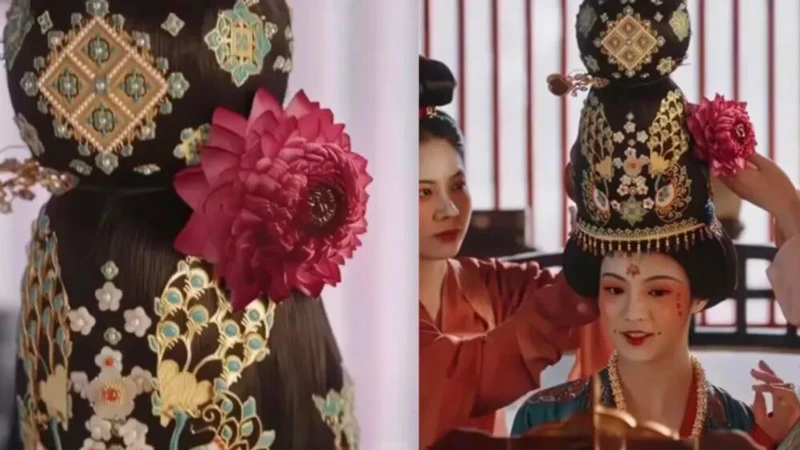
The transformation from a functional object to a beautiful hairpiece involved a change in name and design. The basic Sheng evolved into the Huasheng (华胜). The character “Hua” means flower, indicating that the original form was now decorated with intricate floral and botanical motifs. One historical text explains that it was worn to enhance one’s appearance and was considered a winning adornment when placed over the hair in the front.
During the Han Dynasty, the Huasheng often had a rounded, almost candy-like shape. However, fashion evolved. By the glorious Tang Dynasty, its form had shifted dramatically. It began to incorporate rhombus and square patterns, eventually solidifying into a new, dominant style known as the Fangsheng (方胜). This was characterized by its square or diamond shape, sometimes featuring small circles on the corners that were a faint echo of its earlier, rounder predecessors.
This was not just a simple square. The Fangsheng pattern became incredibly popular and versatile. More complex versions featured interlocking squares, known as “stacked Sheng.” This motif was not confined to hair. It was woven into fabrics, engraved onto hairpins, cast into rings, and incorporated into other jewelry like decorative pendants and temple ornaments. The pattern signified harmony and connection, its interlocking lines representing endless good fortune.
A Lasting Pattern
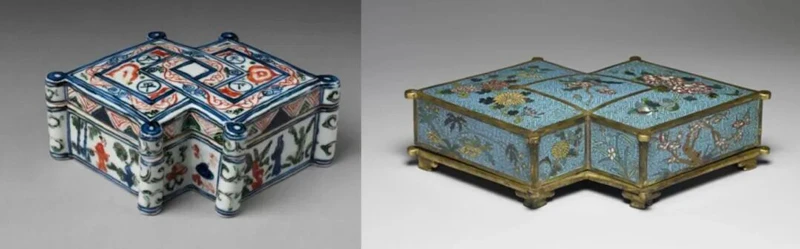
The influence of the Fangsheng extended far beyond the Tang Dynasty. Its pleasing, geometric design proved timeless. Throughout the subsequent Song, Ming, and Qing dynasties, the pattern remained a favorite decorative motif. It was carved into jade, painted onto fine porcelain, and inlaid into lacquerware. The pattern was considered auspicious, its connected forms symbolizing unity and happy unions.
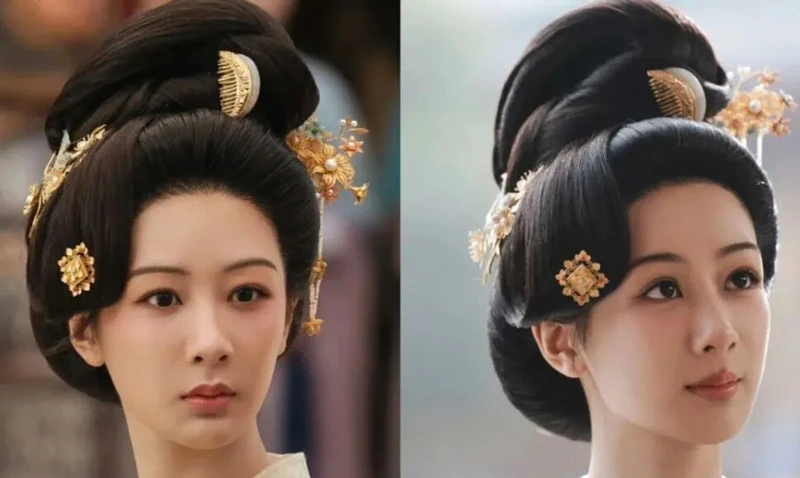
Evidence of its importance can even be found in poetry. The Tang poet Du Fu mentions the “golden flowers in the Sheng” in his poem “Human Day,” linking the ornament to seasonal celebrations and the endurance of beauty. This literary nod confirms that the Fangsheng was a recognizable and valued part of cultural life, a detail that held meaning for the people of that time.
Perhaps the most surprising part of this story is that the Fangsheng never truly disappeared. While women no longer wear square hairpins to channel a goddess, the pattern persists in plain sight. Look closely at traditional Chinese lattice windows, certain types of garden fences, or repetitive motifs on modern decorative panels. You will likely see the interlocking squares of the Fangsheng. It is a quiet, enduring tribute to an ancient art form, a piece of history hiding in the architecture of everyday life.