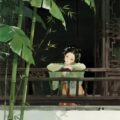
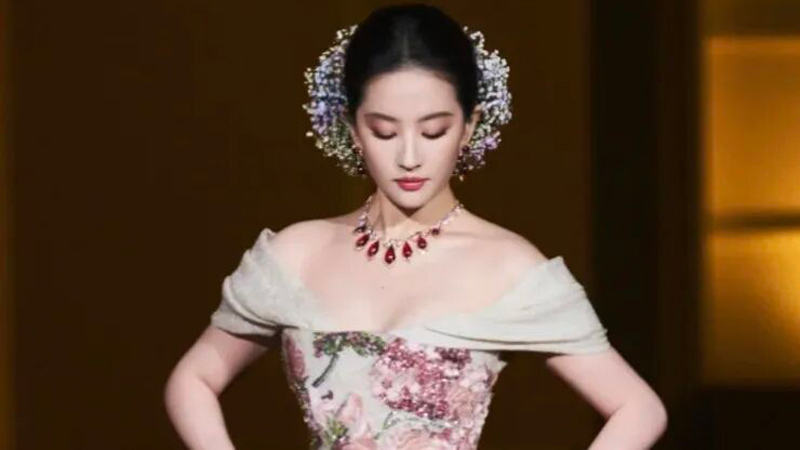
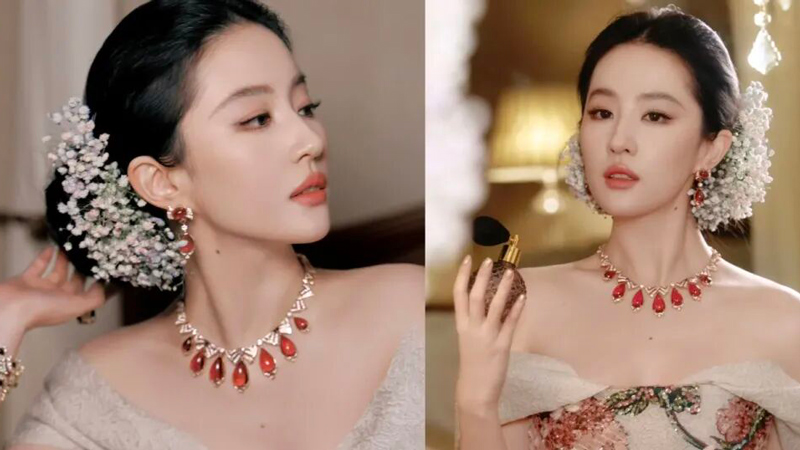
At a recent Vogue event, actress Liu Yifei captivated audiences with an elegant gown and a hairstyle that sparked both admiration and a sense of déjà vu. Her look featured two symmetrical bundles of baby's breath flowers arranged on either side of her head, creating a soft, ethereal version of a classic form. This was not a simple updo; it was a modern, weightless interpretation of a traditional Chinese hairstyle known as Shuang Huan Ji (双鬟髻), a double-knot style historically worn by young, unmarried women. Its immediate appeal lies in this clever fusion—using a contemporary, delicate material to evoke a silhouette deeply rooted in the past, making it feel both fashionable and timelessly beautiful.
Historical Roots
The double-knot hairstyle has a long history in China. During the Tang Dynasty, a version called the Shuang Chui Ji, or double drooping knots, was popular, often worn by young maids. Positioned near the cheeks, this style naturally conveyed a playful and youthful energy. There were no strict rules for its size or exact placement, allowing it to be adapted to flatter different face shapes. It evolved into variations like the Bang Zhu Tou (蚌珠头), or "clam pearl head," a name that poetically suggested pearls hidden within a shell.
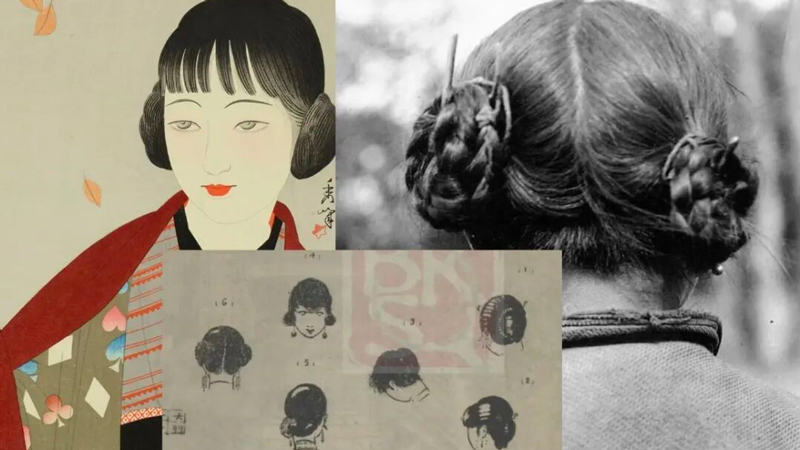
By the Republican Era, from roughly the 1910s to 1940s, fashion underwent significant change. Influenced by Western trends, clothing became more fitted with narrower sleeves, moving away from the wide, flowing robes of earlier dynasties. The elaborate high buns of the past no longer suited these new silhouettes. Consequently, simpler knotted styles became the norm. The Shuang Huan Ji became a common everyday choice for young women, its simplified form better matching the practical, modernizing spirit of the time.
This era also refined the style's aesthetics. Those who could afford it would adorn their knots with tiny jade beads, a single white orchid, or a delicate pair of hairpins. As a woman moved, these subtle decorations would tremble slightly, releasing a faint fragrance. This created a dynamic, sensory elegance that was characteristic of the period—a fleeting, scented beauty noticed in passing.
Cultural Journey
The style's influence extended far beyond China's borders. Around the 1920s, low-slung double buns gained popularity in Europe and Japan. While the trend there was short-lived, it left a lasting impression in Japanese media. The style was adapted with a local aesthetic, sometimes incorporating head wraps, and became a stereotypical representation of "Chinese girl" in manga and anime, ensuring its visual legacy persisted on screen for international audiences.
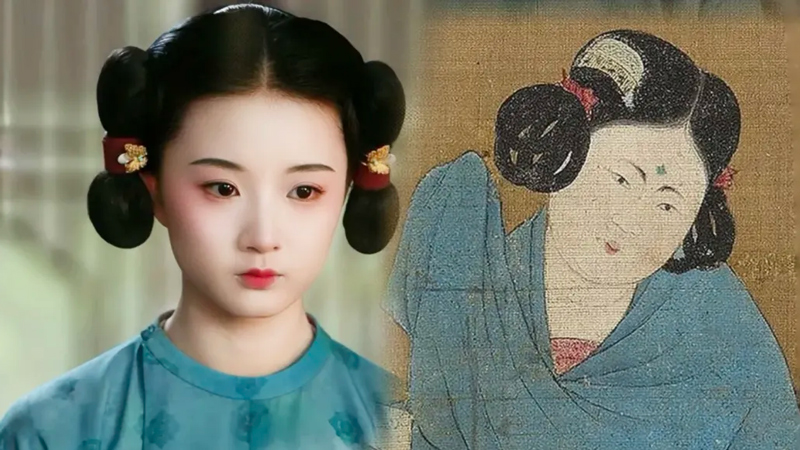
Back in China, the double-knot became a favorite in literature, opera, and, later, film and television. It was a go-to hairstyle for conveying classic femininity and youthful innocence. For instance, in the 1985 television adaptation of the classic novel Ba Jin's Trilogy (家春秋), the actress Chen Xiaoxu (陈晓旭), who played Cousin Mei (梅表姐), sported a refined version of the "clam pearl head." With soft, front-facing tendrils and low, draped knots, the style perfectly captured her character's delicate and melancholic beauty, making her look like a poignant verse from an old poem.
A Modern Revival
Liu Yifei's stylist demonstrated a masterful understanding of this heritage. Instead of creating two solid, heavy knots of hair, they fashioned a single, simple bun at the back of her head. The visual impact of the double-knot style was achieved instead with the airy, star-like clusters of baby's breath. This shifted the style from a literal, solid form to a suggested, virtual one. The result was a look that carried the classic silhouette but felt incredibly light and modern.
This technique of using a delicate, perforated material to create a sense of solidity and void is not entirely new to her. It subtly echoes the iconic hairstyle she wore as Xiao Long Nü (小龙女), the beloved character from the Wuxia series The Return of the Condor Heroes (儿女英雄传). In that role, her hair was often styled with white ribbons that suggested structure without heaviness. It is this clever nod to a previous, deeply familiar character that likely triggered the wave of fond recognition among viewers, making the Vogue look feel instantly iconic.
Ultimately, the success of this look lies in its intelligent dialogue with history. It does not replicate the past but engages with it, using modern materials and a lighter touch to reinterpret a traditional form. It proves that cultural elements can be celebrated not through rigid recreation, but through innovative adaptation that respects their origin while speaking directly to the present. This is why the hairstyle feels so refreshing yet comfortably familiar, a perfect accessory for a modern star on a global stage.