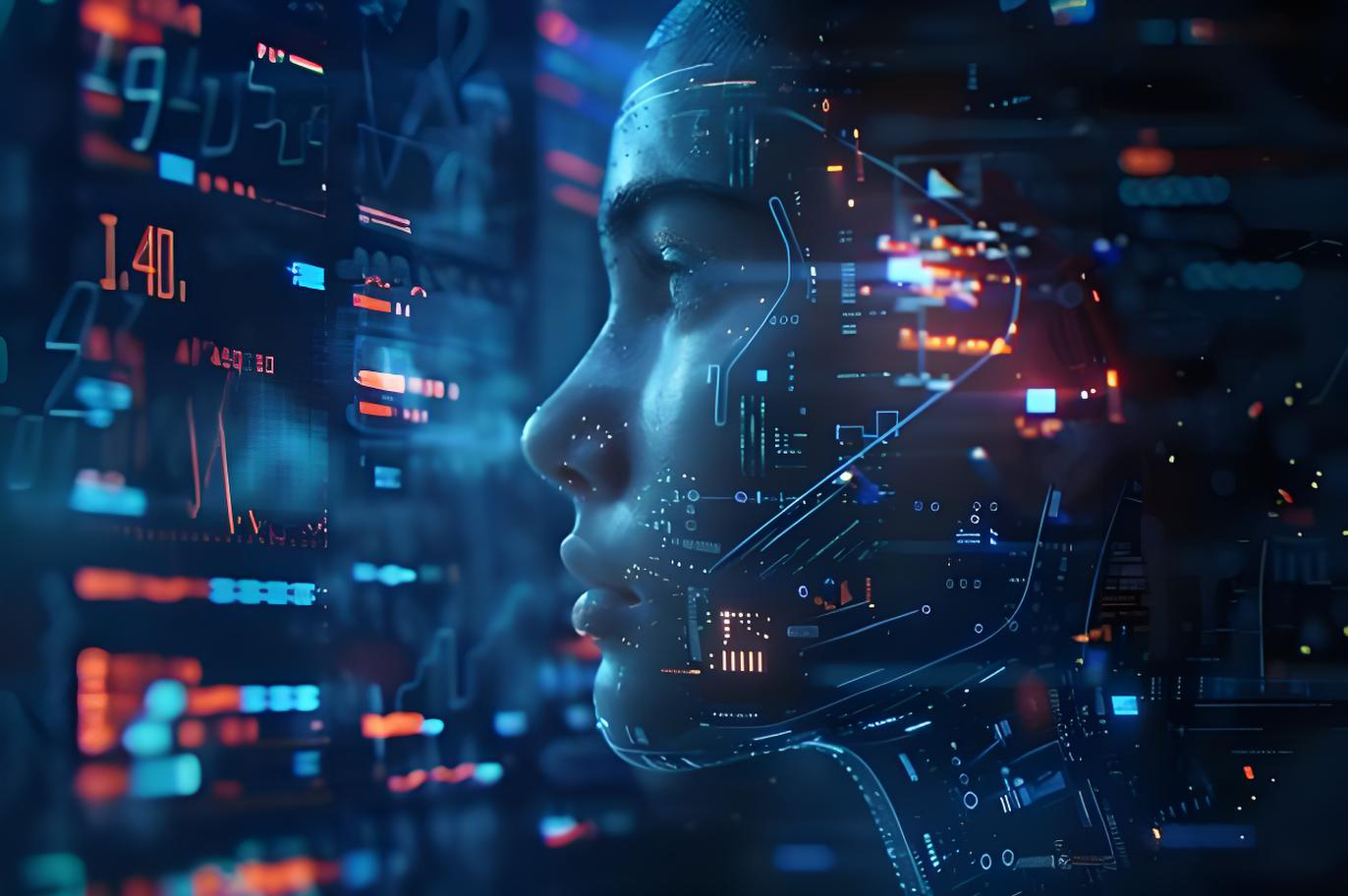
The once-familiar rituals of fashion design - mood boards, fabric swatches, and soul-searching about inspiration - are being quietly upended. No longer confined to back-end analytics, artificial intelligence has stepped into the creative sanctum, generating patterns, predicting trends, and even drafting full collections. This technological incursion sparks urgent questions: Does true creative freedom survive when algorithms influence aesthetics? Can the human "spark" withstand the efficiency of machine logic? As the industry navigates this crossroads, the very definition of creativity hangs in the balance, caught between boundless potential and the risk of homogenized expression.
From Tool to Co-Creator
AI’s journey in fashion began as a powerful organizational force. Early applications focused on streamlining workflows, analyzing vast datasets of consumer behavior and historical trends to identify market opportunities. Designers welcomed the relief from mundane tasks, gaining time to focus on conceptual exploration. Projects like Tommy Hilfiger’s 2018 collaboration with IBM marked a pivotal shift. Their AI didn’t just analyze; it actively generated new designs inspired by the brand’s archives, synthesizing colors, patterns, and silhouettes into coherent, on-brand collections. The machine moved beyond being a mere assistant, becoming a participant in the creative dialogue .
The advent of generative AI accelerated this transformation exponentially. Systems like Maison Meta’s text-to-design engine, unveiled in early 2025, demonstrated startling capability. A simple prompt - "structured evening gown with bioluminescent accents" - could yield multiple viable sketches in seconds. Similarly, Hong Kong Polytechnic University’s AiDA (Artificial Intelligence-based Interactive Design Assistant), developed by Professor Calvin Wong, revolutionized the design pipeline. AiDA interprets rough designer sketches, transforming them into detailed, production-ready technical drawings, drastically compressing the timeline from initial concept to runway prototype .
This evolution signifies AI’s graduation from a passive "toolbox" to an active "co-creator’s studio." Platforms like Midjourney and DALL·E, widely adopted by emerging designers since the inaugural AI Fashion Week in 2023, democratized access to these capabilities. Young talents globally now leverage these tools to produce collections boasting remarkable individuality, such as the striking 2024 line inspired by Spain’s intricate Sargadelos ceramics, conceived almost entirely through human-AI collaboration .

The Control Conundrum
As AI’s creative prowess grows, so does the tension over who - or what - holds the reins. Luxury conglomerates signal cautious optimism. Kering developed Madeline, an AI enhancing personalized shopping journeys. LVMH, through Aglaé Ventures, invested heavily - over €300 million in 2024 alone - into generative AI startups focused on marketing, image generation, and productivity. Yet, both giants maintain a deliberate distance regarding AI’s role in core creative processes .
LVMH’s statement at their 2024 Data & AI Summit encapsulated the industry’s ambivalence: acknowledging the "astonishing creative potential" while highlighting "critical questions of authenticity and accountability." This hesitation stems partly from palpable consumer skepticism. A 2025 Forbes Advisor/OnePoll survey revealed deep unease: 70% distrust AI-written product descriptions fearing manipulation, 60% doubt AI-generated reviews, and 76% worry AI distorts brand information. Consumers readily accept AI optimizing logistics or personalizing recommendations based on purchase history (48% approval) but recoil from its intrusion into creative expression and brand identity .
The core dilemma lies in reconciling AI’s efficiency with the irreplaceable value of human intention and contextual understanding. Can an algorithm genuinely understand the cultural nuance behind a silhouette, the emotional weight of a fabric choice, or the subversive statement of a deconstructed seam? While AI excels at pattern recognition and combinatorial innovation, the profound storytelling and emotional resonance central to high fashion remain distinctly human territories. Designer Norma Kamali’s observation resonates: "AI has no pulse... but it can extend creative possibility in ways we don’t yet understand" .

Redefining the Designer’s Hand
Facing this paradigm shift, designers are not becoming obsolete; their role is undergoing a profound metamorphosis. The future likely belongs not to the lone artistic genius, nor to the algorithm, but to a symbiotic partnership. The designer evolves from being the sole originator of ideas to becoming a curator , a director , and an ethical arbiter within the creative process .
This new role demands critical skills: the ability to craft precise, inspiring prompts that guide AI output; the discernment to select, refine, and contextualize AI-generated concepts; and a deep understanding of cultural, ethical, and sustainable implications that machines cannot grasp. The designer’s "hand" is evident not just in the initial sketch, but in the strategic framing of the problem for the AI, the critical evaluation of its proposals, and the infusion of human narrative and craftsmanship into the final product. They become the guardians of originality and meaning, ensuring technology amplifies human vision rather than replaces it .
The drama unfolding is less about human versus machine and more about forging a new creative language. It challenges designers to master a dual fluency - in the intuitive language of aesthetics and emotion, and the precise language of algorithms and data. Success hinges on leveraging AI’s computational power to explore uncharted aesthetic territories while fiercely protecting the irreplicable spark of human intuition, cultural sensitivity, and ethical responsibility. The future of fashion creativity lies in this powerful, albeit complex, alliance.