
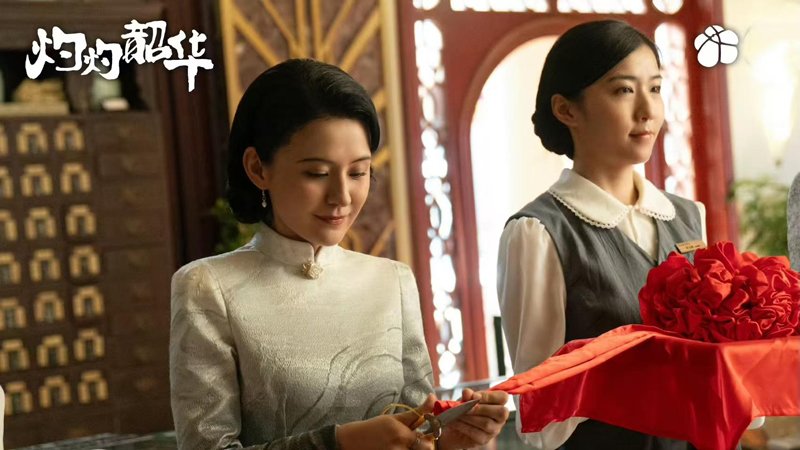
The recent success of the Chinese period drama Wild Ambition Bloom (灼灼韶华) on Youku has become a talking point. It didn't just enter the competitive market; it carved out a distinct space, achieving impressive ratings and climbing to the top of Douyin's drama charts. This success proves that a story set in the past can powerfully resonate with today's viewers. The show's blend of a unique narrative, a modern heroine, and brisk pacing offers a fresh take on the genre.
A Narrative of Scarcity

Wild Ambition Bloom distinguishes itself through its unique premise. The protagonist, Chu Shaohua (褚韶华), begins her journey not as a typical young, unmarried heroine, but as a widow seeking to remarry. This "widow" and "remarriage" setup is rare for dramas set in the Republic of China era. It immediately places the character in a complex situation filled with societal prejudice and survival challenges.
This narrative choice serves a deeper purpose. The storyline naturally expands to explore themes of female autonomy and financial independence. The plot moves beyond domestic squabbles into a broader exploration of a woman's awakening. The addition of the niche world of traditional Chinese medicine, further enhances the show's fresh perspective. This scarcity of subject matter provides a solid foundation for its differentiation.
A Modern Heroine in a Period Setting

The modernization of Chu Shaohua’s character is the heart of the drama. She is not a passive victim of her circumstances. Viewer data shows that terms like "female growth," "career woman," and "ambitious" are highly associated with the series. Audiences clearly perceive her independent and clear-minded nature.
Shaohua is a multifaceted character. She makes pragmatic choices, like marrying to save her brother, yet maintains her sharp wit. She navigates family conflicts with intelligence and competes in the business world with ambition. Her portrayal as a resilient and strategic woman aligns perfectly with contemporary values, particularly for women aged 24-40, who form the show's core audience. Though set in the past, Shaohua’s strong female lead mindset feels thoroughly modern.
Pacing and Production Quality
A key innovation of Wild Ambition Bloom is its fusion of an epic scale with tight, high-stakes pacing. The plot moves quickly, packed with dramatic reversals and evolving conflicts. This approach keeps viewers engaged episode after episode.
However, the show’s appeal isn't built on sensationalism alone. The experienced team behind it, including director Yu Ding (余丁) and screenwriter Su Xiaoyuan (苏晓苑), ensures a high production standard. Meticulous attention to costumes, sets, and the overall recreation of the Republican era provides an immersive atmosphere. Strong performances, particularly from lead actress Reyizha (热依扎), ground the dramatic plot in emotional truth. This combination delivers both visceral excitement and artistic credibility.
The Road Less Traveled

The finale of Wild Ambition Bloom brings its core message full circle. The paths of its female characters serve as powerful contrasts. One character's descent into madness highlights the danger of pinning all hopes on others. Another's tragic end underscores the brutal realities of her time. In contrast, Shaohua’s journey embodies the show's central thesis: the hardest path is often the most reliable.
The series suggests that true agency comes from self-reliance. The initial desire to be sheltered gives way to the realization that waiting for a savior is futile. A better life is built, not granted. Shaohua’s story is compelling because she seizes control, makes mistakes, learns, and forges her own destiny.
Conclusion
Wild Ambition Bloom offers a valuable case study. It demonstrates that traditional genres can connect with modern, global audiences when approached with a contemporary lens. By combining a scarce narrative, a relatable heroine, and a dynamic pace on a foundation of quality production, the show points toward a viable path for future period dramas. It successfully marries artistic integrity with broad commercial appeal.