

If you think time-loop stories always involve reliving the same day until a hero solves a puzzle, "Mobius" (不眠日) might surprise you. This Chinese thriller, starring Bai Jingting (白敬亭) and Janice Man, twists the genre into a high-stakes game where characters are trapped in a five-cycle loop—but with a catch: their abilities stem from scientific experimentation, not magic. Launched globally on Netflix and iQiyi in September 2025, the series quickly climbed top-10 charts by blending suspense, emotional depth, and a fresh take on familiar tropes.
A Grounded Approach to Sci-Fi
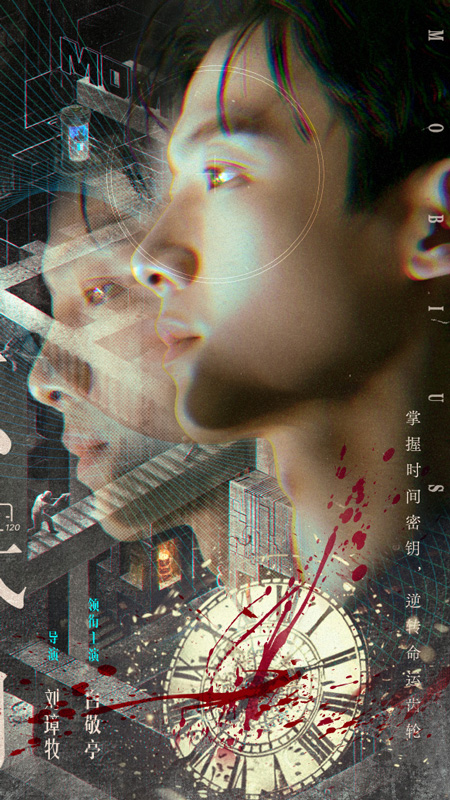
"Mobius" avoids flashy gimmicks by rooting its premise in biochemistry. Characters like police officer Ding Qi (丁奇) gain time-loop perception after exposure to an experimental drug called RAN, which alters neurons. This "limited loop" concept—five cycles per event—creates urgency without repetitive fatigue. Director Liu Zhangmu (刘璋牧) explained that the rules were designed to feel plausible: "Everyone has experienced déjà vu. We anchored the fantasy in that relatable sensation."
The show’s visual language reinforces this realism. Instead of resetting with a character waking up, loops begin abruptly at midnight, returning characters to their location at that time regardless of where they were moments earlier. The production team enhanced this effect through subtle environmental cues, such as papers floating and objects shifting, which were achieved through practical props like wires and fans. These details, though labor-intensive to film, ground the spectacle in tactile details.
Characters Drive the Mystery

Ding Qi is no superhero. He initially uses his loop awareness for personal gain, such as settling petty scores or buying lottery tickets, before gradually embracing his role as a protector. His relatability contrasts with the complex antagonist, Mo Yuanzhi (墨远致), a biotech CEO whose grief over his lover's death warps into vengeance. Mo Yuanzhi creates a fictional villain called "U" to disguise his crimes while eliminating business partners who stand in his way.
Their conflict unfolds in Hua'ao (华澳), a fictional city blending Hong Kong's density with Macau's moody aesthetics, filmed on location in Macau and Zhuhai. This setting provides a fresh visual identity distinct from typical mainland Chinese dramas.
Supporting characters add layers. An Lan (安澜), a biologist determined to uncover the truth about her missing friend, bridges science and emotion while seeking a cure for the loop's side effects. Meanwhile, Ding Qi's police colleagues provide comic relief, making the squad feel like a cohesive unit rather than plot devices. Their camaraderie proves crucial when they support Ding Qi even after he's suspended, highlighting themes of trust and collective purpose.
Global Appeal Through Authenticity
"Mobius" resonated internationally by balancing genre conventions with local flavor. While RAN's ethical dilemmas echo Western sci-fi, the focus on familial loyalty and sacrifice taps into universal themes. Netflix's nine-language release helped, but the show’s success hinges on its tight pacing—16 episodes that avoid filler—and a finale that satisfyingly resolves mysteries while hinting at future stories.
Why It Stands Out

In a crowded thriller market, "Mobius" innovates by limiting its supernatural elements. The loops are a tool, not a crutch, forcing characters to rely on intuition and growth. As Director Liu notes, "The goal was never to copy others. We sought differences." The series introduces moral stakes beyond personal survival; Ding Qi saves not just colleagues but also peripheral characters like an overworked delivery driver who would otherwise die in unrelated incidents.
The ending provides closure while teasing future possibilities. After apparently curing his condition, Ding Qi shares a peaceful moment with An Lan—until subtle hints suggest the loops may persist, leaving room for continuation. For viewers tired of predictable plots, this series offers a smart, character-driven alternative that respects both science and human emotion.
