
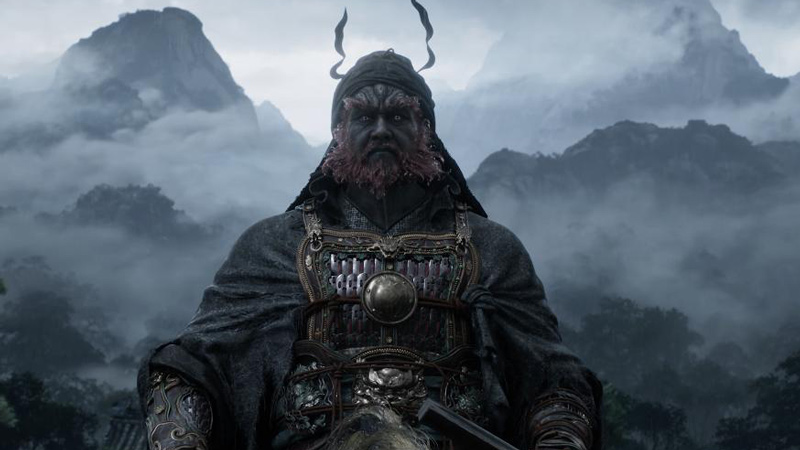
I was keeping an eye on the news from Gamescom, and when Zhong Kui (钟馗) popped up, my first reaction was genuine surprise.
It wasn't that I was expecting DLC for Black Myth: Wukong - it was more that the Zhong Kui IP feels like a familiar yet distant figure. The last time I heard this name in mainstream pop culture was probably over a decade ago in a TVB series.
Using a traditional cultural IP that has somewhat faded from public memory means there's almost no existing blueprint to follow. They'll have to rebuild public recognition of Zhong Kui almost from scratch.
But then again, the first Black Myth game laid a solid foundation. Not only did it turn developer Game Science into an IP with a loyal fanbase, but it also established a framework for using the gaming medium to deconstruct and reimagine traditional culture—a framework Black Myth: Wukong has already proven can effectively break through cultural barriers overseas.
For Game Science, an IP like Zhong Kui—rich in meaning and open to reinterpretation—offers tremendous creative freedom.
Unlike Sun Wukong, a household name and national-level IP, Zhong Kui lacks a clearly defined canonical narrative or a structure that easily lends itself to gameplay.
But this is precisely what makes him an ideal guide: a figure traversing the realms of humans, gods, and ghosts, connecting countless tales from classical strange fiction. The interactive nature of video games makes them a perfect medium for expressing this kind of layered cultural narrative.
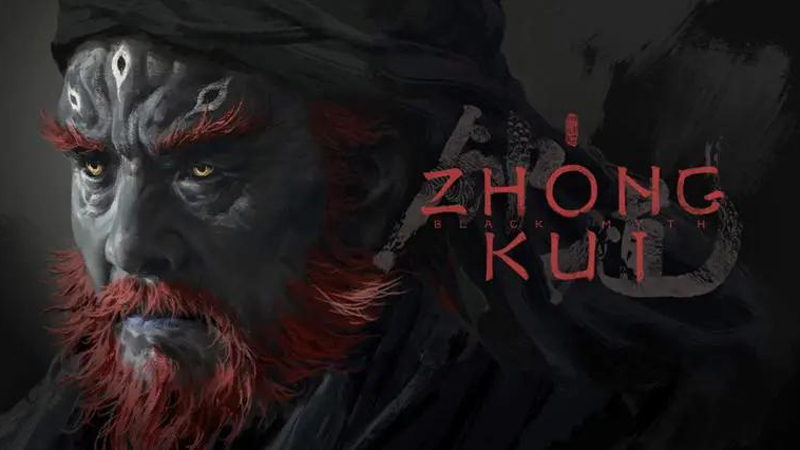
So, when Game Science decided to use a AAA game to bring Zhong Kui back into the cultural spotlight, it revealed a considerable—and unmistakable—ambition.
In a way, Black Myth: Zhong Kui also signals that China's AAA gaming industry has found a path that reflects its local identity—one already validated by the golden ages of overseas film and gaming: building original IP motifs and using serialized projects to continuously reimagine local culture.
Zhong Kui in History, Folklore and IP Adaptation
On August 19, during the Gamescom Opening Night Live (ONL), Game Science announced their new project, Black Myth: Zhong Kui, and released a CG teaser trailer.
Black Myth: Zhong Kui will be the second entry in the Black Myth series. It is conceived as a single-player action RPG (ARPG) centered around the Chinese mythological figure Zhong Kui. The project is currently in early development, with no in-engine footage shown yet.
Compared to Journey to the West and Sun Wukong—IPs known to virtually everyone in China—Zhong Kui is relatively niche. But in terms of cultural significance, the Zhong Kui IP carries considerable weight.
In folklore, Zhong Kui is a protector who drives away ghosts and evil spirits and protects the house. During the Spring Festival, many people posted the door god of the New Year's paintings, often is the "Zhong Kui exorcism" image: angry eyes, long beard, holding a sword, often under the feet of a group of ghosts and monsters, symbolizing the evil spirits outside the door, for the family to keep the New Year's Day to ensure peace. In some areas of the south, whenever the plague epidemic, will also hold a "Zhong Kui swept the plague" ceremony, people dressed as Zhong Kui, parade to expel the plague god.
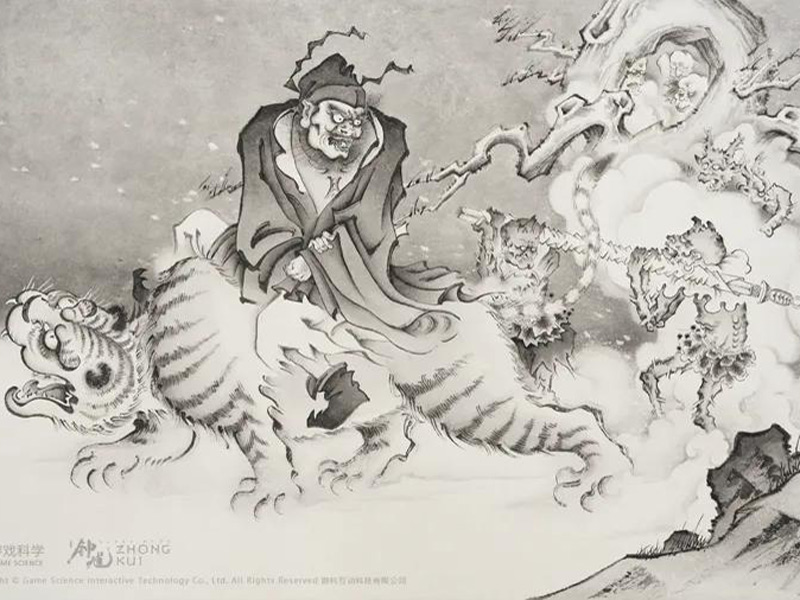
Legend has it that Zhong Kui was a martial arts examiner during the reign of Emperor Gaozu of the Tang Dynasty, but because of his unimpressive appearance, he failed the exam and killed himself, vowing to rid the Tang Dynasty of evil spirits. Later, Emperor Tang Xuanzong had a dream that he was being haunted by a small ghost, and Zhong Kui appeared in the dream and cut down the ghosts to save the emperor. When Tang Xuanzong woke up, he ordered the painter Wu Daozi to paint the statue of Zhong Kui and promulgate it to the world. Since then, Zhong Kui has become a great god to drive away ghosts, and it has been passed down to this day.
Zhong Kui, a favorite of the people, used to appear mainly in China's film and television adaptations.
Hong Kong's Zhong Kui Marries Her Sister (1994) was adapted from a traditional opera, bringing a bit of comedy with its ugly appearance and the plot of marrying a sister; Zhong Kui Catches Ghosts (1988) was combined with the martial arts action genre, presenting a martial arts version of Zhong Kui; and Taiwan's Heavenly Teacher Zhong Kui (1994) grafted Zhong Kui's image onto that of Pao Ching, portraying the supernatural figure as one who "straddles the realms of yin and yang and clears away wrongs and restores justice". (1994), which grafted Zhong Kui with Bao Zheng to portray him as a supernatural enforcer who "crosses the boundaries of yin and yang to redress grievances and restore justice"; and Zhong Kui Catching Demons (2018) and Zhong Kui Foo Demon (2015), which added grandiose divine and magical fantasy coloring to the mix.
Zhong Kui is also found in games, but has never independently supported a full IP. In Game Xuanyuan Sword, for example, Zhong Kui appears as a boss; the Zhong Kui most familiar to young gamers may come from Glory of Kings - the hero character Zhong Kui's signature second skill, "Annihilation Lock The hero character Zhong Kui's iconic second skill, "Lock of Annihilation," can hook the opposing hero to his side for control, transforming the cultural symbol of "ghost hunting" into an interactive experience.
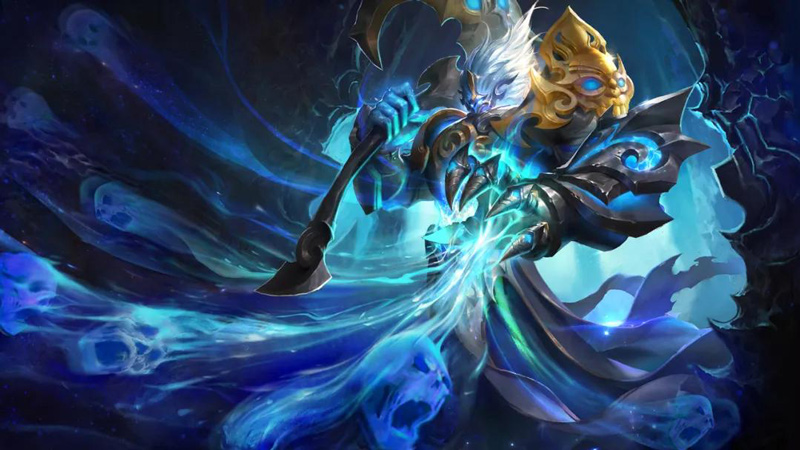
However, in these adaptations, the power and skills of Zhong Kui are often emphasized, and the folklore narrative and complex cultural implications behind him are downplayed into a combat mechanism.
Therefore, when Black Myth - Zhong Kui was released as a stand-alone game, it meant that for the first time, this "niche IP" became the core of gameplay and culture in a game medium, and was re-examined and re-created with 3A specifications. Players will be able to take on the role of a full character, experiencing the beginnings of his identity and his ghost-hunting duties.
Just the Right Amount of Familiar Strangeness
Ghost hunting and demon hunting are in fact universal cross-cultural themes.
Overseas, The Witcher series is based on Slavic folklore and the novel of the same name by Polish writer Andrzej Sapkowski. In the game, players need to play the role of a demon hunter to accept commissions, investigate clues, and get rid of monsters, while the game has rich cultural details and a rich and heavy worldview. This combination of "universal framework + local culture" is a common successful path for highly accomplished IP adaptations.
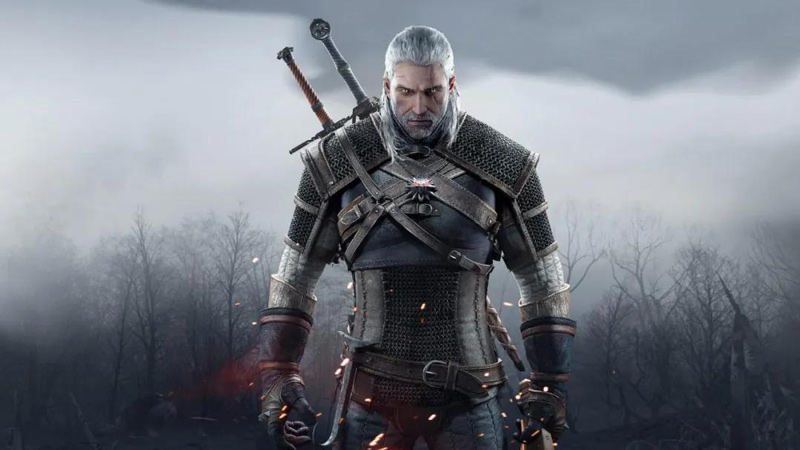
Zhong Kui, as a representative of Chinese culture, also has considerable potential for adaptation.
In terms of plasticity, Zhong Kui possesses the qualities of an "arrow-stacked" image.
The 81 difficulties of the Journey to the West is a natural chapter framework, which is very easy to "level"; Wukong's identity as "Pil Ma Wen/Qi Tian Da Sheng" is also relatively stable, which is suitable for canonical adaptation. The worlds of ghosts and monsters are more hybrid, with foxes, demons, nightjars, and ghosts ...... not relying on a single canon, but rather connecting with each other in local legends and notebook texts (e.g., So Shen Ji, Liao Zhai).
Zhong Kui is precisely the right "guide" for this labyrinth, a "functional character" who can connect the different systems of gay and lesbian monsters, which makes him very suitable to become a support point for the "black mythological universe". This makes him very suitable to be a supporting point of the "Black Mythos Universe".
Zhong Kui is not simply a demon slayer, but a god who can catch and kill ghosts, a member of traditional folk beliefs, and deeply tied to Taoist culture: in the preview of Black Myths - Zhong Kui, elements such as the Taoist seven-star sword, bats, and tigers appear. In addition to allowing the game to build its own cultural symbols, these elements can also be systematized into the game's interaction mechanics.
More importantly, Zhong Kui's image is also more compatible with the "black myth" narrative core.
The background of Zhong Kui's identity brings its own narrative tension: he used to be a scholar, died in anger due to unfair fate, and was later appointed as an exorcist god, wandering in the ambiguous zone between humans, gods, and ghosts.
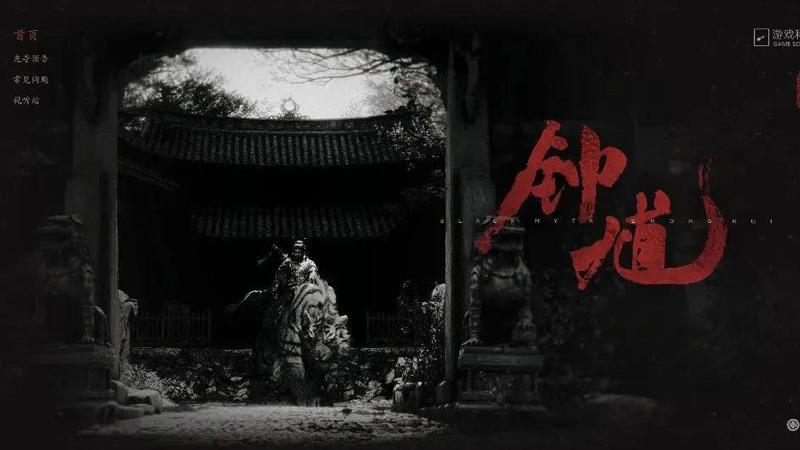
The narrative method of the "Black Myth" is to pull the traditional epic of light into a dark and complex context, placing the protagonist at the edge of the order and creating an anti-heroic narrative through his situation, choices and actions.
The figure of Zhong Kui provides room for the creation and adaptation of such a narrative. It is not surprising that Zhong Kui in the future black myth is either a great official who catches and kills little ghosts, or a subordinate who works for Yama (King of Hell).
Black Myth as the Mother Theme and the Chinese Game Debut
Feng Ji, CEO of GameScience, explained on Weibo why he didn't choose to do DCL for Black Myth - Wukong: on the one hand, many second creation works are already more "up and down" than the game production team's idea of making DLC; on the other hand, there are surprises only when there are unknowns, and there are fun only when there are challenges.
Feng Ji did not say directly, is to accelerate the creation of "black myth universe", with the game to lift a originally niche IP, the creators of the attraction and can get a sense of achievement, than lying in the old money most of the money.
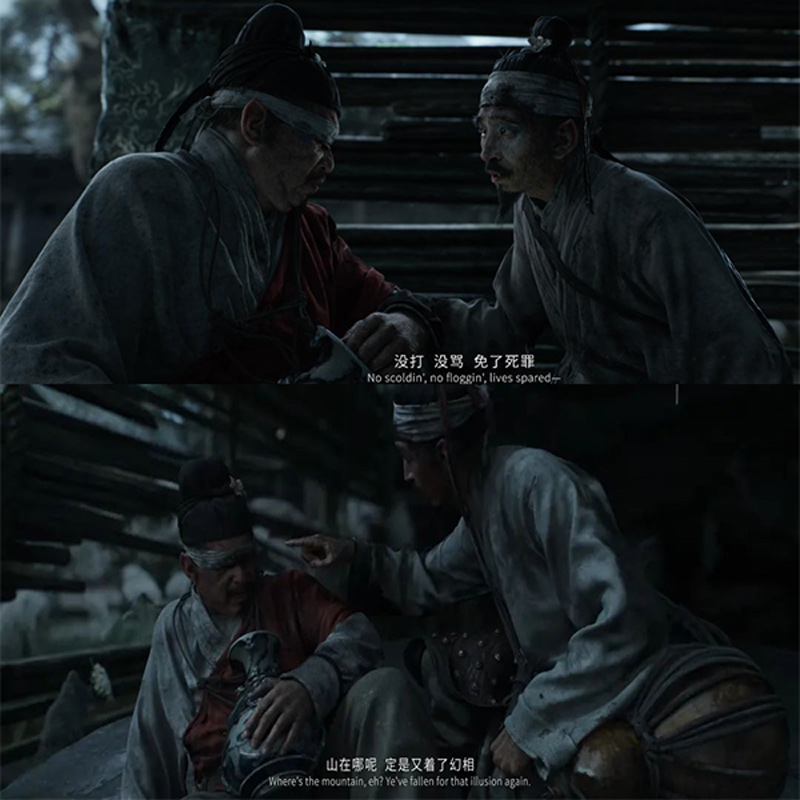
A search will reveal that Game Science has registered several trademarks a few years ago, including "Black Myth: Jiang Ziya (姜子牙)", "Black Myth: Xiaoqian (小倩)", "Black Myth: Searching for the Gods (搜神)", "Black Myth: Mountains and Seas (山海)", "Black Myth: The Great Wasteland (大荒)", and so on.
Only now, with the announcement of "Black Myth: Zhong Kui", the thinking and concept behind it has further surfaced - Game Science has changed the name of its multi-platform account from "Black Myth - Wukong" to "Black Myth "as the "unified official account for the Black Myth series of games". It's really a series building mode for the IP.
If "Black Myth - Wukong" is just a single game that provides an example of recreating traditional culture, then the series approach is a new attempt to expand this "deconstructing myth" creative idea into a cultural theme.
Such attempts, in the film, especially animation film field has been relatively common, the most typical representative is the chase light animation ("White Snake" series, "30,000 miles of Chang'an", etc.).
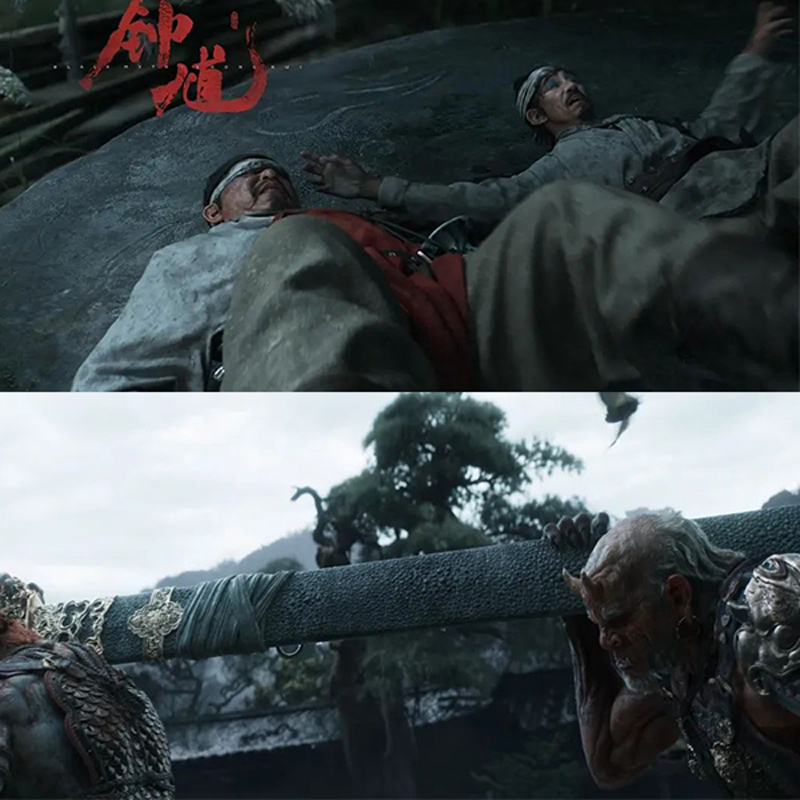
In the early years of the immortal sword, Regulus sword and other combination of immortal, martial arts and other traditional culture of the series of single-player games, limited by the times, stayed in the traditional cultural elements to enrich the game narrative stage.
Traditional Chinese cultural IPs have reached a stage where they can show a more recognizable spiritual temperament through games.
Our game series can also have a Final Fantasy-style openness and the structure of "independent chapters + unified mother brand" to realize the inheritance of cultural temperament.
At the same time, this kind of serialization also means that in the face of the problem of "how to display Chinese culture", the game medium can give a new answer - cultural expression is no longer "emphasizing its own Chineseness", but becoming a part of game creation. Instead of "emphasizing its own Chineseness", cultural expression has become the natural starting point for game creation.
In this year's Cologne Game Show, in addition to the "Black Myth" as a 'surprise' on the global stage, "Tomorrow's Ark: End of the Earth", "Shadow Blade Zero", "The World of Glory of the King" and other domestic games, but also a strong sense of presence. Domestic game industry itself, gradually find the comfort zone of self-expression, the establishment of active self-narrative right.
In the future, it is also expected that more obscure Chinese cultural themes will be revitalized through the medium of games, moving from the periphery to the center.
