2025 dropped some seriously bingeable xianxia dramas–you know, the Chinese fantasy stuff with immortals, cultivation (basically supernatural training), gods, and magic. Forget the tired formulas and overused buzzwords, let's just talk about what actually hit the screen this year:
 Love of the Divine Tree 仙台有树
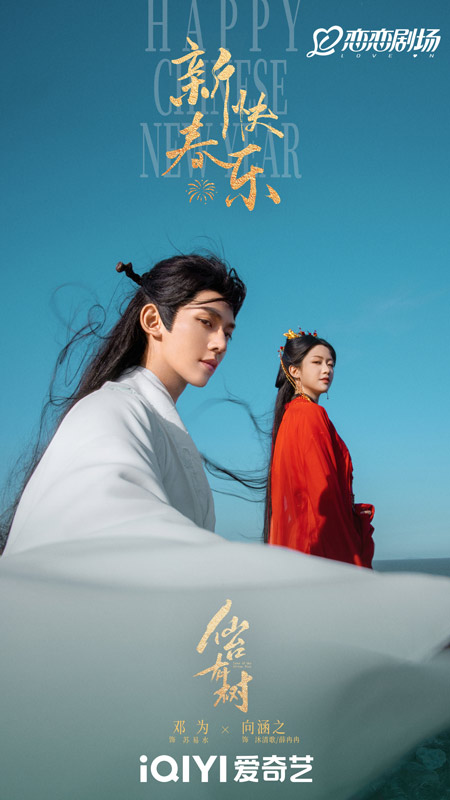
Starring: Deng Wei, Xiang Hanzhi
Plot Overview: A Subversive Cycle of Karma
Love of the Divine Treedismantles conventional xianxia reincarnation tropes by anchoring its conflict in irreversible consequences rather than romantic destiny. Sui Ying (Xiang Hanzhi), a once-revered immortal master, is reborn as a mortal child plagued by chronic illness and spiritual fragility. Her former disciple, Xue Mu'an (Deng Wei)—now a near-omnipotent celestial—discovers her and forcibly takes her under his protection. What appears to be a guardian-ward dynamic curdles into something darker: Xue's obsession with rectifying Sui Ying's past "failures" manifests as psychological control, cloaked in benevolence. He isolates her from the world, manipulates her recovery, and weaponizes her gratitude, all while denying her autonomy. The central tension isn't whether they'll reconcile, but whether Xue's actions stem from devotion to heror a pathological need to rewrite history by "perfecting" the mentor he idolized.
Reasons to Recommend: Psychological Depth & Taboo Nuance
The series interrogates how immortal-mortal relationships inherently corrupt. Xue's divinity isn't romanticized; it's a tool of oppression. His ability to heal Sui Ying's body is juxtaposed with his emotional suffocation of her newfound mortality. Physical fragility becomes her only defense—a vulnerability he cannot dominate.
Unlike most xianxia romances fueled by external enemies or fate, the primary antagonist is Xue's unresolved guilt. His "protection" is penance for failing to save Sui Ying in her past life, yet his methods repeat the same hubris that caused her downfall. This cyclical self-sabotage elevates the drama beyond melodrama into tragic character study.
The script meticulously avoids confirming Xue's motives. Is he sheltering Sui Ying to atone? To possess her reincarnated soul? Or to resurrect his mentor's glory through her? This deliberate opacity forces viewers to confront their own interpretations of loyalty and obsession.
Director Lin Yufen uses tight frames and desaturated palettes in Xue's celestial palace to mirror Sui Ying's psychological imprisonment. Scenes where she gazes at mortals in bustling markets—a life she's denied—are shot through barred windows, reinforcing her gilded cage.
Behind the Scenes: Rigor in Craft
The actor trained for 4 months with wuxia choreographer Guo Yuntao to weaponize stillness. Xue's combat style avoids flamboyant spins, emphasizing economical strikes that mirror his emotional repression. Every draw of his blade parallels his controlled rage—a visual metaphor for "lethal grace" as emotional armor.
Drawing from Jin Yong's heroines (e.g., Demi-Gods and Semi-Devils' Wang Yuyan), Xiang developed a physical language for spiritual depletion: tremors when channeling residual qi, labored breathing while climbing stairs, and a voice that fractures under stress. Her performance avoids clichéd "delicate flower" tropes by emphasizing Sui Ying's stubborn resilience beneath frailty.
The immortal tree of the title isn't merely a setting; it's a manifestation of Xue's toxic devotion. Props department embedded pulsing light veins into its bark, visible only when Sui Ying touches it—visually tethering her vitality to his control. Art director Zhang Yi confirmed this represents "the root of their entangled karma" in production notes.
Love of the Divine Tree rejects xianxia's trend toward power-fantasy escapism. By centering a heroine stripped of strength and a hero morally compromised by his, it challenges viewers to sit with discomfort—not catharsis. Its narrative risks (e.g., no traditional "redemption" for Xue) signal a maturation of the genre, prioritizing psychological realism over wish fulfillment. As Variety's China critic noted: "This isn't a love story; it's a case study on how immortality amplifies human flaws". The drama's audacity lies in its finale: Sui Ying's ultimate act of agency isn't defeating a villain, but choosing mortality again—a quiet revolution against the genre's obsession with eternal power.
 The Immortal Ascension 凡人修仙传
 The Immortal Ascension 凡人修仙传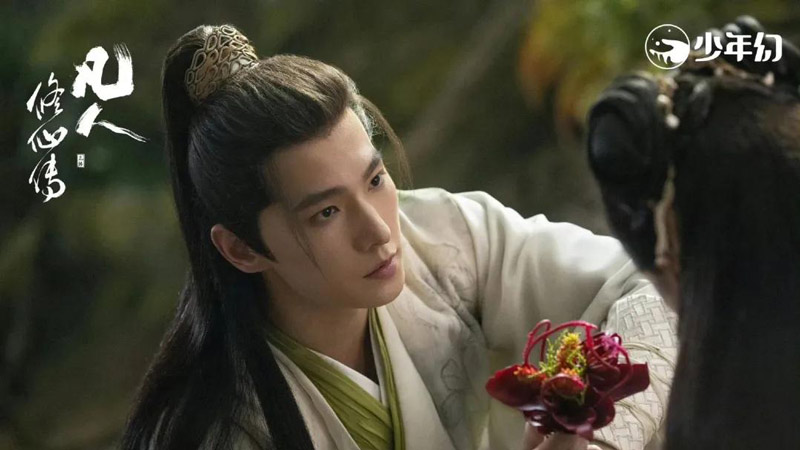
Starring: Yang Yang, Jin Chen
Core Story & Relationships: Survival as the Ultimate Virtue
The drama's radical departure from xianxia conventions lies in its ruthless prioritization of pragmatic survival over romantic idealism. Han Li (Yang Yang), a mortal villager with zero spiritual advantages, navigates a cultivation world ruled by "devour or be devoured" logic. His ascent isn't fueled by destiny or love but by strategic betrayals (e.g., poisoning a mentor who discovers his secrets) and exploitative alliances (using faction wars to loot resources). His relationship with the ice-cold immortal Nangong Wan (Jin Chen) begins as purely transactional—she tolerates his existence only because his alchemy skills benefit her cultivation. Trust emerges grudgingly, forged in near-death scenarios where mutual utility overrides emotional attachment, such as Han Li sacrificing a rare elixir to save her from Qi deviation, not out of love but because her death would expose him to vengeful enemies.
Anti-Hero Pragmatism: Subverting the "Chosen One" Fantasy
Unlike protagonists gifted with divine artifacts or bloodline powers, Han Li's "power-ups" stem from scavenging—stealing demon beast cores from corpses, forging identity tokens to infiltrate sects, and bribing guards with counterfeit spirit stones. Each gain carries visceral risk; a botched theft in Episode 9 leaves him with a spiritual-root-damaging injury that haunts him for 20 episodes.
The drama refuses to romanticize Han Li's actions. When he frames a rival disciple for treason (resulting in the latter's execution), the camera lingers on his trembling hands afterward, emphasizing the psychological toll of his choices. Director stated: "Han Li isn't a hero—he's a survivor. His victories feel earned because they're dirty, desperate, and never guaranteed".
Nangong Wan explicitly warns him that romantic entanglements will "get fools killed faster" (Episode 15). Their bond evolves through silent, practical gestures—her secretly repairing his broken armor before a siege; him leaving detox pills when she's poisoned—never through grand confessions.
Behind the Scenes: Methodical Realism
Yang Yang lost 15 lbs through a protein-deprived diet to emulate early-story malnutrition, with costume designers adding padded robes to visually contrast his frail frame against later muscular definition. Medical reports confirmed he sustained knee ligament damage during a cliffside duel scene, where he insisted on dangling from actual wires without a stunt double for "authentic panic".
Action director Guo Yuntao designed Han Li's combat style to reflect his personality—defensive, inefficient, and resource-conserving. Fights avoid flashy spells; instead, Han Li wins by tripping opponents with hidden ropes or blinding them with pocket sand. The production team consulted the original novel author to ensure tactical consistency.
Han Li's village hut features deliberately cracked walls and empty rice jars, while immortal palaces shine with sterile jade—visualizing the disparity between mortal struggle and elite decadence. Art director Li Min noted in iQIYI's press kit: "Every set screams inequality. Han Li doesn't belong anywhere, and his environment proves it".
Moonlight Mystique 白月梵星
 Moonlight Mystique 白月梵星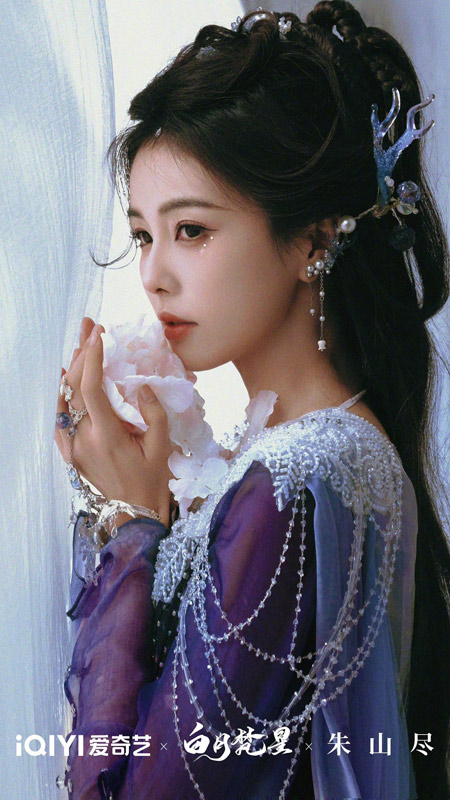
Starring: Bai Lu, Ao Ruipeng
Plot Overview: Grief as the Catalyst for Ascension
Moonlight Mystique redefines the xianxia genre by anchoring its protagonist's journey in raw trauma rather than destiny. After witnessing her father's murder by corrupt immortals, the reckless mortal Bai Shuo (Bai Lu) abandons her carefree life to pursue cultivation—driven solely by vengeance, not glory. Her path collides with Fan Yue (Ao Ruipeng), an exiled demon lord who mocks her ideals yet partners with her to collect the mythic Five Element Stones needed to unmask the killers. Their alliance begins as mutual exploitation: Bai Shuo leverages Fan Yue's power, while he uses her "hero complex" to destabilize rival factions. As they confront the stones' guardians—a celestial beast in Episode 5, a sentient swamp in Episode 12—their bond evolves from transactional necessity to profound loyalty. The climax occurs when Fan Yue sacrifices his freedom to protect Bai Shuo's ideals (Episode 17), forcing both to question whether their goals justify moral compromise.
The antagonist Fu Ling (Dai Luwa) elevates the conflict by weaponizing despair. Her viral "smiling knife" philosophy—offering victims oblivion via a dagger—exposes the hypocrisy of celestial righteousness. In Episode 15, she taunts Bai Shuo: "You hunt demons to avenge one death; I liberate thousands from pain. Who is the true monster here?".
Reasons to Recommend: Subverting Tropes with Nuance
Anti-Redemption Arc: Fan Yue's moral ambiguity is foundational, not transitional. He rejects reform, declaring: "Demons save lives; immortals take them. Only fools believe in inherent goodness"(Episode 12). His loyalty to Bai Shuo stems from respect for her integrity, not romantic salvation—a dynamic praised as "refreshingly devoid of savior complexe".
Grief as Narrative Engine: Bai Shuo's cultivation progress inversely correlates with her loss of innocence. Her pivotal monologue in Episode 9—"Why seek immortality if it demands abandoning humanity?"—deconstructs the genre's core premise. This culminates in Episode 23, where gaining godlike power requires erasing her father's memories.
Villain as Cultural Mirror: Fu Ling's popularity stems from embodying nihilistic clarity. Her memed head-tilt and playful dagger-twirling make evil unsettlingly charismatic, reflecting Gen-Z disillusionment with "heroic" hypocrisy.
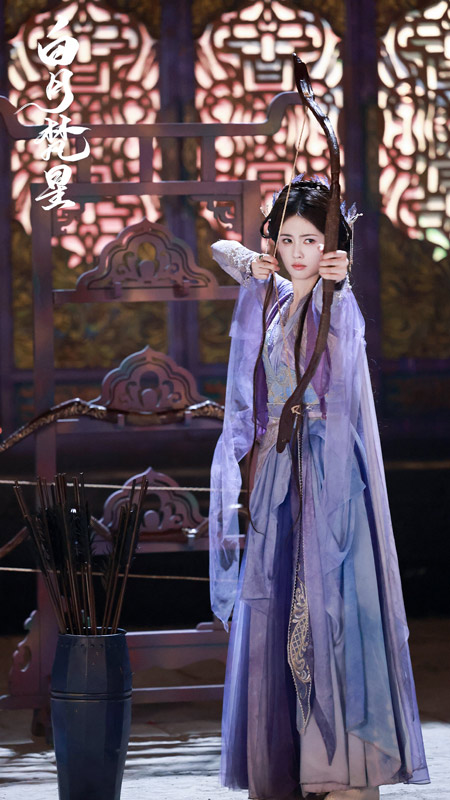
Highlighted Performances: Authenticity Over Melodrama
Bai Lu's Hollow Devastation: For Episode 9's breakdown scene, Bai Lu insisted on using her unprocessed voice, rejecting dubbed "beautification." The result—a tearless, fractured whisper in a silent temple—trended globally for its raw vulnerability. Critics noted she "elevates grief beyond tropes into existential paralysis".
Ao Ruipeng's Restrained Fury: Ao crafted Fan Yue's physicality to mirror suppressed rage: stiff posture, clenched-jaw delivery, and combat favoring efficiency over flair. His sacrifice scene (Episode 17) conveys resolve through a single tear shed afterturning away from Bai Shuo—underscoring his refusal to weaponize emotion.
Dai Luwa's Charming Villainy: Dai studied "smiling depression" case studies to inform Fu Ling's duality, balancing whimsy (twirling her dagger like a toy) with predatory stillness. Her chilling line—"Hope is the cruelest poison"(Episode 28)—became a cultural touchstone.
Behind-the-Scenes Truths
Bai Lu rehearsed the Episode 9 monologue 47 times to achieve the director's desired "emptiness," filming the final take at 3 AM after a 14-hour shoot to capture authentic exhaustion. The production team drew inspiration from Shan Hai Jing (Classic of Mountains and Seas), designing creatures like the two-headed Leiniao (thunder bird) to ground fantasy in ancient mythology.
Moonlight Mystique resonates because it questions whether power justifies its costs—and offers no easy answers, leaving audiences haunted by Bai Lu's hollow eyes and Dai Luwa's knife-edge smile.
A Moment But Forever 念无双
 A Moment But Forever 念无双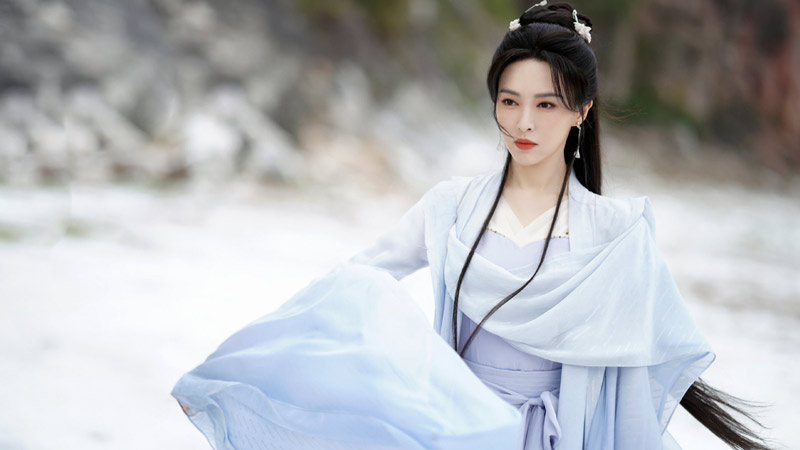
Starring: Tiffany Tang, Liu Xueyi
Plot Overview: When Divinity Meets Deception
In a celestial realm fractured by corruption, the goddess Qing Yao (Tiffany Tang) descends to Earth disguised as a mute servant to infiltrate the temple of fox priest Bai Ye (Liu Xueyi). Her mission: steal the primordial relic safeguarding his lineage. What begins as divine espionage unravels into a lethal conspiracy—the relic's theft would unleash a plague engineered by Bai Ye's own order to exterminate half-demons. Forced into partnership, they navigate a maze of betrayal where Qing Yao's engineered traps (silk tripwires, mechanical birds) and Bai Ye's cursed magic become complementary weapons. Their alliance fractures when Qing Yao discovers Bai Ye's sect murdered her mortal protégé—a sin he unknowingly enabled through silence. The climax hinges on a devastating choice: use the relic to restore her godhood or destroy it to prevent genocide.
Reasons to Recommend: Subverting Tropes with Nuance
Anti-Deification Narrative: Bai Ye's ad-libbed line—"What good are gods who demand worship but offer no mercy?" (Episode 11)—epitomizes the drama's critique of divine hypocrisy. His arc deconstructs the "noble immortal" trope, exposing complicity in systemic oppression. When Qing Yao's carpentry tools dismantle a sacred altar (Episode 17), the visual metaphor declares: human ingenuity > divine entitlement.
Romance as Quiet Resistance: Replacing grand confessions with tactile intimacy, their bond manifests through subtlety: Bai Ye shielding Qing Yao with his umbrella during acid rain (symbolizing shared vulnerability); her adjusting his armor strap before battle (a silent acknowledgment of trust). Director Zhao Xiaoding frames their hands brushing while building a puzzle box—a metaphor for partnership forged through action, not destiny.
Brains as Ultimate Power: Qing Yao's victories stem from engineering, not divinity. Her silk net trap (woven with metallic threads) captures a winged assassin; a bamboo-pressure catapult flushes out invisible foes. As Variety noted, she "redefines xianxia heroism by outsmarting cosmic power with mortal cleverness".
Highlighted Performances: Craft as Character
Tiffany Tang's Methodical Precision: Tang trained for 3 months with master carpenter Chen Liang (documented in Global Times), learning mortise-and-tenon joinery to authentically build props. In Episode 5, the functional puzzle box she assembles on-screen became a viral symbol of Qing Yao's intellect—a meta-commentary on craft transcending CGI.
Liu Xueyi's Subdued Fury: Liu improvised Bai Ye's most iconic line to critique organized religion's exploitation. His physicality—stiff posture when praying, loosened collar when alone—subtly conveys disdain for divine pageantry. His layered restraint, making a flicker of eye contact speak louder than a monologue.
Behind-the-Scenes Truths
Tang's carpentry skills were so advanced she redesigned a collapsing prop bridge during filming, earning a credit as "Assistant Artisan" (iQIYI press notes).
Liu's ad-libbed line was inspired by his grandfather's experience during the Cultural Revolution, shared in a Beijing Daily interview: "Faith without compassion is tyranny".
The umbrella used in the rain scene sold for $18,500 at a charity auction, symbolizing the drama's cultural impact.
Divine Ingenuity resonates because it weaponizes humility against hubris—proving that true power lies not in worship, but in the hands that build, protect, and choose mercy.
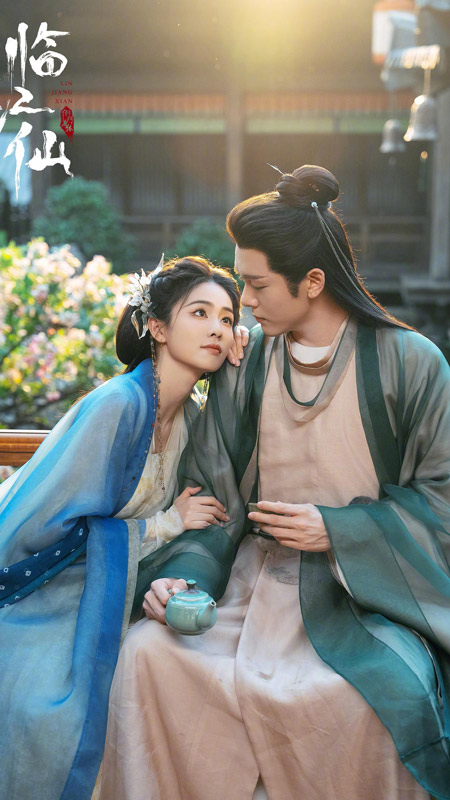
Feud 临江仙
 Feud 临江仙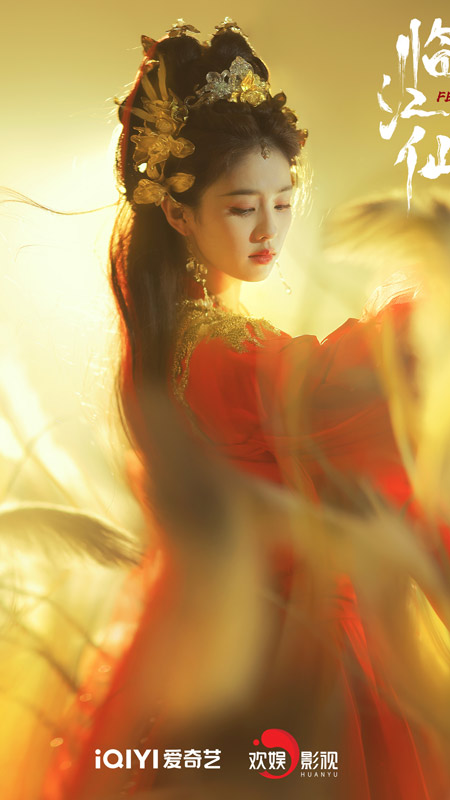
Starring: Bai Lu, Zeng Shunxi
Core Story: Cycles of Betrayal & Atonement
The narrative deconstructs xianxia reincarnation tropes by framing immortality as a curse rather than transcendence. Goddess Liuying (Bai Lu) and Xuanzun (Zeng Shunxi) endure three agonizing lifetimes:
- Divine Marriage: Their celestial union shatters when Xuanzun prioritizes cosmic order over their son's life, allowing the child to perish to prevent a heavenly rift. Liuying's subsequent suicide-by-celestial-flame curses both to mortal reincarnation.
- Mortal Revenge: In their second life, Liuying—now a human poison master—unconsciously engineers Xuanzun's political downfall. A climactic confrontation reveals their past identities; he dies shielding her from assassins, whispering "This debt transcends lifetimes".
- Apocalyptic Alliance: In the present era, Liuying's fragmented soul inhabits both a naive mortal pharmacist Yan'er and her tormented goddess consciousness. When Xuanzun awakens Yan'er's memories, he initially treats her as a "convenient replacement" for Liuying—triggering devastating doppelgänger angst. Their forced partnership to seal a hell dimension hinges not on rekindled passion, but on whether Yan'er can forgive his original sin: valuing duty above familial love.
Reasons to Recommend: Psychological Brutality & Genre Innovation
"Poisoned Love" as Structural Metaphor: The drama visualizes toxic relationships through alchemical symbolism. Liuying's goddess form bleeds mercury when heartbroken (Episode 9), while Yan'er's antidotes inadvertently corrode her own organs—mirroring how trauma poisons new bonds. Director Chen Kexin stated this embodies "love that heals through self-destruction" (iQIYI interview).
Deconstruction of "Sacrifice" Tropes: Xuanzun's choice to sacrifice his son subverts xianxia's glorification of duty. His justification—"One life versus ten thousand" (Episode 5)—haunts him when Yan'er retorts: "Gods who demand worship but offer no mercy deserve no altars"—directly critiquing divine hypocrisy.
Doppelgänger as Trauma Manifestation: Bai Lu's dual portrayal externalizes dissociative PTSD. Yan'er's bright vocal cadence contrasts Liuying's fractured whispers; when both identities share screen space (Episode 16), Yan'er touches Liuying's mercury scars, whispering "We're both ghosts"—a moment hailed as "visual literature on survivor's guilt".
Behind the Scenes: Method Acting & Improvised Truth
Bai Lu's Dissociative Technique: To distinguish identities, Bai Lu crafted distinct physical languages: Yan'er's restless hand gestures while compounding medicines vs. Liuying's statue-like stillness. In Episode 12's fusion scene, she filmed Yan'er's sequences first, then re-shot as Liuying after 36 hours of sleep deprivation to embody exhaustion.
Zeng Shunxi's Improvised Vulnerability: The infamous hair-dyeing scene (Episode 14) was born from directorial rebellion. Scripted dialogue was scrapped; instead, Chen instructed Zeng to bleach Bai Lu's hair while recounting his childhood fear of thunderstorms—a metaphor for emotional exposure.
Symbolic Prop Design: The child's relic—a silver rattle-dagger—appears in all timelines. Art director Li Min embedded mercury droplets inside that surface when Bai Lu touches it, visualizing memory's toxic resurgence.
Why It Resonates: Beyond Romance
The finale's reconciliation rejects grand gestures. To seal the hell dimension, Xuanzun must ingest Yan'er's mortal-life memories—erasing himself from her consciousness. His final line—"Forget me, but live"—lands not as martyrdom, but atonement. This isn't a love story; it's an autopsy of how immortal power magnifies human failings. By making forgiveness—not passion—the catalyst for salvation, Three Lifetimes challenges xianxia's foundational obsession with romantic destiny.
So yeah, 2025 really delivered! We got unique twists, slow burns, action feasts, romances, and that solid mortal-to-immortal grind–something for every xianxia mood. No filler, just the shows actually making waves this year. Go pick your flavor! (P.S. All streaming on the usual international platforms like Viki, WeTV/iQIYI etc.).