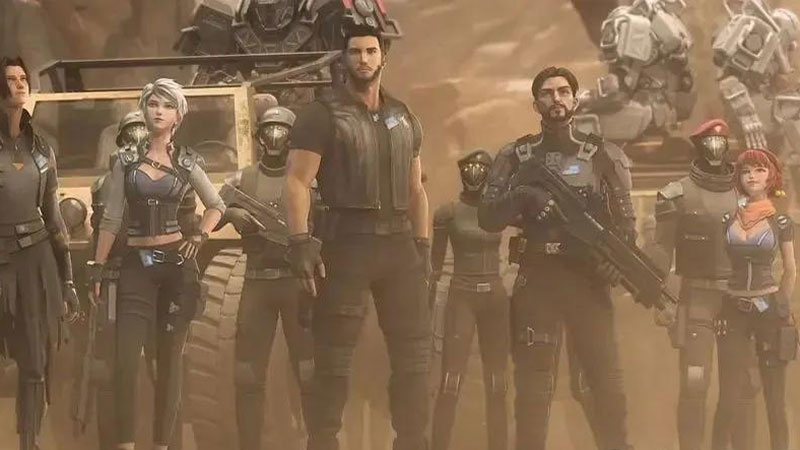
Let's rewind to 2019. Ling Cage: Incarnation Season 1 dropped as China's first original "post-apocalyptic wasteland" anime. Its bold concept and massive world-building instantly grabbed fans. Fast forward to now—Season 2 just landed, painting a new kind of survival story. And honestly? The quality hasn't missed a beat.
Here's the buzz: A live-action Ling Cage series is in the works. Let's be real—Chinese TV's been stuck recycling the same ideas lately. Truly fresh stories? Rare. A hardcore, gritty wasteland tale like this hitting live-action? That's uncharted territory. It's not alone, either. Other unique books and animations are getting adapted too. Could this wave finally refresh things?
But here's the real test: Will Ling Cage's story even work on screen?
In a ruined future, humanity clings to survival inside a floating fortress called the "Lighthouse," battling the deadly Maya Ecosystem ravaging Earth. Season 1 followed the "Hunters"—teams scavenging the toxic surface for supplies while fighting mutant horrors called Corrupted Creatures. Season 2 shifts gears, introducing Dragon Bone Village: a settlement built by surface survivors. They're still under the Maya Ecosystem's shadow, but compared to the Lighthouse's cold, class-driven tyranny? This place breathes freedom.
Ling Cage's magic lies in its world—a fusion of wasteland grit, sci-fi tech, and Chinese cultural threads. Survival here means facing death daily. Emotions buckle under the Lighthouse's harsh rules. Humanity warps. It's bleak, brutal, and packs a visual and emotional punch.
 Adapting Epic Stories for Live-Action Poses Unique Challenges
 Adapting Epic Stories for Live-Action Poses Unique Challenges
First up: Production nightmares. The floating Lighthouse? Massive. The armored Gravity Suits? Complex biomechanical rigs. The Corrupted Creatures—think body horror meets alien biology? Challenging. Endless ruins, decayed cities? Immense scale. Pulling this off demands either blockbuster-level CGI or insane practical sets. Costs will skyrocket. Then there's the wasteland "look"—rusted tech, decayed structures, makeshift gear. Nail it, and it's atmospheric; miss, and it just looks cheap.
Then there's the "too Western?" trap. Chinese audiences often connect better with local flavors. Season 1's vibe leaned hard into Western sci-fi: think Hunters in powered armor blasting monsters across desert ruins. Cool? Absolutely. Familiar? Undeniably. But potentially alienating for a home crowd wanting something new.
Season 2's Dragon Bone Village, though, flips the script. Here, survivors use a blend of tech and Taoist-inspired "cultivation" (a practice about unlocking human potential) to become "Awakened." Key fighter Bai Yuekui? Her combat style weaves in Tai Chi's flow, fire cupping therapy, and even the suona's piercing wail—turning traditional elements into weapons. Fans loved this distinct flavor, much like Black Myth: Wukong's use of Shaanbei folk arts.
And let's not forget: Ling Cage thrives on breathtaking combat. Those high-stakes, fluid fights are fan favorites. Translating that to live-action? It'll test everything—choreography that feels visceral, camera work that keeps pace, effects that don't overshadow the action. Can actors and directors deliver that same raw adrenaline?
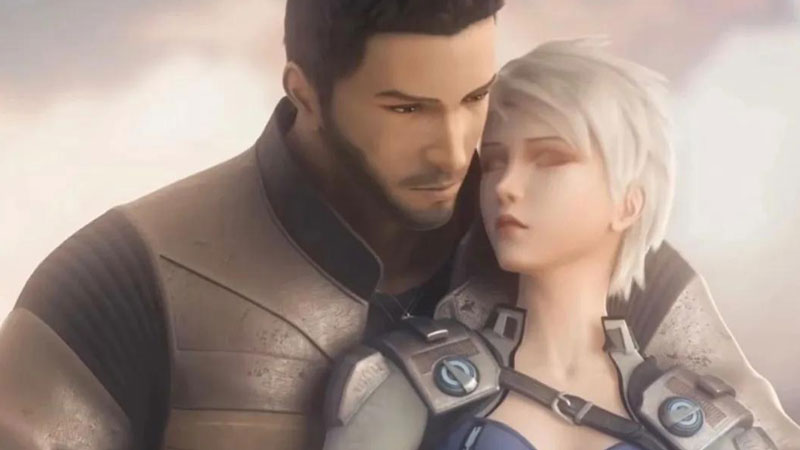
Beyond the visuals, Ling Cage's storytelling throws up its own hurdles. Its vast apocalyptic scope and deep dives into human nature mean it's not exactly casual viewing. The original animation tried to hook viewers partly through striking character designs – take protagonist Mark. He's a classic Western-style brute: massive, hyper-muscular, creating a huge visual contrast with his love interest, Ran Bing. That kind of exaggerated physique? Impossible to replicate realistically with live actors.
Then there's the philosophy. The show's heavy existential questions need translating into more relatable emotions for TV. Think about the complex father-son conflict between villain Charles and the Lighthouse's ruler, Morgan, tangled up with their clashing visions for humanity's future. Or Mark himself: it was his love for Ran Bing that pushed him to defy the Lighthouse's cruel rules, aiming to lead people from mere survival towards true freedom. The brutal irony? He transforms into a Corrupted Creature, accidentally kills Ran Bing, watches comrades fall, and in despair, destroys the Lighthouse only to be saved by the new surface leader, Bai Yuekui. It's a gut-wrenching journey.
Strip away the wasteland setting, and Ling Cage reveals a core challenge: it's classic male-oriented storytelling. Its original fanbase skews heavily male. Packed with masculine tropes and perspectives, making it resonate with the female-dominated TV drama market will test any adapter's skill.
Character depth is another issue. Compared to its rich world, the main cast feels thin. Mark is the archetypal righteous hero. Ran Bing is the beautiful, doomed "tragic lost love." Charles isn't hugely different from villains elsewhere. This lack of fresh characterization is another puzzle the live-action version needs to solve.
What Other Anime Are Eyeing the Live-Action Stage?
 What Other Anime Are Eyeing the Live-Action Stage?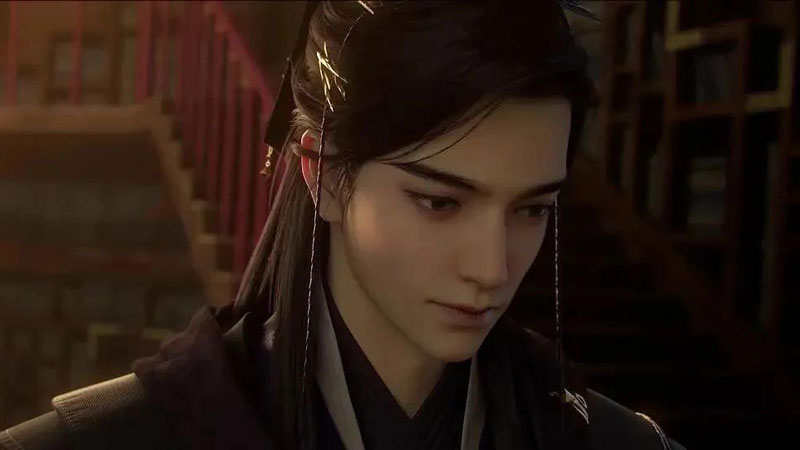
Ling Cage isn't alone. Another acclaimed Chinese anime, The Island of Siliang (眷思量), recently sparked adaptation rumors. Created by Zhao Yuqing, it follows mortal girl Tu Li and divine youth Jing Xuan on an island prison for exiled gods and their descendants. The twist? Islanders can't touch seawater and face trials every 500 years to supposedly return to heaven – a system that might be a centuries-old lie, tangled in political webs.
The Island of Siliang offers a stark contrast to Ling Cage. Its appeal leans heavily feminine, praised for stunning character models tailored to female tastes and exquisite Chinese aesthetics. It relies less on action or plot twists and more on rich, emotional storytelling – a structure naturally closer to live-action drama. Its downside? Pacing is slow, and the plot feels thin; two seasons of content likely aren't enough for a full adaptation.
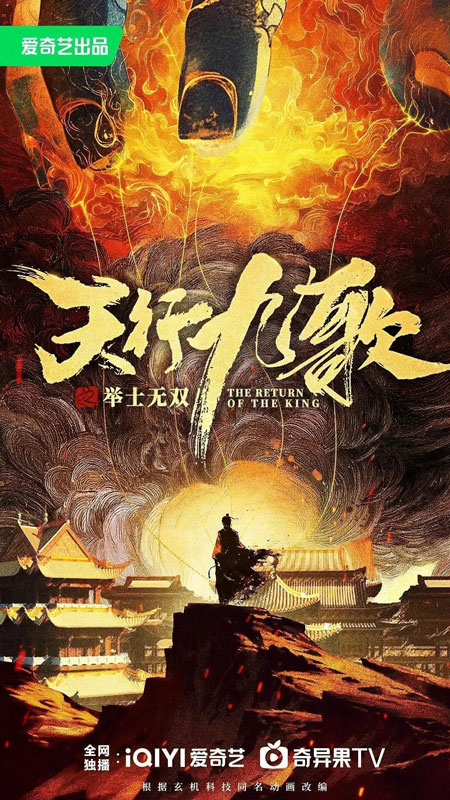
Then there's The Legend of Qin: Nine Songs - Peerless, announced at iQIYI's April conference. Adapted from Xuanji's The Legend of Qin: Nine Songs, it aims for a blend of youthful spirit and ancient court intrigue. A spin-off of the Qin's Moon saga, Nine Songs follows Han Fei's "Sand Stream" syndicate fighting against Qin's dominance during the Warring States period. It boasts a huge fanbase drawn to its gorgeous visuals and intricate political drama.
The challenge here is immense. The 2015 live-action Qin's Moon was widely criticized. Adapting Nine Songs, with its dense historical backdrop and complex political maneuvering, promises an even tougher battle. The pressure is on to avoid past missteps.
The film Blades of the Guardians: Wind Rises Over the Desert (镖人:风起大漠), adapted from Xu Xianzhe's hard-hitting wuxia manhua Blades of the Guardians, is already underway. Directed by the legendary Yuen Woo-ping and starring heavyweights like Wu Jing, Nicholas Tse, Jet Li, and Yu Shi, it promises serious action chops. Plus, Youku's recent drama slate also lists a Blades of the Guardians series.
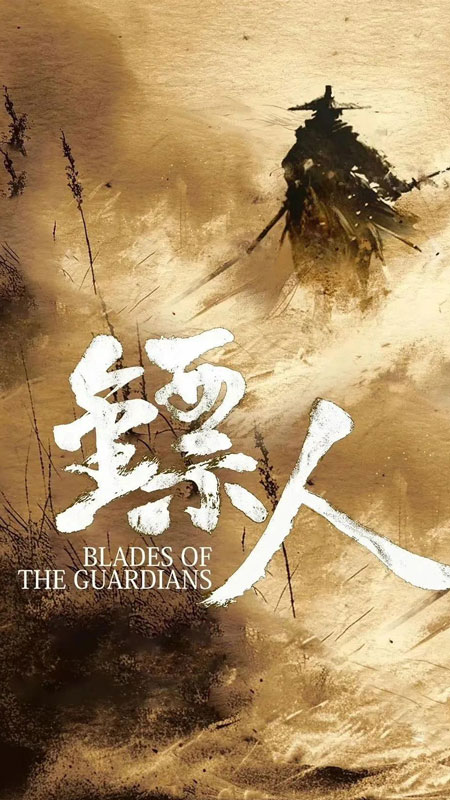
Blades of the Guardians is pure, gritty wuxia. Set in the late Sui Dynasty, mercenary swordsman Dao Ma escorts a mysterious figure, Zhi Shi Lang, back to Chang'an, getting entangled in complex vendettas and the fate of the empire. The source material thrives on raw violence and unapologetically masculine energy. Given that traditional wuxia has faded lately (even hits like Mysterious Lotus Casebook blended in mystery-solving), and its lead Cheng Yi wasn't a "tough guy" type – can Blades bring back the hardcore wuxia hero? It's a trend worth watching.
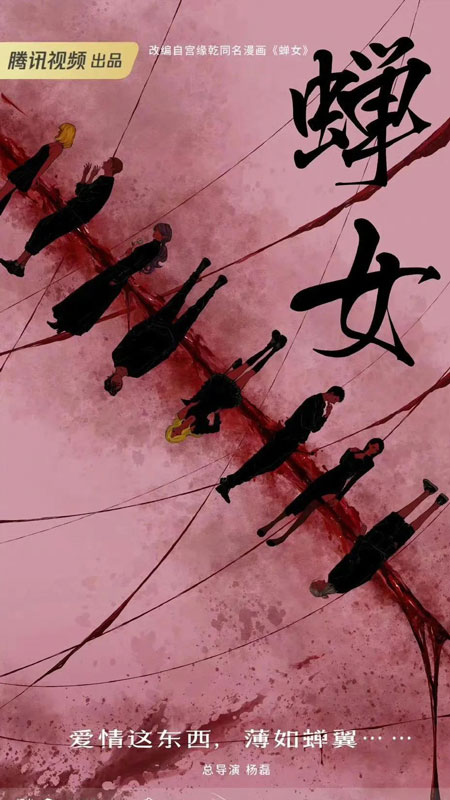
Then there's Cicada Girl (蝉女), a manhua by Gong Yuanqian. The TV adaptation, titled Roses Grow Wild (玫瑰丛生), is directed by Yang Lei and stars Wang Ziwen and Liu Yuning. The story follows Liao Xi, a "love tester" who gets close to men to fulfill their fantasies, hired by their wives to test their fidelity. The live-action leads look quite different from the comic originals, and some of the comic's edgier plotlines will likely be toned down for a mainstream urban drama. Still, its spicy, novel premise could inject some much-needed freshness into the often preachy world of urban women's dramas.
What About Fresh Novel IPs?
 What About Fresh Novel IPs?
Following the breakout success of The Three-Body Problem, sci-fi novel adaptations are surging. Multiple works by Liu Cixin are now in development.
Ball Lightning (球状闪电): Directed by Dai Mo, written by Chen Sicheng, starring Tong Yao, Wang Anyu, and Yang LiXin. It follows young Chen Guang's quest to unravel the mystery of ball lightning – the phenomenon that orphaned him.
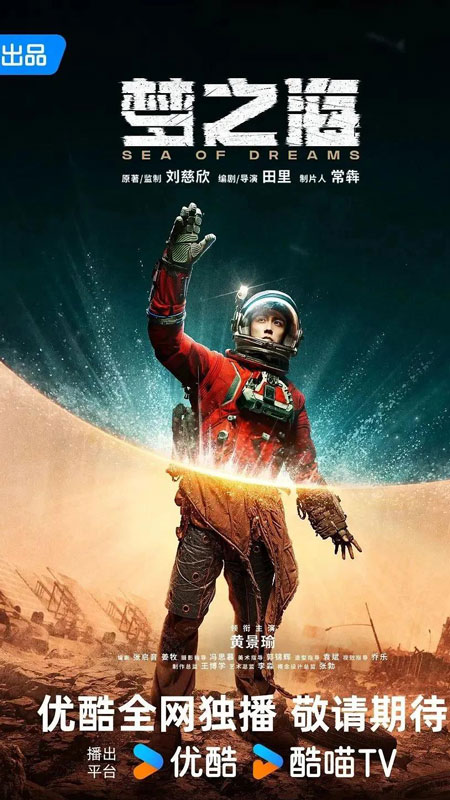
The Dream Sea (梦之海): With Liu Cixin himself as producer and screenwriter, directed by Tian Li, starring Huang Jingyu. A catastrophic event lifts all Earth's water into space; a brother and sister must link sky and earth to save civilization.
Other notable sci-fi adaptations include:
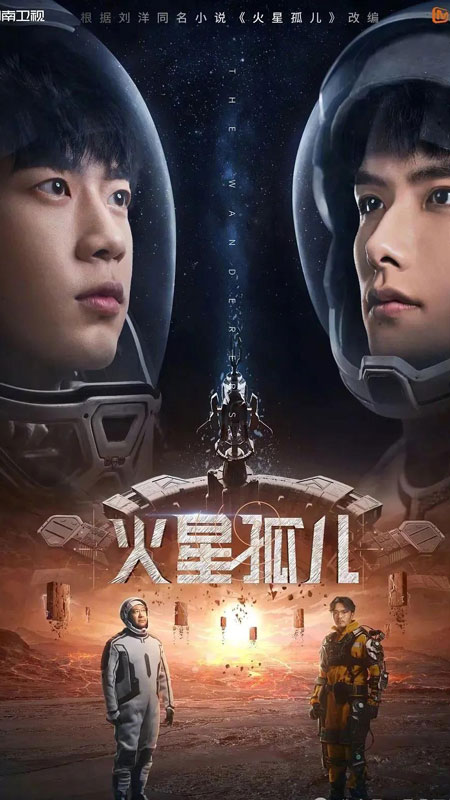
The Orphans of Mars (火星孤儿): An 8-episode series directed by Zhao Yilong, starring Fei Qiming and Zhao Yiqin. When alien beings arrive and threaten Earth, a group of high schoolers become humanity's last line of defense.
Nanjing Nirvana (我们生活在南京,Literal translation 'We Live in Nanjing): A high school boy in 2019 Nanjing connects via radio with a girl living in the same location in 2040. Together, they fight for survival against an apocalyptic disaster – described as "Your Name meets the apocalypse via radio." Concept art has been released.
At its 10th anniversary, China Literature announced 20 major IPs. Only six hadn't been adapted yet: Lord of the Mysteries (诡秘之主), Swallowed Star (吞噬星空), The Herdsman Chronicles (牧神记), Night's Nomenclature (夜的命名术), Daogui Yixian (道诡异仙), and Xian Ni (仙逆). The latter three (Night's Nomenclature, Daogui Yixian, Xian Ni) have since had adaptation rumors surface.
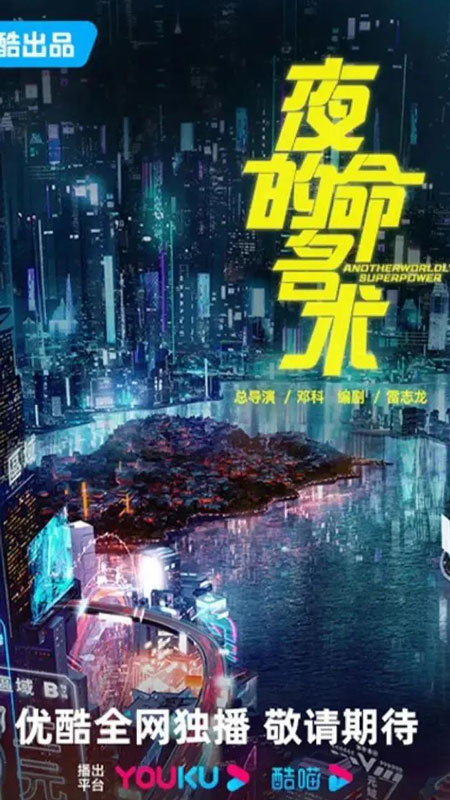
Night's Nomenclature: Appeared on Youku's slate, reportedly with Deng Ke as director and Lei Zhilong as writer. Adapted from the web novel by Huishuode Zhouzi, it blends sci-fi elements (post-tech revolution co-existing "real world" and "digital realm"), cyberpunk, human-machine relations, group transmigration, and cultivation. Already adapted into animation. The novel is a power-fantasy with sprawling worldbuilding, but its cyber elements feel surface-level, and later arcs become formulaic. The setting is its main draw. A live-action version would need massive budgets for the digital realm and heavy editing to cut filler.
Daogui Yixian, merges Lovecraftian horror with xianxia insanity. The protagonist, Li Huowang, straddles two worlds: a mental patient in modern times and "Red Zhong" in the ritualistic Great Nuo world (大傩世界). Its brilliance lies in Huowang's psychological unraveling and the grotesque, boundary-pushing Nuo realm. Adaptation Huowang (火旺), backed by Linmon, faces steep challenges: the recent animated version was swiftly pulled for its intense content. Live-action must navigate censorship while preserving the protagonist's fractured psyche—a near-impossible tightrope.
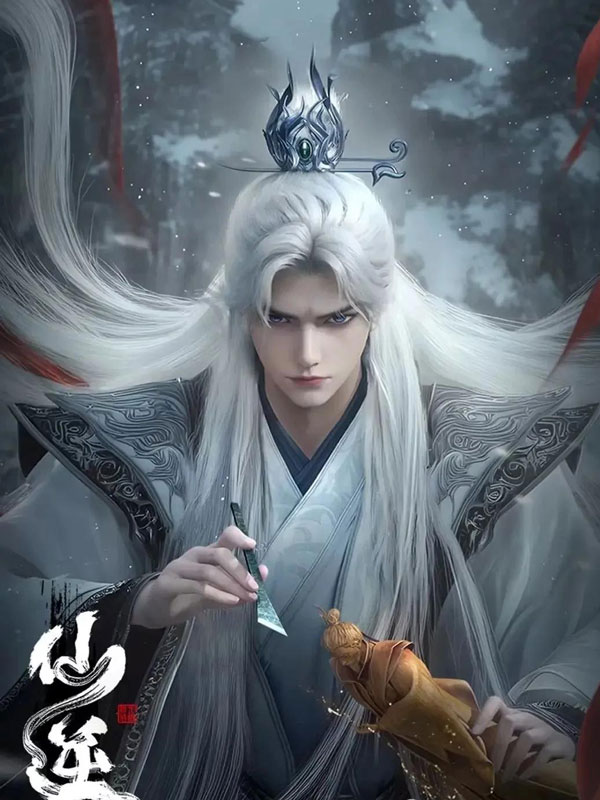
Xian Ni, another xianxia hit, appears on Straw Bear's 2025 drama slate. Orphan Wang Lin claws his way into cultivation after being rejected for "weak talent," earning monikers like "Wang the Devil" for his ruthless ascent. While its "all villains, no heroes" premise is gripping, TV will inevitably soften Wang Lin's murderous edge. Notably, its anime adaptation thrives on impossibly gorgeous character designs—a hurdle for live-action casting, much like The Island of Siliang and Nine Songs.
Fresh Gems in Female-Centric Fiction
 Fresh Gems in Female-Centric Fiction
Female-oriented stories are pushing boundaries too:
Girls' Dorm Escape (女寝大逃亡): A rule-based survival horror where global university dorms transform into deadly game zones. All-female cast, pure camaraderie, and clever infinite-loop mechanics make it stand out.
Sell the Iron to Study (砸锅卖铁去上学): Sci-fi with a fierce female lead, Wei San, who evolves from penniless dropout to elite mecha pilot and engineer. Strengths: female empowerment, chaotic squad dynamics, and tournament-driven growth—no romance.
Cyber Hegemon (穿进赛博世界后干掉boss成功上位了): After transmigrating into a cyberpunk world, the heroine assassinates her way to power. Her romance? An AI named Adam. Despite superficial similarities to Night's Nomenclature, its deeper worldbuilding and ruthless protagonist set it apart.
Scavenging the Wasteland (我在废土世界扫垃圾): Grittier than Ling Cage, this female-led apocalypse story follows "trash cleaning" missions across hazardous zones. Zero romance, rich female side characters, and unflinching realism.
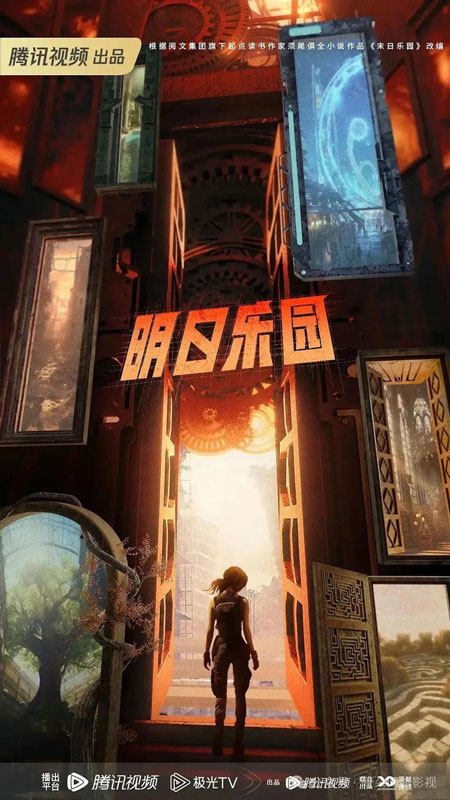
End of the World Amusement Park (末日乐园): A foundational work in the female-oriented infinite-loop genre. This sprawling 7.19 million-word epic is famed for its bizarre, inventive scenarios and countless "dungeons." Its drama adaptation, Tomorrow's Paradise (明日乐园), was touted as a Tencent flagship project. However, announced as only 16 episodes, it barely scratches the surface of the source material. Adding fuel to fan outrage: rumors suggest a male side character might be elevated to "male lead"—a controversial move for a fiercely heroine-driven story.
Still Not a Doll Today (今天也没变成玩偶呢): A survival infinite-loop thriller. The world transforms into a deadly game board where humans become dolls forced into lethal "doll games." The heroine, Bai Youwei, uses a wheelchair, has a darkly manipulative and psychopathic intellect, and possesses a deceptively childlike face. Teaming up with a physically powerful male companion, they fight to clear the game. Praised for its pace and creative challenges, Bai Youwei's unconventional persona is a standout. Yet, the novel's pervasive horror, gore, and the heroine's extreme psyche guarantee heavy edits for TV.
Why These Breakout Novels Are So Tricky
 Why These Breakout Novels Are So Tricky
A surge of popular anime and novel adaptations proves there's no shortage of fresh IP. These source materials offer immense potential with wildly imaginative worlds—post-apocalyptic games, cyberpunk cities, ritualistic horrors—and often break genre molds: featuring complex heroines, tight plots, and crucially, no forced romance (a rarity in female-targeted dramas).
However, translating these innovative stories to screen faces massive hurdles:
Visions like cyberpunk metropolises (Cyber Hegemon), interstellar mecha battles (Sell the Iron), and desolate wastelands (Scavenging) demand massive budgets for VFX. Recreating these intricate, often alien settings—many drawing on Western or otherworldly aesthetics—pushes the limits of current Chinese production capabilities. The challenge extends to vast game dimensions or grotesque Lovecraftian realms.
Sell the Iron and Scavenging strictly avoid love subplots; Cyber Hegemon's key relationship is with a genderless AI. This is core to their appeal. Yet, past adaptations often inject male leads to "balance" female-driven narratives—a tactic virtually guaranteed to alienate loyal readers. Similarly, female-oriented stories (End of the World Amusement Park) risk having romance or prominent male leads forcibly added, betraying the source material's focus on female agency and found family, sparking fan backlash.
Horror, gore, psychological extremes, and supernatural elements—staples of IPs like Girls' Dorm Escape and Daogui Yixian—face heavy sanitization or outright bans. This directly conflicts with the authenticity and appeal that drew audiences to the originals.
Settings steeped in non-Chinese cultural elements or entirely fictional civilizations can feel distant for domestic audiences accustomed to familiar backdrops. Furthermore, male-oriented stories featuring overly dark tones or extreme anti-heroes (Xian Ni's Wang Lin) often require significant softening, potentially diluting their edge.
While brimming with potential, adapting these mold-breaking stories involves navigating a minefield of high costs, cultural dissonance, censorship mandates, and the perilous temptation to alter fundamental character dynamics and plot elements—risks that threaten the very essence of what made these IPs compelling in the first place.