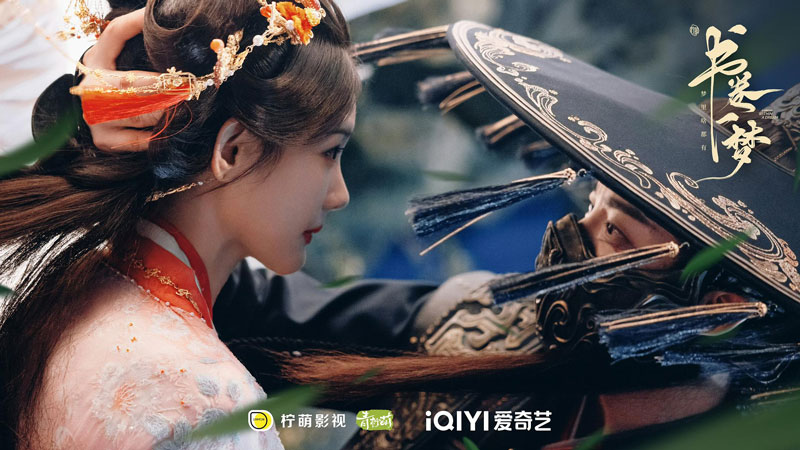
Following the success of The Double (墨雨云间), Yu Zheng's heavily promoted The Feud (临江仙) has ignited the summer fantasy romance market. Riding on the momentum of Wonderland of Love, Huanyu TV seems to have found a new formula—recasting long dramas in the mold of short-form content. The strategy: emotional punch over plot depth, and a binge-friendly pace over traditional slow burn.
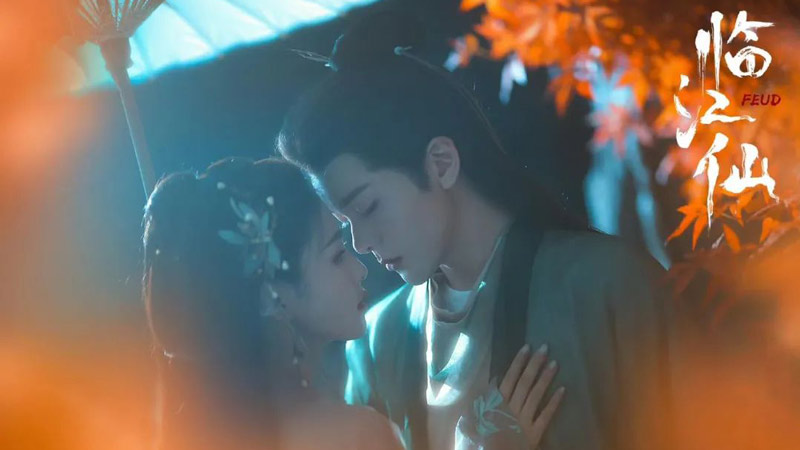
An "immortal romance" centered on a so-called "marital war," The Feud drew both praise and backlash, yet undeniable buzz. Its iQiyi popularity index climbed past 9500, though whether it can break 10,000 remains to be seen. Written by Zhao Na and Ren Yanan, directed by Zhi Lei and Guo Hao, and starring Bai Lu, Zeng Shunxi, He Ruixian, and Chen Xinhai, the drama tells the twisted tale of Hua Ruyue (Bai Lu) and Bai Jiusi (Zeng Shunxi)—immortal sovereigns doomed to love, hate, and marry/divorce three times across realms.
Promotion was intense. Within a day of airing, the show's index surpassed 9300, peaking at 9514 by day three. Yet buzz began to slow. Nonetheless, 1873 trending topics—152 on Weibo's Hot Search, 637 on the Hot Rising list, and 305 on the Entertainment list—kept attention strong. Yunhedata confirmed a 12% market share on launch day, with the show briefly ranking second overall.
 The Short-Drama Mindset
 The Short-Drama Mindset
After Wonderland of Love, Yu Zheng famously declared war on traditional long dramas, advocating for a "short-drama mindset" focused on heightened emotion and simplified plots. The Feud reflects this: cliffhangers at every turn, fast-forward character arcs, and surface-level spectacle replacing gradual development. The result? Divided viewers.
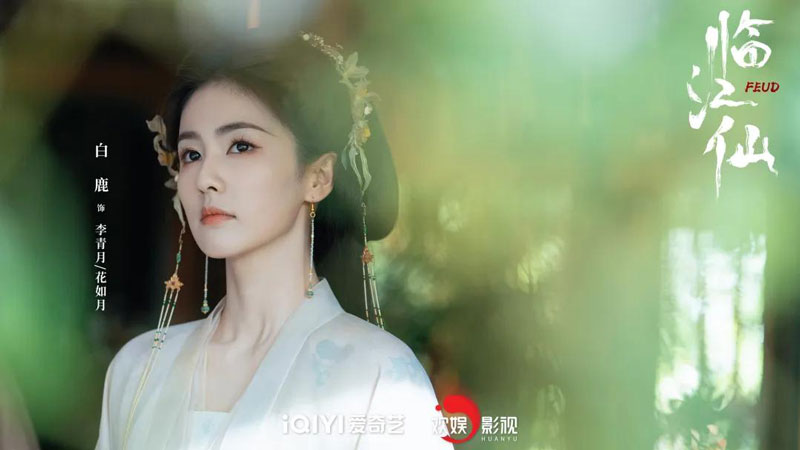
The drama opens explosively. The female lead, originally a lowly disciple, kisses heaven's top deity by accident and spends her life savings to marry him out of honor. Obsessed, she charges into the celestial world chasing him. It's a bold, fast-paced tale that wastes no time on subtlety.
The unique framing of a "marital war" distinguishes it from typical xianxia romances. Dubbed the "pure-hatred couple," Hua Ruyue and Bai Jiusi marry/divorce three times—each breakup messier than the last. Fans cheer the battle: "At least they're wrecking each other instead of the universe!"
Some even interpret the series as a utopian marriage allegory: scenes of time-reversed suffering, mutual recognition of trauma, and power struggles in love. Others highlight the strong female lead, whose transformation from underdog disciple Li Qingyue to sovereign Hua Ruyue is intricate and strategic. Her revenge is cold-blooded: she doesn't want Bai Jiusi dead—she wants him to suffer.
 Criticism and the Aesthetic Gap
 Criticism and the Aesthetic Gap
The backlash is just as intense. Critics describe the show as "tacky, like a fantasy cosplay in a photo studio." The heavenly palaces resemble cheap tourist sets. The male lead's reincarnated form wears all-white outfits with no variation. Plot points—accidental kisses, sudden weddings, humiliating rescues—feel like tired CEO-romance clichés. As one comment put it: "Don't call this female empowerment—it's trophy wife fantasy."
What's worse, the show delays key revelations. Hua Ruyue's transformation doesn't hit until Episode 11. The early episodes feel like filler, and many viewers tune out before the plot kicks in. The show borrows heavily from short-form structure—every episode has a twist, every character a secret—but in long format, these gimmicks wear thin.
Let's be honest: purely by numbers, both The Feud and A Dream Within A Dream performed decently. Yet when it comes to word-of-mouth, the situation is far more complicated—audiences remain deeply divided.
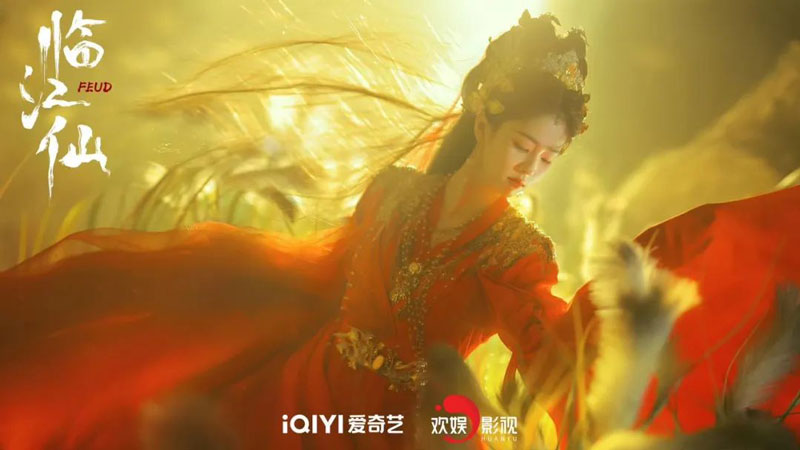
The Feud kicks off with its signature "three marriages, three divorces" fantasy setup. It opens with a Cinderella-like figure marrying a high-ranking immortal lord before shocked onlookers—a hook designed for maximum drama. What follows is an endless cascade of twists: the female lead feigns innocence while hiding her true strength; through multiple lifetimes fraught with love and betrayal, she and the male lead eventually find peace in each other.
Fans embrace its departure from traditional xianxia romance formulas, dubbing the series a "hate-fueled satisfaction"—a dramatic spectacle where love turns into war, and symbiosis means mutual destruction. The nonlinear timeline and the fated entanglement add an unpredictable edge, precisely what keeps viewers hooked.
On the flip side, critics see it as a melodramatic mess bordering on parody. The three-lifetime premise often feels more gimmick than meaningful story arc. Chemistry between leads is weak, character motivations shaky, and the grand schemes often fall flat.
The Feud isn't alone in this polarized reception.
Consider A Dream Within A Dream. It begins with a modern woman pulled into an ancient "abuse novel"—a genre where the heroine is relentlessly mistreated. To escape her grim fate, she tumbles into a whirlwind of palace intrigues and bizarre romantic entanglements.
Supporters view it as a meta, tongue-in-cheek take on the "trapped-in-a-novel" trope. The forced looping mechanism, the self-aware, paper-thin characters waking to their roles, all create a chaotic joyride that feels fresh, wild, and unpredictable.
Detractors dismiss it as genre soup—a clumsy mash-up of love triangles and court politics lacking grounding. Characters behave erratically; emotional logic is all over the place. The result is a mishmash of punchlines and plot twists with no cohesive core.
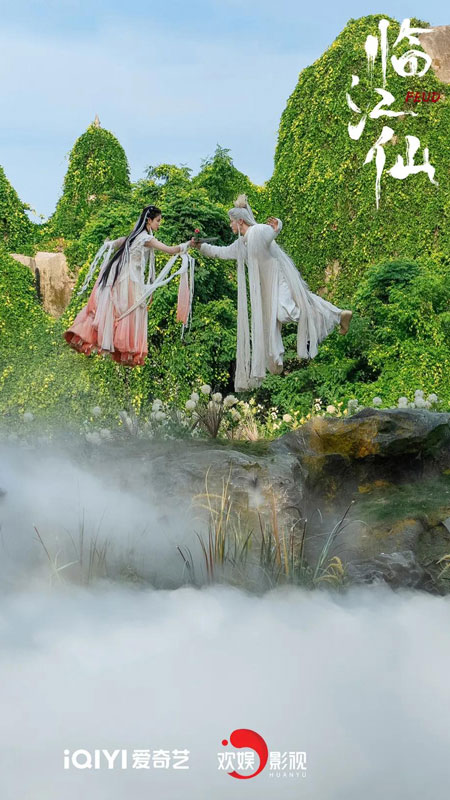
So, what's really going on?
Both dramas share a similar ambition: to break away from typical costume romance formulas. Instead of familiar tropes, they layer on labels like "dark," "offbeat," "mind-bending," and "you'll never guess what happens next."
And they do get noticed. Streaming numbers, search volumes, hashtag buzz—all are elevated. But neither manages to reach true viral status.
Compared to the generic, assembly-line dramas that audiences expect and often mock, these two have more spark, more personality. Yet their appeal remains niche, never fully breaking into widespread success.
Why?
Because The Feud and A Dream Within A Dream rely heavily on what can be called the "high-concept breakout" strategy. They aim to combat audience fatigue toward costume romances—especially short-form ones—by flooding the narrative with rapid-fire twists, complex world-building, and chaotic structures. It's a deliberate attempt to disrupt the norm.
Sounds ambitious. But in execution, it leaves them stranded in an awkward middle ground—too weird for mainstream appeal, yet too shallow for hardcore niche fans.
What went wrong?
The real hook of a costume idol drama—the thing that keeps viewers binge-watching—is never complex plotting or fancy structure. It's something simpler: a clean setup coupled with direct emotional payoff.
Take Ashes of Love (香蜜沉沉烬如霜), for instance. What captivated viewers wasn't convoluted twists but the fierce love between Jin Mi and Xu Feng—their fight against fate, the breaking of a love-suppressing magical seed, and their bittersweet journey across four realms.
Or The Journey of Flower (花千骨), where viewers were enthralled by Hua Qiangu's transformation from naïve disciple to demonic goddess, fueled by all-consuming love for Bai Zihua—a love so intense it could burn the heavens.
Or Goodbye My Princess (东宫), where the tragic collision between Li Chengyin's blood feud and Xiao Feng's heartbreak as she jumps into the River of Forgetfulness kept audiences riveted. That push-pull of love and hate became unforgettable.
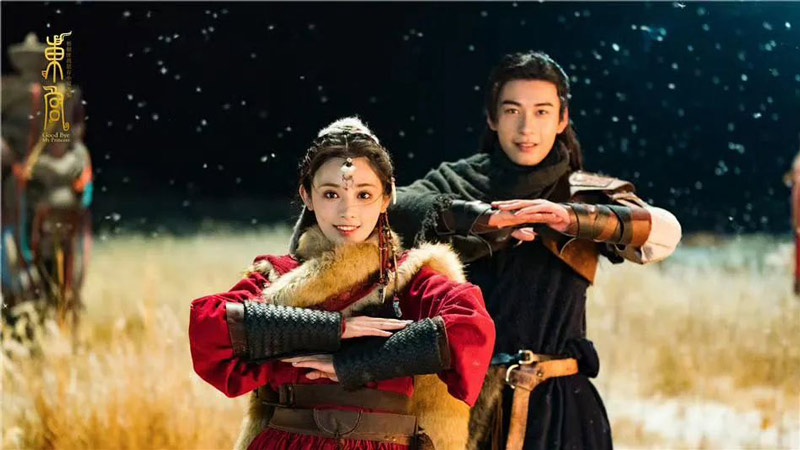
These dramas followed a proven formula: extreme archetypes, emotionally charged set pieces, Cinderella and god-like leads, misunderstandings, jealousy, tortured romance balanced with sweetness. A pop aesthetic made for mass appeal, crystal clear and emotionally straightforward.
No overthinking required. You don't need to untangle reincarnation or celestial rules. Just know: he loves her, she's misunderstood, and finally, they understand each other. That's all you need.
But The Feud and A Dream Within A Dream chose a different path.
Trying to shake the cliché label, they piled on structural complexity, world-building, and endless twists.
The Feud combines three marriages and divorces, fate, reincarnation, palace intrigue, and revenge. A Dream Within A Dream blends book transmigration, character awakening, infinite time loops, and meta-comedy.
Sounds like a brainy idol drama, right? Except they neither deliver the intellectual payoff such complexity demands, nor the emotional buildup to sustain it.
What the audience gets instead is constant rewriting. Just as you start to feel something—bam! A twist: "Wait, she's not who she thought," "So they aren't actually reincarnated lovers?" "Now he's the villain?"
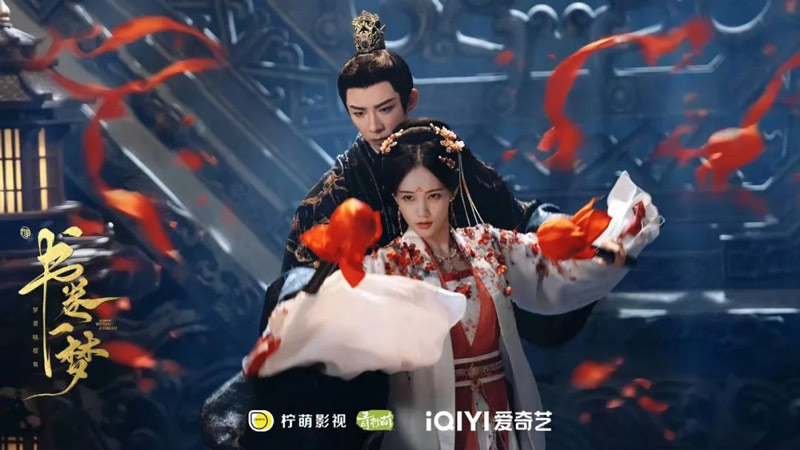
When twists become the norm, plot mechanics overshadow emotional arcs. Viewers lose immersion, doubting if they're "too dumb to get it."
That's the worst misstep: raising the barrier to entry.
If someone wants light, shippable, easy-watching romance, the last thing they want is a puzzle box. Why wrestle with multiple identity reveals and complex worldbuilding when you can watch a thriller or movie instead?
But here's the kicker—and maybe the fatal flaw.
Despite all the narrative gymnastics, both shows center on a single setup: a love story.
All reincarnations and reversals aside, it's still the classic "he loves her, she misunderstands him, then they reunite." Same story, dressed differently.
This traps the shows in flashy form without sparking true aesthetic innovation.
Today's drama market is hyper-segmented, with audiences possessing sharp tastes. The mix of "short-drama craziness" and "long-drama caution" can create hype bursts but not the kind of nationwide breakout hit.
That's why, at the same time, The Double scored big using the classic "married first, love later" formula; Joy of Life carved its niche with nuanced storytelling and cultural flair; and Cang Hai Zhuan stuck to steady political intrigue. Each knew their formula and executed it clearly.
Meanwhile, The Feud and A Dream Within A Dream—the most ambitious and hardest-working contenders—polarized audiences. Watching them feels like reading a wildly creative yet scattered essay: plenty of ideas and effort, but no solid emotional core holding it all together.
Still, trial and error is part of evolution.
This "going wild" vibe reveals a real struggle behind the scenes. Creators push back against the grinding pressures of drama production, trying to scream their way out of repetitive ruts.
The Feud and A Dream Within A Dream are brave experiments.
This road of rebuilding costume idol dramas with wild new ideas may feel rough and uneven. But at least someone is trying to carve a new style.
For now? That road looks long and winding.
 Chasing Short-Form Sparkle, Missing Substance
 Chasing Short-Form Sparkle, Missing Substance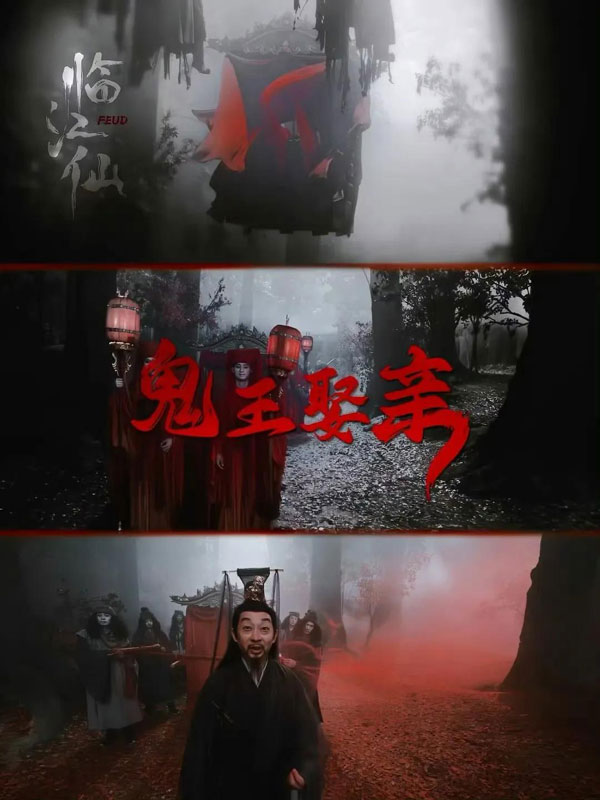
There's no shortage of flashy moments: the "Ghost King's Bride" horror arc, the VFX-heavy "Snake Slaying in Frost Lake." These sequences went viral. But viral clips can't carry a long drama. The Feud frontloads spectacle, but without coherent character motivation or tonal balance, emotional arcs get drowned in slapstick or angst. Characters swing wildly between extremes—one moment plotting revenge, the next making jokes.
Tropes pile on: doppelgängers, love triangles, identity swaps. The show throws in every internet-beloved cliché but lacks the narrative glue to hold them together. Even the acting suffers. The leads seem either over-the-top or expressionless. Stoic ≠ stone-faced. And glaring ≠ depth.
Is this still peak Yu Zheng? This is the question viewers keep asking. For a summer popcorn drama, The Feud has its fun—solid pacing, heightened emotion, and a few snappy lines blending classical and modern Chinese. For casual viewers, it's comfort TV.
But this isn't the Yu Zheng of Yanxi Palace, Winter Begonia, or Wonderland of Love. Once a master at tapping public taste, Yu now seems to be playing catch-up—relying on formula without finesse. Every plot twist follows a predictable four-word trope. Even viewers unfamiliar with the genre find the beats too easy to guess.
Which leads to a deeper concern: has the Yu Zheng formula aged out? Or is it that the structure of long dramas is collapsing under the weight of short-form expectations?
 The Industry-Wide Pivot
 The Industry-Wide Pivot
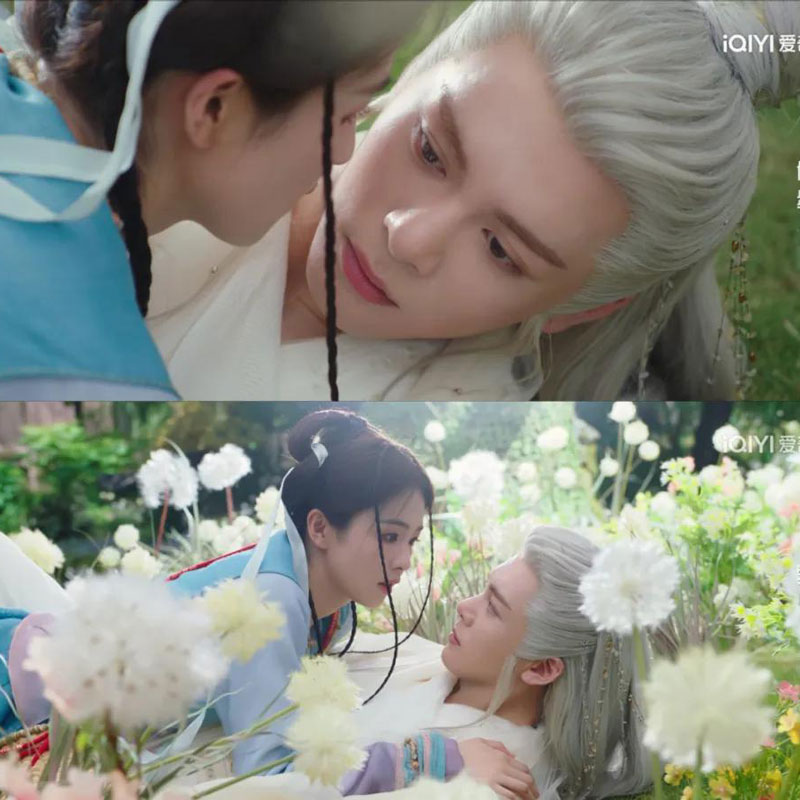
As attention spans fragment, fewer people commit to 40-episode sagas. Short-form content—dramas under 15 minutes or summary edits—are devouring market share. To stay relevant, long dramas are importing short-form techniques: fast pacing, heavy emotions, cliffhangers.
Series like The Double, Love of Rebirth, The Feud, and A Dream Within A Dream are leading this experiment. The hope: let "fast" empower "deep." But it's a delicate balancing act.
Traditionally, long dramas rely on slow narrative buildup. Short-form stories, however, compress time: a hook every 30 seconds, twist after twist, emotion stacked high. To adapt, long dramas now cut filler, accelerate key arcs, and place suspense upfront.
The Feud cut 40 planned episodes down to 32. Each episode features 2-3 emotional peaks. Episode 1 alone includes a major injury, an impulsive marriage, a resemblance to a dead lover, and hidden identities. By Episode 11, Li Qingyue fully transforms into Hua Ruyue.
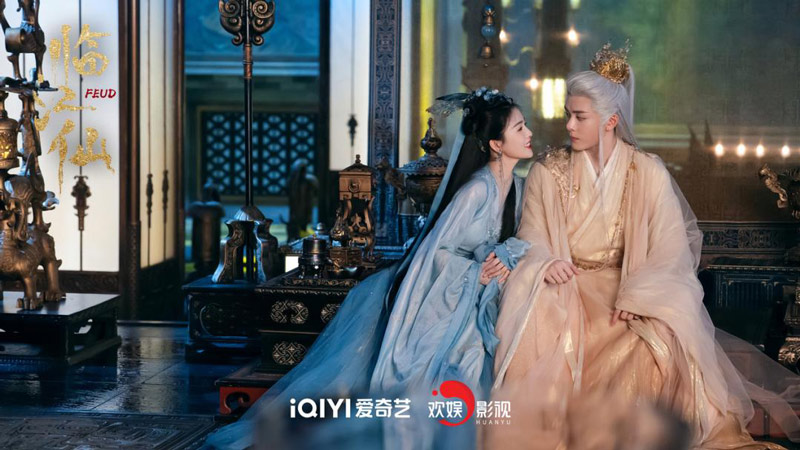
Notably, the show fragments its timelines. Key scenes—like Hua Ruyue killing her second husband or self-destructing—appear early, then gain context later. These non-linear hooks boost curiosity and keep audiences engaged.
Yet short-form pacing risks flattening characters. If everyone's just a plot device, viewers stop caring. The best approach lets characters drive the story.
Directed by Zeng Qingjie (The Killer Is Also Romantic, Familiar Stranger), Love of Rebirth succeeded where others stumble. The rebirth/revenge narrative isn't just shock value—it shapes Dou Zhao (Meng Ziyi) into a fierce, principled heroine. Supporting roles—scheming stepmothers, tragic uncles, cold-hearted but kind lovers—all have full arcs.
Rather than trimming all complexity, the show focuses tightly on core characters, cutting subplots without disrupting theme or emotion. The result: clean storytelling with real payoff.
Short dramas succeed online because they're meme-able. Tropes like "cold CEO meets quirky girl" or "revenge after rebirth" offer instant gratification. Long dramas often lag behind in this "internet feel."
But some titles, like A Dream Within A Dream, are catching up. This fantasy comedy uses "infinite flow" time loops and chaotic logic, earning the nickname "crazy drama" (癫剧). Yet it never loses narrative focus. It weaponizes internet tropes without becoming incoherent.
Done right, "internet appeal" can refresh old genres—adding vibrancy without killing logic. Done poorly, it becomes noise.
 Can "Fast" and "Deep" Coexist?
 Can "Fast" and "Deep" Coexist?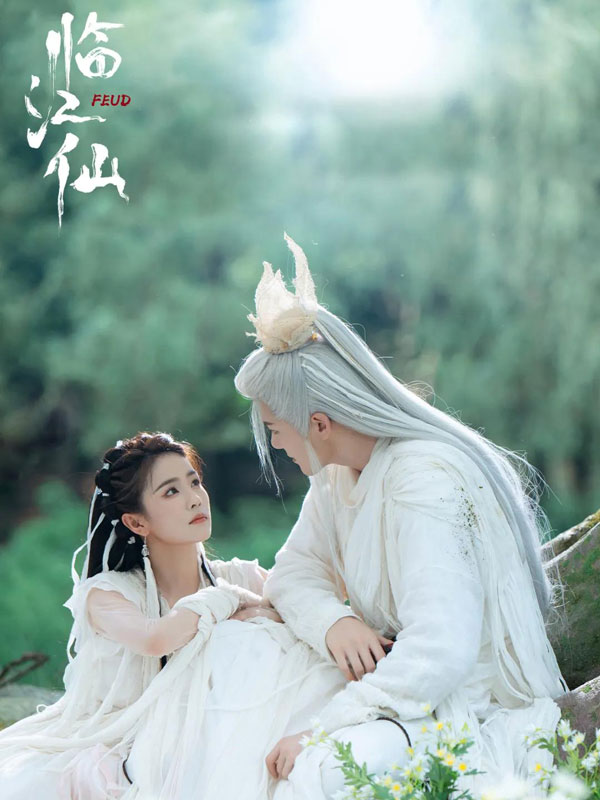
The answer lies in moderation. Overloading a drama with constant twists or emotional peaks can ruin worldbuilding and make character actions nonsensical. Excess reliance on web fiction tropes leads to emotional hollowness and viewer burnout.
This tension is birthing new formats: "mid-length dramas" (15–30 episodes) that retain narrative integrity while quickening the pace. Some, like Worth Loving, even experiment with dual edits—full-length and condensed cuts—to cater to different viewer types.
Empowering long dramas with short-form techniques isn't just about making them shorter—it's about making them sharper. That means:
Trimming narrative fat without gutting emotion
Preserving character arcs alongside fast pacing
Using internet tropes to reinforce, not replace, core themes
Yu Zheng may not have fully cracked the code with The Feud. But his attempt highlights an industry-wide reckoning: in the race to stay relevant, long-form storytelling must evolve—or fade.
Let the new rule be this: speed can thrill, but depth must endure.