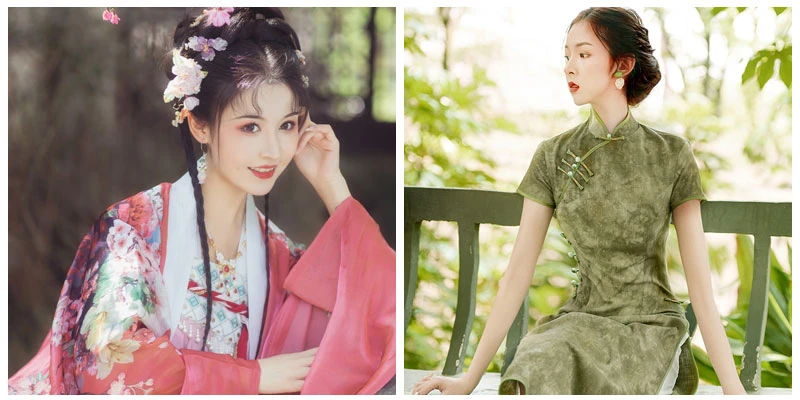
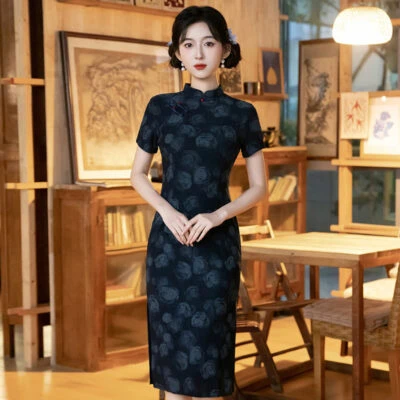
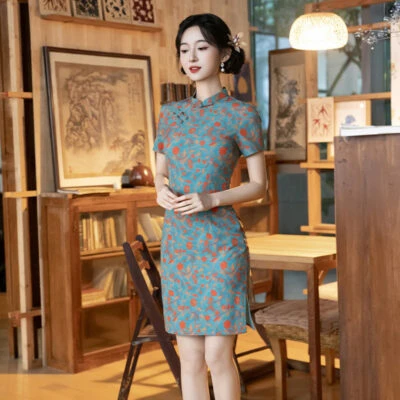
On October 5, a qipao team from the Tansong Qipao Culture Society in Jiading, Shanghai, walked into Mamen village in Waigang Town and staged a moving show along the village’s rice-field ridges, the Jiading District government reported on October 9. The society’s head, Wang Fang, led the group in her own home village: “I grew up in Waigang and played around here as a child. Today I bring our qipao team, dressed in beautiful clothes, walking through the scenery of my hometown, and I am very happy and proud.”
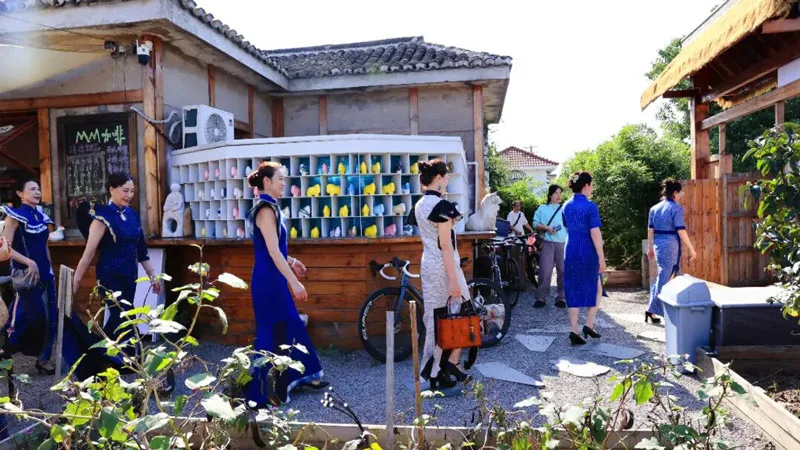
Coarse Cloth on the Ridges
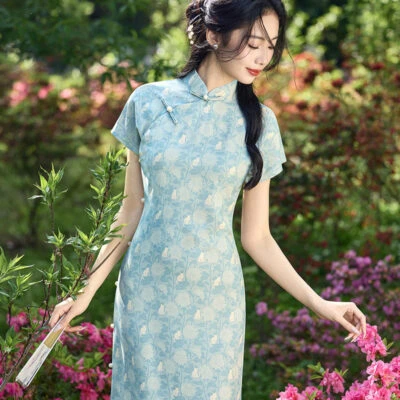
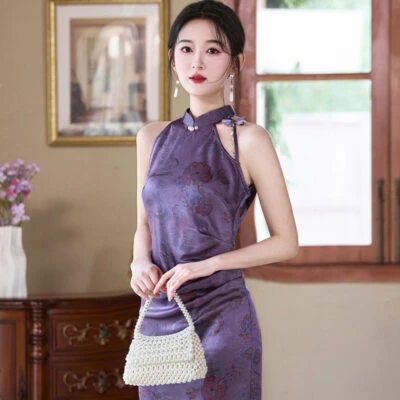
Wearers took to the ridges in coarse-cloth qipao of several cuts, running from traditional classics to modern revisions and pieces finished with fashion detail; different as they were, each kept the plain, warm texture of the fabric. Autumn wind moved across the paddies, and the coarse cloth’s natural grain stood against the golden rice, the qipao’s soft lines working into the village air.
Villagers and visitors stopped to photograph the walk. A visitor named Liu, in the village for the holiday with her child, said: “The countryside is so beautiful now, with art, culture and everyday life all together. We ran into the show by chance, and my child watched for a long time, saying the ladies looked like they had stepped out of a painting. This kind of grounding in traditional culture teaches more vividly than a textbook.”
Pankou as a Thread to Local Craft
For years the Tansong Qipao Culture Society has worked to present and promote qipao culture, and with the Waigang Town culture and sports centre it runs an intangible-heritage Pankou project that uses the knotted-button craft as a link between traditional qipao and local heritage skills. Mamen was the latest outing: the qipao left the exhibition hall, entered the countryside, and found a new setting between the ridges and the rice.
That partnership has made the knotted button more than trim, tying a garment tradition to craft work that grew up in the same district. The society frames the day as a two-way move between art and the soil underfoot, and one more attempt to give traditional qipao dress a setting beyond the showroom. From the exhibition hall to the ridge, and from the qipao to the knotted button, the walk joined a costume tradition to a workshop practice rooted in the same local ground.
A Small Village Turned to Art
Mamen’s art scene reaches well past one show. During the National Day holiday the village’s stone bridge became its busiest entrance, with queues to get in at peak hours, according to Jiefang Daily. More than 20 potter’s wheels at the shared ceramics centre ran at full load all day, deep-experience sessions held steady at 50 to 60 people daily, and 2,000 to 3,000 people entered the village each day.
The village added its own holiday exhibition, with ceramic boxes, pickle jars and lidded bowls made by resident artists set out on the stone steps in front of villagers’ doors. Tea seats were laid by the water, the qipao walk passed through the trees, and after nightfall visitors could sit in a courtyard for folk songs and grilled food or stay on for “Mamen Night Talk,” a craft beer in hand and a conversation with resident artists about aesthetics and rural life.