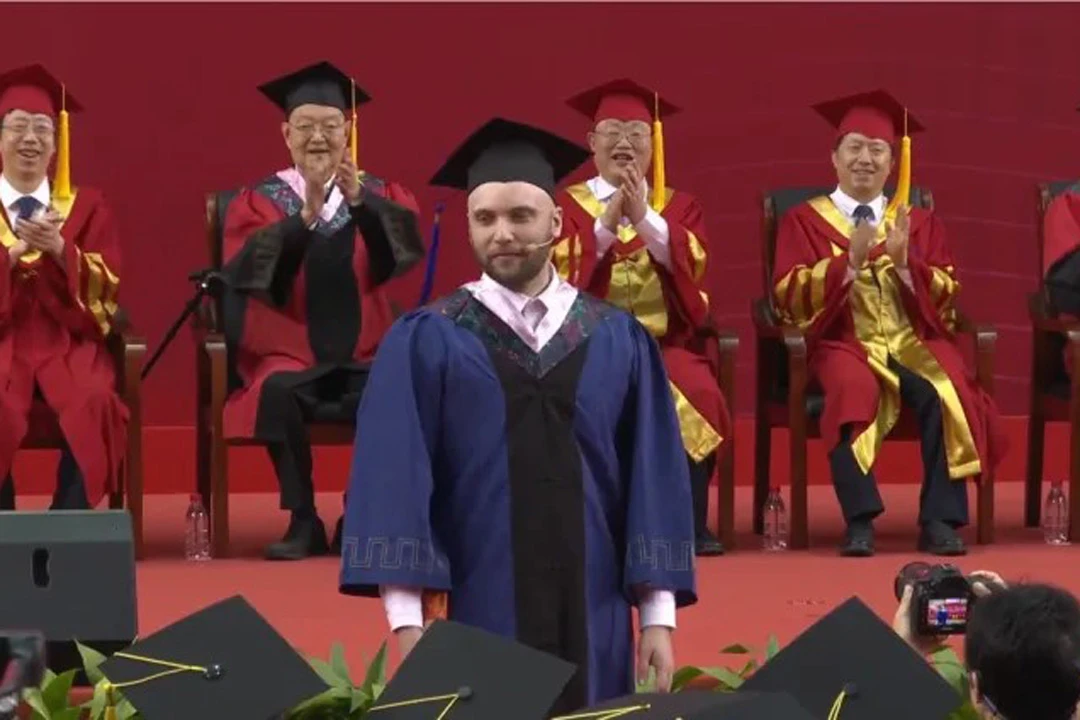
Thirty-six students, teachers and parents from School No. 606 in St. Petersburg spent October 9 at Hainan University, meeting Chinese students and staff for the first China-Russia youth cultural exchange held at the university’s Institute for Mutual Learning of Chinese Wisdom and Civilizations. The session took the theme “mutual learning among civilizations, China and Russia walking together” and formed part of a 13-day study tour of Hainan that began on October 5 and runs to October 17.
What the Visiting Students Met in Class
Organisers built the programme to carry forward the goodwill accumulated during the China-Russia cultural years, now that the 2026-2027 China-Russia Year of Education has opened, pushing exchanges past simple display toward teaching, youth contact and deeper understanding. The institute built its sessions around classical poetry, traditional Chinese medicine, medicinal herbs, cloisonne, huanghuali wood, agarwood and Li brocade, so that the visitors could approach Chinese thought through poem, medicine, fragrance, brocade and vessel rather than through lectures alone. Hainan’s own Li brocade, huanghuali and agarwood were set beside the open character of the island’s free trade port, while medicine, herbs and cloisonne showed how many strands run through one culture.
The group toured the university’s history museum and its collaborative innovation centre first, getting a sense of how the university was built and what its researchers work on. At the opening ceremony the Russian and Chinese guests and students posed for a group photograph, then planted a friendship agarwood tree together in front of the institute, a gesture meant to say that the friendship would put down roots. An information session on the university’s policies for international students ran at the same time, alongside an incense culture demonstration led by Luo Zijie, director of the incense culture committee of the China Traditional Culture Promotion Association and founder of the Taiyue incense study system.
Sachets, Masks and a Chanting Class
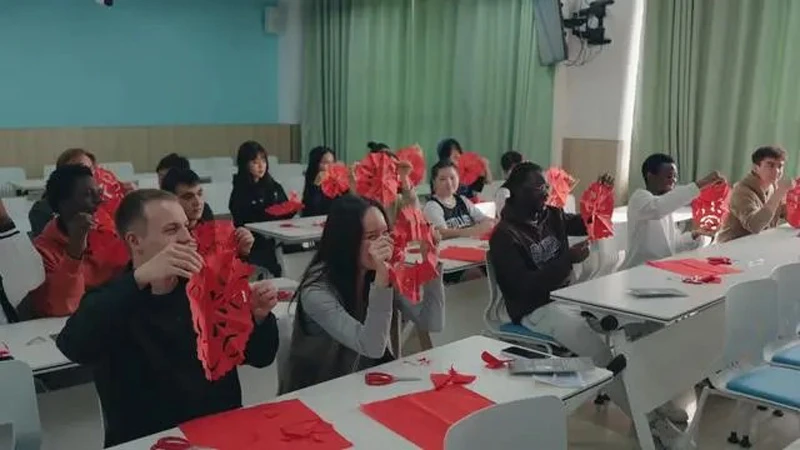
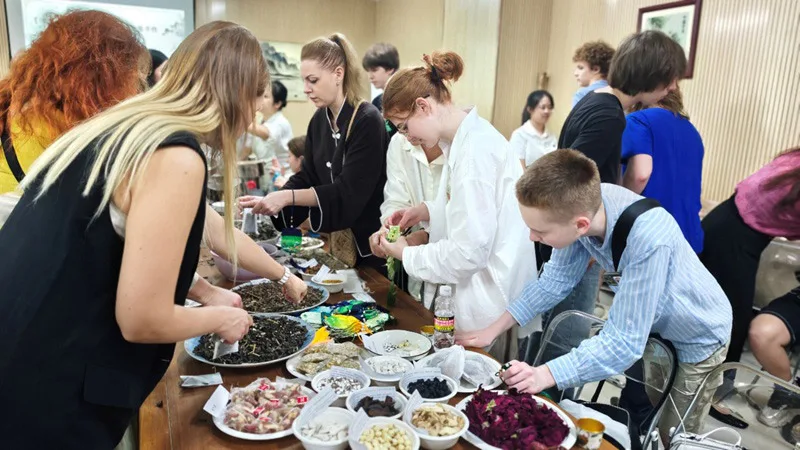
Groups then spread out to try their hands at tea packs from traditional medicine, sachets and hand-made face masks, and at cloisonne crafts and huanghuali sachets. The making was deliberately tactile, with students mixing, folding and assembling rather than watching a demonstration on a screen.
After lunch the day moved to the social sciences building, where the visitors chanted classical Chinese poetry together, feeling out the rhythm and the rhyme that carry the form. “Making a sachet and trying cloisonne by hand made me feel that Chinese culture is not only words in a book,” one Russian student said. “It is something you can touch and smell.” A parent travelling with the group added that the trip had genuinely brought the children close to China, and that the students had made Chinese friends along the way.
The First Visit of a Longer Series
This was the opening event in the institute’s Russia study-tour programme, organised under the academic guidance of its dean, Professor Zhao Yanchun. The 13-day itinerary places the university session within a wider trip through the island, and the format couples classroom time with museum visits, planting, craft work and performance.
Study courses for foreign teenagers have been widening in scope in recent years. Traditional Chinese medicine, Li brocade, incense culture and cloisonne now appear together in the same timetable, and for many of the visitors the appeal is the same as the one the student described: things that can be handled, smelled and worn, rather than read about. The friendship tree planted outside the institute was a young one, and the group leaves Hainan on October 17.