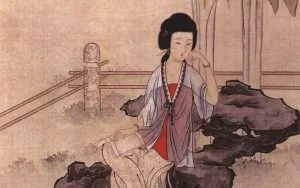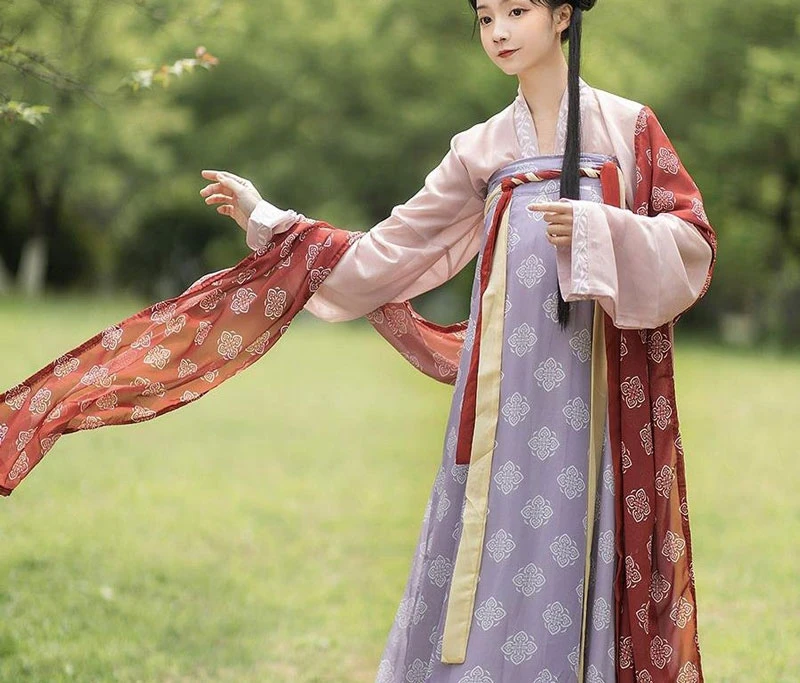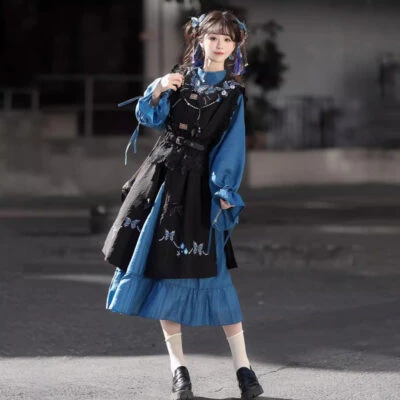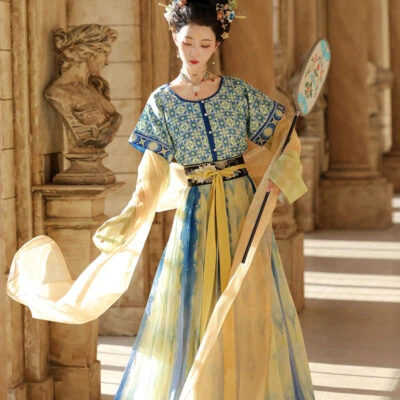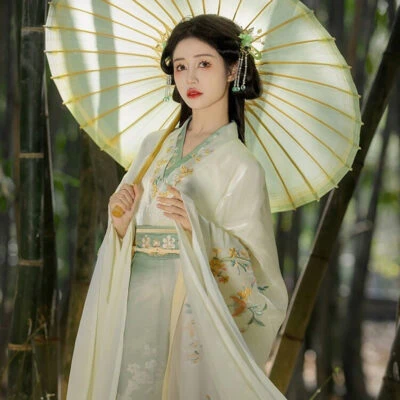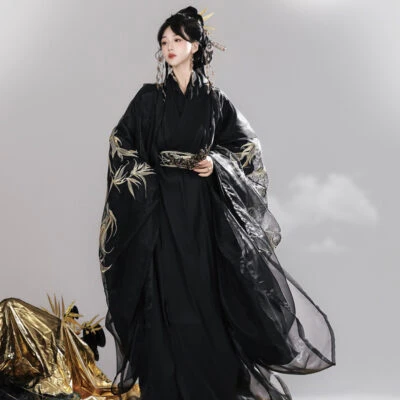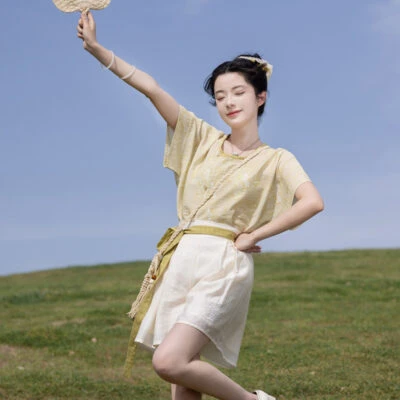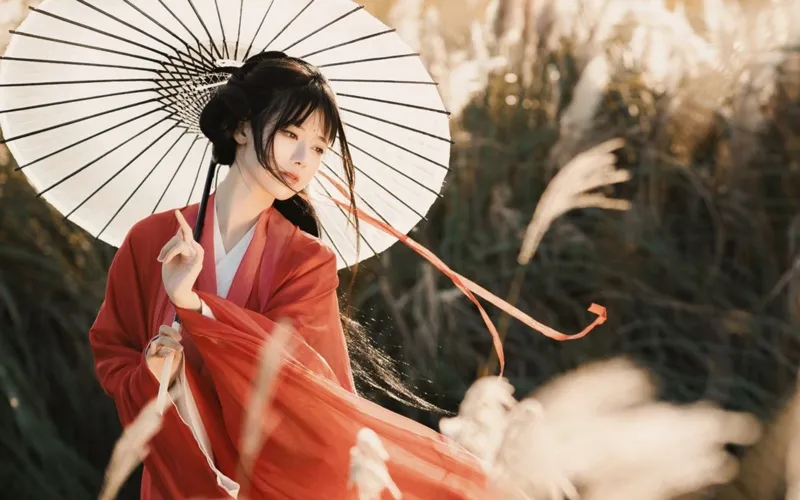
Nowadays, young people wearing Hanfu can often be seen in parks and ancient scenic spots. With loose, flowing sleeves, light and graceful skirts, delicate makeup and elegant hair ornaments, they walk among ancient buildings, as if traveling through time and forming a unique scenery of their own.
Clothing ranks first among the four necessities of life: clothing, food, shelter and transportation. Clothes do not only keep people covered and warm; they also embody etiquette. In the following series, we will talk about Hanfu and traditional costume culture.
What is Hanfu?
Hanfu refers to the traditional clothing of the Han ethnic group. It does **not** only mean costumes of the Han Dynasty.
It covers traditional garments worn by Han people across successive dynasties: Shang-Zhou, Qin-Han, Tang, Song and Ming.
Key features: cross-collar right lapel (the front placket overlaps to the right), wide robes and large sleeves, fastened with ribbons instead of buttons. Round-collar and straight-collar styles also exist.
Common styles: Quju (曲裾), Ruqun (襦裙), Beizi (褙子), Aoqun (袄裙), Daopao (道袍), etc.
Important note: Hanfu is the traditional costume system of the Han people, ending in the Ming Dynasty.
1. Costumes of the Shang and Zhou Dynasties
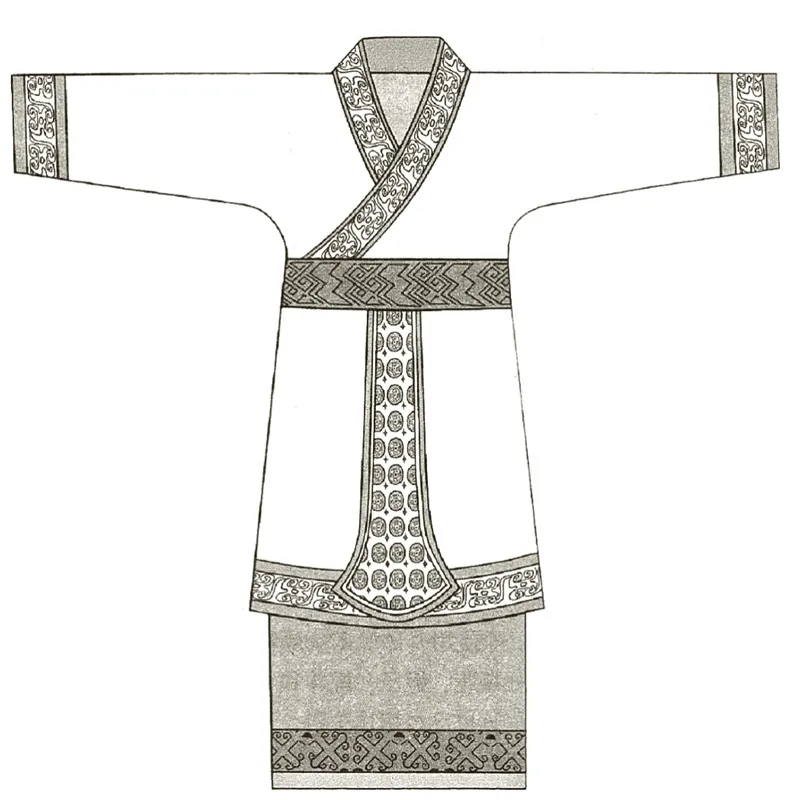
Representative styles: This period marks the origin of Hanfu ritual systems. The main style is the top-and-skirt system (上衣下裳).
Complete outfit: upper garment + lower skirt + sash + Bixi (apron-like ornament). Nobles also wore ritual headgear and jade pendants.
Features: solemn patterns and strict colour rules. The emperor’s robe had twelve kinds of decorative patterns; nobles and officials had fewer patterns by rank. Ordinary commoners were forbidden from wearing elaborate embroidery.
2. Costumes of the Qin and Han Dynasties
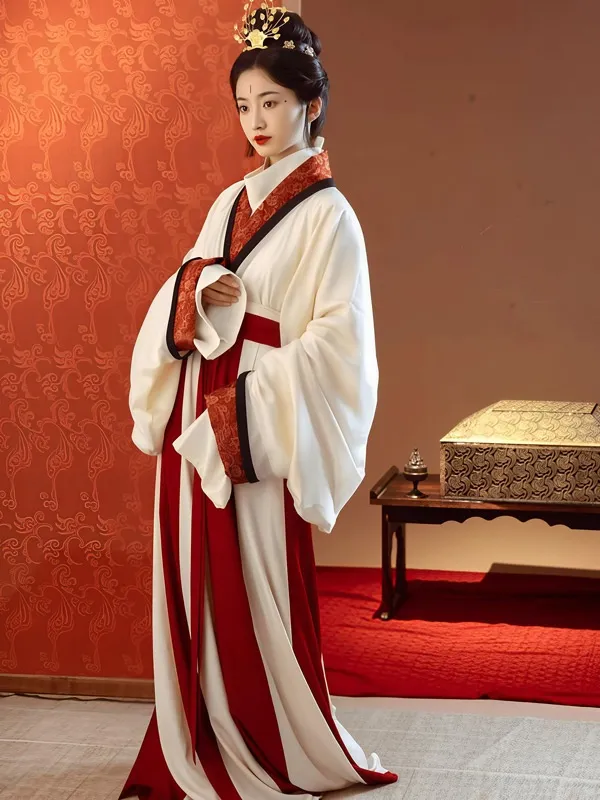
Representative styles: Quju Shenyi (曲裾深衣), Zhiju Shenyi (直裾深衣), and women’s Ruqun.
Complete outfit: outer robe + inner garment + undergarment. Nobles favoured the “three-layer robe” style, with collars of inner layers peeking out in sequence, paired with jade pendants and ribbons.
Features: Trousers in the Han Dynasty did not have a full crotch. Therefore, Quju had to wrap around the wearer formally to meet etiquette requirements.
3. Costumes of the Tang Dynasty
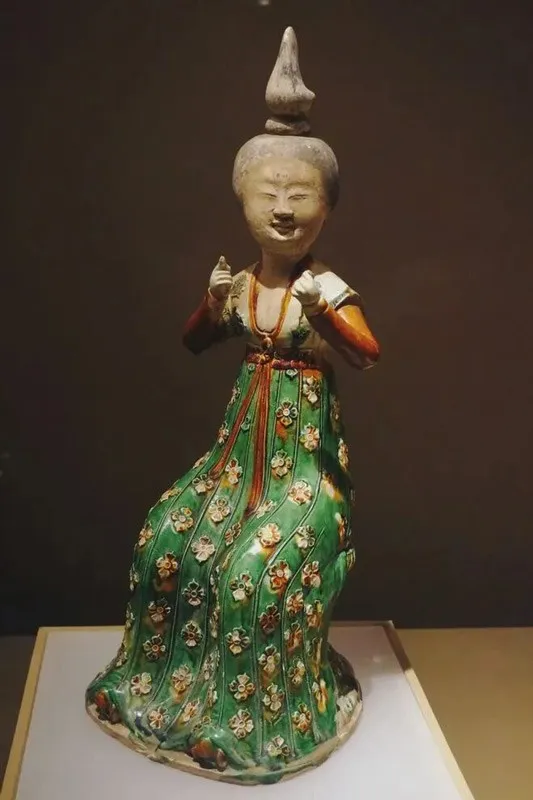
Representative styles: Women’s Qixiong Ruqun; Men’s Yuanling Pao (round-collar robe).
Complete outfit for women: upper blouse + chest-high skirt + Pibo (披帛).
For men: round-collar robe + sash + Putou (幞头).
Features: Bright colours, bold and open aesthetic, absorbing styles from Western Regions. Sheer, low-cut styles were mainly worn by court nobles; ordinary civilian women did not dress like this.
4. Costumes of the Song Dynasty
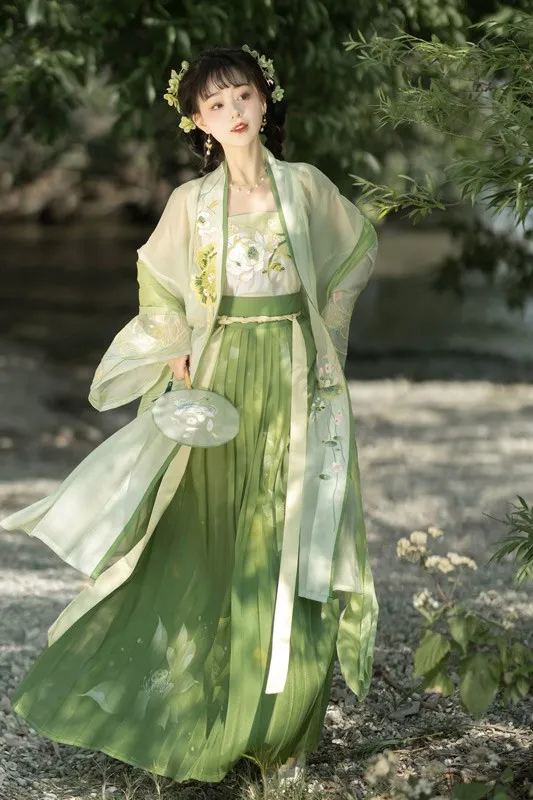
Representative styles: Beizi, Baidie Skirt (百迭裙) for women; men’s Yuanling Lanshan (圆领襕衫) and Daopao.
Complete outfit for women: chest binder + Ruqun + Beizi.
For men: Lanshan or Daopao, matched with various headwraps.
Features: Influenced by Neo-Confucianism, Song fashion valued simplicity and muted colours, with slender, refined cuts rather than ostentatious decoration. Wealthy families used embroidered brocade for Beizi, while commoners wore plain cloth.
5. Costumes of the Ming Dynasty
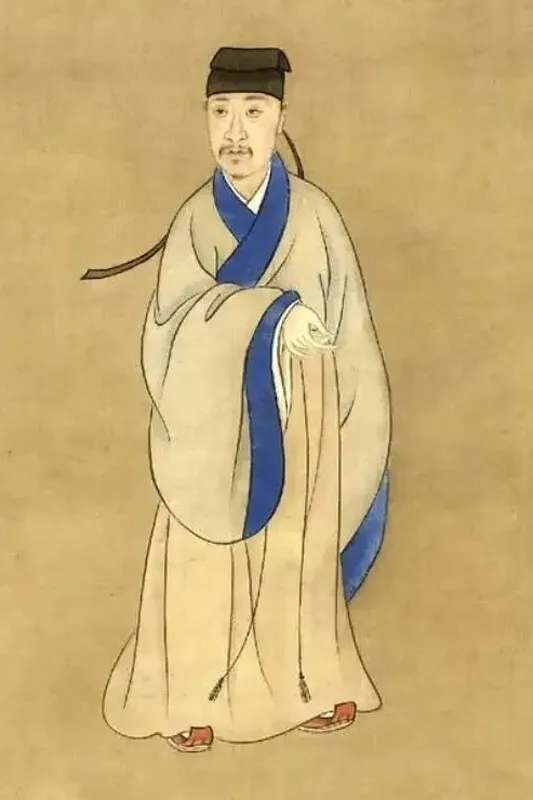
Representative styles: Women’s Aoqun, Mamian Skirt, Bijia (比甲); Men’s Daopao, round-collar official robes with rank badges.
Complete outfit for women: short jacket + Mamian skirt, with an outer Bijia or cloak. Noble brides wore Fengguan Xiapei (凤冠霞帔).
For men: Daopao, Zhishen (直身); officials wore rank-badge court robes.
Features: Dignified and steady; stand collars became widespread, with rich embroidered patterns.
Dress codes were the strictest: only the emperor wore bright yellow dragon robes. Commoners were banned from gold colour and premium brocade. Merchants could not wear high-grade silk fabrics.
Idioms Related to Clothing
Yi Shan Lan Lü (衣衫褴褛): Rags and tattered clothes.
Jin Yi Yu Shi (锦衣玉食): Fine clothes and delicacies; living in luxury.
Yi Guan Chu Chu (衣冠楚楚): Neatly dressed.
Feng Guan Xia Pei (衣冠楚楚): Magnificent ceremonial attire for ancient noble brides: phoenix crown and rosy shawl.
Yi Mei Piao Piao (衣袂飘飘): Fluttering sleeves, describing a graceful figure.
Cu Yi Bu Lü (粗衣布履): Plain rough clothes and cloth shoes; simple and frugal dressing.
Yi Guan Qin Shou (衣冠禽兽): Originally referring to officials whose robes were embroidered with birds and beasts; now a derogatory term for people who look decent but are morally corrupt.
Bi Yi Xiao Fu (敝衣枵腹): Wearing rags and going hungry.
E Guan Bo Dai (峨冠博带): Tall hat and wide sash; the dress of ancient scholars.
Duan He Chuan Jie (短褐穿结): Short rough hemp robe patched and torn; describing extreme poverty. From
Biography of Mr. Five Willows (五柳先生传).