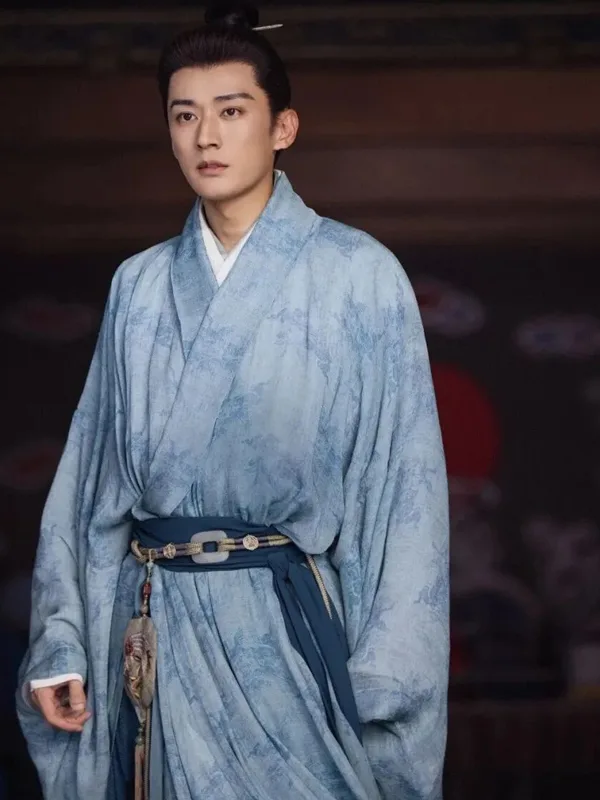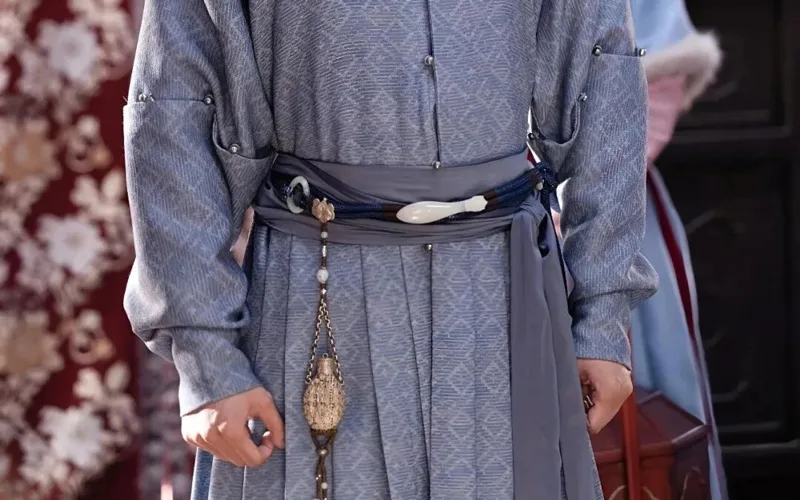
In Against the Current (兰香如故), Lin Jinqi (林锦岐) catches the eye not because of a sword or a grand robe, but because of a tiny object swinging at his waist. Viewers notice it in several scenes: a small pouch, richly worked, quiet yet impossible to ignore. It looks like jewelry, but it also works like a tool. In Ming Dynasty dress, such waist pieces appeared on men and women alike. The object has a name: the scent pouch. Some call it a Hebao (荷包), but the two are not the same. A Hebao carries loose change and small goods; a scent pouch carries fragrance. Without bottled perfume, people relied on this little bag to leave a pleasant trail wherever they walked. That small swing of cloth and silk held far more than scent.
Two Thousand Years
Its ancestor was the Pei Nang (佩囊), a carrying bag. Ancient clothes lacked pockets, so keys, coins, papers, and other daily bits went into a cloth pouch tied at the waist. The word “he” meant to carry, which is why it was also called a Hebao. Later, Book of Rites (礼记) set a rule for young people: at cockcrow, they had to wash, dress neatly, wear a fragrant pouch, and greet their elders. The smell was not vanity. It was manners. A clean, sweet scent showed respect, and a young person without it could seem careless.
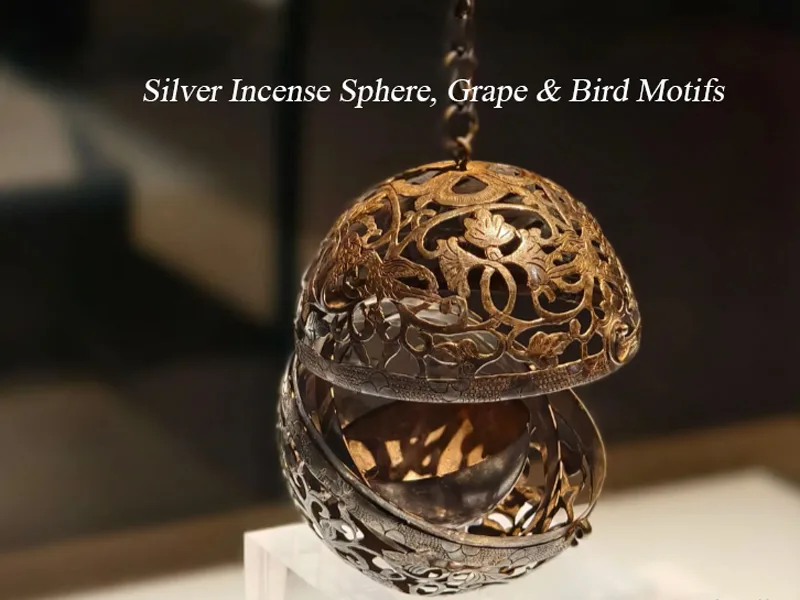
By the Han Dynasty, the scent pouch had its modern name. Poet Fan Qin (繁钦) wrote in Poem of Settled Love (定情诗): “How to show my earnest heart? A scent pouch tied behind the elbow.” During the Northern and Southern Dynasties, officials wore them at court to signal dignity and refinement. In the Tang and Song dynasties, shapes, fabrics, and ornaments multiplied. Song society, in particular, treated fragrance as a daily pleasure and a mark of taste. Ming scholars followed the same habit: a knife on the left, a fragrant pouch on the right, looking almost immortal.
Yet the pouch was never only about scent. In Ming times, the Hebao handled daily business: money, documents, seeds, snacks. The scent pouch handled the inner life. It sat close to the body, often stitched by a woman’s own hand, so it could become a token of love. A mother might sew one for a son; a lover might hide a private stitch inside. It also guarded health. A herb bag, people said, kept insects and bad air away. Ritual, romance, and medicine met in one small item, and each thread carried a duty.
Belts and Rank
The classic partner of the scent pouch was the leather belt. Tang court dress used strict parts: a leather body, decorated plaques, a buckle, and an end piece. Material and number told rank. A belt was not just a belt; it was a public statement. The Diexie belt (蹀躞带) added metal rings and short straps for hanging a knife, a calculation bag, a scent pouch, and other useful objects. It was standard for men’s daily wear and made travel practical. More often, the pouch hung from silk cords tied near the belt plaques or along one side, usually at the back or side waist, so it did not block movement or ruin the front line.
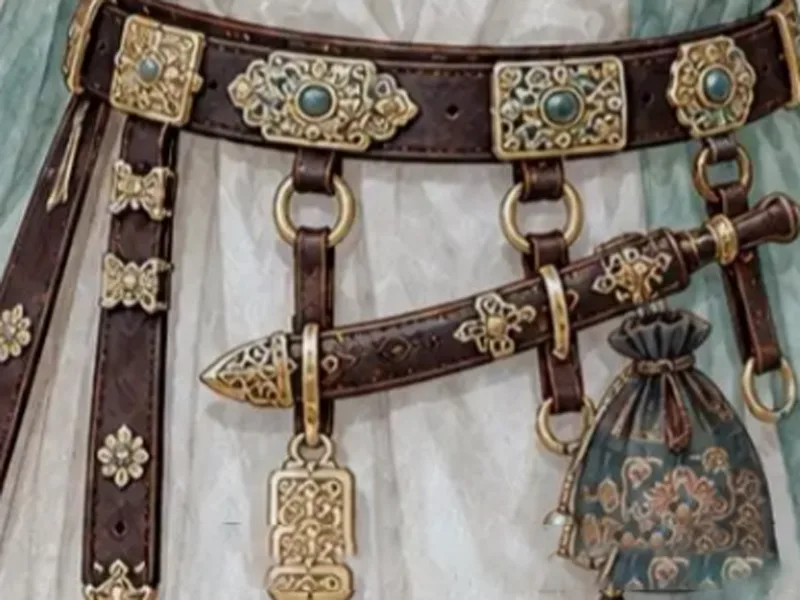
Rank could also be read from the belt itself. Ming History (明史) records rules from 1393: first-rank officials wore jadeite belts, second-rank wore rhinoceros horn, third and fourth wore gold, fifth wore silver with engraved flowers, sixth and seventh plain silver, eighth and ninth black horn. Nobles and first-rank officials shared the same grade. A jade belt was not a casual choice. A waist accessory thus carried law, status, and taste at once, and a man’s belt could speak before he did.
Still, the overall effect was deeply literary. A scholar in Ming robes, a leather belt, a jade plaque, and a small fragrant pouch did not simply follow rules. He moved through the world with a private scent, a public rank, and a quiet story tied at his side. That is why Lin Jinqi’s little waist charm remains so compelling. It is not mere decoration. It is memory, etiquette, health, and desire, all folded into a handful of cloth. The pouch was small, but its social weight was heavy, and its charm outlasted the dynasty that wore it.