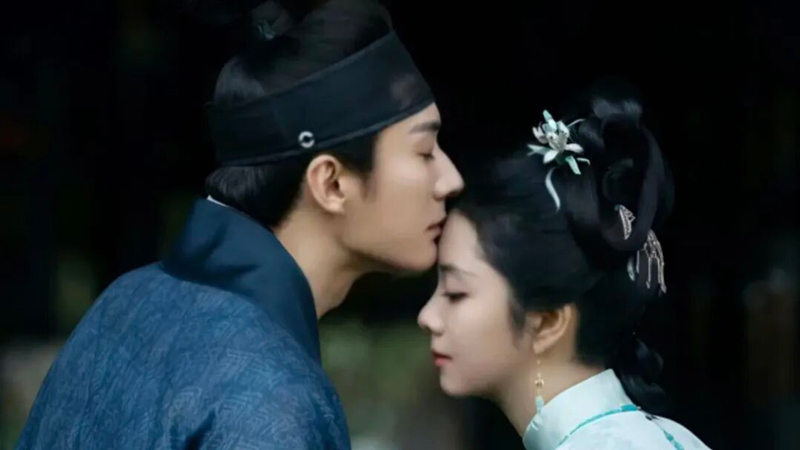
If you have been watching the period drama Against the Current (兰香如故), you might have noticed something odd about Liu Xueyi’s (刘学义) character, Lin Jingqi. The man wears what looks like a piece of fishing net stretched over his head. Viewers have joked about it endlessly online, asking whether the production ran out of budget for proper headwear. But here is the twist: that so-called net is actually one of the most historically accurate costume choices in recent Chinese period television, and it has a name — Wangjin (网巾), a mesh hairnet worn by adult men during the Ming Dynasty.
A Practical Tool
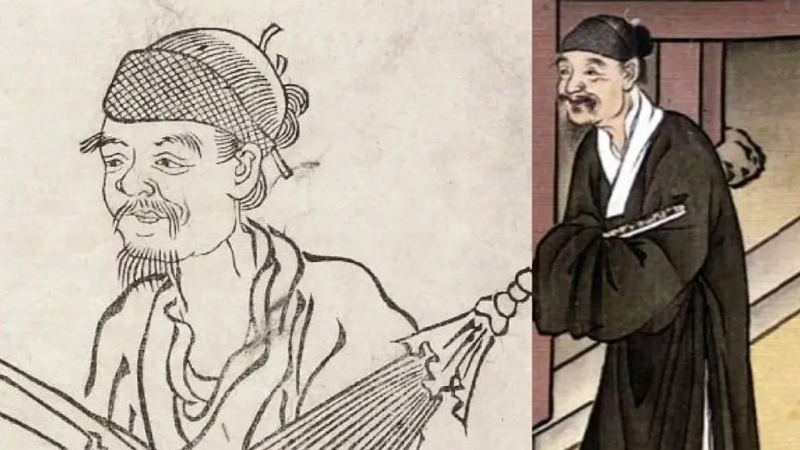
The Wangjin was not decorative. It served a straightforward purpose: gathering hair into a topknot, taming stray strands, and keeping hats from sliding around. Think of it as a functional base layer for the head, the ancient equivalent of a hair tie that also happened to look sharp. According to the Ming-era encyclopedia Sancai Tuhui (三才图会), the dynasty’s founders wanted to replace the hairstyles of the previous Mongol rulers with something distinctly Chinese, using silk knotted into a net to bind the hair. The object carried a name that sounded almost political: “Law binds the Central Plains, and the four directions are pacified.”
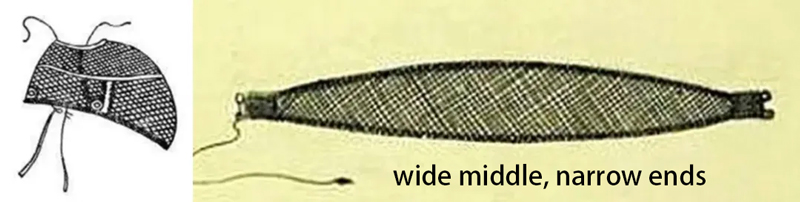
Two main styles existed. One resembled a fitted cap that covered the entire skull. The other was a band-like strip, wide in the middle and narrow at both ends, tied at the back. Most adult men in the Ming era used the Wangjin as a foundation. Commoners might wear it alone when stepping out; officials and scholars would layer a formal cap on top. The History of Ming (明史) records that “from noble to humble, all wrapped the Wangjin,” making it one of the rare accessories that crossed every social boundary.
From Emperor to Prison
The Wangjin’s nationwide popularity owes much to Zhu Yuanzhang (朱元璋), the Hongwu Emperor. Legend has it that he once traveled in disguise to a Taoist temple and saw a priest weaving a net by lamplight. Curious, he asked what it was. The priest replied that it was a Wangjin, and that wrapping it around the head would make “ten thousand hairs neat and orderly.” The emperor liked the answer so much that the next day he ordered every man across the thirteen provinces to wear one.
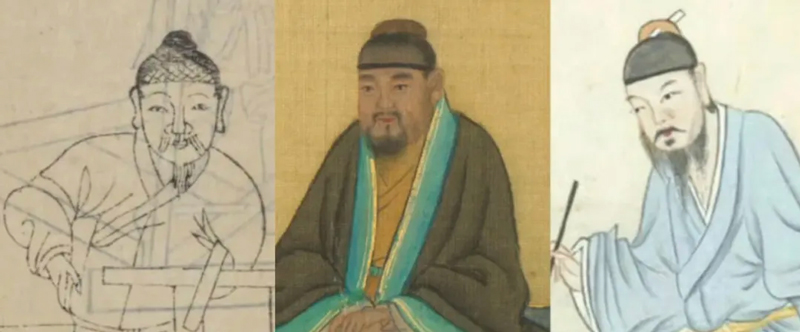
Materials varied over time. Early versions used fine black silk cord, horsetail, or palm fiber. By the late Ming, people switched to horsehair and even human hair, which gave the mesh a denser, more refined texture. Top-grade examples had drawstrings threaded through jade or metal rings at the temples. If you imagine the difference between a flimsy pair of stockings and a tightly woven pair, you get a sense of the quality gap between cheap and well-made Wangjin.
By the late Ming, a lazy version appeared. Called the “Lazy-Cinch Wangjin,” it dropped the drawstring at the top and eventually eliminated the upper half entirely, leaving only a curved band that sat across the forehead. The story goes that prisoners during the Tianqi era could not remove their Wangjin in time, so they cut off the top cord and wore the bottom half alone. Commoners copied the look, and despite scholars turning up their noses at what they called a “prisoner’s cloth,” the style caught on. Within a decade, the full version had practically vanished.
Not a Korean Hat
Here is where things get complicated. Many Chinese period dramas have dressed their male characters in a two-band headband that looks nothing like the Ming Wangjin. That style is closer to the Korean Manggeon, a circular band with strings at each end, worn across the forehead. The Manggeon was indeed derived from the Chinese Wangjin and spread to the Joseon court during the Ming Dynasty, but it evolved into a distinct form. The Chinese original covered the top of the head like a perforated cap. The Korean adaptation wrapped around the forehead like a headband. They are related, but they are not the same garment.
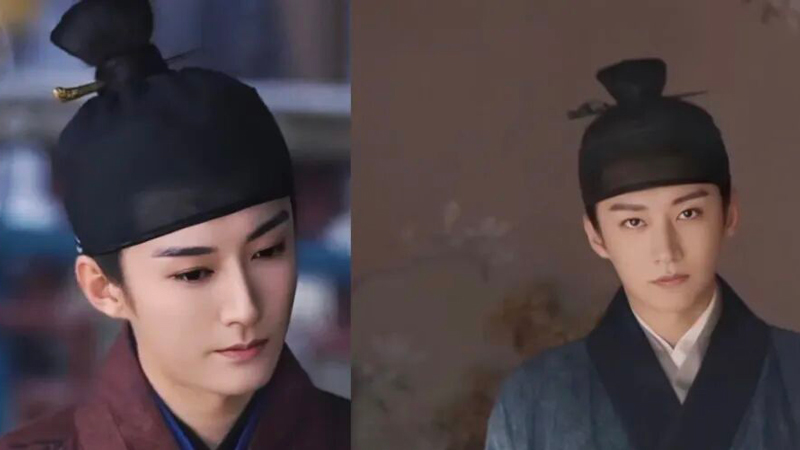
So when Against the Current puts a proper Ming-style Wangjin on Lin Jingqi’s head, it is not making a fashion error. It is correcting one. The net-like texture, the way it sits flat against the hair, the ties at the back — these details follow historical records closely. Whether you find the look handsome or slightly absurd, one thing is clear: after decades of costume dramas recycling the same inaccurate headpieces, a production finally did its homework. The next time someone calls it a fishing net, you can tell them it is a Wangjin — and that the fish were never the point.