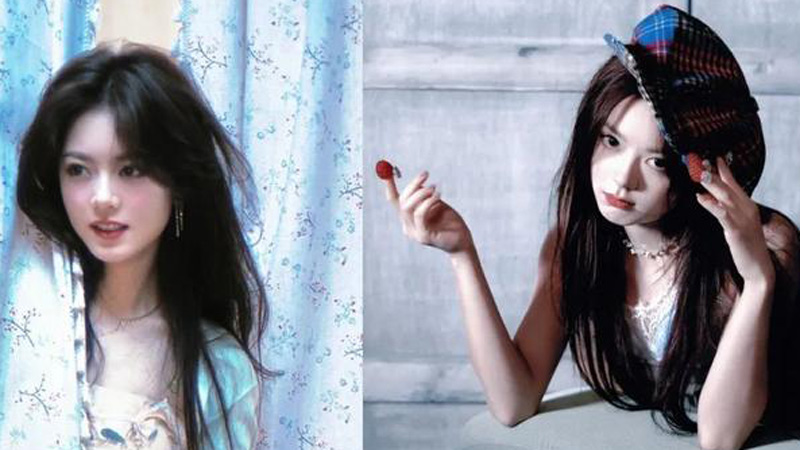
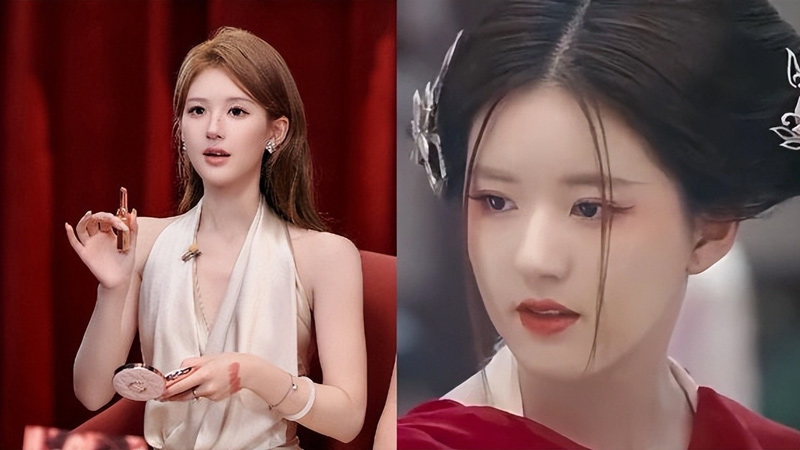
China’s new Chinese-style apparel market passed 250 billion yuan in 2025. Hanfu alone cleared 20 billion yuan, and Caoxian county in Shandong, one of the country’s largest Hanfu manufacturing bases, contributed more than 13 billion yuan of that.
The growth figures arrive with a set of problems the trade now recites without being asked: thin brand premiums, homogenised design, and little influence over how the category is read outside China. When motifs are lifted and pasted rather than understood, buyers respond to the surface and nothing else, and surfaces are easy to tire of. The harder question the category has set itself for 2026 is how a symbol becomes a system.
That question is being answered along three axes at once: fabric, silhouette and setting, and the three interlock.
Why Fabric Now Sells by Touch
At Shanghai Fashion Week’s autumn/winter 2026 shows, one signal repeated. Independent Chinese designers stepped back as a group from gloss and digital prints and moved toward a fabric narrative built on touch. Recycled wool, organic cotton and linen blends became the default base; bio-based polyester and mycelium leather turned up in several avant-garde collections. This is not aesthetic fatigue. Post-pandemic wearers care more about how cloth sits against skin than about how it photographs from across a room, and designers answered with coarse wool, double-layer weaves and air-layer knits that build depth quietly.
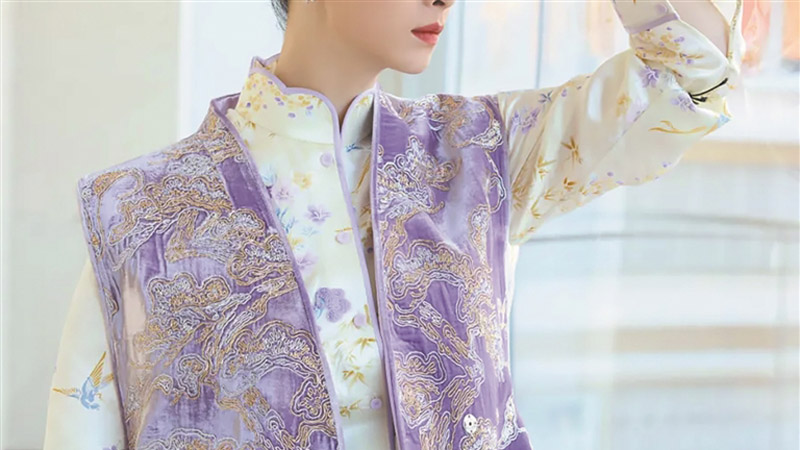
Heritage handwoven textiles are the more consequential shift. Song brocade, Xiangyunsha and the Dong people’s liangbu stopped being trim. They were deconstructed and rewoven with recycled fibres into composite cloth that carries cultural weight and still holds a contemporary line. The technique is now the material rather than the pattern printed on it.
Fabric preference is pushing the supply chain into a structural adjustment. Export mills are built around kilometre-scale minimum orders; independent designers work in hundreds of metres. Around Shanghai, a set of small-batch, fast-response weaving workshops has appeared to close that gap, using digital weaving and laser cutting to lower the order threshold while keeping hand finishing in the last stage. Traceability has become the new currency of trust, with the full chain, fibre origin through dyeing and finishing, published end to end, and that is displacing the old argument over price. Designers are also re-evaluating where they make things, favouring spinning and weaving capacity in the Yangtze River Delta for shorter lead times, a smaller carbon footprint and the ability to check quality on the spot. That regional supply chain is still a prototype, and it could redraw the geography of Chinese fashion within three to five years.
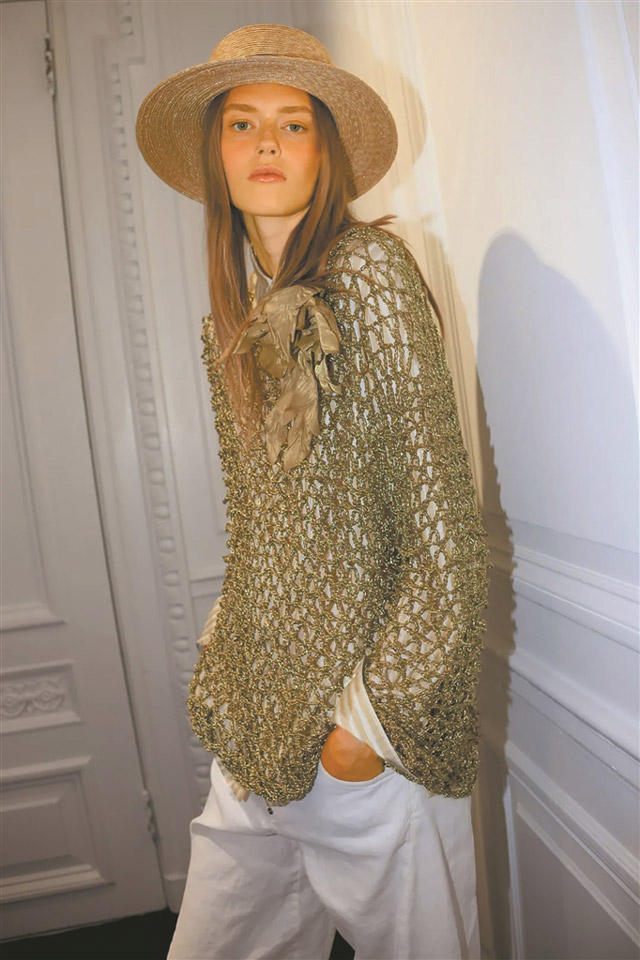
Silhouette Leans on Subtraction
At the silhouette level the keyword is Liubai (留白), the deliberate leaving of blank space. Where earlier seasons stacked Pankou, standing collars and embroidery until a garment carried as many references as possible, this year’s new Chinese style takes things away: plain colour, simple cutting, large empty areas. Searches for holiday travel outfits climbed across e-commerce platforms and content communities, Liubai new Chinese style became a term young shoppers type, and posts tagged for National Day dressing and new Chinese-style photography clustered around plain Pankou tops and moon-white qipao.
International runways had already signalled it. At the spring/summer 2027 shows in London and New York, Burberry marked its 170th anniversary by returning to the everyday under creative director Daniel Lee, digging back into the value of classic, practical pieces beyond their function. Luxury, Lee wrote in his show notes, is essentially emotional. He added that it is the frills and imperfections that make a thing feel human. Ralph Lauren loosened its own rules, opening with a corset worn over plain khaki trousers and pushing the collection toward something lighter and brighter; Khaite and others ran in a similar direction. Young Chinese labels including Lii and Private Policy showed in New York, and a group of younger Chinese designers formed a visible creative bloc in London.
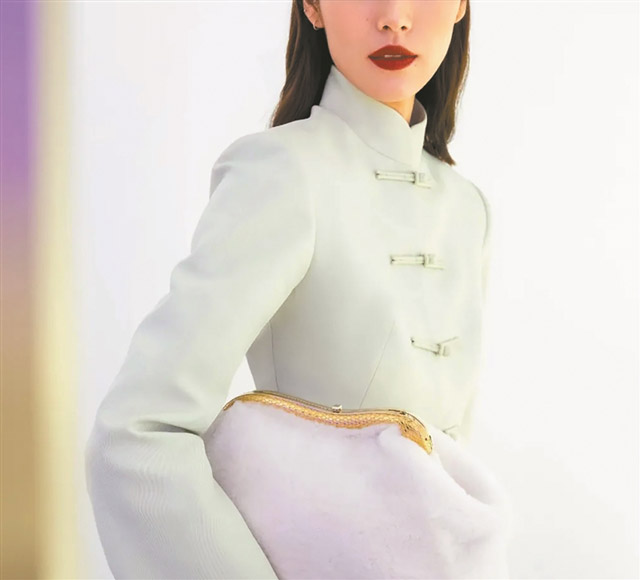
Not everything on those runways was subtractive. Romance and ornament returned in force as well. What the Liubai look captures is the more directional current underneath, a turn toward the practical, the relaxed and the empty. “Less is more” is now widely accepted, and the Xieyi tradition of Chinese painting, which values suggestion over depiction, catches that demand neatly. For designers this means working three inherited ideas into method rather than motif: harmony between heaven and humanity becomes a sustainable design ethic, ritual order becomes modern dress etiquette, and harmony in difference becomes a cross-cultural design language.
In the Wardrobe, Ceremony Loses Ground
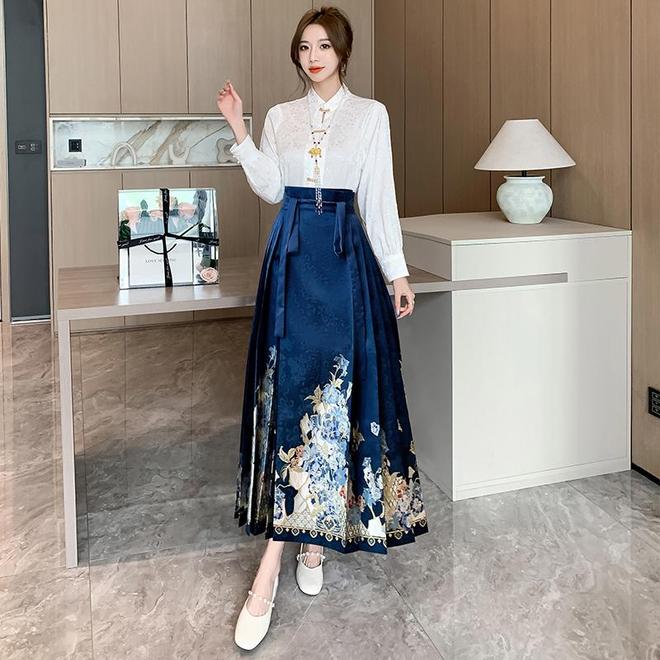
Setting is where the advance shows most plainly. Improved qipao, Pankou tops and standing-collar shirts are now wearable enough to move between occasions, the pitch being one garment across four seasons. Shoppers have started reasoning that a plain Pankou top beats a ceremonial gown that lives in a wardrobe. That is a maturing consumer, paying for temperament and wearability rather than for a symbol, and it is the demand base the Liubai look rests on.
Breakout moments keep accumulating. When the cast of Empresses in the Palace reunited 13 years after the drama aired, the principals appeared in new Chinese-style dress, and actress Jiang Xin wore two looks from the designer label M essential, one emerald green and one purple gown the label titled “Purple Mist from the East”. Fashion outlets treated the styling as a step up. During the Shanghai Formula 1 Grand Prix, the newly married wife of Ferrari driver Charles Leclerc appeared in custom qipao, one of them blue, with a print that worked the Chinese rendering of a quotation from Ferrari’s founder into the pattern. The “NewChinese” tag has been fermenting online since last year, with users outside China filming themselves in slippers and lemon water in imitation of a Chinese way of living.
Formal occasions are opening at the same time. Through fashion applications of Xiangyunsha and Song brocade, new treatments of the standing collar and the Duijin closure, simplified forms and tighter fit to the occasion, the category is recasting inherited ritual as a modern code of self-respect, situational judgement and cultural identity. A dress etiquette distinct from Western convention is taking shape.
In daily practice the Liubai principle runs through everything. For an old town or a classical garden, a plain improved qipao works, or a Pankou top with beige or moon-white wide-leg trousers; cotton and linen breathe, silk drapes, and flat cloth shoes or soft-soled mules keep a full day of walking comfortable. City days reward garments that work more than one way, an oversize new Chinese-style shirt worn alone or layered, with a knit vest or a thin trench for temperature swings. Keep the palette to three colours and the accessories minimal, one jade bangle or a pair of pearl studs, and skip the stacked motifs. Makeup follows the same logic, aiming at light: a clear base, earth tones swept lightly over the eyes, low-saturation lips in bean paste or nude pink. Hair wants low-maintenance polish, a low ponytail or low bun finished with a wooden hairpin or a velvet scrunchie. For a wedding banquet or a family dinner, the move is luxurious subtraction, with velvet or jacquard carrying the formality, a simple cut, a low bun and light makeup.
Where the Conversion Mechanism Stalls
Commercialisation is the bottleneck. The machinery that carries cultural resources into products is the weakest link in the chain, and the trade’s own consensus runs across four levels. On product, the proposal is a database of Chinese traditional dress culture, given the status of a public cultural resource: intellectual-property backing designers can point to, and a structure that lets form, pattern, colour and craft be broken into modules that can be called up and recombined, so that cultural gene, design language and product narrative form one conversion system. On brand, the aim is a cohort of high-end labels rooted in Chinese cultural practice, supported to keep investing in fabric research, pattern databases and heritage craft certification, with a dedicated fund for internationalisation and deeper implementation of the Ministry of Industry and Information Technology’s Three Products programme, which calls for more variety, better quality and stronger brands.
On talent, design schools are being pushed to put Chinese traditional culture into the core curriculum, so that students understand the philosophy behind the garments instead of receiving only Western costume history and technique, and graduate able to decode the tradition and convert it commercially. On policy, the clusters around Caoxian, Guangzhou and Hangzhou need certification and quality standards for Guochao dress, plus systematic support on intellectual property and overseas compliance. The Intangible Cultural Heritage Law gives the tools to protect traditional dress techniques and license their commercial development, which matters if low-end imitation is not to drain the credibility of the category. Cross-sector work with tourism, film and television, and digital content is the other half of that brief.
Sustainability is not a side question. According to UNEP, textiles and apparel account for more than 10 percent of global carbon emissions, above international flights and shipping combined. The older Chinese habit of treating materials as something to be conserved, whether in the Ming patchwork robe pieced out of cloth scraps or in the craft principle that the seasons have their timing, the earth its force, materials their beauty and workmanship its skill, has become a productive source for rebuilding what fashion values. Plant-dye revival, zero-waste geometric cutting, organic cotton at scale and waterless dyeing are the current expressions of it, and they give the Chinese industry a set of propositions for the global green transition that are not simply borrowed from Europe.
Fabric as a Statement
What is happening in 2026 is a collective statement of values. When recycled fibre, heritage textile and local production are woven into a single coat, cloth stops being only a cost line and becomes a position. When the plain Pankou top and the moon-white qipao displace the fully loaded silhouette, dress returns to expression rather than display. For every link in the chain this means the old scale logic is failing: the supplier who adapts fastest to small batches, traceability and joint development is the one designers will go looking for next season. A wardrobe tradition measured in millennia becoming both a marker of cultural confidence and a real driver of industrial quality is the turn most worth recording in 2026.