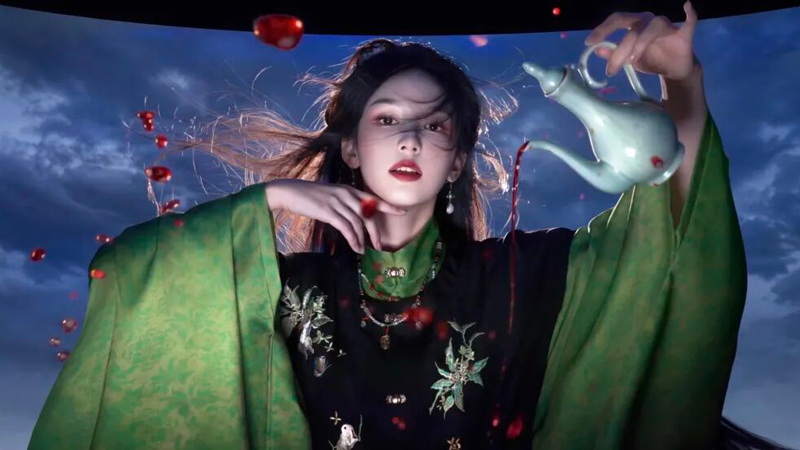
When Zhou Ye (周也) released a new set of Hanfu portraits, viewers expected soft gardens, quiet gestures, and gentle light. Instead, they met red and blue backdrops, a black vest over a green robe, and a mood closer to a ghost story than a spring album. The images quickly split opinion. Some said they were too frightening for children, even disrespectful to tradition. Others praised the bold break from pretty, airy photos. The styling also echoed her role in Spring of the Blade (一瓯春), where she plays Xie Qingyuan (谢清圆), a figure nicknamed a “life-demanding ghost.” That link turns cloth into narrative: color, cut, and camera angle all suggest revenge, secrecy, and unease.
Color and Character
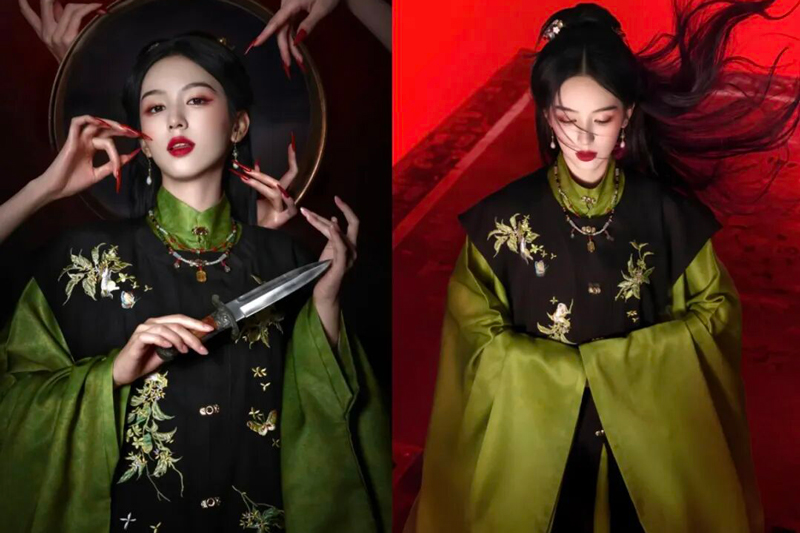
At first glance, the outfit is simple. Zhou wears a Ming dynasty standing-collar diagonal-front long robe in willow green. Over it sits a black round-collar Bijia (比甲). The green suggests fresh leaves and early spring, yet the black layer pulls the whole look into shade. Red and blue walls behind her do not calm that contrast; they sharpen it. The result is not a pretty portrait but a scene with pressure. The eye keeps moving between bright background and dark garment, unsure whether to feel invited or warned. This tension matches Xie Qingyuan’s rumored vengeful spirit. Clothing here is not decoration. It is a script.
Bijia itself deserves a closer look. It is a sleeveless, vest-like garment with side slits, often reaching the hips or knees. Historical examples may have round, square, cross, or parallel collars. Some versions fall nearly to the floor. In its early form, it appeared in the Song dynasty as a long sleeveless overshirt, sometimes called a Beixin (背心). It was practical and layered, worn over a broad-sleeved shirt or padded jacket, with a skirt below. That combination let color and texture build in steps. A plain inner robe could support a darker outer piece without losing elegance. Zhou’s black Bijia follows this logic, but it uses contrast for a colder, more theatrical purpose.
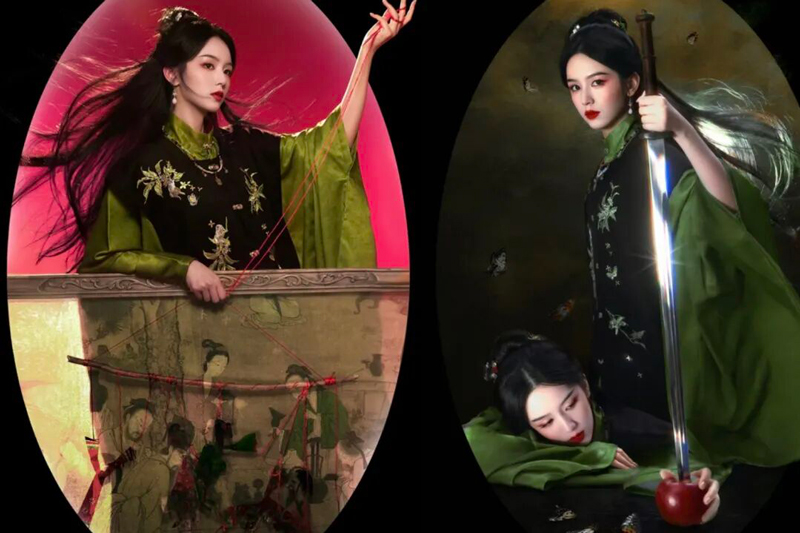
The garment later traveled into Mongol life, where horse riding and archery shaped clothing needs. Yuan Shi (元史) records a garment with no front flap, a longer back, no sleeves or collar, and two loops, named Bijia for bow and horse use. People copied it. In the late Mongol-Yuan period, northern Han women liked the style even more. Once fabric loops and buttons spread in the Yuan era, Bijia could close with cloth or metal fasteners. That made dressing quicker and the fit firmer. In the Ming era, three to five metal mother-and-child buttons often appeared on finer Bijia, mostly for wealthy wearers.
Zhou’s black Bijia over a long robe follows a manner popular in the mid-to-late Ming period. The layering is historically grounded, but the mood is modern. A garment that once signaled convenience, rank, or daily fashion now carries cinematic threat. The dark vest does not simply sit on the body; it presses down on the green robe. That pressure creates the “oppressive” feeling many viewers noticed. When paired with Xie Qingyuan’s ghostly label, the look becomes a visual hint: something polite on the surface, something vengeful underneath. The styling does not need a caption. The silhouette and shade already tell the story.
Old Cloth, New Eyes
Modern Hanfu photography has many faces. Some shoots aim for quiet elegance, some for palace drama, some for fantasy, and some for horror-tinged storytelling. Because taste varies, no single image can speak for an entire tradition. Zhou’s portraits are unsettling, but that does not automatically make them disrespectful. Tradition is not a locked room. It has always changed through fabric, buttons, collars, and wearers. The real question is whether the new frame treats the source with care. Here, the cut and layering are specific. The round-collar Bijia, the standing-collar robe, and the red-blue stage all point to a deliberate choice, not random shock.
Critics worry that eerie styling turns Hanfu into a prop for scares. That concern has weight. If a photographer ignores history and uses old dress only for a cheap jump scare, the result can feel hollow. Yet Zhou’s set does not hide its references. It names the Ming style, the Bijia, and the layered construction. It also links the mood to a fictional role. The fear comes from character, not from mocking the clothing. A viewer may still dislike it. A parent may still find it too dark. But dislike is not the same as insult. The images ask for a reaction, and they get one.
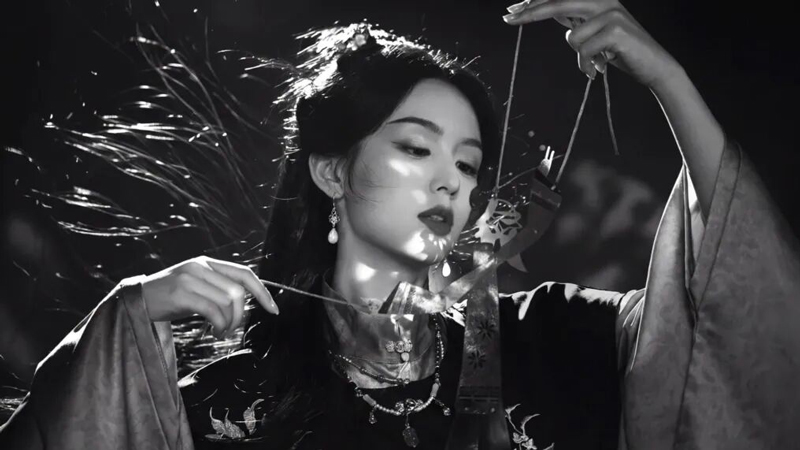
Supporters see something else: a fresh angle. Hanfu does not have to be sweet, soft, or obedient to a single beauty standard. A green robe under black can suggest spring trapped in shadow. Red and blue can feel like opera stages or crime scenes. Metal buttons and side slits can look sharp rather than delicate. For younger viewers, this mix of old shape and new mood may feel more alive than another gentle garden pose. The style does not erase the past. It places the past in a different emotional room and lets the camera watch what happens.
So is Zhou Ye’s Hanfu shoot a break from tradition or a new branch of it? The answer depends on what a viewer wants from old clothing. Some want comfort, continuity, and calm. Some want tension, story, and surprise. The portraits sit between those desires. They use Ming layers, Bijia history, and a ghostly role to build unease. They may frighten children and delight fashion fans. They may annoy purists and inspire photographers. That split is the point. Would you enjoy this style, or would you rather see Zhou Ye in softer Hanfu light?