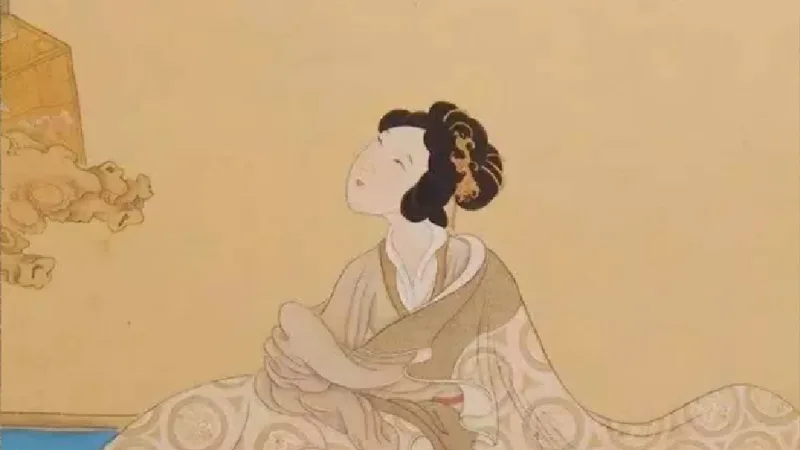
In many period dramas, a red undergarment flashes for a second and disappears. It looks like a prop, a tease, a secret. Yet in China, such clothing carried more than erotic suggestion. Outer robes announced rank, gender, and duty. What lay beneath could whisper private taste, bodily comfort, and even a woman’s small rebellion. This story is not a simple march from shame to freedom. It is a long conversation between cloth and custom. Before modern bras or slips, Chinese women invented shapes that answered their times. Their choices survive in tombs, paintings, poems, and embroidered scraps. To understand them, start with a word that once made people lower their voices.
Han Layers
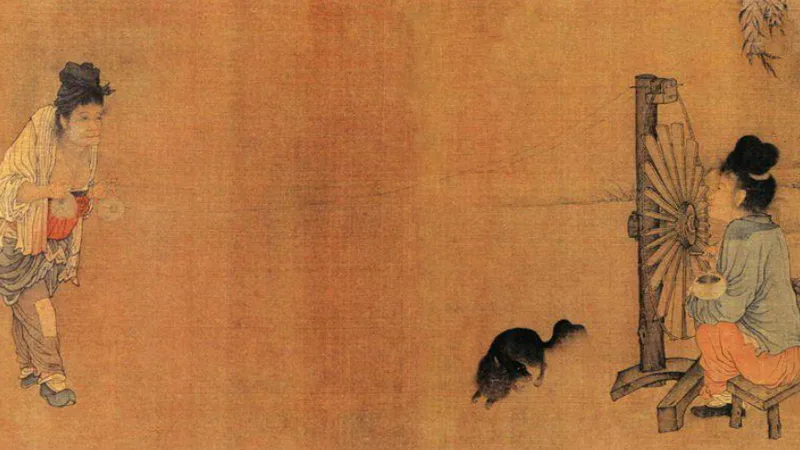
Before the Han dynasty, underwear was commonly called Xieyi (亵衣). The character xie suggested lightness, disrespect, something not meant for public view. That name alone shows how tightly shame and privacy were stitched together. The body beneath was not a topic for polite talk. But by Han times, makers began to experiment. A plain strip of cloth wrapped across the belly became known as Pafu (帕腹). It was less a garment than a practical layer, close and quiet. From this modest beginning, more deliberate forms appeared. Each added strap or panel changed how a woman moved, breathed, and saw herself.
Add ties that cinch the waist, and the Pafu became Baofu (抱腹). Add shoulder straps and a lower flap, and it became Xinyi (心衣). The surprising detail is that both often had only a front panel. The back remained bare. Centuries before modern backless fashion, Han women were already wearing garments that exposed the spine. This was not accidental. It suited layered robes, warm rooms, and a private idea of beauty. The front carried decoration; the back carried air. In that gap between covered and uncovered, the wearer controlled what others could know.
Han undergarments were often made of plain woven silk. Colorful threads embroidered patterns across the surface. Many designs centered on love: paired birds, intertwining flowers, wishes for closeness. Such motifs turn a hidden layer into a message. A woman might wear a private garden under formal robes. No one else needed to see it for it to matter. The cloth touched skin, but it also touched hope. More than two thousand years ago, romance already lived next to the body.
Wei-Jin Reversal
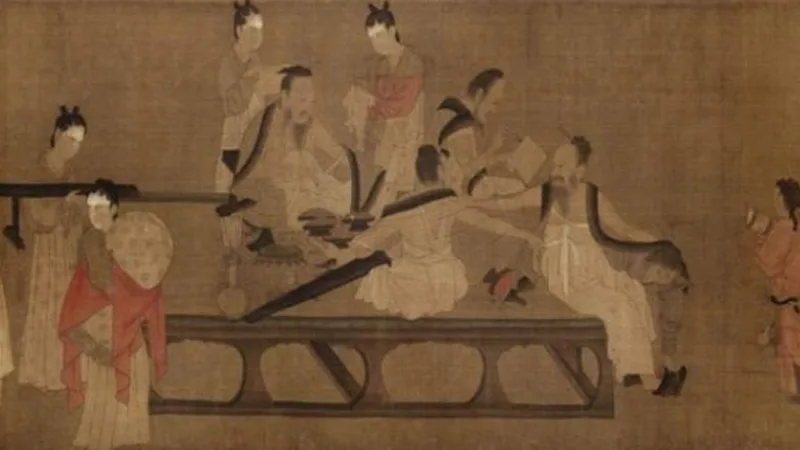
During the Wei and Jin periods, a new piece took center stage: Liangdang (裲裆). Unlike Han front-only styles, it had two panels. One covered the chest; one covered the back. “One for the front, one for the back,” as people described it. This was a real shift. The garment no longer merely wrapped or pressed. It enclosed. It gave the torso a complete silhouette, almost like an early vest. In a time of political fracture and shifting manners, even underwear became more structured, more visible, more capable of standing on its own.
Liangdang was usually made from thick, richly colored brocade. Two layers enclosed a filling of cotton. The result felt substantial, warm, and sculptural. It could be worn inside, but it could also be worn outside. That double life matters. What had been hidden could suddenly become display. Elites, scholars, and fashionable women could let the underlayer speak in public. The boundary between private cloth and public costume grew thin. In a sense, this was an early form of underwear-as-outerwear, long before runways turned slips into dresses.
The shape also answered practical needs. Cold halls, drafty rooms, and long seated gatherings made warmth valuable. A padded front-and-back piece protected the body without heavy outer robes. Decoration turned function into status. Brocade cost money; visible brocade cost even more. Yet the garment never lost its intimate role. It stayed close to the skin while announcing itself to the room. That tension between privacy and performance would return in later dynasties, each time with a different cut and a different excuse.
Tang Bareness
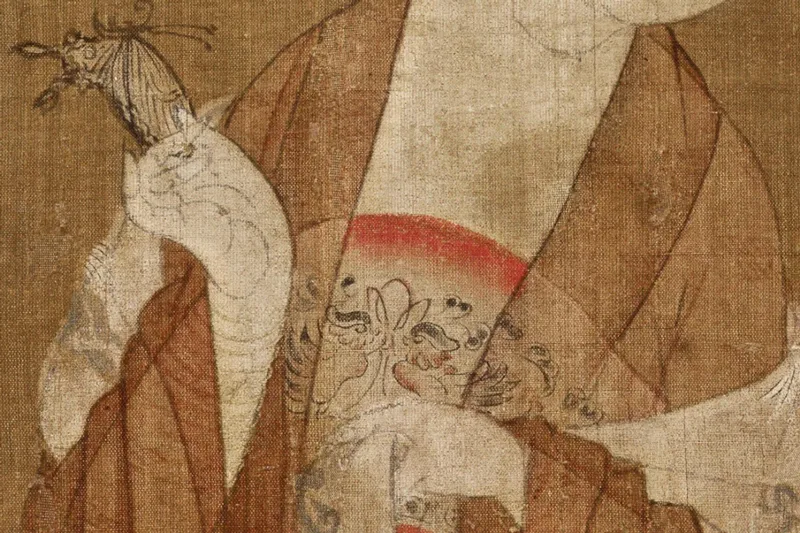
The Tang dynasty gave Chinese underwear one of its boldest chapters. A strapless piece called Hezi (诃子) appeared. It supported the chest without shoulder straps, using firm, slightly elastic fabric and two ties below the bust. The design matched Tang dress, where skirts rose high above the waist and necklines opened wide. A woman could wear a sheer outer robe over the Hezi. The undergarment remained half-seen, half-guessed. It was not hidden shame but calculated presence. The body was not denied; it was framed.
An old text, Shiwu Jiyuan (事物纪原), credits Yang Guifei (杨贵妃) with inventing the Hezi. Whether true or legend, the story reveals what people wanted to believe: that beauty, power, and invention could meet in a private garment. Yang was the emperor’s famous consort, a figure tied to luxury and desire. Her name gave the Hezi a glamorous origin. In a court where appearance could shape influence, even an underlayer became part of politics. The tale also hints that women, or at least the women around power, drove fashion with practical genius.
Tang aesthetics favored fullness and confidence. The Hezi did not flatten the chest. It shaped and lifted, then let the outer dress do the rest. Gauze, silk, and bright sashes created layers of transparency. The effect depended on movement: a turn, a bow, a sleeve lifted. What showed was never the whole. This play of veiling made the body an active subject, not a passive object. For its time, the style was remarkably free. Yet freedom still had rules. Class, occasion, and court etiquette decided who could wear such openness and where.
Song Dynasty
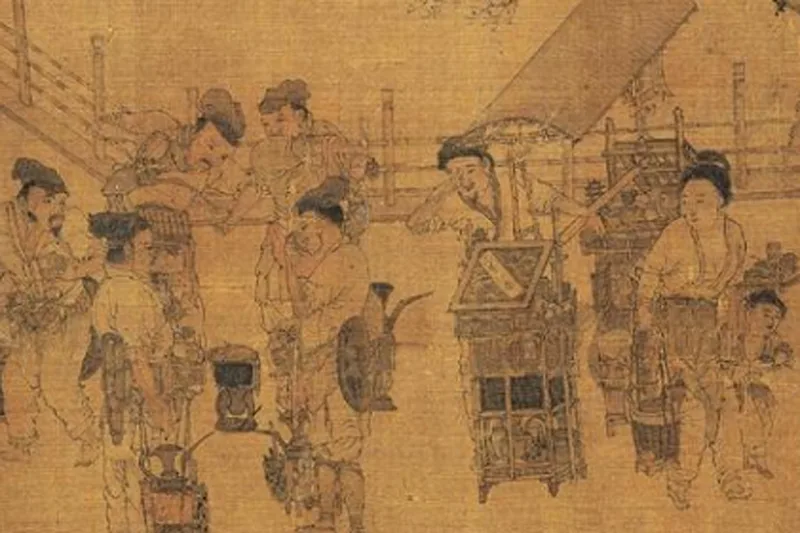
Under the Song dynasty, Cheng-Zhu Neo-Confucianism (程朱理学) tightened expectations around women. Underwear answered with restraint. The Moxiong (抹胸) covered the chest above and the belly below. It could be paired with a Beizi (褙子), a long outer jacket whose open front let the Moxiong appear and disappear with each step. This was modesty, but not dullness. The shape created a quiet frame. It controlled the body without erasing it. In a stricter society, the hidden layer still found ways to speak through fabric, border, and fit.
Song women did not abandon luxury. The philosopher Cheng Yi recalled that his great-aunt owned a Moxiong decorated with pearls. If a scholar’s family kept such a piece, richer circles must have sparkled even more. Tombs preserve the evidence. The earliest known Moxiong came from the Southern Song tomb of Huang Sheng (黄昇) in Fuzhou. Made of plain silk, it measured fifty-five centimeters long and forty wide. Another from a Song tomb in Nanjing stretched over a meter across. A diamond-flower printed silk piece now rests in a Nanjing museum, still vivid enough to stop a viewer.
Ming and Qing Dynasty
The Ming dynasty favored the Zhuyao (主腰). It looked like a vest, with three ties on each side of the front. Pulled tight, it narrowed the waist and created a crisp line. Fashion demanded red and embroidery. A plain undergarment was not enough; people said no one should wear anything but bright red embroidered cloth. The Zhuyao turned support into spectacle. It also showed how underwear followed the body’s social shape. When the ideal silhouette changed, the hidden seams changed first. Outer robes could hide the effort, but the wearer felt every knot.
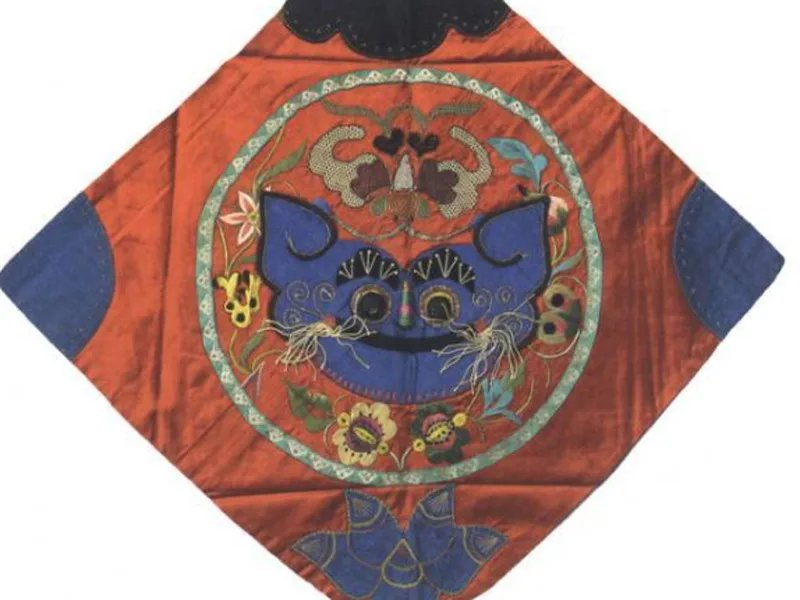
By the Qing dynasty, the Dudou (肚兜) settled into the diamond shape many people recognize today. A loop went around the neck; two ties crossed at the back; the lower point covered the navel and reached the lower belly. Embroidery turned each piece into a personal charm. New couples received mandarin ducks, a wish for harmony. Young women wore butterflies and paired birds. Children wore tiger heads and the Five Poisons to ward off illness. Lotus and a child meant many sons; a vase of flowers meant peace and wealth. Every stitch held a hope. Under harsh constraints, women still stitched romance, protection, and power into a small square of cloth.