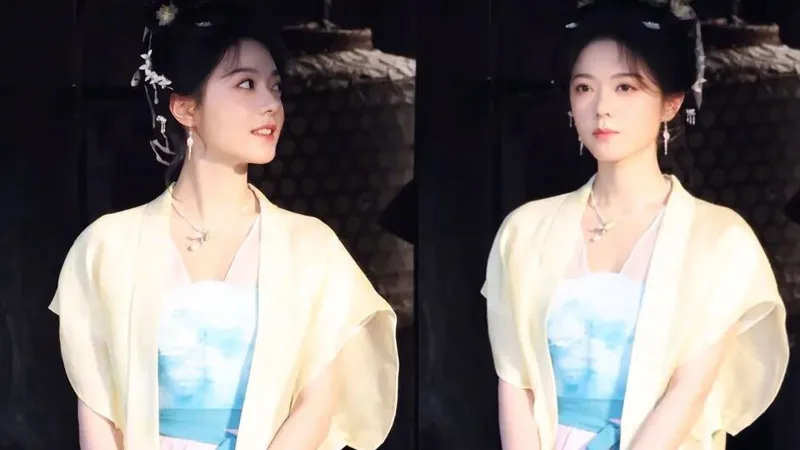
A recent street shot from the costume drama Yi Nian Jiang Nan (一念江南) shows Zhao Jinmai (赵今麦) in a pale yellow short-sleeved cardigan over a chest-high skirt. Her arms are bare. Comments quickly split: some call the look too modern, arguing that proper women in ancient China covered their arms. That reaction says more about modern assumptions than about historical wardrobes.
Short sleeves were not a sudden invention from a film stylist. They appeared in China long before, though their meaning depended on place, class, weather, and occasion. The real question is not whether ancient women ever wore them, but when, where, and how they did.
Half Sleeves
The earliest clear examples belong to the Han Dynasty. People called them half-sleeves or half-arms: tops with shorter sleeves, often layered over a long-sleeved garment. The book Explanation of Names (释名) even describes this cut. It was not underwear in the modern sense, nor a radical reveal. It added warmth around the torso while leaving the lower arm freer. In daily life, such layering gave movement and comfort. A woman could keep the formal line of a long-sleeved robe while gaining practical ease. That balance matters. Ancient dress was rarely about one rule for every moment; it was a system of adjustments.
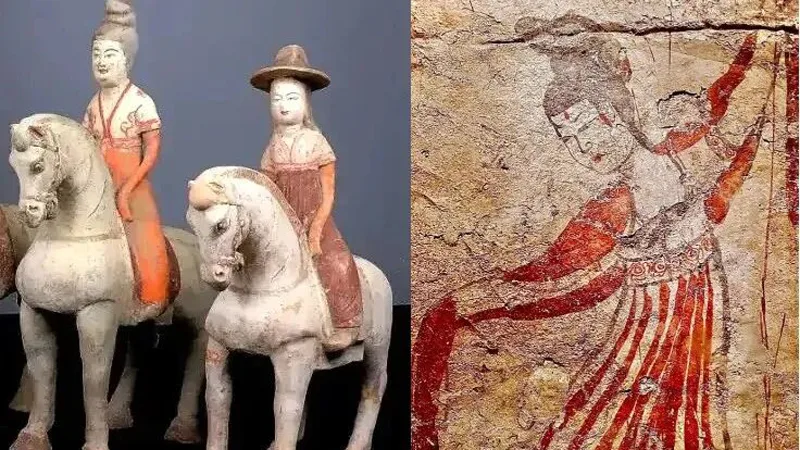
During the Wei, Jin, Southern and Northern Dynasties, the half-sleeve stayed popular. Makers decorated the sleeve edge with pleats, ruffles, or contrasting fabric. These details sound surprisingly current, yet they served the same purpose as trim today: they drew the eye, marked taste, and gave a simple shape a sharper identity. Women did not wear the same outfit everywhere. A half-sleeve could sit over a long-sleeved top indoors, or appear in lighter form in warmer weather. Tomb figures, murals, and textiles hint at these choices. They show that short sleeves had a social life long before cameras and comment sections.
The Tang Dynasty pushed the half-sleeve to a high point. Court women and ordinary women wore it. Some women also wore short-sleeved tops alone, with bare arms. Surviving objects and images often link that choice to dancers and working people, because movement and labor made long sleeves inconvenient. Yet Tang society was relatively open, and summer heat is summer heat. In a private home, a woman might reasonably wear a lighter top without a long-sleeved layer. Art does not record every private moment. What survives is partial, and it should not be mistaken for a complete rulebook.
What about men? Short-sleeved layers also appeared on male laborers and soldiers, but women’s wear drew stricter comment because female modesty was tied to family status and public gaze. A farmer’s wife and a scholar’s daughter might both wear short sleeves at home, yet their silk quality, trim, and color differed. Clothing marked rank, age, season, and task. A single snapshot cannot explain all of that. The useful approach is to ask who is wearing what, where, and why. The answer changes with each detail. This is why a street photo can feel modern to one viewer and historically grounded to another.
Cooling Tricks
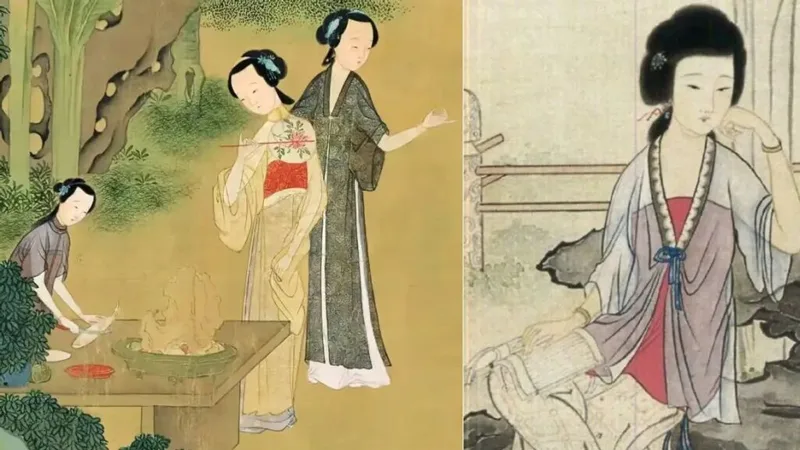
In the Song Dynasty and Yuan Dynasty, short sleeves remained useful for work. A long sleeve catches on tools, hearths, and looms. A shorter one does not. A sleeveless or short-sleeved jacket unearthed in Nanjing belonged to a Song elite woman, and its buttoned, open-front shape is close to what Zhao Jinmai wears. Song women could also wear a chest wrap as an outer layer in some settings. If that was acceptable, a short sleeve was hardly shocking. By the Ming and Qing dynasties, short-sleeved shirts had spread widely. In the hot, damp south, including Jiangnan, women in ordinary homes and scholarly families changed into them for housework or outings. Genre paintings and beauty portraits show them again and again.
Short sleeves were only one answer to summer. Light fabrics mattered just as much. Ramie, gauz, and leno silk allowed air to pass. Leno silk, woven with open holes, was especially popular in Song and Ming summers; a leno skirt or top felt far better than heavy brocade. Another solution was the sleeveless vest, a front-opening layer worn over a skirt and top. It added structure without heat. Ming painters such as Qiu Ying (仇英) included this look in scenes of city life. Necklines changed too. Tang low-necked ruqun exposed the collarbone; Song straight-collar jackets opened at the front over a chest wrap. Each choice increased airflow.
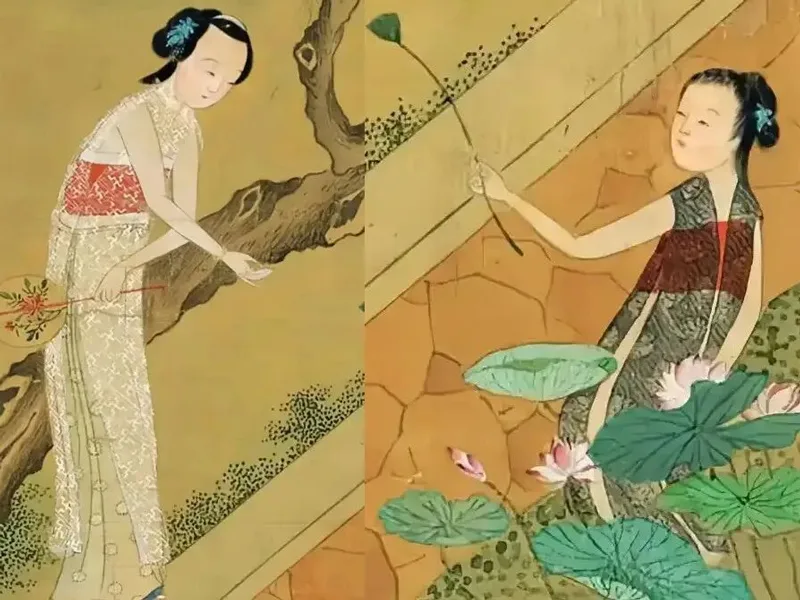
The common belief that ancient women never wore short sleeves comes from a simple mistake: we confuse formal rules with daily habits. At rituals, courts, and formal visits, long-sleeved robes signaled respect. Weather did not cancel that duty. At home, in the field, at the market, or on a summer walk, people chose what worked. Short-sleeved clothes belonged to informal life, so they appear less often in formal portraits. Zhao Jinmai’s pale cardigan, loose fit, gauzy fabric, chest wrap, and long skirt fit a Song-inspired everyday style. Earlier costume dramas rarely showed it. That is why it looks new, even when it is not.
So the debate around Zhao Jinmai’s costume is less about a single sleeve length than about memory. Popular costume dramas often repeat a narrow image of the past: flowing sleeves, layered robes, covered skin. That image is elegant, but it is not the whole wardrobe. Historical dress had work clothes, rain clothes, sleep clothes, festival clothes, and hot-weather clothes. Short sleeves survived because they solved a real problem. They were not a rebellion against tradition. They were part of it, tucked into the ordinary hours that formal art rarely bothered to paint. Once we notice those hours, the surprise fades, and the past feels more human.