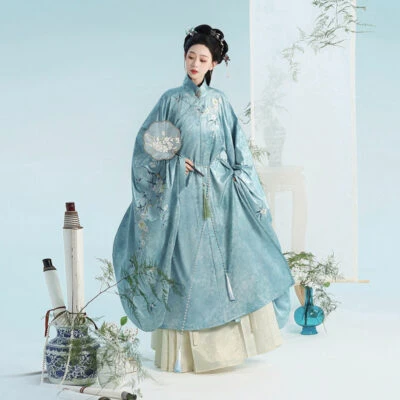
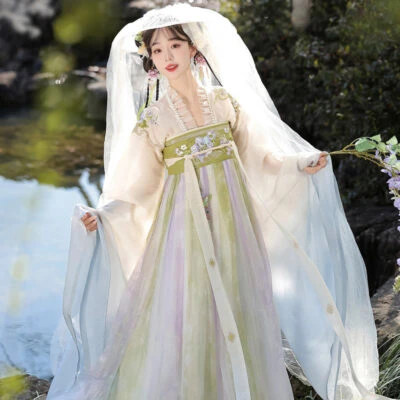
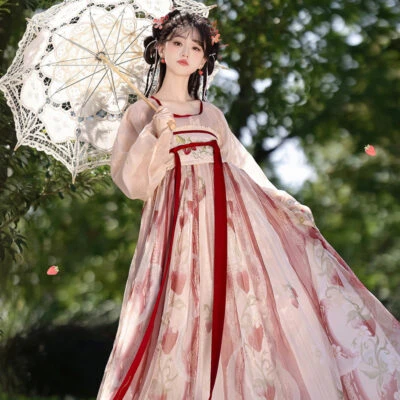
China’s apparel exports reached 120.7 billion US dollars in the first three quarters of 2026, up 4.8 percent year on year, with September alone rising 23.9 percent to mark a fourth consecutive month of relatively fast growth. At the 140th Canton Fair the category that drew the densest queue of overseas buyers was not basics. It was Guochao: clothes cut from Chinese pattern work, sold as design rather than as labour.
The Buyers Who Skip the Platform
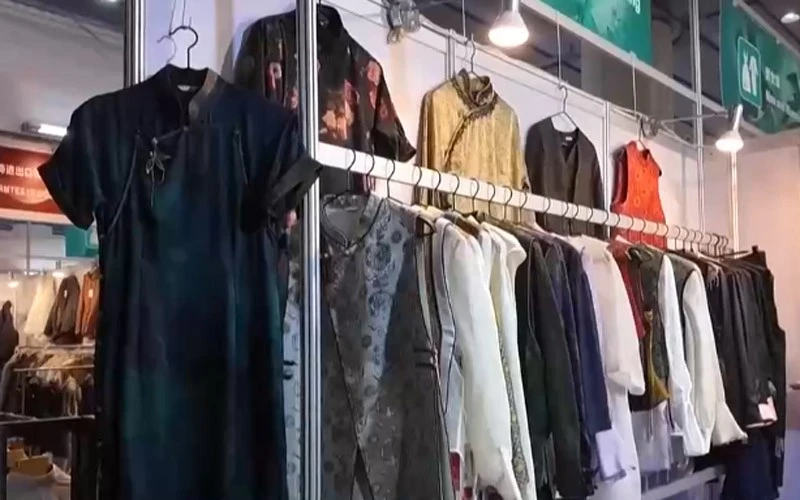
At the fair, booths showing garments in Canton satin and Shu brocade drew crowds of overseas visitors who priced and ordered on the spot. A buyer from Venezuela explained his own decision in terms of workmanship rather than motif, saying he had walked in because the sewing and the finishing pulled him over. That distinction matters commercially: a buyer is judging whether a garment can be sold, not whether it photographs well.
The traffic has a second address. Shenzhen’s Nanyou district, a long-standing source for womenswear, has shifted from a wholesale market that domestic retailers used to visit into a sourcing destination that foreign buyers fly to. The buying logic moved with them, from following whatever sold well in China to picking styles against their own market. A buyer from Kazakhstan put it plainly: Chinese clothing sells well where he trades, in Kazakhstan and beyond.
Small Batches, Fast Reorders
Order shapes changed at the same time. Buyers now ask factories to host a livestream on the company’s own account, and if five hundred pieces move in a day they take that quantity immediately, then ask for exclusive rights in their city. One store manager reported an overseas client buying the entire category stock of a shop in a single payment, at 580,000 yuan, with hand-embroidered pieces reordered roughly every two weeks.
Yudu county in Ganzhou, Jiangxi, is where much of that is made. More than 3,800 textile and apparel firms are registered there, many running export orders through flexible production: a British buyer on her first factory visit watched a smart workshop where almost every step is digital, an urgent order is customised quickly, and one line switches between styles. A supervisor there said a style that sells out online can come back as tens of thousands of pieces, while a leasing manager at another firm described minimum orders starting from a few pieces.
Base figures come from the China National Textile and Apparel Council: by 2025 the industry’s equipment digitalisation rate reached 57.4 percent and its equipment networking rate 51.8 percent. Those two figures are the reason small batches are viable at all, because changing a style used to cost more in downtime than the order was worth.
What a Video Call Cannot Do
Three steps still resist the screen. The first is hand-feel: the weave density of Canton satin, the warp-and-weft colour pairing of Shu brocade, the stitch spacing of hand embroidery. These are the parts of traditional chinese clothing that a specification sheet cannot carry, and none of it survives a photograph. The second is modification, where a buyer proposes a change and a factory answers with a feasible version the same day, which cross-time-zone messaging cannot match.
The third is exclusivity. Regional rights are negotiated against first-order volume and reorder commitments, which makes them a conversation rather than a form. Put together, the three produce a conclusion that reads backwards at first: the better cross-border e-commerce becomes, the more the high-value, craft-heavy end of the trade depends on buying in person. Online solves efficiency for standard goods. Offline solves trust for goods that are not standard.
How long the run lasts is a separate question from how strong the quarter was. Exports of 120.7 billion dollars and a 23.9 percent September describe nine months of direction, not a trend line. The variables sit at both ends: whether overseas buyers keep paying a premium for Chinese design, and whether domestic flexible capacity holds when orders arrive at once. The 580,000-yuan order and the two-week reorder cycle answer the first for now. The second waits for the next peak season.