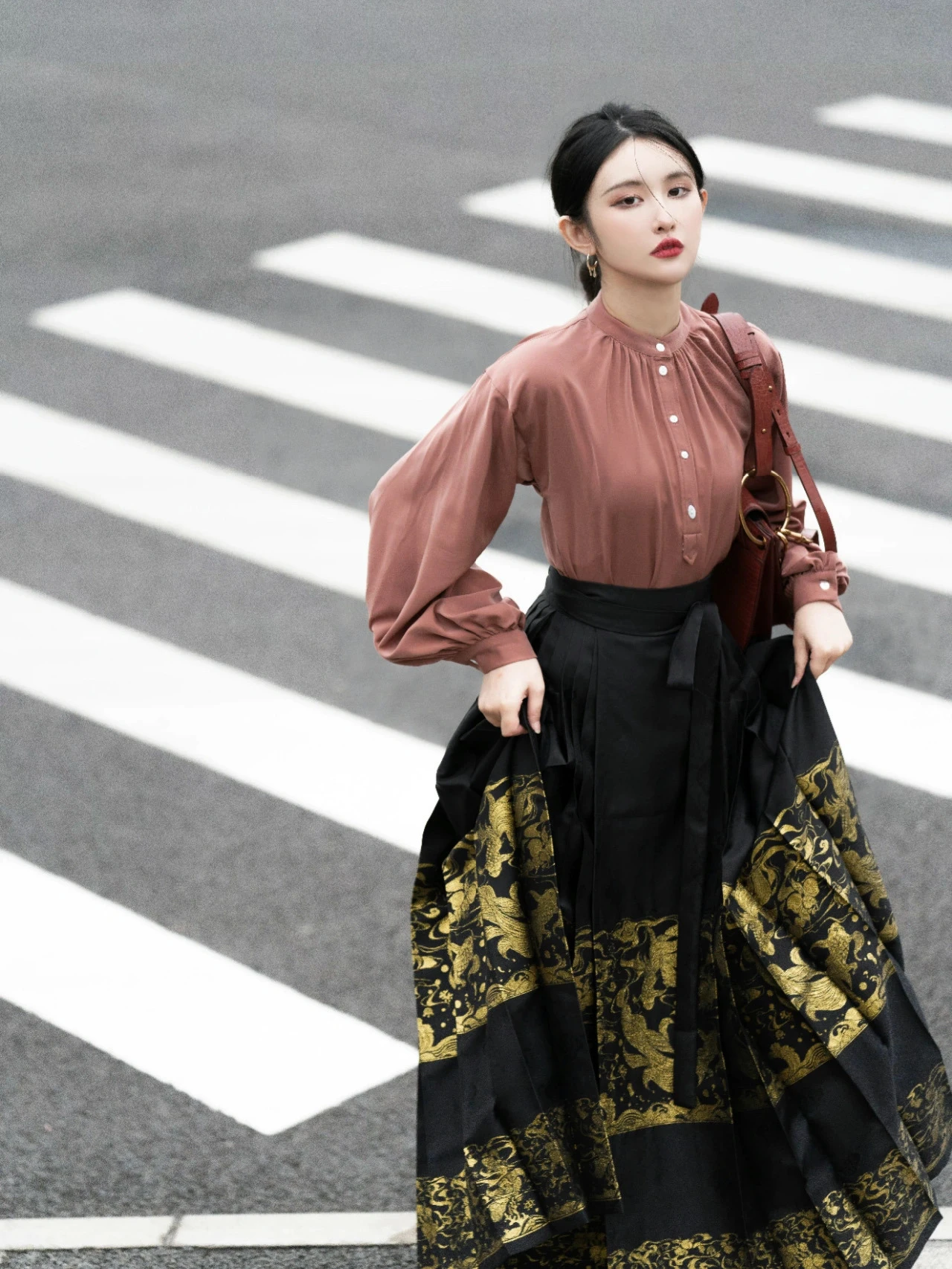
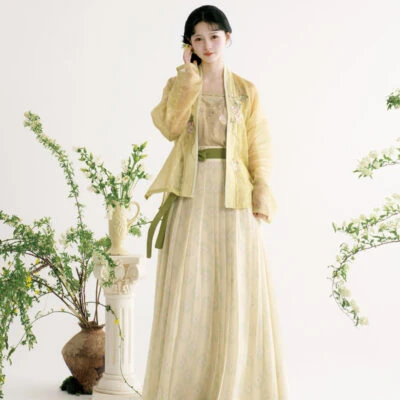
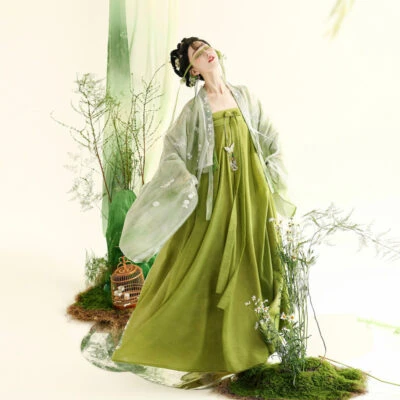
Zhuangrong took the second chapter of its twentieth anniversary to a rice field on 27 October, sending 61 outfits through standing crop in Huahong village, Luojing town, Baoshan district, on the northern edge of Shanghai. The label’s Chinesewear technique entered Shanghai’s municipal intangible heritage list in 2019, and this was the first time it had moved a runway out of a hall and into a field.
| Date | 27 October 2026 |
| Venue | Rice fields at Huahong village, Luojing town, Baoshan district, Shanghai |
| What it is | Second chapter of Zhuangrong’s twentieth anniversary, titled Fengyu Zhuangrong |
| Scale | 61 outfits in three chapters |
| Craft | Panjin embroidery, within a technique listed by Shanghai in 2019 |
| Setting | Huahong, in Shanghai’s first batch of municipal rural tourism villages, built around farming and weaving |
Three Chapters, Three Verbs
Sequence carried the argument. The opening chapter kept the models still at the field edge in thin morning mist, hems lifting in the wind, which set up the quiet the brand has built its name on over twenty years. The second chapter took the main passage: wind moved through the crop, fabric moved at the same frequency, and gold thread in the embroidery caught the sun in fragments. The third brought the models back holding ears of rice, the harvest carried home.
Three chapter titles map onto three verbs, holding, walking and gathering, and the staging followed the words rather than the other way round. It is an old device in Chinese formal dress, where a garment is worn for an occasion and the occasion supplies the movement. What was unusual here is that the movement came from a crop rather than from a hall.
Why the Rice Field Changes the Cloth
Gallery light is even, and the sheen of a silk or a gold thread is manufactured by spotlights aimed at a fixed point. Field light is slanted and constantly moving, so the same embroidery disappears at one angle and lights up when the wearer turns. In a museum that uncertainty would count as a defect. In a field it becomes the feature, and it forces a designer to place ornament where movement will find it rather than where a lamp will.
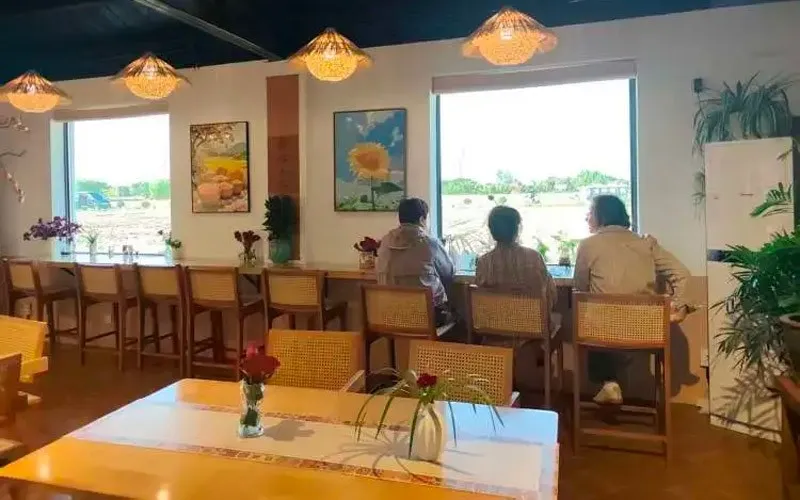
Huahong was not an empty patch of ground. The village belongs to Shanghai’s first batch of municipal rural tourism villages and is built around farming and weaving as a theme, which is what puts a rice field and a dress in the same sentence. A converted granary runs as a café called Our Granary, close to 300 square metres, fitted out with minimal intervention so the original timber beams and the double-height ceiling stayed, with glass onto the crop. Xiaoxue, who runs it, said the site first drew her because of the old building and the unbroken fields, and that trade has climbed since May with peaks during the September and October harvest.
Luojing town then turned a single point of heat into a line. Its five-village programme links Huahong with Haixing, Xinlu, Tangwan and Yangqiao along a 21-kilometre greenway used for family runs and hiking races. A runway in the rice puts a content node on that line, which is the part of the plan that outlasts the show.
Embroidery Under Moving Light
Panjin embroidery (盘金绣) works by coiling gold thread into the outline of a motif and couching it down, so the surface sits raised and reflects hard. It was traditionally reserved for formal dress and festive occasions, and it does the same job in a field that it did in a hall: decoration that stays visible at distance and in motion. Sixty-one outfits reading in layers without a single spotlight is the practical result.
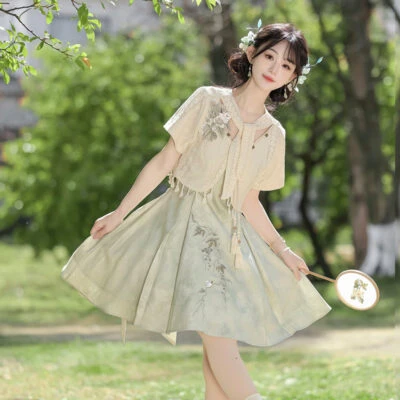
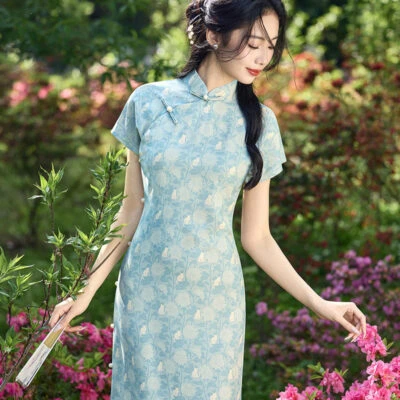
The technique base is documented. Zhuangrong’s Chinese womenswear method, listed by Shanghai in 2019, covers qipao, formal dress and new Chinese aesthetics, which places the style on top of two mature production systems rather than beside them: pattern cutting, interlining, bias binding, Pankou knots and embroidery were all in use in qipao workshops for decades. What has changed is the occasion and the pairing, not the craft. The same holds across much of the new Chinese wardrobe, which borrows the construction of traditional chinese clothing and re-cuts it for daily wear.
One guest made the point without a script. Alessandro, an Italian blogger who posts in Shanghainese and is known locally as the Shanghai son-in-law, attended and offered a single sentence afterwards: the rice fields here are beautiful. A foreigner speaking the local dialect, standing at the edge of a Chinese field watching a Chinese label show new Chinese clothes, is closer to the intended effect than any press line.
Where this goes next is a rental question. The café owner put it as an ambition rather than a plan: rice-field weddings, launches and outdoor shows in the same fields, with nature as the best runway and gallery available. If that holds, the field stops being a one-off backdrop and becomes a venue a village can let out, rent and revenue share for the collective, low-cost natural scenery for the brand. The show itself ended on 27 October and will not be repeated.