Salt built Yancheng, named it, and then left. What the city did with the remains is now the subject of two shows running inside Yandu Ancient Town, a rebuilt late-Qing street inside the Dayang Bay scenic area. The main production, “Yandu Past,” follows a salt-merchant family through the Republican era; the smaller one, a six-scene comedy called “Biao,” chases a stolen bowl of braised pork skin. Both began this autumn’s holiday run on October 3 with a blessing rite drawn from the city’s sea-salt drying method, and the audience walked in behind the cast.
Chen Jiaying, deputy general manager of the Yancheng Dayang Bay group development company, put the first three days at more than 60,000 arrivals, with a large share of them watching one show or the other. The figure worth arguing about is smaller: a county that spent two thousand years boiling seawater for tax has found a way to charge admission to the story of how it stopped.
What Yancheng’s Salt Industry Was
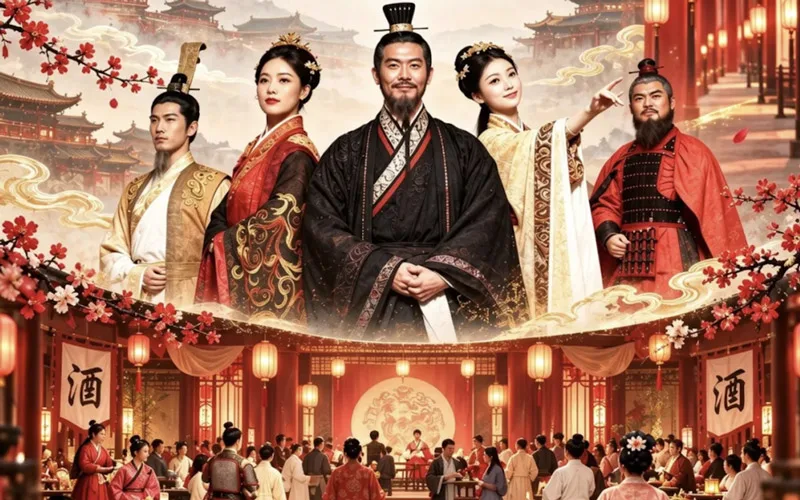
Yancheng’s salt industry was the administrative reason the city exists. The county was founded in 119 BCE under Emperor Wu of Han as Yandu, a name meaning the channel dug to float salt out, and for most of the next two millennia it ran as a revenue machine for the imperial treasury. Two salt administrations sat inside its borders in the Tang, and their output was large enough that contemporaries wrote of half of all state profit coming from salt.
Figures here are specific. In 762 CE the Hailing office boiled 600,000 shi a year and the Yancheng office 450,000. Under Song Zhenzong, between 998 and 1025, the two together reached 1,073,000 shi, the highest in the Huai region and larger than the Sichuan well-salt industry. Salt money paid for dikes, canals and the town grid. The seasoning itself is a separate subject, covered in our guide to Chinese salt and pepper.
| Period | Output / scale | What changed |
|---|---|---|
| 762 CE (Tang, Baoying 1) | Hailing 600,000 shi; Yancheng 450,000 shi | Half of state profit said to come from salt |
| 998-1025 (Song Zhenzong) | 1,073,000 shi across the two offices | Largest in Huainan; above Sichuan well salt |
| c. 1275 (late Southern Song) | 27,000 shi | Yellow River shift of 1128 moved the brine line east |
| 1333 (Yuan, Zhishun 4) | 3.8 million shi across Huainan and Huaibei | Two Huai produced over a third of the national total |
| 1617 (Ming, Wanli 45) | Merchant-run quota system adopted | State stopped buying salt; merchants dealt with boilers directly |
| 1802 (Qing, Jiaqing 7) | 11,888,347 yin in the local fields | Peak of the Qianlong-Jiaqing expansion |
| 1911 (Qing, Xuantong 3) | 1,467,959 dan locally | Under one sixth of the mid-Qing norm |
| 1937 | Eight yards left, then none | All salt administrations in the county abolished |
What survives is a set of names, one technique and a menu. Touzao, Sanzao, Biancang and Datuan are villages named for the number of salt pans that once stood there. The drying method still has practitioners who demonstrate it for visitors. And the food that fed the yards, heavy, salty and cheap, is what the town now sells under the name Eight Great Bowls (八大碗).
Walking the Town That Plays Its Own History
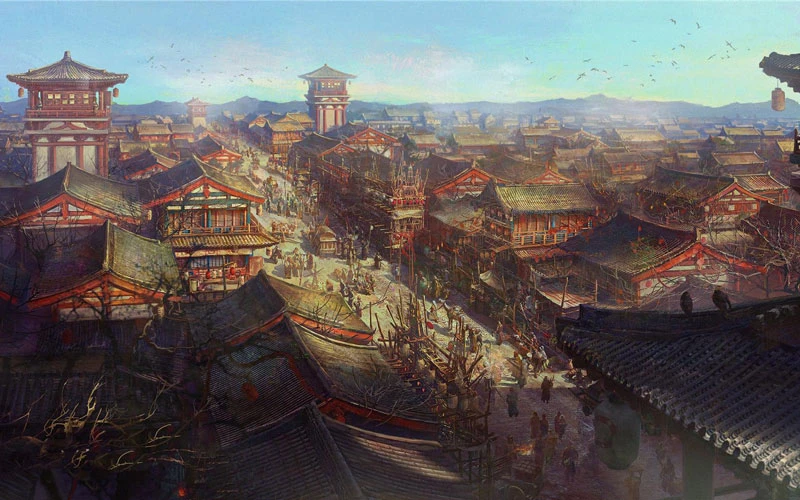
Yandu Ancient Town is not a film set. It is a walkable block of 22 old and new buildings on more than 50,000 square metres, with a Qing merchant house moved in from Wuyuan, a courtyard built entirely of golden nanmu, and a coin museum inside a hall raised in 1865. The performance happens around the visitor: a wine shop, a painted qipao on a brick wall, a postbox, a rickshaw, granite paving underfoot.
Inside the old opera house the audience sits at tables below the stage and is served fruit tea while a Huai opera (淮剧) excerpt is sung from above; actors enter down the aisles while the scene runs. Out on the market street, troupes perform Jianhu acrobatics and a boat-wedding sequence that reconstructs the water-town marriage custom of the lower Lixia River, wedding boat and processional music included. Immersive theatre clusters have become a genre of their own in China, and the Henan theatre complex is the largest example of the type.
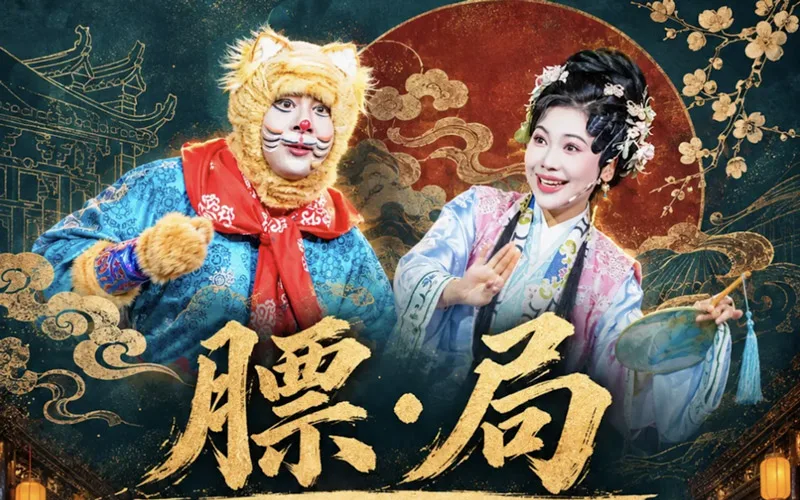
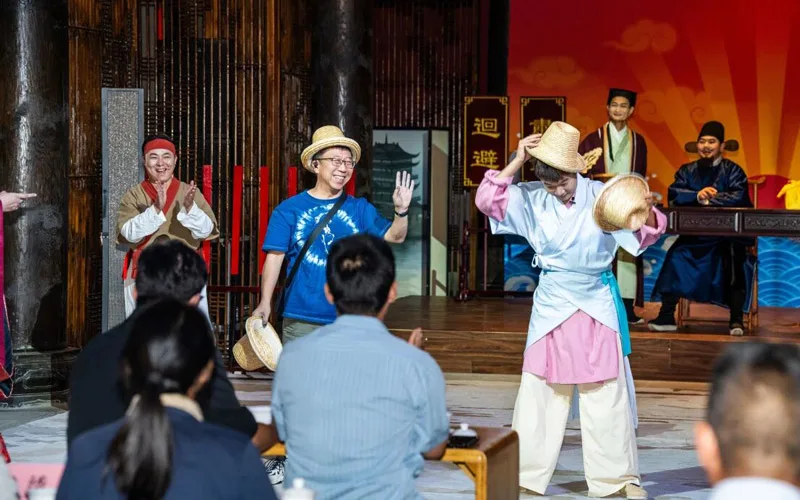
A smaller hall runs a different calculation. “Biao” plays in six scenes around the theft of one dish, and threads Huai opera arias, acrobatics, clapper talk, the cooking method behind the Eight Great Bowls and Dongtai hair embroidery through the plot. Visitors eat Wuyou fried dough twists during the show and get pulled up on stage. Zhou Chunlin, visiting from Nanjing, was handed hats to juggle. “Two at once I could manage,” he recalled. “Three and I lost the rhythm. The troupe keeps four or five in the air.”
The Salt Trade’s Long Decline
Silt began the collapse. In 1128 the Yellow River broke through and ran to the sea across northern Jiangsu, carrying silt that pushed the coastline east and left the brine flats stranded inland. By the late Southern Song the offices were boiling 27,000 shi, and the Zhu Xi, Qihui and Si’an yards west of the dike had been abandoned. The Yuan brought a recovery, with 13 of Huainan’s 25 yards inside the county and the two Huai regions producing over a third of the national total, but the coastline kept moving against the industry.
Cost finished what silt started. Huainan boiled brine in pans over bought heat; Huaibei raked seawater across open beds and let sun and wind do the work, at a fourteenth to a sixteenth of the fuel bill. Farmland inside the Fan Gong dike was reclaimed for crops, which raised the price of the straw the pans burned. Upstream floods washed out the drying yards. Then came the tax structure: after 1853, when the court levied an additional salt duty to fund its wars, roughly eight parts in ten of the margin went to the state.
Arithmetic at the bottom of the chain is recorded to three decimal places. One barrel held 279.4 jin. The yard merchant paid 1.831 yuan for it. Producing it cost 1.901 yuan. The boiler family absorbed the difference. Tian Beihu, writing on salt in the late Qing, described the result in plain terms: boilers stripped of clothing and living on grass, ground down by layer upon layer of merchant deduction, and leaving the yards in numbers.
In 1901 Zhang Jian raised 300,000 taels and founded the Tonghai Reclamation Company at the Lusi salt field to grow cotton for his Dasheng mill, and within a decade had broken 116,000 mu of former salt land. The model spread: more than 70 reclamation companies put up 17.32 million yuan across 4.32 million mu, and 63 of them sat inside present-day Yancheng with about 20 million yuan on roughly 4 million mu. A salt county became the country’s largest state-farm district. That conversion, not the theatre, is the real hinge of the story.
Coupons, Tea and Eight Bowls
What turns a ticket into revenue is not the show. It is the seam between the show and the cash register. Visitors who interact with the performers earn vouchers, and the vouchers can only be spent at one restaurant in Tangduli, where the Eight Great Bowls are served. The fruit tea poured during the opera scene is a local heritage item; the Funing rice cakes and Wuyou twists sold on the way out are too. Both the ticket and the snack counter are food businesses wearing period costume.
The annex does the same work with time. Rooms off the small theatre have been turned into temporary exhibition space and hands-on study-tour space, so a family that came for a 90-minute show can spend another hour on Dongtai hair embroidery, Yancheng tiger shoes or Sheyang peasant paintings. Signage inside the performance area names each craft and explains the technique shown in the scene, which is why school groups book it. Regional cooking is the hook: our overview of the eight famous Chinese cuisines explains where the Huaiyang branch sits, and Yancheng’s own culinary guide covers the dishes themselves.
Set that against the structural problem the craft sector keeps naming. Ding Xuebing, chairman of the Yangzhou Lacquer Factory, told a separate gathering that traditional workshops face three linked difficulties: few people to take up the skill, weak conversion into marketable product, and a shortage of people who can do both. The Yancheng answer is not to ask a heritage craft to find its own customers, but to seat it inside a narrative that already has a queue at the door.
The Limits of the Model
Three preconditions make the model work, and all three are local. The county holds an unusual density of recognised crafts: Huai opera and Jianhu acrobatics at national level, the sea-salt drying method at provincial level, plus hair embroidery, tiger shoes, peasant painting, the Eight Great Bowls technique and two snack traditions. Remove any one and the show thins into a folk revue. The town itself is evidence rather than scenery, because visitors walk the street in period dress and the street explains the script.
Employment is the third condition. A boat wedding, an acrobatics set, an opera excerpt, a dough-twist stall and a braised-pork kitchen each need named people, and once the run is stable those jobs move from festival hires to year-round posts. That is the argument a local cultural bureau can take to a budget meeting. It is also the argument’s weakness: the model needs steady arrivals, since Dayang Bay is a scenic area with its own traffic, and it needs new product to bring people back, which is what the small hall is for. Yancheng’s wetland coast, profiled in our heritage guide, supplies the second reason to visit.
Copy the interface and the arithmetic transfers: vouchers that expire at one kitchen, retail placed at the exit, a study-tour room behind the stage. Copy nothing else and it fails, because the asset being sold is not immersive theatre as a format. It is two thousand years of one city’s salt records, and the crafts that grew up around the pans.