Article
搜索结果:
-
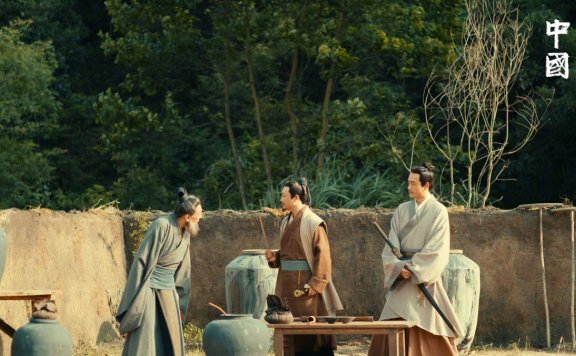
Exploring Ancient China: Eighteen Must-See Documentaries on Chinese History
China has a rich and complex history that has fascinated people around the world for centuries. From the rise of the Zhou dynasty to the construction of the Great Wall, there are countless stories and events that have shaped the country as we know it today. While there are many ways to learn about Chinese history, one particularly engaging medium is documentary films. In this article, we'll take a closer look at eighteen must-see documentaries on ancient Chinese history that are sure to captivate viewers and shed light on the country's past. 01 The Rise & Fall of the State of Chu The state of Chu (楚国) created many firsts in Chinese history, such as the first section of the Great Wall, the first county, the first writing brush, and even the first iron sword. Despite its glorious history dating back 3,000 years, little is known about the state of Chu today. At its height, it stretched from the north to the Yellow River, east to the East China Sea, west to Bashu, and south to Lingnan. The cultural legacy of Chu, which was shaped by absorption, integration, and innovation, had a profound impact on the Yangtze River basin,… -
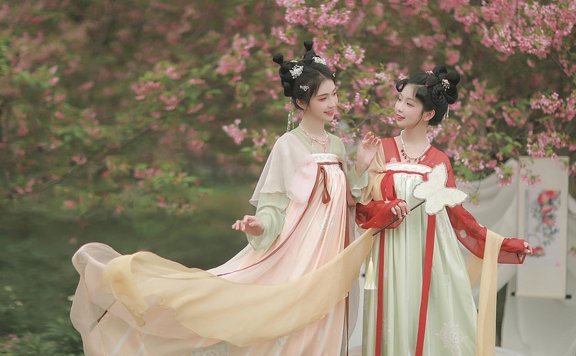
Bloom in Style: Recommended Spring Hanfu for the Flower Season
As the flower season approaches, it's the perfect time to refresh your wardrobe with pieces that exude elegance and grace. If you're looking for inspiration, spring hanfu offers a stunning array of options that celebrate the beauty of nature and femininity. Hanfu Shidai has compiled several spring hanfu that are appropriate for the season, based on the types of flowers that are available in spring. Winter Jasmine Winter jasmine, the earliest blooming flower among all, is named after its ability to welcome spring when all the other flowers start to bloom. As a harbinger of spring, it brings a sense of vitality with its clusters of flowers hanging from the branches like a golden waterfall. Currently, it is the prime season for winter jasmine, and you can capture its beauty through the lens and use it to adorn life. Recommended Hanfu The bright and vibrant colors of the winter jasmine make it an excellent choice for photography with light-colored hanfu outfits. Such as a white or light-colored cross collar shirt on top and pair it with a blue-green waist-length skirt. This combination not only complements the flower but also gives a fresh and playful feeling. Yulan Magnolia Yulan… -
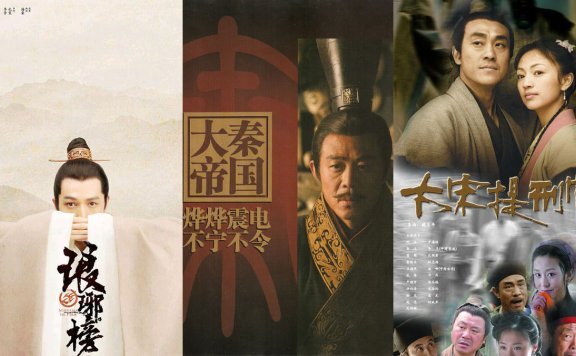
3 Timeless Masterpieces of Classic Chinese Historical Drama with 9/10 Rating
As an important genre of drama, Chinese historical drama emerged in the 1980s and were one of the first Chinese dramas to mature and perform best in the market. China's long and storied history provides a large pool of material for such works, and the creative approach, which is far removed from the sensitive areas of reality, also gives it a wider and freer narrative space. "Nirvana In Fire", "The Qin Empire 1", and "Judge of the Song Dynasty" are three classic Chinese historical dramas that have been the subject of much debate among Internet users. All of them have been recognized by viewers in the TV era and have earned high scores on Douban (China's most popular movie & drama rating platform), which is mainly for young users. In recent years, traditional historical dramas have become increasingly rare, with a marked increase in idolized historical dramas driven by film and television platforms. The industry is placing more and more emphasis on costumes, makeup and props, which is what the market demands and there is no excuse, but classic works should not just be forgotten. A good costume historical drama can recreate the spiritual world of the ancients. The history… -

Romance of a Twin Flower: Delightful Blend of Romance and Comedy
Get ready to fall in love with "Romance of a Twin Flower", the latest romantic comedy cdrama that is taking the entertainment industry by storm. This Chinese drama series is a perfect mix of heartwarming romance and hilarious comedy, making it a must-watch for anyone looking for a feel-good show. With its captivating storyline, characters, and breathtaking cinematography, "Romance of a Twin Flower" is sure to leave you smiling and swooning from start to finish." "Romance of a Twin Flower" is a historical romantic comedy television series directed by Xie Ze and starring Ding Yuxi, Peng Xiaoran, Yi Dachuan, Mark Chao, He Changxi, and Jia Nai. The drama premiered on March 21st, 2023. Based on the novel of the same name by Bai Lu Cheng Shuang, the series tells the story of Ji Man, a talented young woman with exceptional business skills who unexpectedly loses her memory. She takes the place of her twin sister Nie Sangyu in the Ning Mansion and uses her business acumen to resolve crises, while experiencing ups and downs with Ning Yuxuan and growing and finding happiness along the way. Basic Information of Romance of a Twin Flower Also known as: Chun Gui Meng… -
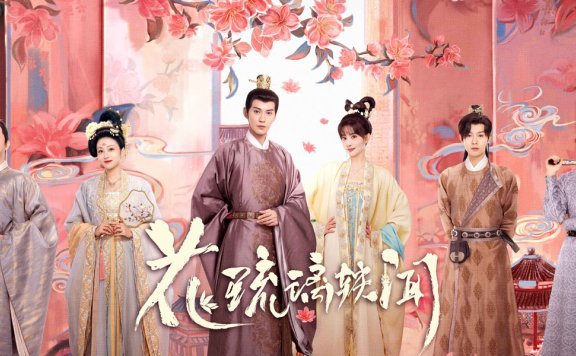
Unraveling the Intriguing Plot of Royal Rumours: A Must-Watch Romantic Costume Drama
Are you a fan of historical dramas filled with romance, scandals, and royal intrigues? If so, you won't want to miss the latest sensation sweeping through streaming platforms "Royal Rumours". let's settle in for a journey back in time as we explore the exciting plot of this drama. "Royal Rumours" is a romantic comedy cdrama set in ancient times, directed by Zhou Jiawen and starring Jeremy Tsui and Meng Ziyi in the lead roles, with supporting performances from Ryan Zhu, Su Mengyun, Yi Yunhe, Li Qing, and others. The series airs on March 15, 2023. Adapted from the novel "Zao Zuo Shi Guang" by author Yue Xia Die Ying, the story follows the collaboration between the cold-hearted Crown Prince Ji Yuansu and the smart and witty Hua Liuli, who together uncover and eliminate imperial conspiracy, eventually falling in love with each other. Basic Information of Royal Rumours Also known as: Zao Zuo Shi Guang Genre: Romance/Comedy/Historical Aired: March 15, 2023 Director: Zhou Jiawen Starring: Jeremy Tsui as Ji Yuansu, Meng Ziyi as Hua Liuli Episodes: 24/45 minutes Plot Summary of Royal Rumours During the prosperous era of the Great Jin Dynasty, general Hua Yingting, who had just achieved… -
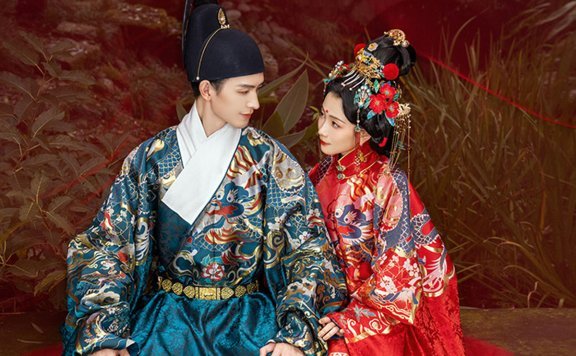
Exploring the Vibrant Palette of Ancient China: Hanfu Color Scheme
Traditional Chinese colors come from nature and from the imagination of the ancient Chinese civilization. Traditional Chinese colors pursue the color concept of giving colors according to types and conveying consciousness through colors. In ancient times in China, there are positive colors and inter colors, with the distinction of respect, and lowly; righteous, and evil. Positive color refers to the color that promote each other, that is, the original color. Ancient primary colors to "Yin Yang Five Phases" doctrine in the five elements, water, fire, wood, metal, and earth, respectively, corresponding to black, red, cyan, white, and yellow as color symbols, known as the five-color system. Traditional Chinese clothing colors are also mainly primary colors. With the development of the times, different dynasties revered different colors, and these popular colors also reflected the material and spiritual civilization of their dynasties to a certain extent. Hanfu Shi Dai has compiled a summary of the traditional hanfu color schemes through dynasties, let's explore together. Han Dynasty The Han Dynasty was influenced by the Taoist philosophy of Huanglao and Confucianism, and its costumes often pursued the essential beauty of the whole. At the same time, by the previous Qin dynasty, the concept of black… -
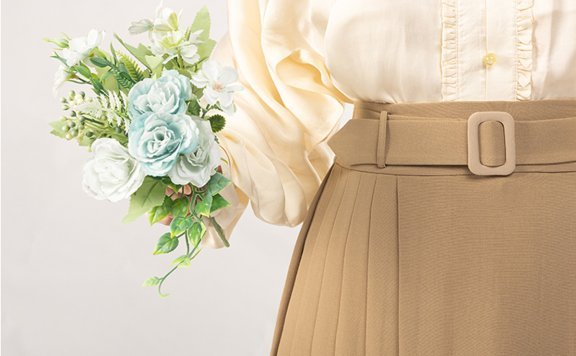
8 Modern Mamian Qun That Will Wow You
The Mamian Qun, or the horse-face skirt, is a traditional Chinese dress that has a long history and a rich culture, and its elegant and graceful style. However, in recent years, the Mamian Qun has undergone some changes and innovations, thanks to the creative efforts of some designers who have given it a modern twist. In this article, we will introduce you to eight modern Mamian Qun that are stunning and fashionable. These dresses combine the essence of tradition with the elements of innovation, creating a new trend of Chinese dress that you don’t want to miss. Style 1 It features a simple design with a piece of leather buckle, which not only adds to the aesthetic appeal but also helps to keep the dress in place. The fabric used in this Mamian Qun is not prone to wrinkles, making it an ideal choice for those who prefer a neat and polished look. The pleat style is stable, ensuring that it retains its shape even after multiple washes. Furthermore, this Mamian Qun particularly striking in the way it reflects light, displaying a golden sheen that catches the eye and adds a touch of luxury. Style 2 This Mamian… -

Discovering Ancient China's Spring Excursion: Traditions and Customs
As the chill of winter melts away, spring brings with it a sense of rejuvenation and new beginnings. In ancient China, this feeling was often celebrated through the tradition of spring excursions. For many, the new season signaled a time for renewal, rejuvenation, and adventure. While modern-day excursions may look vastly different, there are still traces of ancient springtime traditions that can be observed throughout China. From blossoming gardens to vibrant festivals, join us on a journey through the rich cultural history of spring in ancient China. Spring excursion in the pre-Qin period was romantic and charming. There are many love poems in the "Classic of Poetry", all of which took place during spring excursions. 《郑风·出其东门》:出其东门,有女如云。It means that the people of Zheng like to spring excursions, and when they leave the east gate of the city, they can see many girls on their spring trips, which is a good opportunity for the men of Zheng to meet love. 《郑风·溱洧》:士与女, 殷其盈矣。It means that at the River Zhen and the River Wei, the men and women of Zheng were seen everywhere on their spring excursions. Many men and women fell in love with each other during the spring excursions and became engaged… -
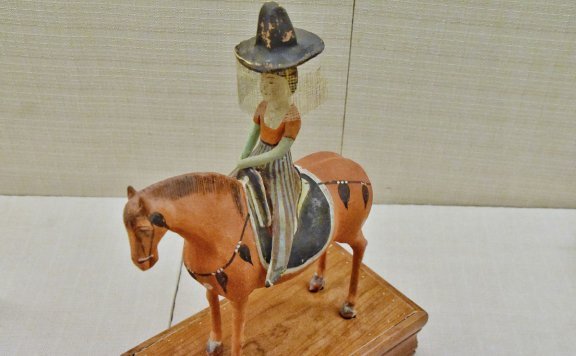
Rediscovering the Splendor of Tang Hanfu through Artifacts - Horse and Female Rider
Among the many Tang Dynasty relics in the Xinjiang Museum's History Hall, two painted clay women figurines on horses are particularly attractive: "Horse and Female Rider". One is from Turpan Astana Tomb No. 187, excavated in 1972, showing a woman with dignified features, wearing a Wei Mao (帷帽), holding the reins in her left hand and sitting on top of a saddle, a typical image of a noblewoman riding a horse at that time. The other figurine was excavated in 1973 from Turpan Astana Tomb No. 216 and shows a woman riding a red horse with white skin and red lips, wearing a Wei Mao, which is quite charming. Looking at these two figurines of ladies, we can see a scene in our mind: in the city of Gaochang more than a thousand years ago, during the early spring, several fashionable Tang dynasty women wearing Wei Mao and riding their horses slowly, the ladies seem to be talking about something; and not far away, under the pavilion, a noblewoman with a graceful physique is concentrating on playing Go. Mysterious underground history museum Astana is known as the "Underground Museum of Turpan", the ancient tombs are located in the northern suburbs… -
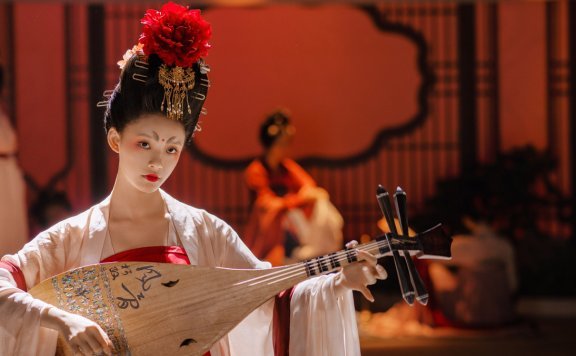
The Timeless Beauty of Traditional Chinese Flower Hairpins
In ancient China, women's headwear was very gorgeous, and in addition to gold and silver jewelry, beautiful flowers were often worn as accessories. In the Song Dynasty, from the court down to the folk, both men and women loved flower hairpins. In this article, let's explore the history of traditional Chinese flower hairpins. Origin of Flower hairpins The earliest record of the custom of flower pinning is from the period of Emperor Gaozu of Han, in which Lu Jia wrote in his "Nan Yue Xing Ji" that women in the Lingnan region liked to wear jasmine flowers as hairpins. During the Sui, Tang, and Five Dynasties period, flower hairpin was very popular among the Central Plains. At this time, society was open, people pursued fashion and novelty, and there was a wide variety of clothing and accessories, including flower pins. In the painting "Court Ladies Adorning Their Hair with Flowers", we can see that the ladies are wearing peonies, lotus, hydrangea, and other flowers in their hair, which has a unique flavor. The Tang Dynasty also featured men wearing flower hairpins, and the emperor often rewarded officials and scholars with flowers. In the Song Dynasty, the custom of flower… -
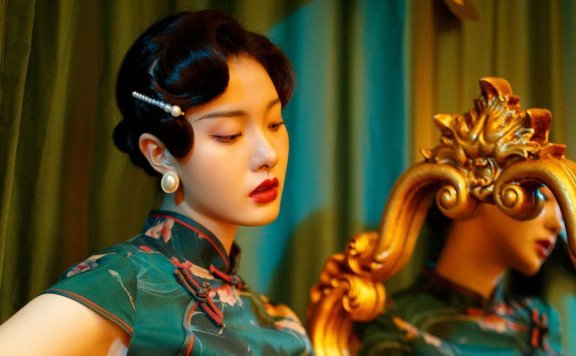
The Perfect Accessories to Elevate Your Cheongsam Outfit
Are you looking to add some extra flair to your cheongsam outfit? Cheongsams are already a stunning traditional Chinese dress that exudes elegance and grace, but with the right accessories, you can take your outfit to the next level. Whether you're attending a formal event or simply looking to spice up your daily wardrobe, the right accessories can make all the difference. From jewelry, hats to handbags, there are many options to choose from. Here are some of the best accessories to match with your cheongsam. 01 Shawl A shawl can be a beautiful accessory to pair with a cheongsam outfit. One of the advantages of wearing a shawl with a cheongsam is that it can add an extra layer of warmth and comfort, especially if the dress is made of lightweight fabric. Additionally, a shawl can add a touch of elegance to the outfit, especially if it is made of luxurious fabric such as silk or cashmere. Another advantage of wearing a shawl with a cheongsam is that it can be used to add some color and texture to the outfit. A brightly colored or patterned shawl can complement the dress and create a beautiful contrast. It can… -
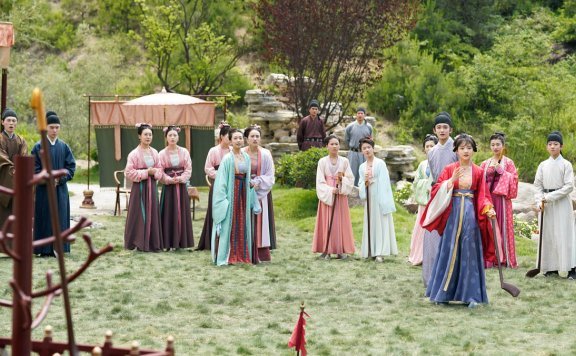
Exploring the Allegory of Chinese Color Theory in Traditional Dress
As an objective visual aesthetic element, the color in nature has a stable aesthetic meaning as the cognitive ability of the aesthetic subject improves and the aesthetic interest accumulates. Human cognition of the objective color world is the sublimation of people from material cognition to spiritual cognition, so color has strong psychological properties and emotional factors. During thousands of years of history, the Chinese people, with their unique cultural character, have gradually formed their own philosophical and discursive view of color in their consideration of nature and themselves. 1 Traditional Chinese Color Theory Ancient Chinese color theory is mostly derived from man's profound understanding of ecological phenomena in nature, as well as the imitation and generalization of natural colors. On this basis, the ancients linked their understanding of color with the traditional "Wuxing (五行, five phases)" philosophy, forming a very oriental flavor of the "Wuxing & Wuse (五行五色, five phases, and five colors" color theory. When the ancients began to understand color at the beginning, they saw that everything in the world was covered with harmonious and beautiful colors, so they had the desire to follow suit and collected colorful objects for their own decoration. With a further understanding… -
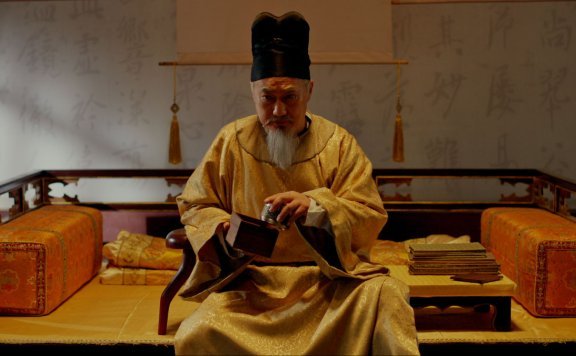
Unveiling the Beauty and Significance of Hanfu in the Documentary The Flavor of History
Wearing incense sachets in daily life, or burning the incense burner when reading or sipping tea, the pursuit of fragrance by the ancient Chinese surpassed even modern times. The combination of form and spirit is the ancients revered spiritual states. Clothing provided the form of the real state, while the flavor implied in the air gave the spirit part. The documentary "The Flavor of History" features a unique perspective that brings hanfu and flavor together again. Tang Dynasty Ruilongnao (瑞龙脑) is produced in the country of Brahma (now Brunei). In addition to growing in hot places, it needs to be smoked to release its aroma. But its flavor is as cool and pure as its appearance, like a contradictory combination of noisy and silent, entwined and moving. In the clothing system of the Tang Dynasty, color was an important clue to distinguish the superior and inferior. According to the Book of Tang - Records of Yufu, the emperor's regular clothes are Chi Huang (赤黄, a color between yellow and red, #F8CE00) robes, Fu Tou (幞头), nine rings belt, and Liu He boots (六合靴)". At the time of Emperor Gaozu of the Tang Dynasty, it was officially stipulated that Chi Huang… -
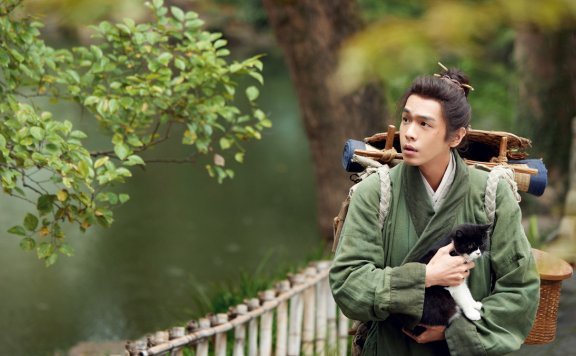
Exploring the Ming Dynasty Hanfu Featured in the Drama Under the Microscope
"Under the Microscope: The Tax Case of Silk" is arguably the most exciting historical costume cdrama of 2023 so far. Unlike most costume cdramas, "Under the Microscope" presents an exciting taxation curiosity case of the Ming Dynasty in only 14 episodes. The tight plot and accurate restoration of the Ming Dynasty make everyone start looking forward to the second season (there are six stories in the original, and the silk tax case is the first one). The drama is set in the Ming Dynasty time, showing Chinese aesthetics and authentic Ming Dynasty costumes. Shi Yue from Han Fu Shi Dai has compiled a list of the classic hanfu styles that appear in the drama, so let's learn about them. Shuhe & Zhiduo Shuai Jia Mo, the main character in the drama, is a mathematical genius who relies on measuring land to earn a modest income. He was not enrolled in the civil service and was a commoner. Shuai Jia Mo often wears Shuhe and cloth shoes, highlighting his simple and unpretentious temperament. Shuhe (裋褐): also known as Heyi (褐衣), Buyi (布衣), refers to the rough cloth clothes worn by ordinary people. Feature with cross collar, narrow sleeves, usually shorter,… -
Unveiling the Beauty and History of the Iconic Qipao Dress
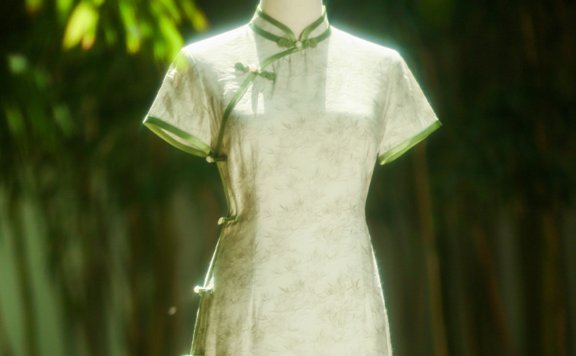
Recently, Zhou Xun's Qipao (旗袍, cheongsam) dress look in the movie "Hidden Blade" brought this traditional costume back into the spotlight. If it is said that every era has representative clothing, then, the Republic of China women's closet must not be missing one cheongsam. 01 Fashionable clothing in the Republic of China period Qipao dress can be said to be the most representative clothing in the Republic of China. For social needs, the ladies also often update cheongsam style. Song Meiling often wore cheongsam, when she went to the United States to seek support for the war, especially when she spoke in the U.S. Congress, the image of a black satin cheongsam stunned the crowd, while boarding the major U.S. magazines. The popularity of the cheongsam owes much to the successful incorporation of practical Western elements without losing traditional Chinese features. Although designated as one of the Chinese dresses, the Qipao dress is actually a Western-style wear under a Chinese-style appearance. On the outside, the Qipao dress still adheres to the traditional Chinese elements such as silhouette, Pankou, and vertical collar, and the custom of "right overlapping" is also retained, which constitutes the unique aesthetic form of the Qipao… -
The Art of Cheongsam Collar: An Exploration of the Different Styles and Their Feature
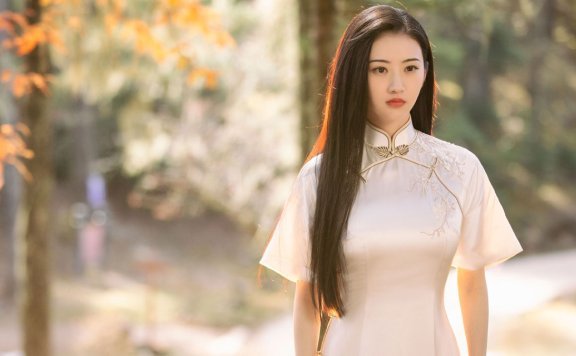
Cheongsam, as one of the traditional Chinese dresses, can be seen as one of the tags of oriental women. It is like an ink-scented rice paper, which writes the history of Chinese dress, and like an inscription of the ancient time, even the folds of which contain the scent of ancient culture. It is not only a garment, but also a carrier of traditional Chinese culture. As one of the key elements of the composition of cheongsam, the collar shape has a very important influence on the style of cheongsam. Traditional cheongsam collar, often with a stand collar design, formed an elegant effect, with good effect in highlighting the lines of the female neck and body. The details of the cheongsam collar, show the workmanship, also the soul of the cheongsam. The right collar type can fit perfectly with the body, but also with the cheongsam as a whole, to the overall style of cheongsam into more exquisite aesthetic temperament, from the fundamental focus on temperament. The origin of the cheongsam collar The relationship between modern cheongsam and Qing dynasty Manchu robe is still controversial, but it is undeniable that there is an inextricable relationship between cheongsam and Qi… -
Tracing the Fascinating History of Cheongsam: From Qing Dynasty to Modern
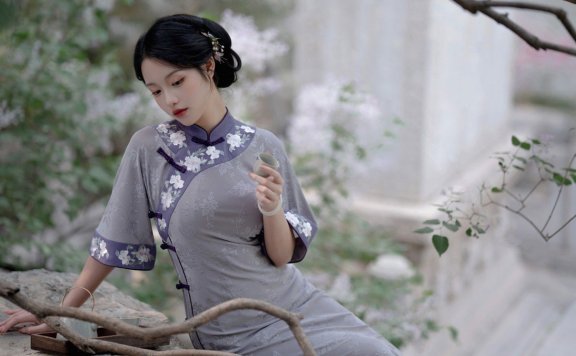
For centuries, the cheongsam has been a symbol of elegance, femininity, and Chinese culture. Also known as qipao, this form-fitting dress has been worn by women in China and beyond, captivating the world with its stunning beauty and timeless charm. While the cheongsam is now a fixture on fashion runways and red carpets around the world, its origins and evolution tell a captivating story of cultural exchange, fashion innovation, and societal change. From its early beginnings in the Qing Dynasty to its modern-day reinventions, the history of the cheongsam is one of the most fascinating and enduring tales of fashion history. In this article, Hibetterme explores the rich history of the cheongsam, the characteristics of modified cheongsam, and how to pick the right style of cheongsam for you. The Evolution of cheongsam The origin of the cheongsam is actually quite controversial. Some scholars believe that it is the robe of the Qing Dynasty, and in the late Qing Dynasty and the early Republic of China, it gradually evolved into the current cheongsam due to social changes and the influence of Western culture. Some scholars also point out that the origin of cheongsam should be older than the Zhou, Qin,… -
New Gestures of Hanfu Dissemination
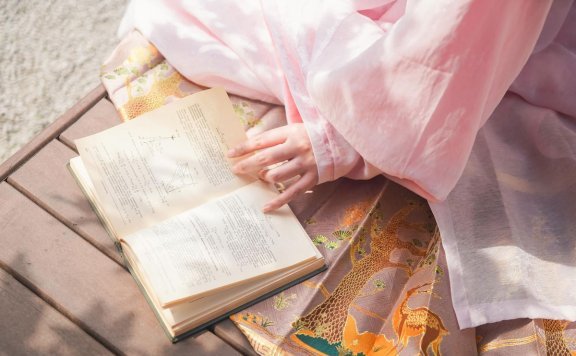
The rise of the hanfu market restored traditional festivals back to former hustle and bustle. Lighting lanterns, pasting couplets, wearing hanfu, and singing ancient poems, built a bridge between ancient and modern times and seized the young people’s hearts. Hanfu brings feelings of nostalgia, ancestor worship, and gratitude to modern people. At the same time, hanfu production, sales, makeup, and supporting service markets have risen, and hanfu element immersive experience marketing is also in the stage of vigorous development. Traditional culture in the costume The West Lake cruise ship with rabbit lanterns is swaying in the lake, and several tourists in hanfu complement with beautiful scenery, which is pretty much in line with the feeling of crossing Hangzhou, a thousand-year-old city. Many young people are immersive in it. "When I watched costume dramas as a child, I often put on a bed sheet to imitate a robe, and now wearing hanfu is more like a dream come true." Yan Peishan, who studied in Italy, said, "Earlier, I played erhu on stage in hanfu and won a lot of praise. It turns out that there are not only cheongsams in China, but also beautiful hanfu." Hanfu does not only refer… -
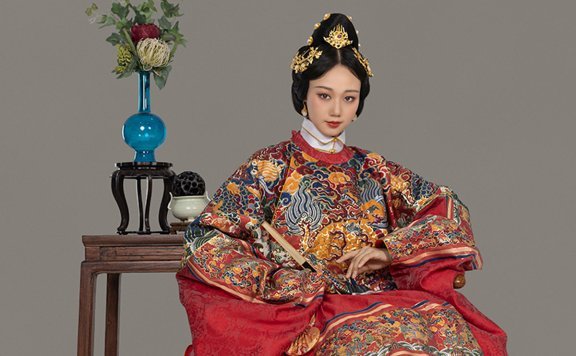
Classic Hanfu Ornaments in Ming Dynasty Auspicious Costume
The Definition of Auspicious Costume Ji Fu (吉服, auspicious costume) was a new classification of clothing formed in the Ming Dynasty, referring to the clothing used for various auspicious occasions such as seasonal festivals, weddings, birthdays, and banquets. In the Qing Dynasty, it became a specialized category within the clothing system. Traditional Ji Fu refers to the clothing used for auspicious ceremonies (major rituals, etc.). With the development of the times and the increase in festivals and celebrations, there was a need for a special auspicious costume for all kinds of festive occasions, so the Ming dynasty referred to a more formal dress than the everyday casual dress for rituals and all kinds of auspicious occasions as the auspicious costume. Although not found in the system, the term "Ji Fu" was repeatedly used in various political books and literary works. During the Ming dynasty, the auspicious costume was not a single standard style, but the same style as the regular and casual hanfu costumes, such as Yuan Ling Pao, Zhi Shen, Yi San, Tie Li, Dao Pao, Ao Qun, etc. The color was mostly in festive colors such as red, for example, the officials used to wear a red round… -
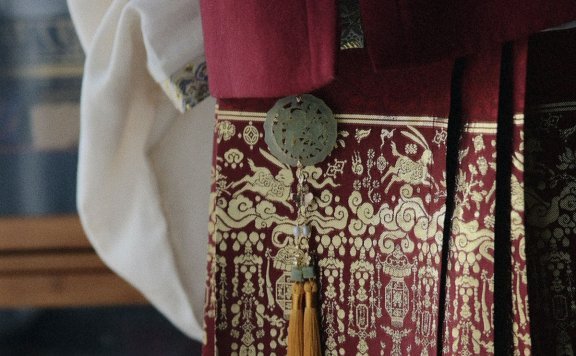
Hanfu Accessory: Jin Bu History and Purpose
Vocab “Step ban” or “walking ban” - Jin Bu (禁步, jìn bù) - an accessory often matches with hanfu. It is an accessory that is threaded together with jade stones and hung over a hanfu dress. Jade pendant - Yu Pei (玉佩, yù pèi) - also an accessory made of silk threads, beads, and jade stone that hung at the waist. But yùpèi are much simpler than Jin Bu, oftentimes it is just a jade with one or two beads tied together with thread. Oftentimes there will be no silk or bead tassels at the bottom like Jin Bu. Materials Jin Bu are usually made up of colored silk threads, jade beads, and jade pendants combined together. There may or not have tassels made up of silk thread at the end of the accessory. If not, the tassels may also be made up of threaded beads. Jin Bu in the past were made up of precious stones, and since they are threaded, they will clash together when walking making jade clash. If this is heard now people might not think much about it, but the etiquette and customs were stricter in ancient times, especially on feminine etiquette and how…