Article
Search results:
-
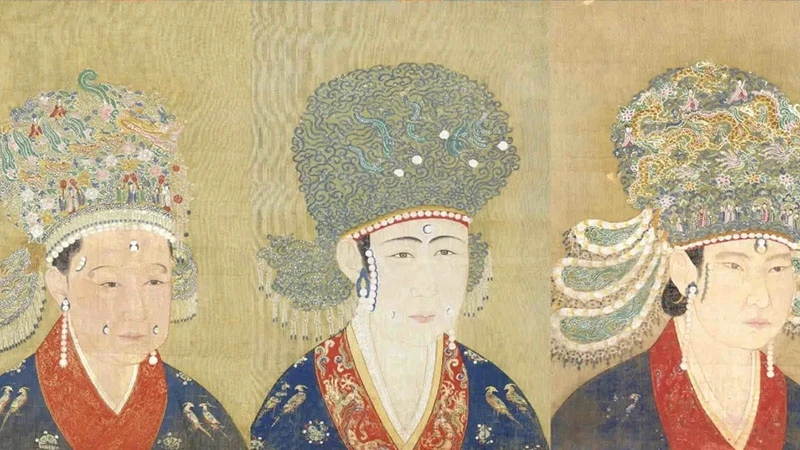
Song Dynasty Fashion: The Truth About Pearl Makeup
The Song Dynasty (960–1279 AD) is often romanticized for its elegance and sophistication, particularly in fashion. One of the most iconic beauty trends of the era was the "pearl makeup," where women adorned their faces with tiny pearls. But did the number and placement of these pearls signify social status or rank? The answer, surprisingly, is no. Pearl Makeup: A Universal Trend Contrary to popular belief, the use of pearls in makeup during the Song Dynasty was not regulated by social hierarchy. While the imperial court had strict rules for official attire and ceremonial dress—such as the number of dragons or phoenixes embroidered on robes—there were no such guidelines for pearl makeup. Pearls were a universal fashion statement, embraced by women across all social strata. The pearls were typically applied to specific areas of the face: between the eyebrows, along the temples, and on the cheeks. These placements were not arbitrary but followed aesthetic principles that highlighted the natural contours of the face. However, the number of pearls used was entirely a matter of personal preference and financial means, not rank. Pearls as a Symbol of Wealth While the number of pearls did not denote social status, their abundance often… -
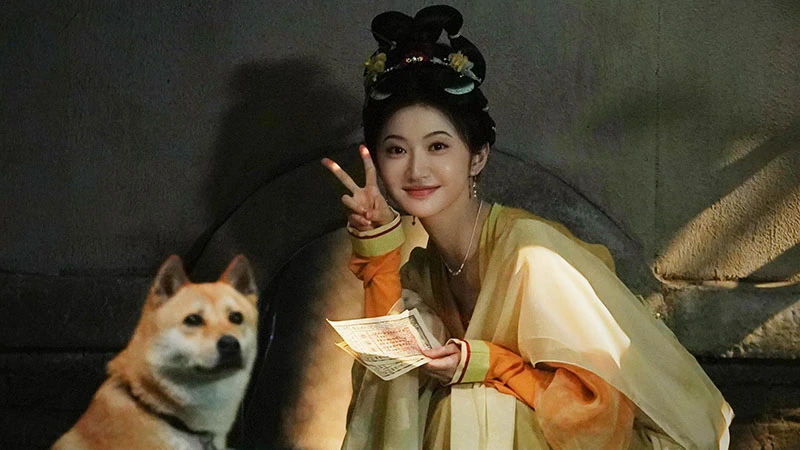
Jing Tian’s Iconic Look: The Double-Ring Immortal Chignon
In the historical drama Sijin (似锦), actress Jing Tian (景甜) has been spotted wearing the same hairstyle repeatedly, with only minor changes in accessories. This has sparked a wave of online commentary, with fans jokingly asking, “Is this hairstyle permanently glued to her head?” But what is the story behind this iconic look, and why has it become such a staple in Chinese historical dramas? The Origins of the Double-Ring Immortal Chignon The hairstyle in question is known as the shuanghuan Wangxian ji (双鬟望仙髻), or “Double-Ring Immortal Chignon.” It evolved from the simpler Shuanghuan ji (双环髻), a traditional hairstyle for young girls. Over time, its ethereal beauty made it a favorite in depictions of celestial beings and noblewomen, earning it a place in classical Chinese art and literature. For instance, the Admonitions of the Nymph of the Luo River (洛神赋图) and the Eighty-Seven Immortals Scroll (八十七神仙卷) both feature this hairstyle, cementing its association with grace and divinity. Its popularity in art and culture has made it a timeless choice for characters who embody elegance and otherworldly charm. A Hairstyle Through the Ages The Double-Ring Immortal Chignon has undergone several transformations throughout history. During the Wei, Jin, and Southern and Northern… -
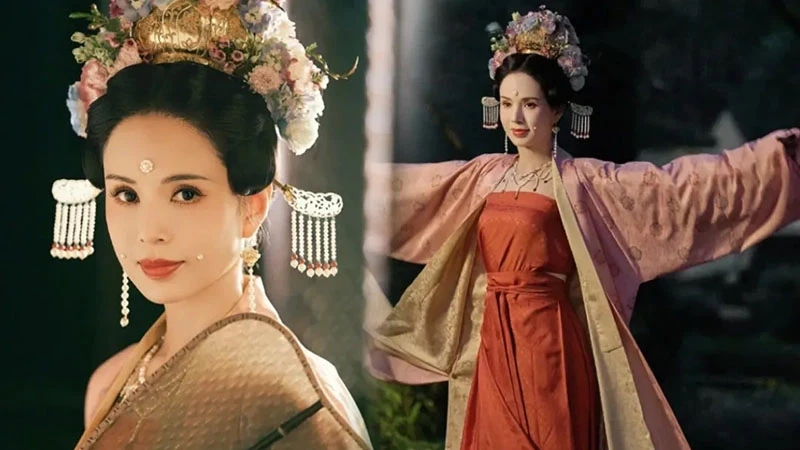
58-Year-Old Carmen Lee Stuns in Hanfu
Carmen Lee (李若彤), the actress best known for her iconic role as the "Dragon Girl" in Return Of The Condor Heroes (神雕侠侣), has once again captured the public’s attention—this time, not for her acting, but for her breathtaking appearance in Hanfu, traditional Chinese clothing. At 58, Lee’s grace and poise have left fans in awe, proving that true beauty transcends age. Whether in modern attire or ancient garments, she exudes a blend of elegance and strength that continues to inspire. A Perfect Match for Song Dynasty Style Lee’s recent Hanfu looks draw inspiration from the Song Dynasty, a period renowned for its understated yet sophisticated fashion. Her outfits typically feature a cross-collar blouse paired with pleated skirts, a classic combination that reflects the refined taste of noblewomen from that era. The addition of a pibo (披帛, a long silk scarf) adds a touch of fluidity and grace, enhancing the overall aesthetic. Her makeup, reminiscent of the Tang and Song dynasties’ Feixia style (飞霞妆), involves a light layer of rouge topped with white powder, creating a delicate, rosy glow. This technique, also seen in Liu Yifei’s (刘亦菲) portrayal in A Dream of Splendor (梦华录), complements warm skin tones beautifully, making it… -
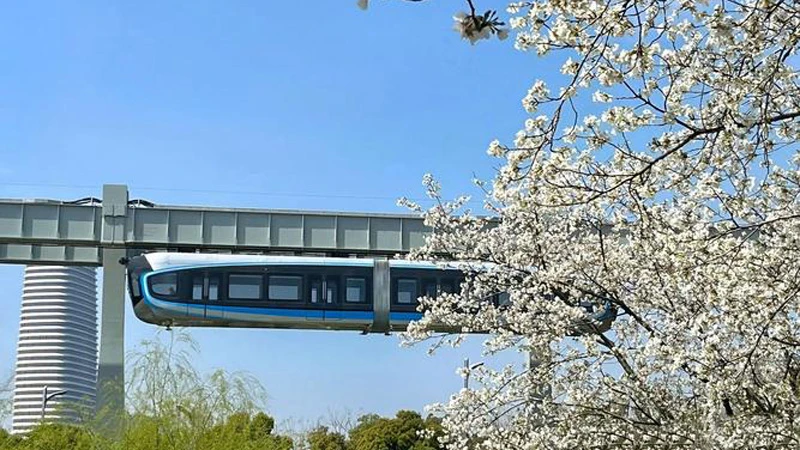
Wuhan’s Cherry Blossom Season: Sakura Hotspots
In March 2025, Wuhan’s cherry blossom season has once again captured global attention, blending natural beauty with creative cultural experiences. From themed post offices to marathon collaborations, the city has transformed its sakura landscapes into a series of viral "internet-famous" destinations. This article explores the multifaceted appeal of Wuhan’s cherry blossom hotspots and their role in shaping urban tourism and cultural identity. 1. Wuhan’s "Sakura Post Office" The Sakura Post Office at Wuhan University’s School of Engineering has become an iconic symbol of the season. Designed with pink-and-white aesthetics, it integrates postal culture, campus heritage, and sakura motifs, attracting millions of visitors annually. The site features four functional zones: postal services, 文创产品区 (cultural and creative products), 文化交流区 (cultural exchange), and 茶饮休闲区 (tea and leisure) . Collectible Stamps and Souvenirs: Over 40 limited-edition文创 products are launched each year, including sakura-shaped keychains, DIY pressed-flower postcards, and metal fridge magnets. In 2025, Wuhan Post collaborated with popular IPs like Ne Zha and Garlic Bird to release over 80 themed items, blending nostalgia with pop culture . Interactive Campaigns: Activities like "集章有礼" (stamp-collecting rewards), sakura-themed photo contests, and AI-powered postcard customization stations allow visitors to create personalized souvenirs. The post office also introduced AR filters in 2025, enabling digital… -
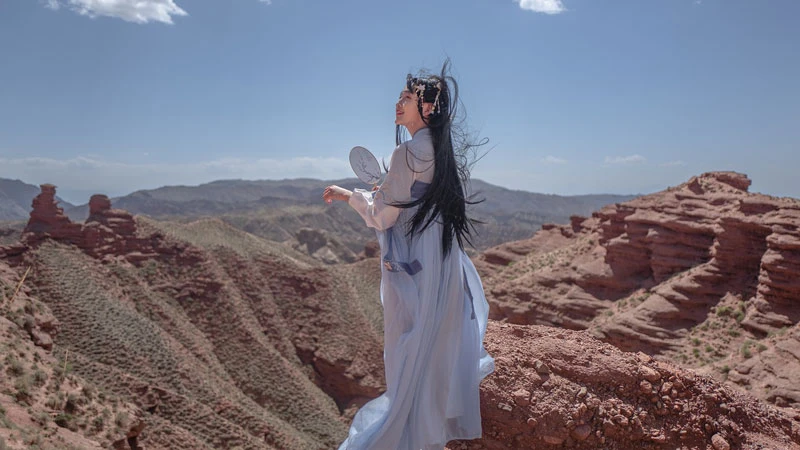
Hanfu in Modern Education: Integrating Traditional Attire into School Curriculums
In recent years, the resurgence of Hanfu, the traditional clothing of the Han Chinese people, has gained significant momentum. This revival is not just a fashion statement but a cultural movement aimed at reconnecting with China’s rich heritage. With increasing interest in traditional culture, a growing number of educators and scholars are advocating for the integration of Hanfu into modern school curriculums. But how can historical attire fit into today’s fast-paced, technology-driven education system? Let’s explore the potential benefits, challenges, and practical methods of incorporating Hanfu into modern education. The Historical Significance of Hanfu Before diving into how Hanfu can be introduced into education, it's crucial to understand why it matters. Hanfu, which dates back over 3,000 years, represents the essence of traditional Chinese aesthetics, etiquette, and philosophy. It was the standard attire throughout numerous dynasties until the late Ming and early Qing periods when it was replaced by Manchu-style clothing. Hanfu is not just fabric and embroidery; it is a reflection of Confucian ideals, hierarchical social structures, and historical craftsmanship. By integrating Hanfu into education, schools can offer students a tangible link to their cultural roots. In a globalized world, where Western influences dominate fashion and lifestyle choices, Hanfu… -
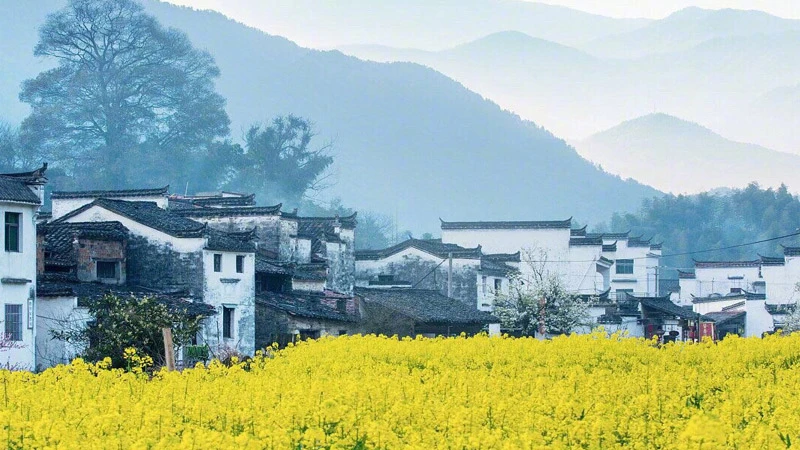
Wuyuan in Spring: A Symphony of Blossoms and Ancient Villages
If there's a place that embodies the essence of a Chinese spring, it's Wuyuan (婺源)—a picturesque county in Jiangxi Province, crowned by National Geographic as "China's Most Beautiful Countryside" and celebrated for its 100,000-acre seas of golden rapeseed flowers. From mid-March to April, this region transforms into a living watercolor painting, where mist-shrouded Hui-style villages, emerald hills, and vibrant blooms create a scene straight out of a Tang Dynasty poem. Here's your ultimate guide to experiencing Wuyuan's spring magic. The Golden Heart of Wuyuan: Huangling and Jiangling Perched at 500 meters above sea level, Huangling (篁岭) is a 500-year-old village famed for its "ladder to the clouds" terraced fields. In spring, its slopes blaze with golden rapeseed blossoms, creating a cascading tapestry that merges with the village's iconic "Sky Street"—a cobblestone path lined with traditional Hui architecture and artisan shops412. Don't miss the 300-meter-high glass walkway or the cable car ride offering a bird's-eye view of this floral spectacle. Jiangling's (江岭) 10,000-acre terraced fields are a UNESCO-listed marvel and one of China's "Four Great Spring Flower Seas". At dawn, the interplay of mist, sunlight, and golden blooms frames the whitewashed villages below, evoking an oil painting. Pro tip: Hike to… -
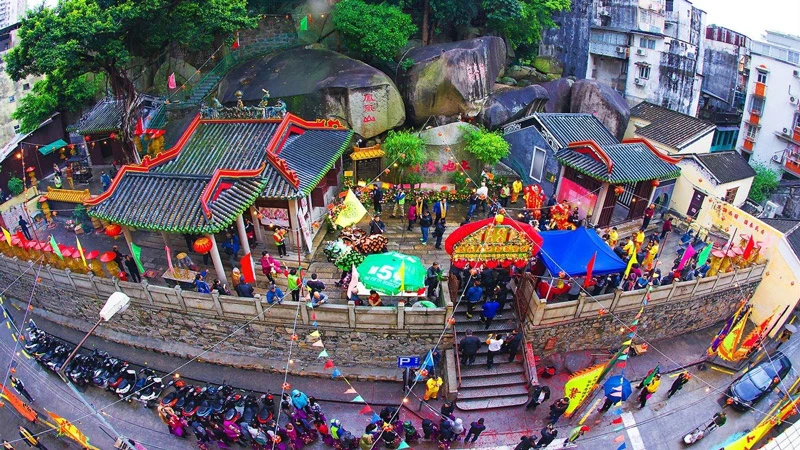
Macau's Earth God Festival: A Celebration of Cultural Heritage
A City Where Tradition Lives On Walking through the streets of Macau, first-time visitors might notice a small yet ubiquitous presence in front of shops and homes—a tiny shrine, often filled with incense, flowers, and an eclectic mix of offerings ranging from fresh fruits and biscuits to soft drinks and red wine. This seemingly modest practice is a reflection of a long-standing local belief in the Earth God, known as "Tu Di Gong" (土地公), a deity revered for bringing prosperity, protection, and harmony to the community. The belief in the Earth God is deeply rooted in Macau's folk traditions, symbolizing a direct and intimate connection between the people and the land they live on. Unlike grand temples dedicated to higher celestial beings, the Earth God's shrines are humble, accessible, and ever-present, making him the "closest" deity to the daily lives of Macau's residents. Each year, on the second day of the second lunar month, the city comes alive for "Tu Di Dan" (土地诞), the Earth God's birthday. This festival is a blend of vibrant rituals, lion dances, opera performances, and community feasts—an event that not only honors tradition but also brings together generations of locals and visitors alike. A Festival… -
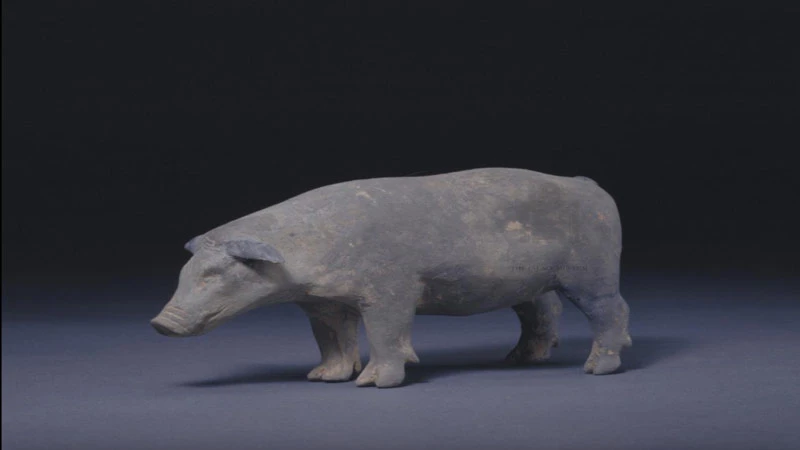
How Pigs Became the Skincare Stars of Ancient China
In the bustling markets of 7th-century Chang'an, Tang Dynasty elites didn't queue for imported perfumes or gold-leaf serums. Instead, they sought beauty in an unlikely source: pigs. While pork rarely graced aristocratic tables, the animal's fats, organs, and even hooves became the cornerstone of China's first documented skincare revolution. Historical records, including physician Sun Simiao's (孙思邈) precious prescriptions, reveal over 50 pig-derived beauty treatments. Collagen-rich pig hooves were boiled with herbs like white mulberry bark to create anti-aging "lightening toners." Pig pancreas, packed with natural enzymes, formed the base of exfoliating scrubs. Rendering yards worked overtime to supply pharmacies with zhū zhī (pig fat)—the Vaseline of its day—used to seal moisture into wind-chapped skin. "This wasn't folk medicine but systematized dermatology," explains Dr. Li Wen, a historian of Chinese medicine. "Sun's formulas specify exact ratios, preparation methods, and even application schedules—like modern prescription skincare." The Tang beauty regimen was meticulous. Wealthy women began their mornings with zaodou (澡豆), a grainy cleanser made from pig pancreas, pea flour, and spices. Evening routines included slathering on mianzhi (面脂), a lard-based night cream infused with jasmine or lotus. For special occasions, aristocrats applied kouzhi (口脂), a pig-fat lip balm tinted with safflower. Even… -

Zhejiang's Ancient Wooden Metropolis Reveal Secrets of the Yue Kingdom
In June 2024, a construction site in Shaoxing Binhai New Area accidentally unveiled a 2,500-year-old Yue state metropolis. This waterfront settlement sealed by a marsh not only refreshed the academic community's knowledge of Yue's construction techniques, but also linked the development of the prehistoric wooden civilization in the Yangtze River basin. The construction team initially noticed unusual soil layering - rows of woven reeds interspersed with dark brown silt. Emergency exploration by the Zhejiang Institute of Cultural Relics and Archaeology confirmed that this was a waterfront settlement during the Spring and Autumn and Warring States periods (770-221 BCE). The well-preserved 6th-century BCE wooden pillars unearthed at the site, with standardized mortise and tenon joints visible at their ends, are in the same lineage as the construction techniques of the Tingshan complex, which was discovered in 2020. Archaeologist Xu Tianjin pointed out that this site, together with the core area sites of Tingshan and Nanshantou, constituted the functional area of the capital city of the State of Yue, corroborating the record of "the great city of Shanyin" in the Book of Yuejishu. Architectural Wisdom Beyond the Era The core of the site is a cluster of two dry-structure buildings with a… -

Zhejiang Ancient Roots: 2024's Top 10 Archaeological Discoveries
For a province already celebrated for its UNESCO World Heritage Sites—from West Lake to Liangzhu Ancient City (良渚古城)—Zhejiang continues to rewrite the narrative of China's prehistoric past. The recent announcement of its 2024 Top 10 Archaeological Discoveries offers a thrilling glimpse into civilizations that thrived here up to 10,000 years ago. Among the highlights are the Neolithic Xiatang Village (下汤村), the enigmatic Huangchao Mound (皇朝墩), and two newly unearthed urban relics from Hangzhou. Let's dive into these time capsules reshaping our understanding of East Asia's early societies. Xiatang: A 10,000-Year-Old Time Capsule Nestled in the upper reaches of the Yong'an River Valley, the Xiatang Site (下汤遗址) in Taizhou's Xianju County (台州仙居县) has stunned archaeologists with its near-complete chronicle of Neolithic life. First discovered in 1984, this 30,000-square-meter settlement spans four distinct cultural phases: the Shangshan (10,000–8,500 BCE上山文化), Kuahuqiao (8,000–7,000 BCE跨湖桥文化), Hemudu (7,000–6,000 BCE 河姆渡文化), and Haochuan (4,500–4,000 BCE 好川文化) cultures. "Xiatang is like a fossilized imprint of China's earliest agricultural communities," explains Zhong Zhaobing, lead archaeologist at the site. Recent excavations revealed a sophisticated village layout: defensive trenches, raised earthen platforms, pottery kilns, food-processing areas, and even a ceremonial "plaza" paved with fired clay. Among the 400+ artifacts uncovered—stone tools,… -
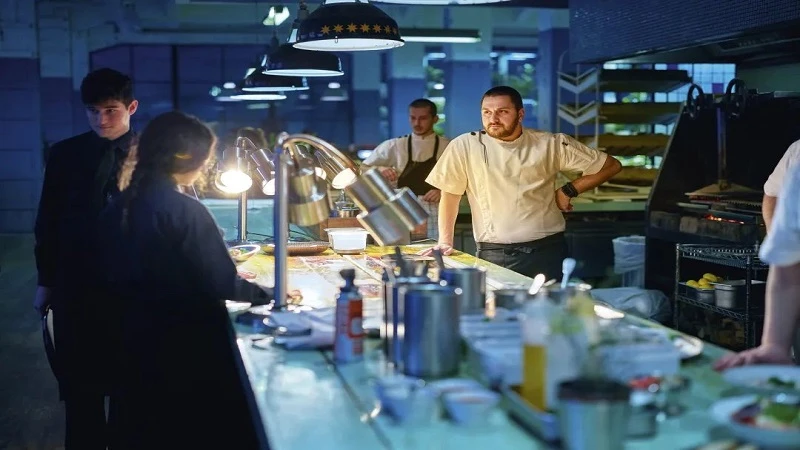
When Chinese Dumplings Meet Georgia's Beloved Dumplings
In the rugged landscapes of Georgia, a doughy delicacy bridges continents and centuries. Meet khinkali—Georgia's beloved dumpling, whose pleated folds and savory broth whisper tales of Mongol conquests, Silk Road exchanges, and a culinary resilience that resonates deeply with Chinese sensibilities. At a cooking class in Tbilisi's St. Bunny restaurant, chef Nino Bochorishvili hands me a lump of unleavened dough. As she demonstrates the art of pleating khinkali—pinching 18 spiraled folds to seal spiced meat inside—I'm struck by its uncanny resemblance to Shanghai's xiaolongbao. "Chinese visitors always say this feels familiar," Nino smiles. Yet differences emerge: khinkali is boiled, not steamed, and crowned with a doughy "handle" for easy handling. The eating ritual also sparks cross-cultural déjà vu. Georgians devour khinkali barehanded, slurping the broth first before consuming the rest—a technique mirroring how Shanghainese navigate soup dumplings. "A messy plate means you've mastered it," jokes Guram, our driver, whose father once ate 89 khinkali in one sitting. To a Chinese eater, this evokes the hearty chaos of a Beijing dumpling feast. History Wrapped in Dough The origins of khinkali are as layered as its folds. Chef Tekuna Gachechiladze, a pioneer of modern Georgian cuisine, traces its roots to the 13th-century… -
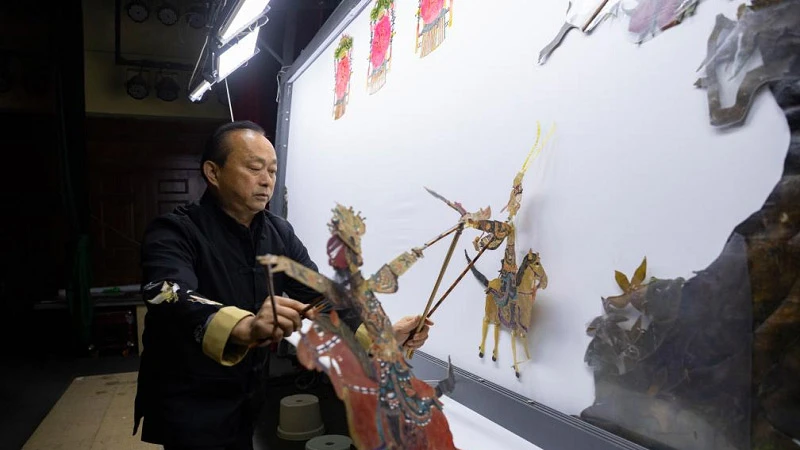
Bringing Shadows to Life: The Art of Sichuan Shadow Puppetry
A Tradition Carved in Light and Shadow A single sheet of leather, a flickering lantern, and the deft movements of an artisan's hands—these simple elements merge to create a theatrical spectacle that has captivated audiences for centuries. Chinese shadow puppetry, a mesmerizing blend of painting, carving, storytelling, and music, has been recognized by UNESCO as an Intangible Cultural Heritage of Humanity. In the historic city of Langzhong (阆中), Sichuan, the tradition of shadow puppetry has been passed down through generations, evolving while staying true to its roots. The Langzhong style, particularly the famed "Wang Shadow Puppetry," has been performed for over 350 years. Its distinct artistry is inspired by Sichuan opera, featuring intricate designs and vibrant characters cut from cowhide or paper. The narratives often revolve around history, mythology, and folklore, bringing to life stories that transcend time. A Master's Journey One of the most dedicated guardians of this tradition is Wang Biao, a seventh-generation heir of the Wang Shadow Puppetry lineage and a national-level inheritor of Sichuan shadow puppetry. Born in 1965, Wang Biao was immersed in the craft from an early age, learning both performance techniques and the delicate art of puppet carving from his grandfather, Wang Wenkun.… -
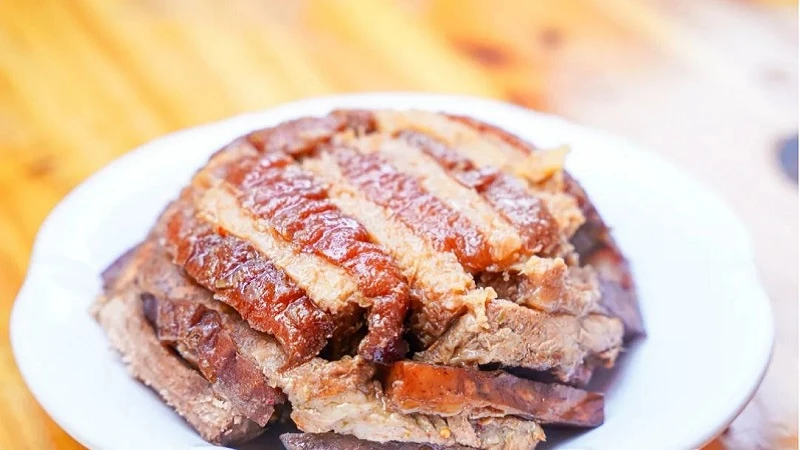
Lipu Taro Braised Pork: The Star of Guangxi Banquets
In Guangxi, no banquet is complete without a steaming plate of Lipu Taro (荔浦芋头) Braised Pork. This beloved dish holds a special place in local culinary traditions, earning its reputation as the undisputed centerpiece of celebratory feasts. From family gatherings to grand wedding banquets, it consistently takes the spotlight, delighting diners with its rich aroma and melt-in-your-mouth texture. Everyday Favorite Lipu taro is the key ingredient that sets this dish apart. Known as the "King of Taro," Lipu taro boasts a high starch content, giving it a soft, creamy texture with a hint of sweetness. The region has cultivated this prized crop for over a thousand years. Historical records indicate that as early as the Qing Dynasty, Lipu taro was selected as an imperial tribute, enjoyed by royalty for its superior quality. Lipu Taro Braised Pork dates back to the Ming Dynasty. Legend has it that devout worshippers once offered pork and taro as temple sacrifices. After the ceremony, they combined the ingredients, steamed them with seasonings, and unknowingly created what would become one of Guangxi's most iconic dishes. Over time, what was once a delicacy reserved for special occasions has become a household staple, enjoyed by families across China… -
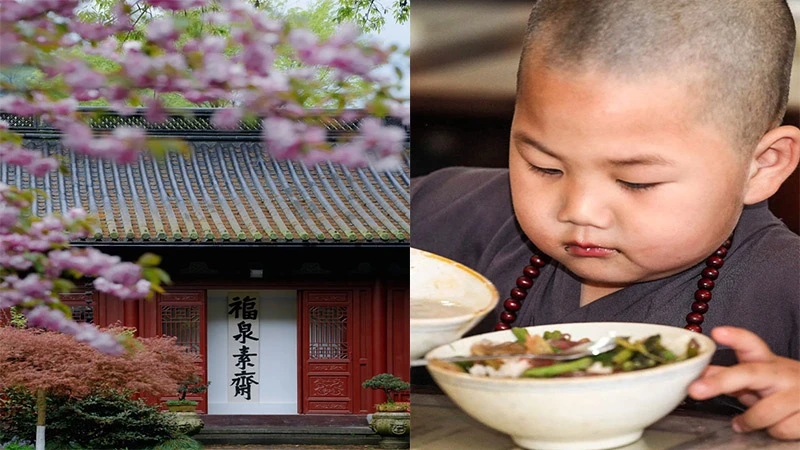
A Flavorful Tradition: Vegetarian Cuisine in Chinese Temples
In China, temples are often seen as places of worship, offering a peaceful escape from the hustle of everyday life. However, a lesser-known but equally delightful aspect of temple life is the cuisine—especially the humble yet hearty vegetarian dishes served within their ancient walls. Far from the notion that vegetarian food lacks flavor or excitement, these temple-based dishes prove otherwise. From noodles to savory snacks, the temples of China serve some of the most delightful meals, blending spiritual tradition with culinary craftsmanship. Though temple food is strictly vegetarian, the variety and depth of flavors can be surprising. Consider the staple dish in many temples: vegetarian noodles. These aren't just any noodles, but dishes steeped in rich, aromatic broths that are painstakingly crafted with an assortment of vegetables, mushrooms, and tofu, designed to nourish both the body and spirit. Let's take a look at some of the best temples to visit if you're looking for not just peace but a truly delicious vegetarian experience. Temple Noodles In Suzhou, a city famed for its sophisticated culinary traditions, even the temple noodles stand out. At Lingyan Mountain Temple and Xiyuan Temple, locals and tourists alike gather early in the morning to enjoy a… -

How Does Mapo Tofu Transcends Borders
No Chinese dish has achieved global recognition quite like Mapo Tofu. What began as a humble street food in 19th-century Chengdu has evolved into a culinary symbol bridging cultures, inspiring chefs, and sparking debates across continents. Its journey—woven with history, creativity, and a dash of misunderstanding—reveals how a single dish can transcend borders. In 1994, two seemingly unrelated events set the stage for Mapo Tofu's global breakthrough. Fuchsia Dunlop, a British scholar, arrived in Sichuan to study Chinese minorities but soon found herself enrolled at the Sichuan Culinary Institute. There, she mastered the art of Mapo Tofu, later introducing it to Western audiences through her books and documentaries. Meanwhile, in Japan, manga artist Etsushi Ogawa debuted Cooking Master Boy (中华一番), a culinary adventure series where the protagonist's triumph hinges on a mythical "Magical Mapo Tofu." These two narratives—one rooted in scholarship, the other in pop culture—propelled the dish into international consciousness. Dunlop became a tireless advocate for Sichuan cuisine, demystifying its history and honoring Chen Mapo, the 19th-century matriarch credited with creating the dish. Ogawa's manga, meanwhile, spawned anime adaptations and a cult following, transforming Mapo Tofu into a symbol of culinary heroism. The Name The dish's global journey wasn't… -
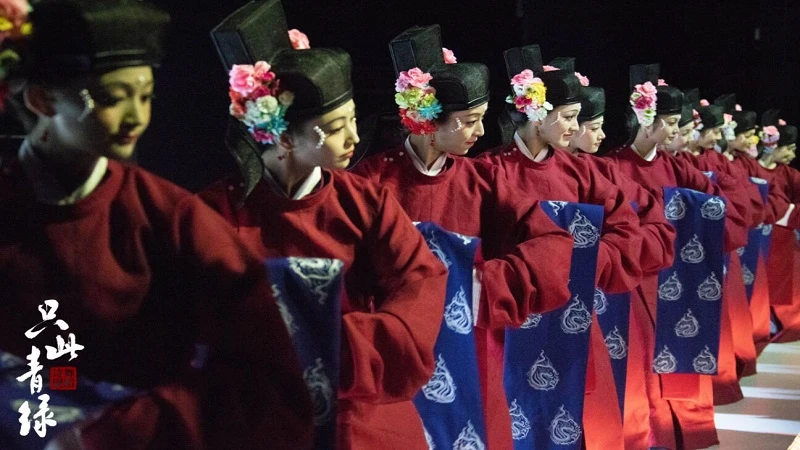
The Eternal Verdant Approaches 700th Performance
Beneath the vaulted ceilings of Guangzhou Opera House, silk cascades like ink dispersing in water, unveiling the 700th iteration of a modern cultural marvel. Since its 2021 premiere, The Eternal Verdant: The Journey of a Legendary Landscape Painting (只此青绿)—a dance poetry drama inspired by the 12th-century masterpiece A Thousand Li of Rivers and Mountains—has transcended theatrical boundaries, becoming a living bridge between Song Dynasty artistry and contemporary sensibilities. Co-created by the Palace Museum and China Oriental Performing Arts Group, this production has magnetized over 1.2 million viewers across 70 cities, from Istanbul's ancient theaters to Broadway's neon glare, collecting accolades like the Wen Hua Award while redefining China's cultural narrative. The genius of The Eternal Verdant lies in its alchemical fusion of disciplines. Dancers don't merely perform; they become brushstrokes incarnate. Limbs curve like mountain ridges traced by Wang Ximeng, the teenage prodigy behind the original painting, their movements oscillating between the tensile grace of calligraphic flourishes and the raw energy of mineral pigment grinding. Silk costumes, dyed using reconstructed Song-era malachite formulas, ripple to reveal hidden cartographies of the landscape. Audiences find themselves not just spectators but time travelers, drawn into a dual narrative where a modern museum researcher's… -
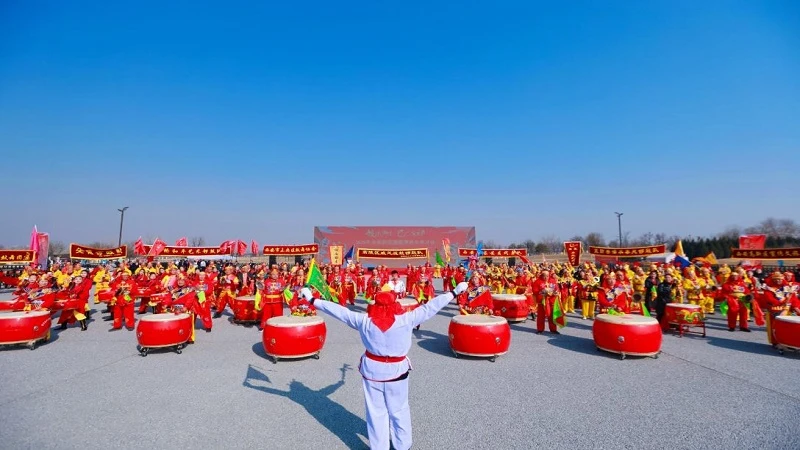
Spring Festival in Shaanxi: The Unique Ancient Drums
Xi'an's ancient city walls trembled not from winter winds, but from the thunderous artistry of 500 drummers. At the Han Dynasty Heritage Park, the air buzzed with anticipation as teams from Chang'an District, Zhouzhi County, and Yanliang District prepared for the "Drum Symphony of Prosperity" competition. Among them, the Chang'an troupe's "The Emperor's Review" (秦王点兵) stood out—a six-movement epic that reimagined Qin dynasty military drills through percussive storytelling. Fourteen-year-old Liang, his drumsticks wrapped in crimson silk, leaned toward his teammate. "The third movement mimics cavalry hooves," he whispered, as holographic warriors materialized above their drums. Nearby, the Lantian County troupe rehearsed "West River Folk Pageant" (西川社火), their cymbals spinning like golden harvest moons. "Each clash echoes our ancestors' celebrations after defeating floods," explained veteran performer Grandma Liu, her wrists flicking with the precision of a calligrapher's brush. The climax came when Zhouzhi County's drummers unleashed their "digital dragon"—a 50-meter LED projection that snaked through the air, its scales rippling to the rhythm of a 13th-century battle hymn. Tech-artist Mei, whose VR headset transformed drum scores into 3D calligraphy. Our ancestors carved prayers into oracle bones; we code them into light. Soil-Stained Hands, Skyward Rhythms In Fuping's frozen fields before dawn,… -
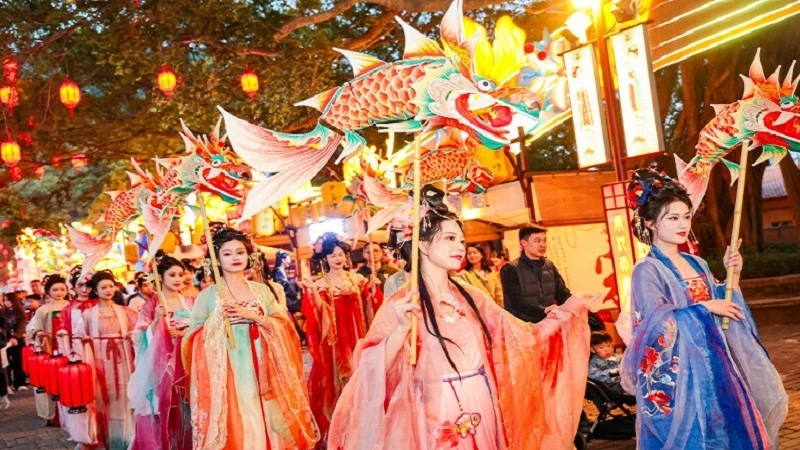
Cyber Park Lantern Festival in Vibrant Bay Area
On the evening of January 22, 2025, the Guangdong-Hong Kong-Macao Greater Bay Area Lantern Festival (1.22-3.30) kicked off with a dazzling display of lights. The first visitors to the park witnessed the spectacular moment as thousands of lanterns illuminated the night sky, offering a mesmerizing view of a world lit up by modern technology and traditional art. "3, 2, 1, Light Up!" With a countdown in the air, lanterns from three major parks—Nansha Puzhou Garden, Nansha Tianhou Temple, and Nansha Seaside Park—simultaneously lit up the night sky. This moment marked the beginning of a breathtaking visual journey, with thousands of lights forming intricate designs that captivated the eyes of onlookers. The first evening drew crowds of visitors eager to witness the magic. One of the standout features of this year's display is the lantern "The Flower Goddess (簪花女神)," which was set against a serene water-side backdrop. The graceful figure of the flower goddess, depicted in intricate detail, transported visitors to a tranquil water town, offering a beautiful juxtaposition between nature and craftsmanship. Another popular installation, "The Monkey King," reimagined the famous character of Sun Wukong from Chinese mythology. The lantern's unique dark fantasy style transformed the beloved hero into a mysterious, almost mythical figure,… -

Nanjing Blooms: A Spring Awakening and Cherry Blossoms
From January 1 to March 31, 2025, travelers arriving via China Eastern Airlines or rail services to Nanjing can unlock exclusive discounts at 23 iconic attractions—from the mist-shrouded Qixia Mountain to the lively Hongshan Forest Zoo. Simply present your boarding pass or train ticket within 10 days of arrival to enjoy up to 40% off tickets and experiences. But here's the real showstopper: March marks the awakening of Jiming Temple's (鸡鸣寺) legendary cherry blossoms. While Tokyo's sakura often steal the spotlight, Nanjing's 400-meter "Pink Corridor" offers an ethereal alternative. Picture delicate petals swirling around ancient temple eaves, accompanied by the soft chime of Buddhist bells—a scene so poetic it could make Kyoto blush. Nanjing offers an antidote to overcrowded Japanese hanami spots. As one guest remarked: "It's like stepping into a scroll painting—one where you can sip cappuccino amid cherry blossoms." Back at the legendary Jiming Temple Road, anticipation builds around the "Messenger Tree"—a lone Chunhan Cherry (春寒樱花) that traditionally heralds the main bloom. Though still cloaked in tight buds, early risers might spot a dozen pioneering flowers defying the chill. "This variety accounts for 80% of our cherry canopy," says local arborist Wang. "Once temperatures stabilize above 12°C, the entire 2km… -
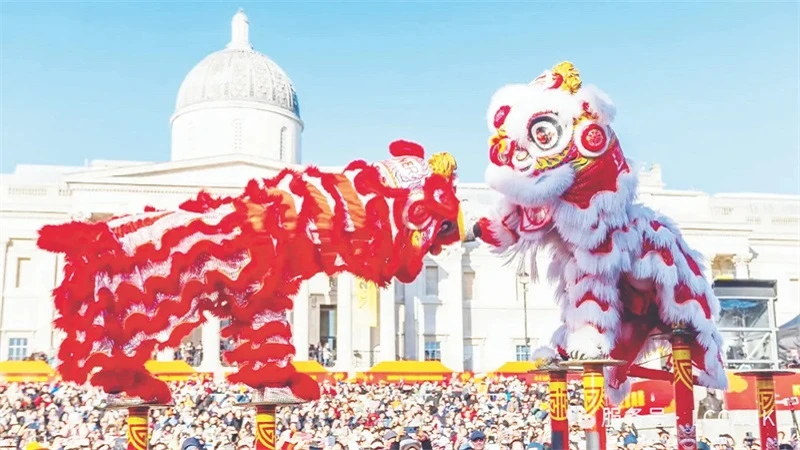
Dragon Dances Meet Digital Skies in Spring Festival
Kuala Lumpur's night sky ignited as 1,200 drones wove luminescent dragons above the Petronas Towers, officially launching the 2025 "Happy Spring Festival" global tour. In Bangkok's Yaowarat district, the scent of tom yum soup mingled with sizzling Chaozhou dumplings as over 100,000 locals and overseas Chinese flooded the neon-lit streets. "Sharing this festival has become our bridge," remarked Thailand's Tourism Minister Sudawan Wangsuphanakul, gesturing to crowds where Thai silk sarongs brushed against Hanfu sleeves. The UNESCO-listed festival's first year as intangible heritage saw unprecedented fusion. Brussels' Royal Museums of Fine Arts hosted children stamping Suzhou's peach-blossom woodblock prints onto Flemish-style canvases, while Greek Parthenon steps echoed with Kunqu opera arias. "It's like watching a Renaissance muse awaken to a Chinese melody," marveled Belgian curator Antoine Delvaux. Southeast Asia's celebrations shimmered with layered identities. Singapore's Clarke Quay transformed into a living Analects: youths in Peranakan-embellished Hanfu practiced archery beside QR-coded lantern riddles. "The ‘Six Arts' aren't relics—they're life hacks for modern minds," laughed Malaysian student Mei Ling, her calligraphy brush tracing Confucian maxims onto augmented-reality scrolls. Jakarta's National Monument witnessed a culinary diplomacy coup—Shenyang chefs reimagined nian gao rice cakes with durian fillings, served alongside VR tours of China's ice festivals.…