Article
Search results:
-

The Song Dynasty Women's Head Coverings
In various historical dramas like 'Secret Records of the Brocade Bag' and 'Rain Clouds Over Ink', we often see women wearing a piece of cloth over their heads when going out. These women weren't necessarily heading to weddings - so what was the purpose of this head covering? The answer lies in what was known as the 'Gaitou' (盖头) during the Song Dynasty. The Song Dynasty inherited many systems from the Tang Dynasty, including its clothing customs. According to Zhou Hui's 'Qingbo Magazine': 'Scholars wore cool robes when riding horses, while women walking in public places covered half their bodies with square purple silk veils, commonly called Gaitou, which followed the Tang Dynasty Weimao (帷帽) tradition.' This reveals that the Song Dynasty Gaitou evolved from the Tang Dynasty Weimao. However, there were differences between the two. As noted by scholar Shen Congwen: 'The Weimao was a stiff hat with a hanging net curtain,' essentially a bamboo hat with a black net. The Gaitou was simpler - just a square piece of fabric, often made of silk ('Luo'), that could cover half the body. Shen Congwen wrote: 'The Gaitou was indeed a common head covering for Song Dynasty women.' Gao Cheng… -

Top 10 Chinese Anime on Tencent You Can't Miss
Tencent Video and Tencent Animation have become hubs for China's animation gems, blending ancient myths, futuristic sagas, and everything in between. Here are 10 must-watch Chinese anime series that redefine what Donghua can be. Battle Through the Heavens 斗破苍穹 At first glance, Battle Through the Heavens fits squarely into the classic cultivation formula: a fallen genius named Xiao Yan sets out to regain his status and surpass his former self. But unlike many shows where power-ups come too easily, BTTH is unusually committed to making every stage of Xiao Yan's progress feel earned—and hard-won. The early loss of his talent isn't just a narrative hook; it forces him to rely on intellect and resourcefulness rather than sheer force. When he gains a mysterious old mentor, Yao Lao, their relationship doesn't just serve as a shortcut for instant power. Yao Lao is more like a chessmaster, constantly reminding Xiao Yan that in this world, raw power alone won't keep you alive—reputation, alliance, and careful timing matter just as much. One of the most distinctive features of this show is its emphasis on alchemy. In many xianxia stories, alchemy is just background dressing—here, it becomes a central tool of conflict and control.… -

Love and Destiny: Epic Rebirth Unveiled
Love and Destiny (宸汐缘) is a sweeping celestial romance where gods and mortals clash in a world of divine law, ancient prophecies, and love that defies fate. At its core is the slow-burning relationship between Jiu Chen, a war-weary god bound by cosmic duty, and Ling Xi, a spirited fairy whose very existence threatens to awaken a long-dormant evil. As their bond deepens, loyalties shift, and the cost of love becomes a question not of happy endings, but of whether the world can survive their connection. Can their love endure across three lifetimes—or will it unravel the very heavens? Chapter 1: The Spark of Fate (Episodes 1–10) "A Peach Blossom, a God's Oath, and the Apocalypse in Disguise" Love and Destiny opens not with thunderous wars or grand deities, but with a world haunted by the past. Jiu Chen (played by Chang Chen), the solemn God of War, has returned to the heavenly realm after centuries of sleep following his defeat of the Dark Lord. Though restored in body, he remains emotionally distant, weighed down by the cost of war and the fragility of peace. Enter Ling Xi (played by Ni Ni), a carefree and optimistic fairy living a quiet… -
Best 5 Michelle Yeoh's Costume Roles List
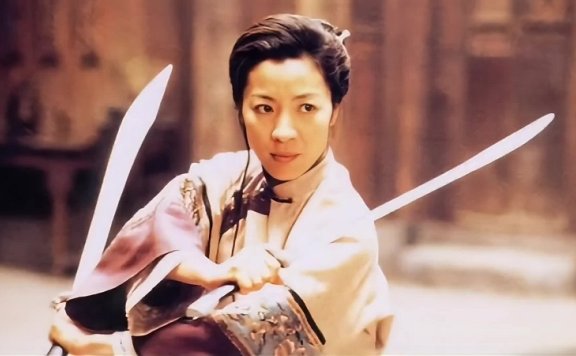
Before Michelle Yeoh—Michelle Yeoh (杨紫琼)—became a global icon, she was already a standout presence in Chinese-language costume films. While most international fans know her from films like Crouching Tiger, Hidden Dragon, her roles in historical TV films are just as revealing. These films show a different side of Yeoh: not just a martial artist, but a storyteller navigating dynastic intrigue, loyalty, and sacrifice. Her work in costume films isn't extensive, but it's meaningful. Each project—whether based on classic wuxia novels or original scripts—places her in morally complex roles shaped by tradition, power, and personal duty. She's played warriors, nobles, and strategists, all grounded in different periods of Chinese history. This article highlights some of her most notable films—both mainstream and lesser-known—where history meets performance with striking results. Crouching Tiger, Hidden Dragon 卧虎藏龙 Released: 2000 Period Background: Set during the Qing Dynasty, but in a fictionalized jianghu world Genres: Wuxia, Historical Fantasy, Action, film Main Roles: Michelle Yeoh as Yu Shu Lien; Chow Yun-fat as Li Mu Bai; Zhang Ziyi as Jen Yu Adapted From: The fourth novel in the Crane-Iron pentalogy by Wang Dulu The film tells the story of Li Mu Bai, a legendary swordsman who plans to retire… -

A Must-Watch Guide for Yu Shuxin’s 5 Costume Dramas
Yu Shuxin's (虞书欣) costume dramas redefine charm and grit in historical fantasy. With a career spanning quirky heroines, cunning spies, and soul-stirring immortals, she crafts characters that linger long after the credits roll. What sets her apart? A rare blend of authenticity and versatility. Whether navigating slapstick comedy or tragic love, Yu avoids overacting traps, grounding even the most fantastical roles in relatable humanity. This isn't accidental. Trained at Huace Film Academy, Yu meticulously dissects character motivations. For Love Between Fairy and Devil, she studied orchid symbolism to embody Xiao Lanhua's purity; in The Ingenious One, she trained in martial micro-expressions to portray a spy's calculated restraint. Yet she never loses her signature spark—the wit and warmth that make her heroines feel like friends. Love Between Fairy and Devil 苍兰诀 Aired: 2022 Period Background: A mythical realm divided between celestial beings, demons, and mortals. Genres: Xianxia, Romance, Adventure Main Roles: Yu Shuxin as Xiao Lanhua, Wang Hedi as Dongfang Qingcang Adapted From: The novel Cang Lan Jue by Jiu Lu Fei Xiang. The fantasy drama centers on Xiao Lanhua (Yu Shuxin), a low-ranking fairy tasked with repairing fate records in the celestial realm. Her life takes a dramatic turn when… -

5 Must Watch Fan Bingbing's Iconic Roles
Fan Bingbing (范冰冰) , known for her magnetic presence in historical dramas, Fan doesn't just act—she resurrects legends. Take The Legend of Wu Mei Niang, where she transforms into Wu Zetian, the Tang Dynasty's ruthless empress. In one scene, Fan's character coldly outmaneuvers a rival, her gaze sharp as the ceremonial dagger she wields. Moments like these—raw, tense, and steeped in history—define her roles. From mischievous maids to cunning monarchs, Fan's performances bridge centuries, offering viewers not just entertainment but a visceral connection to China's dynastic sagas. The Legend of Wu Mei Niang 武媚娘传奇 Aired: 2014–2015 Period Background: Tang Dynasty (618–907 CE) Genres: Historical, Political Drama Main Roles: Fan Bingbing as Wu Zetian (武则天), Zhang Fengyi as Emperor Taizong Adapted From: Historical accounts of China's only female emperor Spanning 80 episodes, the series chronicles Wu's ascent from a curious palace maid to China's only female emperor, a journey Fan embodies with striking nuance. Her performance captures both the vulnerability of young Wu Ruyi, who defies court norms by refusing to kneel during her first encounter with Emperor Taizong, and the calculated ruthlessness of the ruler who later dismantles political rivals. A standout moment occurs when Fan's Wu, wielding a ceremonial… -

3 Jackson Yee's Historical Series Worth Rewatching
Jackson Yee (易烊千玺) isn't just a pop idol turned actor—he's a master at breathing life into historical roles. From strategists to poets, his costume dramas blend sharp storytelling with meticulous period details, making history feel urgent and relatable. Take The Longest Day in Chang'an, where he plays Li Bi, a Tang Dynasty genius racing against a 12-hour terrorist plot. The series doesn't just showcase palace politics; it thrusts viewers into dusty market alleys and smoke-filled war rooms, with Yi's calm intensity anchoring every scene. Or consider Hot Blooded Youth, where his character A Yi evolves from a revenge-driven orphan to a revolutionary hero, mirroring China's turbulent shift from dynasty to republic. These roles aren't pageantry—they're about flawed, thinking characters navigating crises that still echo today: corruption, identity, and sacrifice. Here are 3 Historical Series with Jackson Yee that you'll love watching over and over again. The Longest Day in Chang'an 长安十二时辰 Aired: 2019 Period Background: Tang Dynasty, during the Tianbao era under Emperor Xuanzong's reign, a golden age marked by cultural prosperity and political intrigue. Genres: Costume suspense, political thriller, action Main Roles: Lei Jiayin as Zhang Xiaojing, a disgraced detective-turned-prisoner; Jackson Yee as Li Bi, a prodigious young strategist.… -
A New Historical Suspense Drama Where Life is the Bait
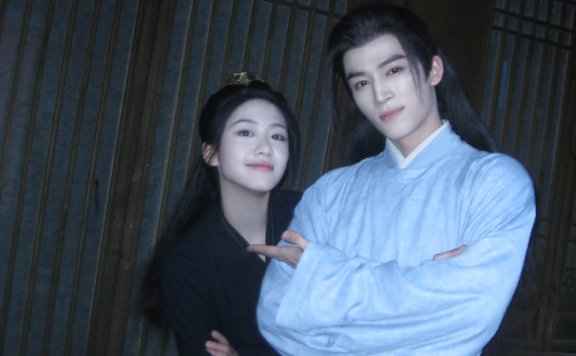
The highly anticipated historical mystery drama Calming Waves (定风波), starring rising talents Wang Xingyue and Xiang Hanzhi, is set to premiere soon. Promising a gripping blend of political intrigue, martial arts heroism, and mind-bending mysteries, this series has already generated buzz for its bold premise, lavish production, and star-studded cast. Adapted from a popular novel of the same name, the 36-episode drama takes viewers into the chaotic world of the Great Qi Dynasty, where survival demands not just strength, but brilliance. A Tale of Betrayal, Survival, and Redemption At the heart of Calming Waves lies the story of Xiao Beiming (played by Wang Xingyue), once revered as the dynasty's greatest detective. His life shatters on what should be his happiest day: framed for a crime during his wedding ceremony, he is forced into exile. This opening twist—rare for a historical drama—sets the stage for a relentless quest for justice. Three years later, Xiao returns to the capital, determined to clear his name. Alongside his sharp-witted martial sister Zhong Xueman (Xiang Hanzhi) and a band of loyal allies, he uncovers a web of conspiracies that threatens both the imperial court and the jianghu (martial arts world). The series masterfully interweaves multiple… -
Under the Moonlight: A New Mystery Drama
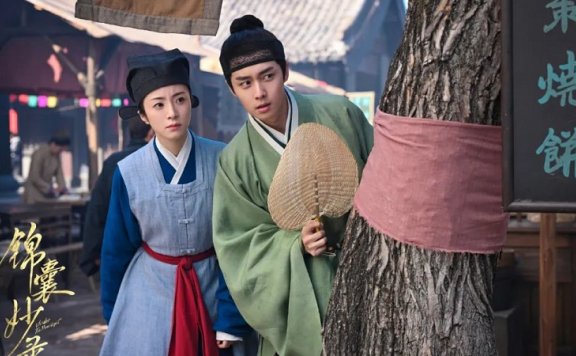
Under the Moonlight (锦囊妙录) offers a refreshing take for viewers tired of over-the-top fantasy romances in historical dramas. This Ming Dynasty-set mystery series combines crime-solving with a grounded, emotionally complex love triangle—a rare feat in a genre often dominated by clichés. With no flashy special effects or exaggerated power dynamics, the show focuses on relatable characters navigating personal growth, moral dilemmas, and realistic relationships. Breaking Stereotypes The story follows Luo Shu (Hu Bingqing), a former music courtesan turned detective, as she works to clear her name and gain freedom from her "low-status" identity. Her partners in crime-solving are Qi Menglin (Zhai Zilu), the impulsive yet well-meaning son of a high-ranking official, and Han Muzhi (played by an understated but compelling actor), a pragmatic county magistrate. What sets the love triangle apart is its avoidance of typical tropes: No "Chosen One" Nonsense: Luo Shu isn't a flawless genius. Her strength lies in sharp observation and emotional intelligence, particularly when interacting with female victims. Realistic Conflicts: Han Muzhi, engaged to a governor's daughter, initially prioritizes career over love. When he falls for Luo Shu, their relationship faces tangible barriers—class differences and existing obligations—not mythical curses. Growth Over Grand Gestures: Qi Menglin evolves… -

A New Revenge Saga with Heart and High Stakes
Legend of The Female General (锦月如歌), Tencent Video's upcoming 40-episode historical drama, is poised to become the next big hit in the crowded genre of ancient revenge stories. Adapted from author Qian Shan Cha Ke's popular novel Rebirth of the Female General Star, the series combines a gripping plot of betrayal and redemption with a cast of rising stars and veteran actors, all wrapped in lavish production design. A Fallen Heroine's Second Chance The story centers on He Yan (played by Zhou Ye), the eldest daughter of a declining noble family forced to impersonate her brother, He Ru Fei, to preserve their status. Disguised as a man, she attends a prestigious academy, excels in military strategy, and eventually becomes a celebrated general on the battlefield. However, her triumph is short-lived: after years of service, her family betrays her, stripping her of her achievements and attempting to kill her to protect their secrets. Miraculously surviving, He Yan reinvents herself as "He Yue," the daughter of a low-ranking official, and re-enters the military to reclaim her honor. Her path crosses again with Xiao Jue (Cheng Lei), a brilliant general and her former academy classmate, who initially suspects her identity. Their relationship evolves… -
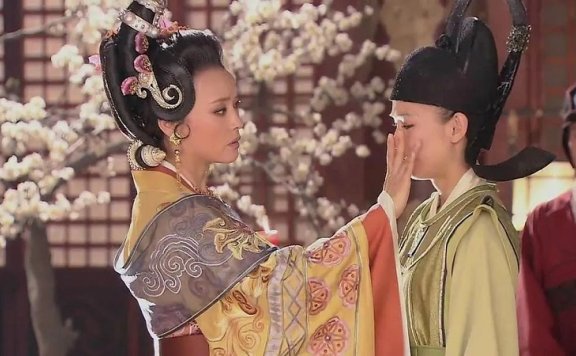
Why Youth Respect Granny Liu Xiaoqing's Playing a Girl
Recently, veteran Chinese actress Liu Xiaoqing announced on social media that she'll star in a new short drama called Lucky Star From Heaven, a sequel of sorts to Adorable Baby Matchmaker: Marriage at 50. The storyline? Well, let's just say it's less important than the casting—because the internet immediately lit up at the fact that 74-year-old Liu is once again taking the lead, possibly even playing a youthful role. Reactions were split. Some mocked, others defended, and many simply shrugged and commented: "Let Granny act if she wants to!" "If Liu Xiaoqing wants to play a teenage girl, who are we to stop her?" It turns out, more and more young people are rallying behind her, not just for her boldness, but for the life philosophy she embodies. From Teenage Cult Leader to Real-Life Wonder Woman Liu Xiaoqing has long been a lightning rod for controversy. Years ago, when she played a teenager despite being over 60, netizens jokingly crowned her the leader of the so-called "Teenage Girl Cult." But jokes aside, admiration for her physical stamina and unshakable energy began to grow. She keeps up a routine of cold showers and long-distance running, easily outperforming people half her age.… -
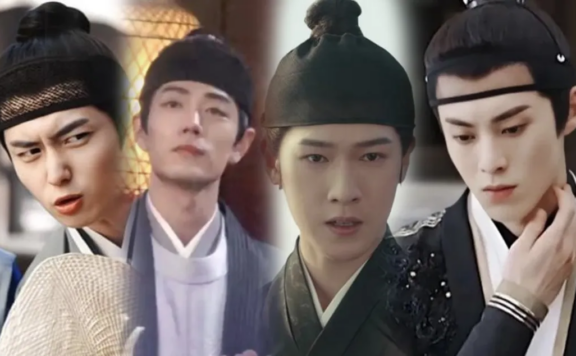
The History of Ming Dynasty Wangjin
In various Chinese historical dramas such as Jiuchong Zi, Jinnang Miaolu, Futu Yuan, and Canghai Zhuan, actors like Xiao Zhan, Li Yunrui, Wang Hedi, and Zhai Zilu are often seen wearing what appears to be stockings or fishnets on their heads. However, these are not stockings but a traditional headgear known as Wangjin (网巾), a net-like accessory used by adult men in the Ming Dynasty to tie and gather loose hair. Practical Uses of Wangjin Wangjin was primarily used to keep hair in place and prevent hats from slipping. It was a practical accessory for daily life, especially among commoners who wore it without additional head coverings. For those of higher social status, Wangjin was often worn under formal hats during important occasions. The popularity of Wangjin can be traced back to Emperor Zhu Yuanzhang of the Ming Dynasty. According to historical records, Zhu Yuanzhang once visited a Taoist temple in casual attire and observed a priest weaving Wangjin under lamplight. Intrigued, he inquired about its purpose and later issued a decree mandating its use across the empire, regardless of social status. Wangjin typically featured a top drawstring called Wangdai (网带), tied at the crown, and small strings at the… -
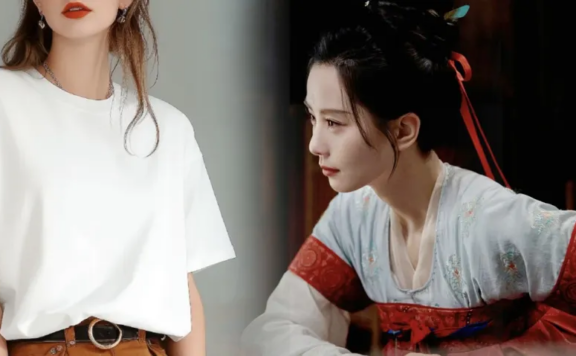
Liu Shishi Wears Ancient T-Shirt Style
Recently, netizens noticed something special about Liu Shishi's costume in her new drama. It looked surprisingly like a modern short-sleeved T-shirt. However, this is actually a traditional Tang Dynasty garment known as Tanling Banbi (坦领半臂). Let's break down the name. Tanling refers to the neckline style, while Banbi indicates the sleeve length. Combined, they describe a specific type of clothing popular during the Tang Dynasty. The Tanling Neckline The Tanling neckline resembles modern pullover shirts. This style dates back to the Shang and Zhou dynasties, though its exact structure remains unclear. It became particularly fashionable in the early Tang Dynasty. Compared to the round neckline, Tanling features a wider opening, often extending to the chest. Some designs even include a pointed center, earning it the nickname "chicken heart neckline". The resemblance to T-shirts comes from this broad neckline, similar to today's fashion pullovers. However, unlike modern T-shirts, Tanling garments usually have buttons or ties at the front or side for fastening. This design allowed wearers to change clothes without disturbing their elaborate hairstyles. The Banbi Sleeves The Banbi sleeves, often seen in period dramas, are typically associated with maids due to their practicality. However, they were not exclusive to any social… -

The Ancient Hairstyles of Young Maidens in Historical Dramas
In the historical drama 'Guo Se Fang Hua,' the portrayal of Yulu's maid has left a deep impression on viewers. Many netizens have humorously remarked, 'Did this hairstyle escape from a museum?' Indeed, the double - bun hairstyle, a signature look for young maidens in ancient times, holds a special place in traditional aesthetics. This hairstyle, known as Shuang Ji (双髻), was commonly worn by unmarried women, palace maids, and young servants, symbolizing youth and innocence. The Shuang Ji can be further categorized based on its shape and drooping style, such as Shuang Huan Ji (双鬟髻), Shuang Luo Ji (双螺髻), and Shuang Ya Ji (双丫髻). The foundational feature of this hairstyle is the division of hair into two equal parts, creating a symmetrical look. Each side is meticulously coiled into a small bun, typically positioned on either side of the head. The drooping version is poetically referred to as 'Shuang Chui Ji' (双垂髻). Additionally, variations like the Mao Ji (卯髻), characterized by its crescent shape, and the Huan Ji (鬟髻), featuring ring - like buns, add diversity to this traditional style. The Huan Ji often appears in pairs but can also be seen in multiples, with three or more buns… -

The Ancient Chinese Drunk Blush Makeup Trend
Have you ever wondered why some classical Chinese portraits depict women with strikingly red cheeks that almost look like bruises? This distinctive look is actually an intentional and celebrated makeup style from ancient China called Jiuyun Zhuang (酒晕妆), or "Drunk Blush Makeup." This bold cosmetic trend originated during the prosperous Tang Dynasty (618 - 907 AD), particularly popular during Empress Wu Zetian's reign. The style involved applying vibrant red pigment across large portions of the face - not just the cheeks, but often extending to the eyelids, jawline, and even ears. Historical records from the Zhuangtai Ji (妆台记), an ancient Chinese cosmetic manual, describe three intensity levels of this look: the most dramatic Jiuyun Zhuang (Drunk Blush), the softer Taohua Zhuang (Peach Blossom Makeup), and the subtle Feixia Zhuang (Flying Sunset Makeup). Beauty Standard of the Time What modern eyes might perceive as excessive was actually a sophisticated beauty standard of its time. The warm Wozhe (渥赭) hue - a traditional pigment made from cinnabar and ink - served multiple purposes: enhancing healthy complexion, creating facial dimension, and projecting an image of vitality. During mid - Tang period, women often paired this look with bold eyebrows for an even more… -
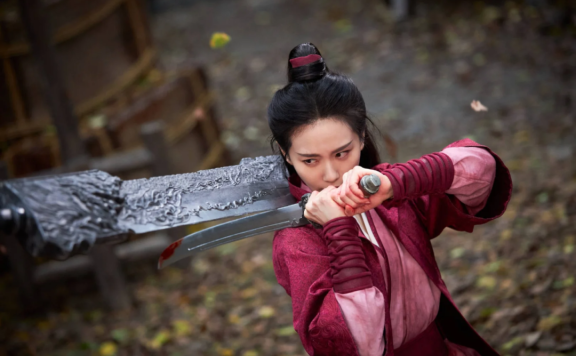
Why Were Sleeves Tied in Ancient Costume Dramas?
When watching action scenes in period dramas where characters flaunt their billowing sleeves, many of us can't help but reminisce about the old - school costume dramas from our childhood. Back then, fight scenes were genuinely intense, and sleeves were often tied up. Netizens have remarked: 'It's both stylish and practical, a perfect match for Hanfu!' This practice of tying sleeves actually has historical roots. In martial contexts, it was a simplified version of 'arm guards,' while in daily life, it stemmed from a tool called 'Panbo' (襻膊). The earliest known arm guards date back to the Warring States period, made of bronze and primarily used in military attire. Another famous example is the Han Dynasty arm guard inscribed with 'Five Stars Appear in the East, Benefiting China,' crafted from brocade—a representative of textile - based arm protection. These were worn by looping them around the arm and securing them with attached straps, though leather versions also existed. In modern dramas, we often see sleeves tied directly with a single strap—a method that, while not fully historically verified, is undeniably practical and straightforward. Moving on to 'Panbo' (襻膊), a staple in period dramas, scholar Shen Congwen noted in his research… -
The Veiled Hat in Ancient China
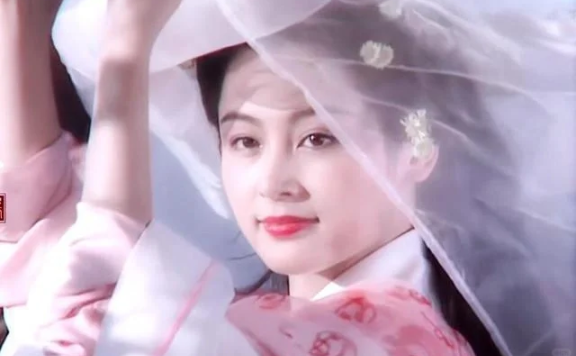
In many historical dramas, the veiled hat, known as Weimao (帷帽), is an indispensable element. A classic scene often features the heroine making her first appearance, with the wind lifting the delicate veil to reveal her breathtaking beauty. This accessory has earned the playful nickname "beautiful yet useless" among netizens, highlighting its aesthetic appeal over practicality. Origin and Features The Weimao originated as a decorative item in Hu (胡) attire. Before its emergence, another style called Mili (羃篱), made of bamboo, was prevalent. Typically crafted from cloth or gauze, the Weimao features a wide brim with hanging silk nets or thin silk panels that extend to the neck, serving as a face cover. During the Sui and Tang dynasties, the hanging nets were shortened, earning it the name "Qianlu" (浅露). Unlike the Mili, which covered the entire body, the Weimao's veil only concealed the upper body. Early Usage Historical records, such as those in the "Book of Jin," note that both men and women initially wore the Mili to shield themselves from wind and sand. Over time, it became predominantly a women's accessory, used to obscure their faces from public view during outings. Some humorously suggest that introverts might have… -

Why Do Tian Xiwei and Jiang Zhenyu Wear the Same Necklace?
In recent costume dramas like "Da Feng Da Geng Ren," it's noticeable that many female characters wear the same style of necklace. Is this a trend from a specific historical period? And don't they mind wearing identical pieces? The answer lies in the term "Yingluo." Derived from the words "Ying" and "Luo," which originally referred to beautiful jade, Yingluo now signifies a multi - gemstone ornament. It's not just limited to necklaces but can also adorn armbands and shawls. In Buddhism, Yingluo symbolizes worldly treasures and is known as "infinite light," often appearing in U or V - shaped necklaces with multiple layers. Historical texts like "The Dream of the Red Chamber" and "Jin Men Yang Shi" mention Yingluo made from gold, silver, pearls, and other precious materials. During the Sui Dynasty, Yingluo was long and simple, but by the Tang Dynasty, it became shorter, more intricate, and highly popular among noblewomen. The trend influenced fashion, with materials ranging from jade to amber. Poets like Liu Yuxi and Yuan Zhen documented its popularity, and by the Ming Dynasty, Yingluo evolved into necklaces with pendants like longevity locks. Even today, Yingluo - inspired designs add a touch of classical elegance to… -
When Gods Painted the Walls: Seeing Dunhuang Through Modern Lens
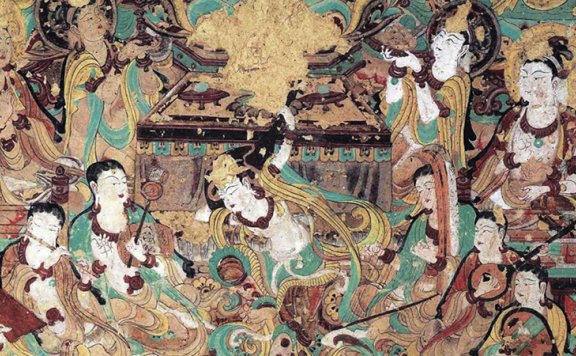
It’s funny how we throw around the word “Dunhuang” like it’s a single, well-defined thing. For most people, it’s synonymous with the Mogao Caves—those dusty, majestic Buddhist grottos in the far-flung desert of northwestern China. But Dunhuang (敦煌) is less of a place and more of a time capsule layered with over a thousand years of belief, brushstrokes, and guesswork. It isn’t just one cave, one dynasty, or one style. It's an ecosystem of art, faith, and faded colors—held together by sand and memory. Let’s clear one thing up first: Dunhuang isn’t just the Mogao Caves. It includes the Yulin Caves (榆林窟), the Western Thousand Buddha Caves (西千佛洞), and even more obscure clusters like the Five Temple Caves (五个庙石窟). It's more accurate to call it the Dunhuang Grotto Complex—a network of spiritual and artistic experimentation that unfolded across centuries. Not Just Tang Dynasty Grandeur We love to associate Dunhuang with the Tang Dynasty (唐朝)—maybe because the Tang's cultural glamor fits so neatly with the image of heavenly bodhisattvas strumming pipa mid-air. But that's a postcard version of Dunhuang. In truth, the site saw activity from the 4th to the 14th century, spanning dynasties like the Northern Wei (北魏), Sui (隋),… -

How Real Is the Qixiong Ruqun?
There’s a certain kind of outfit that turns heads, not just because it’s beautiful, but because it leaves people wondering: Is this really how ancient people dressed? Enter the Qixiong Ruqun (齐胸襦裙), a style of Hanfu where the skirt is tied all the way up to the chest—sometimes even under the armpits. It’s dramatic. It’s feminine. And it’s sparked years of debate over whether it’s based on history or pure fantasy. The Rise of a Silhouette That Defies Gravity At a glance, the Qixiong Ruqun feels like a distant cousin of the Korean Chima Jeogori—a wide-skirted dress worn high on the torso, paired with a short jacket. In fact, when you fluff out the skirt and widen the waistband, the two styles can look eerily similar. But the rabbit hole runs deeper than visual resemblance. Questions around the Qixiong Ruqun don’t just come down to aesthetics. They ask something more fundamental: How do you even keep this thing from sliding down? Anyone who’s tried wearing one has likely felt that awkward sensation—the pull of gravity on a waistband that doesn’t seem to be anchored to anything solid. It’s not a minor wardrobe inconvenience. It’s a design flaw. And it’s raised…