Article
Search results:
-
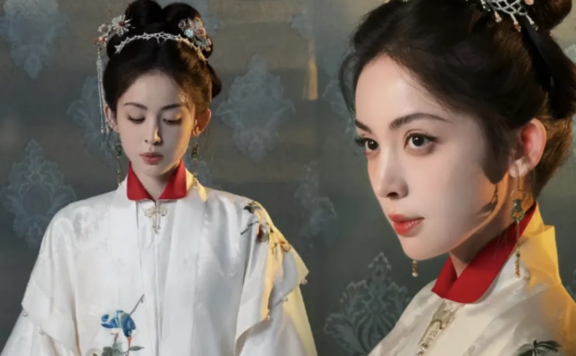
Guli Nazha in Polo Shirts?
Recently, stills of Guli Nazha wearing Hanfu were released. Netizens noticed the trendy collar - turning style. Did the Chinese in the Ming Dynasty already have polo shirts? Let's start with the conclusion. It's an adjusted way of wearing a standing collar. Some previously criticized Ming - style Hanfu for not showing the neck well and making the face look bigger. This collar - turning method is a great solution. It offers more styling options and allows better ventilation in summer by unbuttoning the collar, killing two birds with one stone. The Ming Dynasty was a period when 'polo - shirt - style' clothing was very popular. A short - sleeved standing - collar diagonal - closure shirt was unearthed from a Ming tomb. The small white folded collars in ancient paintings might be the effect of wearing such short garments underneath. I initially speculate this short garment meets key criteria for innerwear: it's plain or light - colored, versatile for pairing with outerwear; it uses ties instead of buttons, not interfering with the outer layer. Recall our previous explanation about the Tang Dynasty's round - collar robes. Their innerwear was often half - sleeved. This shows why innerwear often… -
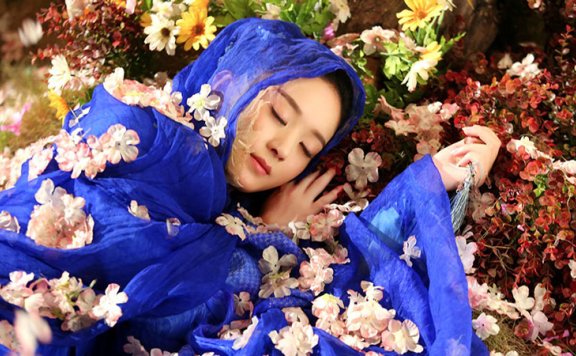
The Journey of Flower: A Deadly Destiny in Bloom
What if your very existence doomed the ones you loved? "The Journey of Flower" (花千骨) is not your typical xianxia fantasy. Yes, there are swords, immortals, and sect rivalries—but at its heart, it's a ticking time bomb of forbidden love and fated tragedy. Each episode peels back a layer of mystery surrounding one girl born under a deathly curse, and the immortal who dares to teach her. Ep 1–12: Cursed Beginnings Qiangu's birth under a lethal curse dooms every living thing that loves her—demons swarm at her scent, villagers shun her, and even the land seems to wither in her presence. Orphaned and alone, she survives by scavenging in Lotus Flower Village, her only comfort the belief that mastering immortal arts might free her from this fatal destiny. When bandits massacre her adoptive family, Qiangu unleashes a desperate burst of power—her blood disintegrates their weapons and halts their advance, marking her as both miracle and monster. Enter Bai Zihua, the aloof leader of the Chang Liu sect: bound by heavenly law to eliminate any threat, yet moved by Qiangu's sacrifice in saving his life from a venomous trap. He senses her unique aura—a fated calamity that prophecy warns will one… -
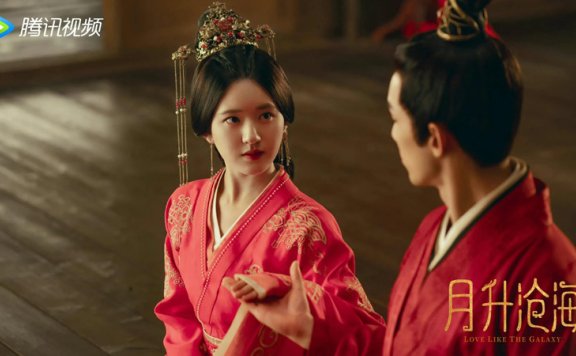
Love Like the Galaxy: A Journey of Choice and Redemption
From a broken girl to a cunning general's wife, here's how Ling Bu Yi and Cheng Shao Shang fell into a war of love and lies. Raised by Strangers (EP1–10) Cheng Shao Shang was born into glory but not into love. The daughter of Cheng Shi and Xiao Yuanyi—renowned war heroes sent to defend the empire's borders—she should have been cradled in honor. Instead, she was left behind as an infant, entrusted not to trusted hands, but to indifference masked as duty. Fifteen years passed before her parents returned, and in that time, she learned that family was a title, not a promise. Raised in a home where warmth was as scarce as fairness, Shao Shang becomes the scapegoat of the Cheng household. Her aunt views her as wild and ungrateful; her grandmother dismisses her as slow-witted and unworthy. Deprived of formal education and punished for her outspokenness, she survives by wit and will alone. Her cousins learn calligraphy and manners; she learns silence, subterfuge, and how to turn every insult into armor. By the time General Cheng and Xiao Yuanyi come back, they find not a pliant child but a girl forged by neglect. Her sharp tongue and guarded… -
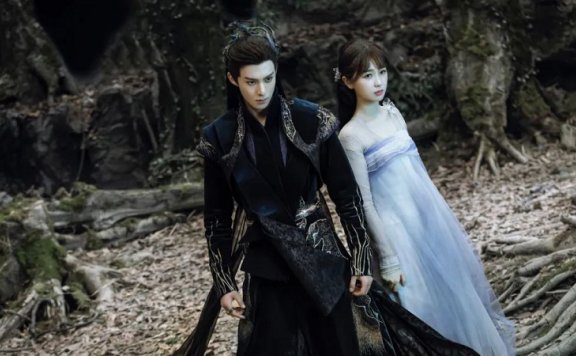
Love Between Fairy and Devil: A Dance Between Light and Darkness
What price would you pay for love that could destroy you? In Love Between Fairy and Devil (苍兰诀), the boundaries between love and revenge blur in a world of magic, betrayal, and dark desires. Dong Fang Qing Cang, a formidable devil consumed by hatred, is bound to a curse that fuels his vengeful heart. Enter Xiao Lan Hua, a pure-hearted fairy whose innocence and destiny are unknowingly tied to Qing Cang's dark past. Their fates collide in a tempest of emotions, where trust is fragile, and every choice carries irreversible consequences. A Forbidden Love Begins (EP1–10) The ancient Devil Lord Dong Fang Qing Cang, feared across realms for his ruthless domination, awakens from a 10,000-year imprisonment only to find his powers diminished and his vengeance against the heavens thwarted. His escape from the celestial prison unleashes chaos—and an absurd twist of fate. During a clash with celestial warriors, he accidentally swaps bodies with Xiao Lan Hua, a low-ranking fairy whose life revolves around nurturing flowers in the Destiny Temple. Bound by the unbreakable "Heartbond Curse," their souls become entangled: they share wounds, emotions, and even fleeting control over each other's bodies. For Qing Cang, whose strength relies on suppressing all… -

Ju Jingyi's Best 7 Characters in Costume Dramas
Ju Jingyi (鞠婧祎), a rising star in Chinese costume dramas, has carved a niche with her delicate visuals and evolving acting range. Known for roles blending elegance and resilience, she navigates genres from sweet romances to dark fantasies, defying criticisms of repetitive styling. While her early works leaned on "beauty-driven" tropes, recent projects like Hualing Ling reveal sharper emotional layers. This article explores her standout performances across seven costume dramas, highlighting how she balances ethereal charm with character depth—a journey from idol to actress. The Legend of White Snake 新白娘子传奇 Aired: 2019 Period Background: Mythological Southern Song Dynasty Genres: Fantasy, Romance, Mythology Main Roles: Ju Jingyi (Bai Suzhen), Yu Menglong (Xu Xian) Adapted From: Classic Chinese folklore Legend of the White Snake The 2019 reboot of The Legend of White Snake reimagines the classic Chinese myth of Bai Suzhen, a millennia-old snake spirit who descends to the mortal world. Departing from the 1992 version's focus on Bai's quest to repay a past savior, this adaptation centers on her serendipitous romance with Xu Xian, a humble physician. Set in the Southern Song Dynasty, the story explores Bai's dual identity as both a benevolent immortal and devoted lover. When celestial forces, led… -
Immortal Samsara: The Love She Had to Forget
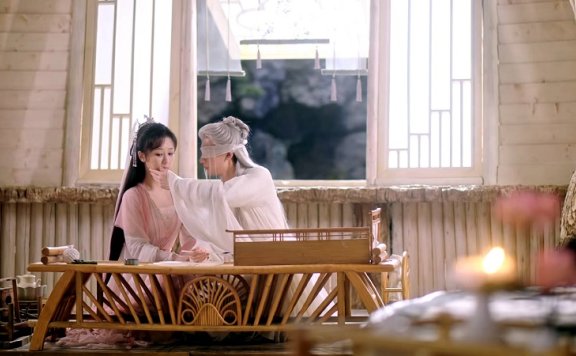
Before the tears, before the bloodshed, before the gods fell—she loved him. In Immortal Samsara, Yan Dan, a lotus fairy with the power to heal, makes one irreversible decision: to shatter her soul and erase her love for the celestial war god, Ying Yuan. No one forced her. He didn’t stop her. That choice becomes the engine of the entire story. Why would someone give up the memory of a love so deep? What did he do—or what truth was she running from? The story doesn’t begin with romance. It begins with a wound so deep, she’d rather lose herself than feel it. A Love Worth Forgetting (Episodes 1–18) She fell in love with a god. He chose duty over her. So she chose to forget. The story opens in the celestial realm—a place of radiant towers and shimmering order, but also a place where love is a sin and feelings are buried beneath rules. Yan Dan and her twin sister Zhi Xi are rare lotus spirits who ascend to the immortal realm after cultivating for thousands of years. They're supposed to devote themselves to virtue, discipline, and selflessness. But Yan Dan doesn’t quite fit the mold. She’s cheerful, curious,… -

China's Top 7 Sci-Fi Anime Picks
Chinese sci-fi animation is quietly undergoing a revolution. No longer confined to tropes of myth or fantasy, a new wave of creators is tackling speculative futures with precision and boldness. These works don't shout for attention; they earn it through sharp world-building, unflinching themes, and a refusal to simplify humanity's relationship with technology. From crumbling post-apocalyptic cities to AI-dominated dystopias, these stories ask urgent questions: What does survival cost? Can humanity evolve without losing itself? The answers are rarely comfortable but always compelling. Below are seven essential titles that define this movement—not as "cultural milestones" but as raw, inventive narratives. They prioritize substance over spectacle, proving that Chinese sci-fi animation isn't just catching up—it's carving its own path. Ling Cage: Incarnation 灵笼 In Ling Cage: Incarnation, humanity's survival hinges on a brutal calculus: sacrifice empathy or perish. The floating fortress Lighthouse enforces a genetic hierarchy where "Uppercitizens" hoard resources while "Dust Citizens" endure dehumanizing labor and insect-based diets. This system strips away human bonds—exemplified by the Dawn Hall's emotionless breeding rituals—reducing life to a eugenicist project. Mark, a Hunter captain tasked with scavenging a monster-infested Earth, initially upholds this order until discovering the Lighthouse's darkest secret: a cult sacrificing children… -

Best 8 Romantic CN Anime List
Chinese romance animations thrive on bold storytelling and character-driven intimacy. Series like Fox Spirit Matchmaker hook viewers with immortal lovers defying reincarnation cycles, while No Doubt in Us reinvents relationship dynamics through a royal couple's body-swap chaos. These stories avoid tired tropes by grounding emotions in tangible stakes: a demon hunter's loyalty tested across lifetimes in Demon List, or a mortal girl unraveling celestial secrets in Contemplation of Affection. What unites them is razor-sharp focus on how characters earn love—whether battling societal expectations or their own flaws—making every confession or sacrifice resonate with raw, earned authenticity. Fox Spirit Matchmaker 狐妖小红娘 "Fox Spirit Matchmaker" redefines fantasy romance with its inventive premise of fox spirits bridging past and present loves. At its core lies the hauntingly beautiful saga of Dongfang Yuechu, a mortal warrior, and Tu Shan Honghong, a fox spirit matchmaker bound by centuries of duty. Their story isn't a straightforward courtship but a layered unraveling of identities—she must confront her role as an emotionless facilitator of others' romances while secretly yearning for her own; he grapples with fragmented memories of lives where their love repeatedly ended in tragedy. The series weaponizes reincarnation as both plot device and emotional catalyst. Flashbacks to past lives—as star-crossed lovers in imperial courts… -

4 Zhou Xun’s Iconic Period Performances
When Zhou Xun dons historical costumes, audiences hold their breath—this petite woman from Jiangnan watertowns carries half of China's epic history in her bones. As the soul-devouring fox spirit in Painted Skin, she laid bare human fragility beneath ethereal beauty; in Ruyi's Royal Love, her restrained sighs as an embattled empress turned palace intrigue into visceral poetry. From her deliberate whisper-pauses to the way her eyes flicker between vulnerability and cunning, we unpack how this actress bends time itself through roles that resonate across generations. Palace of Desire 大明宫词 Aired: 2000 Period Background: Tang Dynasty (618–907 AD), focusing on imperial intrigue. Genres: Historical, Romance, Political Drama Main Roles: Zhou Xun as Young Taiping Princess, Chen Hong as Adult Taiping, Gua Lunshu as Emperor Gaozong. Adapted From: Original screenplay by Wang Anyi. Palace of Desire traces the life of Taiping Princess, portrayed by Zhou Xun in her youth. The series begins with Taiping as a sheltered yet rebellious teenager, her curiosity clashing with the rigid imperial hierarchy. Her early escapades—sneaking into bustling markets, questioning court rituals—highlight her defiance against the suffocating palace life. However, her innocence shatters as she witnesses the ruthless political maneuvers of her mother, Empress Wu Zetian, particularly… -
After 15 Years, Is Zi Xuan Back?
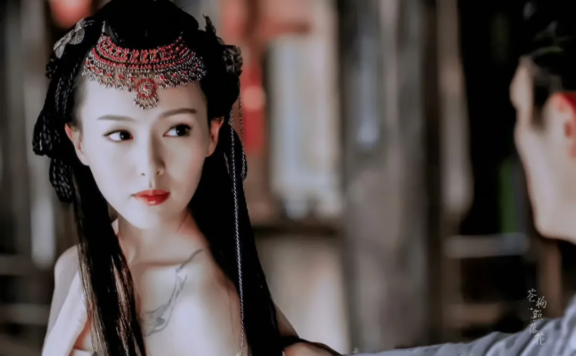
It's been 15 years since Chinese Paladin aired. Recently, Tang Yan's new drama look was unveiled, with her donning purple attire again. Netizens exclaimed, 'Time spares no one, but beauty endures—Zi Xuan is back!' For most, Tang Yan has an exceptional affinity for purple and forehead ornaments, largely because of her unforgettable role as Zi Xuan in Chinese Paladin. In the series, the primary colors of her character were purple and magenta. She wore a forehead ornament, complemented by pink accents. The play of color shades helped shape her character's adaptable personality, making purple and forehead ornaments a must - have for many when imagining a goddess. The forehead ornament stood out due to her prominent broad forehead, which conforms to the traditional aesthetic of a square and full forehead, exuding a sense of grandeur. Adding the ornament further enhanced her classical beauty. At that time, such a broad forehead was quite rare among female celebrities. Unfortunately, apart from the successful styling of Zi Xuan, Tang Yan rarely showed her broad forehead in later roles. She often chose bangs to cover it. Her subsequent styling continuously aimed for a youthful look, which influenced the style of her later characters. For… -
Jing Tian's Song Costume Headdress
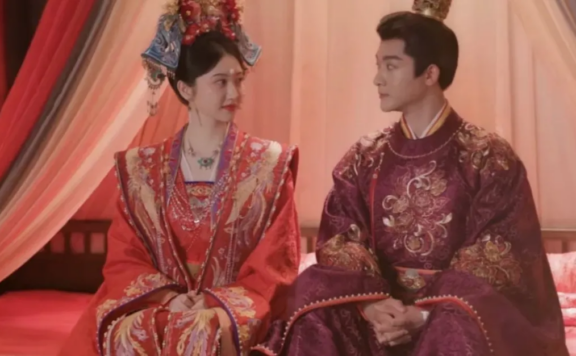
In the historical drama 'Si Jin,' Jing Tian's wedding headdress has sparked an online debate. Many criticized it for resembling a Qing Dynasty 'qitou.' But is it really a Song Dynasty costume paired with a qitou? The answer is no. This headdress actually comes from the Song Dynasty's 'Chuijian Guan' (Drooping Shoulder Crown), a trendy accessory during the mid - to - late Northern Song period. As recorded in 'Chen Shi,' '...the longer corners droop down to the shoulders, hence called Chuijian.' Similar crowns were known as 'Dengjian' or 'Duojian,' with widths reaching up to two or three chi. People had to turn their heads sideways to enter a carriage because of the crown's width. The character 'Duo' means 'drooping.' Based on the round crown design, this accessory got its name as its sides drooped and were often adorned with gold, silver, pearls, or jade. For instance, Wang Churan's look in 'Serenade of Peaceful Joy' referenced this crown, which reflected her bold personality in the early part of the story. This crown was extremely popular at that time, imitated by people from the imperial court to commoners. 'Dream Pool Essays' described the attire of Li Shishi, a courtesan favored by… -
Li Jingxun's Moth Hairpin: Nao E Er
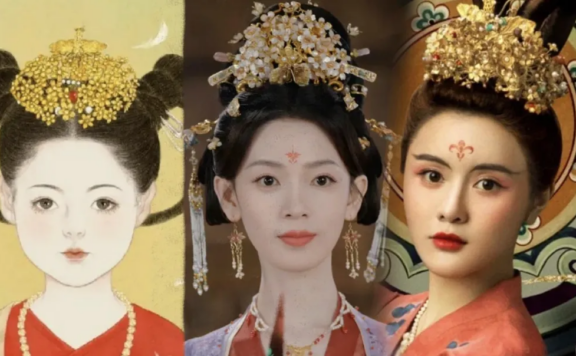
Is the Internet-wide imitation of Li Jingxun's Moth Hairpin misunderstood? This hair accessory has gained such popularity that it has been imitated in numerous dramas and by countless costume enthusiasts. Subsequently, some people argued that as a child, Li Jingxun was not supposed to wear a crown, among other similar claims. To set the record straight, the misunderstanding doesn't lie in whether Li Jingxun could wear a crown or not, but rather that this moth hair accessory is not a 'crown' at all; it's a hairpin! In the early days, hairpins and hair sticks were clearly distinguished. Hairpins had two or more prongs, while hair sticks had only one. However, over time, these terms became interchangeable. This moth hair accessory belongs to the 'Buyao' category. In Shen Congwen's Research on Ancient Chinese Clothing, it is referred to as 'Nao E Er Pu Hua Shoushi' (闹蛾儿扑花首饰), and the excavation report calls it a 'hair accessory' (Institute of Archaeology, Chinese Academy of Social Sciences, Tang Chang'an Chengjiao Sui Tang Mu, Cultural Relics Publishing House, 1980). Since we usually only see partial images, it might be misconstrued as a floral 'crown'. Nevertheless, a crown should have a crown body, which this hair accessory… -
Is Chen Duling's Costume Too Conservative?
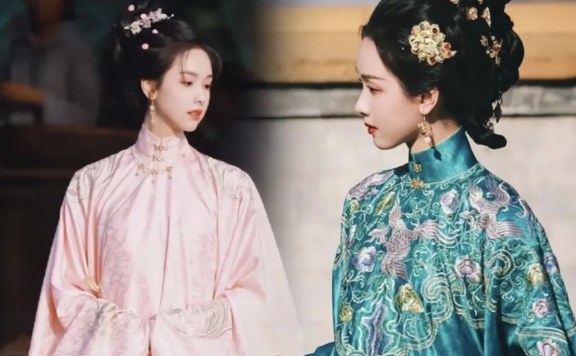
Netizens are raising questions: Is Chen Duling's costume in Noble Lady too conservative? New stills from Noble Lady have emerged, once again presenting the high - collar, vertical - front Hanfu. Some netizens have commented that Ming - style Hanfu seems overly conservative, as it almost entirely covers the body. Looking back at the history of Chinese clothing, during the mid - to - late Ming Dynasty, high collars became a popular choice among the nobility. Some netizens have noted that Ming - style high collars can make the neck appear shorter, the face rounder, and add an aged look. As a result, many people tend to prefer the more widely flattering Tang - style Hanfu. However, this actually shows a misunderstanding of traditional Ming - style Hanfu. After all, delicate beauty is one form of aesthetics, while elegance and dignity are another. The development of high collars in the Ming Dynasty was not simply about 'conservatism'. At that time, China was experiencing the Little Ice Age, which led to a sudden drop in temperature. Consequently, the clothing culture changed to adapt to the weather. Ming - style high collars evolved from the cross - collar and parallel - front… -
How Are Ancient Chinese Masks Worn Without Falling Off?
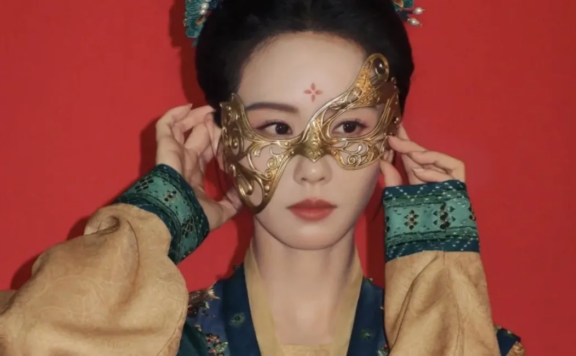
In many historical dramas, intricate half-face masks have become a popular accessory. A common question arises: how are these masks secured to the face without slipping? The answer lies in their design. These masks, often referred to as Mianju (面具), are fastened with ties at the back of the head and feature a nasal groove to prevent sliding. While some associate such masks with Western culture, ancient Chinese hollow masks, particularly those from the Shang and Zhou dynasties, showcase remarkable craftsmanship. The Shang-Zhou period produced two primary types of masks: human-faced (Renmian) and beast-faced (Shoumian). The former, like those unearthed at Sanxingdui (三星堆) and Jinsha (金沙), feature exaggerated eyes and ears. The latter blend multiple animal traits into abstract designs. Contrary to popular belief, many ritual masks weren’t worn on faces—their rough, unfinished backs suggest they adorned pillars for ceremonial purposes. However, wooden masks were likely wearable, as hinted by their refined construction. By the Northern Wei dynasty, masks evolved toward openwork designs with sophisticated motifs like Taotie (饕餮) patterns, showcasing a shift from symbolic abstraction to three-dimensional realism. Tang Dynasty masks reached new heights of lifelikeness, as seen in Hufeng (胡风) masks with eye cutouts for wearability. Archaeological finds… -
Is This the Only Flattering Hairstyle for Jing Tian?
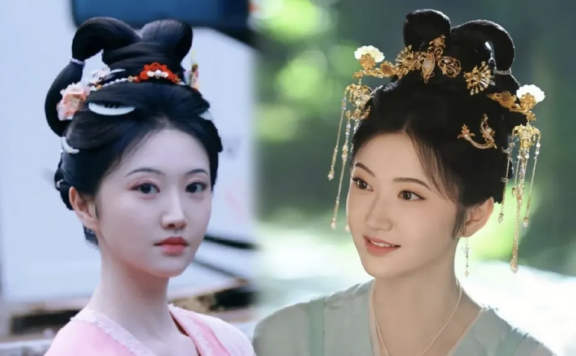
In the TV series Si Jin, Jing Tian appears with this hairstyle so frequently that it seems to be her signature look. The only variations are the accessories, leading netizens to joke: Is this hairstyle welded onto her head? The hairstyle in question is called Shuang Huan Wang Xian Ji (双鬟望仙髻), an evolved version of the traditional Shuang Huan Ji (双环髻). Originally a youthful hairstyle, its ethereal beauty made it a favorite in classical depictions of celestial beings and noblewomen, as seen in masterpieces like Nymph of the Luo River and Eighty-Seven Immortals. Lin Yun also sported this look in How Can She Be So Charming, albeit with a more exaggerated flair. The difference lies in the evolution of the hairstyle: from the rounded, voluminous buns of the Wei-Jin and early Tang dynasties to the wavier, more dynamic forms of the mid-to-late Tang period. By the Song dynasty, it became a mainstream trend, simplified for daily wear with added pearl embellishments—akin to Jing Tian’s interpretation. Despite its celestial moniker (Wang Xian Ji translates to immortal-aspiring bun), this hairstyle is actually a wig. Crafted with wooden or rattan frames and wrapped in hair, it allowed for versatile styling without the daily… -
The Power of Upward-Sweeping Eyebrows in Ancient Chinese Makeup
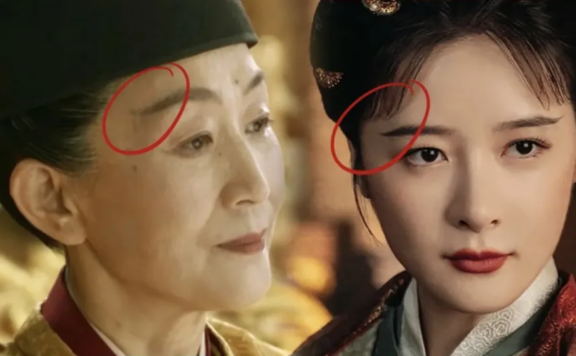
In the historical cdrama, actors Chen Jin and Xu Jiao portray characters with distinctive eyebrow styles that exude an undeniable aura of authority. Unlike conventional female characters whose eyebrows taper downward or remain straight, their eyebrow tails sweep dramatically upward. This unique style, known as Hanyan Mei (涵烟眉) or Fuyun Mei (拂云眉), was particularly popular during the early Tang Dynasty through the Wu Zhou period. Characterized by sharp inner corners and finely separated hairs at the tails, this eyebrow style sometimes featured a narrower, more arched peak, also referred to as Yuanshan Mei (远山眉). Ancient Chinese literature, such as the Fengguang Ci by a Tang Dynasty poetess, describes these eyebrows as ethereal as mist or drifting clouds. Their upward sweep not only added a touch of independence and confidence but also became a defining feature in murals and paintings from that era. Compared to the softer Juan Yan Mei (罥烟眉), Hanyan Mei was bolder and more vibrant, leaving a lasting impression. Modern adaptations in film and television have softened its intensity, blending strength with elegance. Modern Applications and Tips This eyebrow style, often seen in strong female roles like those in Zhang Xin, enhances facial structure by filling the temple… -
Wearing Hanfu as a Hijabi: Modesty, Style, and Cultural Fusion
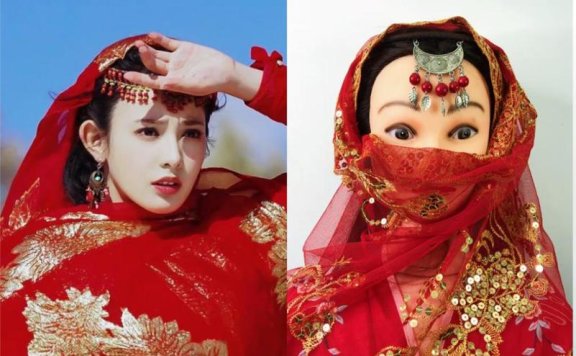
One of the joys of wearing hanfu is discovering how effortlessly it can be adapted to different lifestyles, beliefs, and personal preferences. As a hijabi, one of my biggest considerations when choosing clothing is modesty. Thankfully, many hanfu styles already cater to this ideal with their long, flowing silhouettes, layered structures, and elegant designs. In fact, I’ve found hanfu to be one of the easiest traditional outfits to wear while staying true to both my modesty and aesthetic preferences. Although some hanfu styles are more fitted around the waist or involve shorter sleeves or lower necklines, there are many that work beautifully for hijabis without needing any extra modifications. Personally, I’m especially drawn to Ming dynasty style hanfu. These often feature a mamianqun skirt paired with either a shorter shirt (duijin shan) or a longer robe-style shirt (aoqun or dachang), both of which are generously cut and non-revealing. The fabrics drape naturally, the overall silhouette is loose, and the layering makes it feel effortlessly modest. The added bonus? Mamianqun prints are just stunning. The way the pleats open and close as you walk, revealing flashes of the pattern, creates a sense of movement and beauty that makes me feel elegant… -

Yu Xiaodan: The Hanfu Stylist Making China-Chic
Yueqing, Zhejiang — At the 2025 “Crafting Dreams” ICH Parade in Yueqing this May Day, Hanfu makeup and styling artist Yu Xiaodan (俞小丹) will lead a troupe of enthusiasts in a mesmerizing display of Guoyun Fanghua (国韵芳华, “Elegance of Chinese Heritage”). Dressed as characters from Dream of the Red Chamber (红楼梦) and dancing to classical melodies like Etiquette Nation (礼仪之邦), her team embodies a cultural renaissance that’s captivating Gen Z. Born in 1996, Yu’s love for Hanfu began during college in Fuzhou, where a riverside Hanfu performance left her spellbound. She joined local Hanfu societies, spent savings on 200+ historically accurate outfits—from Tang dynasty qixiong ruqun (齐胸襦裙, high-waisted dresses) to Song-era beizi (褙子, long jackets)—and even splurged 20,000 RMB on a diancui (点翠, kingfisher-feather) crown. “Hanfu isn’t just clothing; it’s a portal to our past,” she says. In 2021, she apprenticed under Yang Shuyun, a legendary CCTV stylist known for Dream of the Red Chamber’s iconic looks. This training, coupled with workshops on huashen zhuang (花神妆, Flower Goddess makeup) in Guangzhou, honed her skills in blending historical accuracy with modern flair. Bridging Eras, Breaking Norms Yu’s talent lies in making Hanfu relatable. At the 2024 Hongqiao Azalea Festival, her “Pink-Green… -
Yang Zi: What's Wrong with Wearing Hanfu and Scarves?
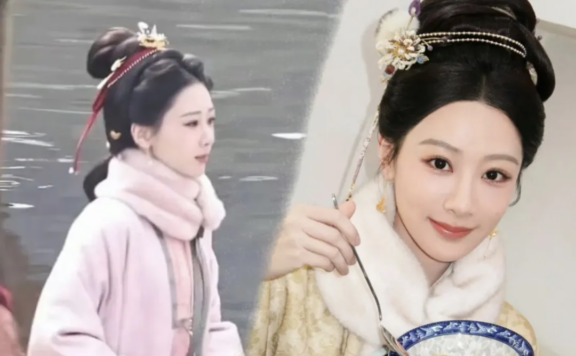
In the spoilers for the TV series Family Business, a scarf appeared. Isn't this a drama set in the Ming Dynasty? Fans questioned: Isn't this scarf too modern? First, let's clarify: we actually had similar scarf-like accessories in ancient times, known as Xiangpa (项帕), Lingjin (领巾), Yongxiang (拥项), or Fengling (风领). The term Weibo (围脖) also appeared during the Ming Dynasty. These accessories served two purposes: protection against cold and decoration. During the Southern Song Dynasty's Yuanxi Festival, women often wore Xiangpa, a decorative neck wrap. Zhou Mi, a scholar from the Song Dynasty, documented in Old Stories of Wulin: Yuanxi: During Yuanxi, women adorned themselves with pearls, jade ornaments, and Xiangpa, often wearing white garments suitable for moonlight. This suggests Xiangpa was a silk or brocade scarf, combining warmth and style. This aligns with historical records of Lingjin from the Song Dynasty. For example, Chen Yunping wrote in Drunken Peach Blossom: With delicate accessories and a tilted Lingjin, her hair was styled in twin buns. While Xiangpa and Lingjin shared similar materials and functions, Lingjin was more versatile, worn by both men and women. Artifacts like Tang Yin's Palace Ladies of the Shu Kingdom depict Lingjin as a triangular… -

Wearing Hanfu to Work: A Practical Guide for Women
In recent years, there’s been a surge of interest in hanfu, not just as traditional attire, but as something that can be part of everyday life—including the workplace. For women who love hanfu and want to express that part of their identity in professional settings, there are more options now than ever before. With both modernised and traditional hanfu being widely available online, it’s becoming increasingly realistic to integrate this historical clothing into our weekday wardrobes. Modern hanfu—sometimes referred to as “fashion hanfu”—has already been adapted for casual social use. According to NewHanfu, it “inherits the elements of traditional Hanfu, and through long-term innovation and development, it is well adapted to the convenient social life in today's modern times.” This means pieces are typically more streamlined, accessible, and comfortable, often made with materials and cuts that suit daily wear. As a result, many modern hanfu outfits can already pass for smart-casual in a workplace setting. Pairing these with accessories like a structured purse, a watch, or a blazer can easily help elevate the outfit to look more professional without compromising the hanfu aesthetic. That said, I personally think there’s also space for more traditional hanfu elements in the workplace—if styled…