-

Shanghai Library Qipao Exhibition Traces 100 Years of Style
Indanthrene blue is not the first color that comes to mind when people picture the qipao, but it was one of the most-worn hues of 1930s Shanghai. The story runs through the current exhibition at the Shanghai Library's Huaihai Road branch, "Hai Shang Yi Chuan: Modern Shanghai Dress Fashions in Historical Documents", which fills the modern catalogs hall on the first floor with period photographs, magazine spreads and textile records, tracing how a city dressed itself over a century. A Century in Two Hours The lecture lands on August 22 at 2 p.m., when Miao Huicui (苗荟萃), a curator at the Shanghai University Museum, presents "Modern Shanghai Style: A Century of Fashion in the Shanghai-Style Qipao" (摩登海尚). Her specialty is textile and dyeing history and Shanghai-style dress culture, and her books include "Oriental Lace: A Century of Chinese Lace and Drawnwork" and a volume on velvet and carpet weaving in the "Ancient Chinese Silk Design Materials" series. She has curated three to five editions of the "Shanghai-Hong Kong Ladies' Qipao" exhibitions. Her talk walks the silhouette's evolution from the wide short-sleeved cut of the early years, to the fitted long qipao of the golden age, to the body-hugging styles that…- 0
- 0
- 27
-
Supai Qipao Supermodel Contest Nantong Leg Launches
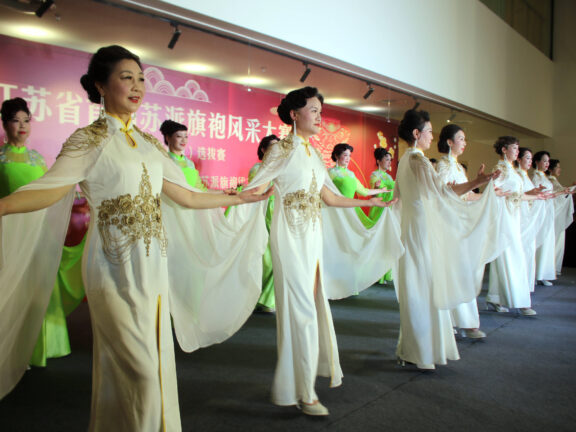
The launch ceremony for the 2026 Supai Qipao Supermodel Contest (Nantong leg) and the "Grand Beauty of Nantong" qipao panorama photo project took place on the afternoon of July 31, organized by the Supai Qipao Art Professional Committee of the Jiangsu Provincial Mass Culture Society. According to the Jianghai Evening News, competition in the Nantong leg begins in mid-August, split into individual and team tracks. The individual track is divided by age into youth, middle-aged and "sunset glow" groups, with contestants required to walk the runway in orthodox Supai qipao; the team track fields groups of 8 to 16 members. Every group awards champion, runner-up and third-place prizes, plus individual awards for best poise and best stage presence. Winners advance to the provincial finals. As one leg of Jiangsu Province's first Supai Qipao Supermodel Contest, the Nantong leg follows the Huai'an leg, which opened on July 3 at the Huai'an Opera Museum on Zhongzhou Island; legs in Yancheng and Yangzhou are also in preparation, extending the competition province-wide in staged rounds. The Nantong Qipao Culture Research Association, an important local platform for researching, promoting and displaying qipao culture, was founded last November with the motto "carry on the classics, promote…- 0
- 0
- 5
-
AI-Powered Embroidery Qipao: Custom Orders Cut to 1-3 Days
A post-2000s student team led by Liu Yi has built what it calls China's first complete digital gene library for Huizhou-embroidered qipao, pairing two years of field research with a self-developed AI custom tailoring model. China Daily reported that the intelligent customization system reached the market in 2026, opening a path of technological revitalization, industrial application and cultural going-global for a craft on the verge of a transmission gap. Liu Yi is an "00s-born" college student who ranks in the top five percent of her major and has won more than 30 awards, including the National Endeavor Scholarship. While studying garment design, she completed several hundred handmade qipao on her own, mastering the core traditional techniques behind Huizhou embroidery, including layered Dazi embroidery and flat-stitch embroidery. At the end of 2024 she launched a two-year, ten-city market survey across Suzhou, Hefei, Hangzhou, Huangshan and elsewhere, visiting 58 Huizhou embroidery and silk qipao workshops and holding more than 100 sessions with artisans. The research surfaced three industry pain points: market styles are highly homogeneous and traditional qipao silhouettes look dated, with weak original design; fewer than 15,000 practitioners nationwide master the complete Huizhou embroidery craft, the master-apprentice oral model is inefficient,…- 0
- 0
- 0
-
Jinzhou Fashion Show at Suzhou Museum: 116 Lingxi-Style Outfits
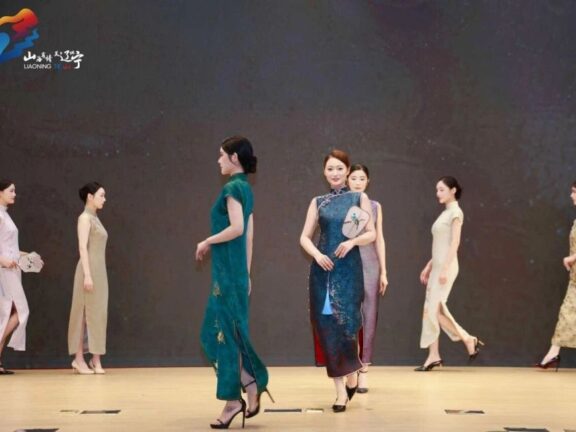
On July 11, the "Shanhai Splendor — Intangible Heritage Reborn" Jinzhou ICH Women's Fashion Show concluded at the West Wing of the Suzhou Museum. Organized by the Liaoning Provincial Department of Culture and Tourism and hosted by the Jinzhou Municipal Bureau of Culture and Tourism, the event was staged on the platform of the Liaoning-Jiangsu cultural tourism special exhibition, marking a milestone in the two provinces' cultural collaboration and traditional craft innovation program. The show was directly tied to the "Su Embroidery Leads · Splendid Revitalization" plan — a cross-provincial initiative launched in December 2025 that focuses on ICH activation, heritage transmission, and industrial upgrading as three core pillars. Jinzhou, a city with over a millennium of Liao-dynasty weaving heritage, draws on deep resources in Liao brocade, Liao embroidery, and Manchu embroidery. Leveraging the Suzhou-Jinzhou collaboration framework, the city partnered with the Luxun Academy of Fine Arts and local ICH workshops to develop a "New Liao Brocade" fabric line. The 116 pieces on display fused ancient tailoring techniques — classic qipao silhouettes, handcrafted Pankou knots, Jinzhou embroidery, and mother-of-pearl inlay — into a cohesive Lingxi-style wardrobe system, establishing a distinctive regional ICH garment craft system for western Liaoning. Under the…- 0
- 0
- 0
-
Qipao Haute Couture Market Grows 18.7% in 2026
In 2026, the qipao haute couture industry is undergoing a structural transformation from traditional garment tailoring to Eastern cultural luxury. According to industry research and the 2025–2026 Chinese-Style Apparel Consumption Trend Report released by the China National Textile and Apparel Council, the high-end qipao customization market is growing at an average annual rate of 18.7%, driven by three core forces: ICH craftsmanship, personalized haute couture, and celebrity-endorsed styles. Handcraft Demand Rises from 32% to 71% Data shows that consumer demand for fully handmade qipao has surged from approximately 32% a few years ago to 71%. Craftsmanship quality (85.6%), fabric quality (79.3%), and design uniqueness (74.1%) rank as the top three decision factors for qipao customization. Consumers are shifting from fast fashion to a deeper appreciation for cultural substance, artisan skill, and wearing experience. In the high-end qipao customization market, the "ICH + handcraft" category accounts for over 63% of the segment. The Yangtze River Delta region concentrates approximately 62% of China's qipao haute couture studios, with Suzhou, Shanghai, and Hangzhou forming the core innovation hubs. At the top of the pyramid, roughly 5% of studios capture about 38% of market share, with their core moats built on ICH heritage and brand premium…- 0
- 0
- 14
-
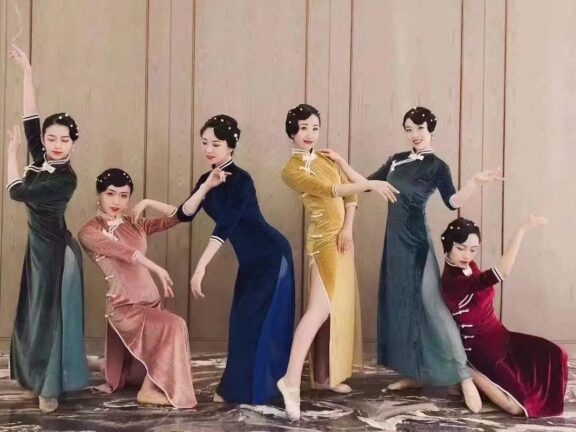
Qipao Month: 6,000 Merchants, Summer Deals in Shenyang
The "Qipao Season · Wuai Garment City Qipao Grand Garden Shopping Month" officially launched at Shenyang's Wuai Garment City on July 21, running through August 31. Organized under the coordination of the Shenyang Municipal Propaganda Department, the event mobilizes 6,000 merchants across the market, with over 100 carefully selected qipao and Neo-Chinese style stores offering summer promotions. Wuai Garment City — known as Shenyang Wuai Market — serves as northeast China's largest garment wholesale and retail hub. The initiative fuses traditional commerce with cultural tourism, creating a shopping experience that blends qipao heritage with everyday consumer activity. Participating stores offer direct discounts, spending-based reductions, and exclusive item promotions, with organizers guaranteeing all deals are genuine. Five major benefit categories anchor the event. Universal welfare: all visitors receive a free ice cream to beat the summer heat. Tourism-linked perks: customers purchasing qipao, graduating high school seniors, college students, and tourists holding July–August tickets for the Shenyang Imperial Palace or Zhang Xueliang Former Residence Museum can redeem custom "Qipao Grand Garden" themed totes and round fans. Cultural promotion: Wuai Garment City distributes Shenyang travel guide brochures at major scenic spots and commercial districts citywide. The event also partners with the Shengjing Qipao…- 0
- 0
- 13
-
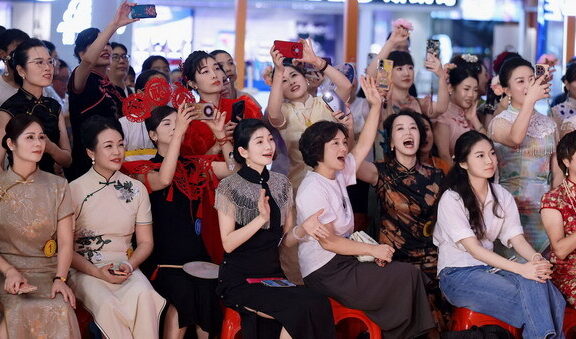
Fujian Qipao Final in Quanzhou: 68 Contestants Showcase
On July 25, 2026, marking the fifth anniversary of Quanzhou's UNESCO World Heritage inscription, the "Song-Yuan China · Qipao Meets Quanzhou" (宋元中国·旗遇泉州) 2026 Fujian Province Qipao Fashion Invitational concluded its finals at the Quanzhou Kaiyuan Shengshi complex. Organized for the third consecutive year by the Fujian Cultural Volunteer Association, the event has anchored itself in Quanzhou's profound maritime heritage, becoming a signature cultural brand. Three years of accumulation, inheritance, and innovation turned the cross-sea oriental aesthetics rendezvous into a warm and elegant highlight of Quanzhou's fifth anniversary celebrations. Competition Overview The competition was co-hosted by the Fujian Cultural Volunteer Association and Quanzhou Radio and Television Station's All-Media News Center, with support from the Association's Women's Federation and the Drum-and-Qipao Volunteer Service Team. Multiple enterprises and ICH institutions, including the Quanfu Impression Sandao Alley Art Museum (泉府印象三道行艺术馆), participated as co-organizers. Since opening registration, the event attracted hundreds of qipao enthusiasts from across the province. After multiple preliminary rounds and semi-finals, 68 finalists made it to the stage. Four Chapters: Generational Splendor Along the Maritime Silk Road This year's final innovatively broke from the convention of grouping by style, instead dividing contestants into four chapters by age, allowing each generation to shine…- 0
- 0
- 0
-
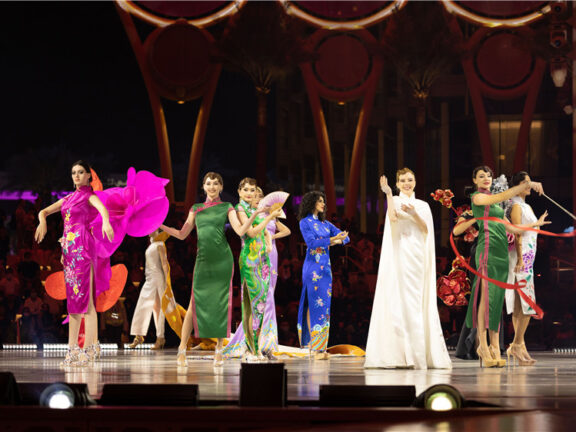
Qipao Evolution: Manchu Banner Robe to Cheongsam
Qipao — or cheongsam — stands as one of China's most internationally recognized garments. Yet the relationship between these two English names, the garment's Manchu origins, and its dramatic transformation over the past century remains widely misunderstood. This article traces the qipao's story across etymology, dynastic evolution, and contemporary revival. Two Names, One Garment Although "qipao" and "cheongsam" refer to the same fitted dress in modern English, their origins differ. "Qipao" derives from Mandarin pinyin for "Banner people's robe" — a direct reference to the Manchu Eight Banners system, which organized society under the Qing dynasty (1644–1912). Manchu women's robes were called qipao, parallel to "qitou" (headwear) and "qixie" (platform shoes). "Cheongsam," by contrast, comes from Cantonese romanization of "long shirt" (chèuhngsāam). In Cantonese and Shanghainese usage, the term originally referred to men's long robes and was later extended to the fitted women's dress. After 1949, Shanghainese tailors who relocated to Hong Kong brought the Shanghai-style qipao to Southeast Asia and the West, and the Cantonese "cheongsam" became the dominant English term during the mid-20th century. In essence: qipao emphasizes ethnic and historical roots via Mandarin; cheongsam highlights the garment's geographic spread through Hong Kong's Cantonese commercial networks. Both describe…- 0
- 0
- 13
-
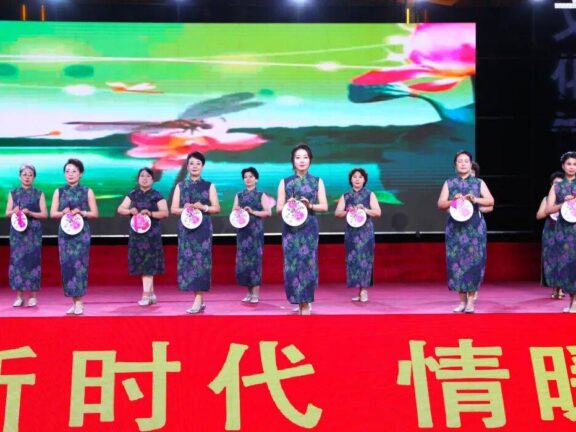
Shuozhou Qipao Show: Yingxian Wooden Pagoda
On July 11, 2026, the Shuozhou City Cultural Center Square hosted a qipao showcase as part of the "Art Gathers the New Era, Warmth Reaches Millions of Families" public cultural benefit series. The event combined local Shanxi heritage with Jiangnan elegance and offered free admission to the public, drawing a large evening crowd. The showcase featured more than a dozen performances. Red-themed processions such as "Ten Sends to the Red Army," "Azalea," and "I Love You China" used qipao to express national sentiment. "Shanxi's Beautiful Scenery" appeared twice, with embroidered qipao evoking the landscape of Shanxi. Other pieces included the poetic scene "Autumn Longing for Return," the gentle "Lotus Pavilion" and "Water Rhymes of Jiangnan" with oil-paper umbrellas, and the tender "E Man" and "Plum Blossom Tears." Each piece showcased a different qipao silhouette and staging concept, from solemn military-red gowns to light Jiangnan-style dresses. The pacing alternated between group formations and solo walks, giving the audience both spectacle and intimate detail. Yingxian Wooden Pagoda Becomes a Runway Motif The standout local element came from the Yingxian Pagoda Township Qipao Team, which presented "This Wooden Pagoda." The piece connected the thousand-year-old Yingxian Wooden Pagoda, the world's oldest surviving all-wood multi-story…- 0
- 0
- 12
-
Shenyang Qipao Season 10th Anniversary: Citywide & Industry
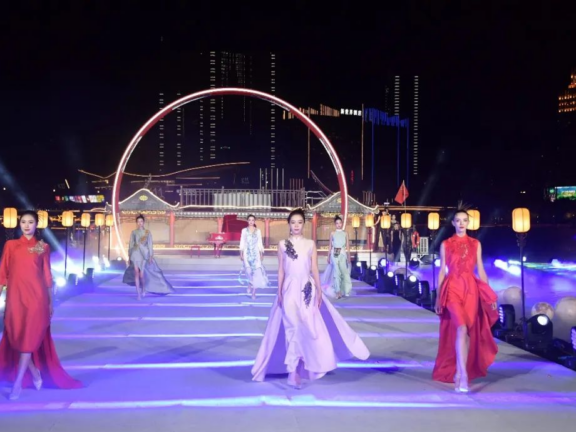
Shenyang, a city long hailed as the "Capital of Qipao", marked a milestone on July 27, 2026, when the Shenyang Municipal Committee of the Chinese People's Political Consultative Conference (CPPCC) published an in-depth report chronicling the qipao culture season's evolution over the past decade. Since its debut in 2017, the annual event has grown from modest folk catwalks and niche aesthetic showcases into a citywide, industry-wide phenomenon — a transformation that mirrors Shenyang's broader cultural confidence. Folk Catwalks The vast landscapes of Northeast China have long given Shenyang's qipao a distinctive character — dignified, unpretentious, and naturally graceful. Yet for years, this elegance remained scattered among folk circles and street-level enthusiasts, lacking a platform for centralized display, public participation, and industrial empowerment. Ten years ago, Shenyang launched its first qipao culture season, beginning with simple folk catwalks and niche aesthetic performances. Each year built on the last, gradually maturing into a cultural IP that radiates nationwide, connects to industry, and enriches daily life. In 2024, under the theme "Taking Qipao as a Bond, Embracing the New," the season rolled out more than 20 activities across six dimensions: conferences, exhibitions, sales, tours, gatherings, and runway shows. In 2025, the season partnered…- 0
- 0
- 12
-
Shenyang Qipao Exhibition: Embroidery and Paper-Cutting
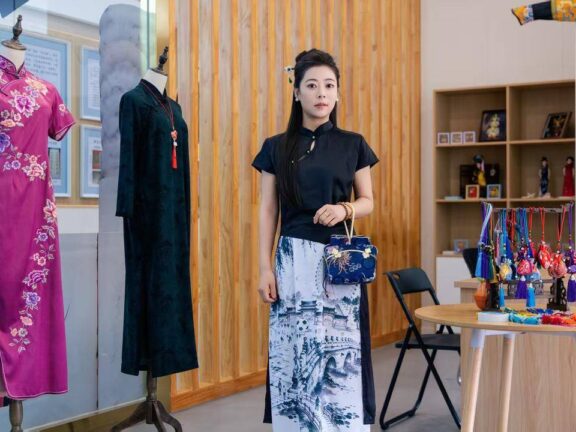
The Yuhong District Qipao Intangible Cultural Heritage Exhibition opened July 12 in Shenyang, Liaoning Province, as a core event of the district's Qipao Culture Season. Organized by the Yuhong District Publicity Department under the theme "Qi Yun Liu Zhuan, Yi Chuan Fang Fang" (The Flowing Charm of Qipao, The Fragrance of Heritage), the exhibition gathers tailored qipao garments, ICH paper-cut parasols, embroidered cloud-shoulder capes, lacquer paintings, clay sculptures, cloisonne enamel works, ink-wash fan paintings, and fine silk-weave textiles in a single venue. The standout feature is a locally designed original qipao series by Yin Jingjing, a district school art teacher who embedded Yuhong's urban landmarks — the Dingxiang Lake ecological landscape and the historic Yong'an Bridge — directly into the garment silhouettes and motif designs. Her work departs from conventional qipao templates, treating the dress as a canvas for local geography rather than a fixed historical form. Each stitch and pattern references a specific Yuhong location, making the collection a wearable map of the district. Yin spent six months studying local architecture and natural scenery before translating these elements into garment patterns, working with traditional cutting techniques to preserve the qipao's recognizable silhouette while introducing entirely new visual references. The…- 0
- 0
- 5
-

Shenyang Qipao Season: Jiuwu City Hosts Runway, Market, Crafts
On July 3, 2026, the Shenyang Qipao Culture Season brought its "Manchu Embroidery Heritage, Qipao Shines in Heping" program to Jiuwu Cultural City in Shenyang's Heping District. The event combined qipao runway shows, a guofeng market, and intangible cultural heritage demonstrations in a single immersive experience, organized by the Heping District Propaganda Department and Culture and Tourism Bureau. Four Qipao Model Teams Open the Show The event opened with four qipao model teams taking the stage in sequence, their measured steps interpreting the aesthetic philosophy of "cultivating the body externally, cultivating the mind internally" that underpins traditional Chinese women's dress. The performance aimed to break stereotypical associations of qipao with mere glamour, instead presenting the garment as a medium of self-cultivation and cultural identity. Following the stage performance, the models transitioned seamlessly into a qipao parade through the "Dongbei Super" market area. This crossover of traditional qipao aesthetics with youth-oriented street market culture was designed to capture younger audiences, using the visual contrast of elegant silk against a bustling commercial backdrop to create what organizers called a "walking aesthetic of tradition meeting trend." The parade then moved into the book city section of Jiuwu Cultural City, initiating a "qipao plus…- 0
- 0
- 17
-
H&M and Wuxi Jiahua Exhibition: Embroidery Fashion in Shanghai
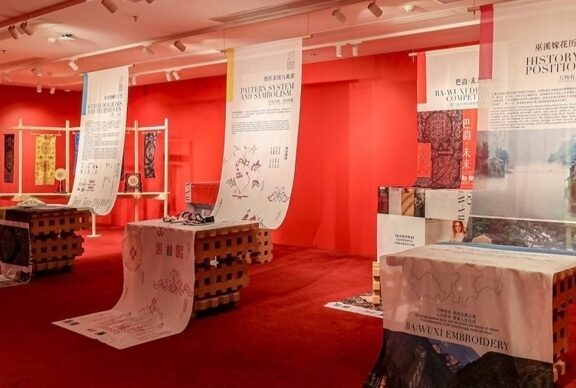
H&M and Shanghai-based cultural platform Xinpin Zhizaoju have jointly launched "Jinchandao — China ICH Fabric Inspiration Treasury," a special exhibition featuring Wuxi Jiahua embroidery, at the House of H&M B1 showroom on Shanghai's Huaihai Road. The exhibition opened in early July and runs through the end of July, with free admission to the public. The show displays over 20 antique embroidery pieces and related artifacts from Wuxi Jiahua, a national-level intangible cultural heritage originating in the mountains of Wuxi County, Chongqing. Wuxi Jiahua carries ancient Wu culture memory and is distinguished by its unique cross-stitch technique aesthetic. The exhibition systematically traces the historical lineage of this embroidery tradition, presenting old embroidered panels, traditional bridesmaid garments, and embroidered banners that recreate folk scenes from centuries past. The exhibition represents a deliberate effort to bring a rural ICH craft into one of China's most prestigious fashion retail spaces. The display design pairs red walls with raw wood display racks, merging traditional weaving and embroidery presentation with contemporary exhibition design concepts. This approach allows the ancient needlework to resonate within an urban fashion environment rather than appearing as a museum relic. Xinpin Zhizaoju, the co-organizer, is a founding member of the Cultural Heritage…- 0
- 0
- 16
-
Song Yuqi Adidas Custom Qipao: Sport Brand Dress
Adidas Originals created two custom national-style outfits for Song Yuqi's solo stage during i-dle's Hong Kong concert on the weekend of July 4–5, 2026, merging qipao construction with streetwear branding in what fans described as a "god-tier" stage look. The first outfit was a black custom qipao retaining the classic Mandarin collar, diagonal front closure, and pan-kou buttons — all hallmarks of traditional Chinese dress — while imprinting the Adidas trefoil logo on the chest and the signature three white stripes along both sides. The silhouette, however, departed from conventional qipao design in several key dimensions. Adidas shortened the hemline to a mini length, added a side slit for movement freedom, and replaced traditional sleeves with ruffle-trimmed cap sleeves — modifications aimed at a pop-idol stage context where high-energy choreography demands unrestricted physical range. The result positioned the garment between heritage qipao and performance costume, using traditional construction elements as design vocabulary rather than structural constraints. The short length and side slit allowed Song Yuqi to execute full dance sequences without fabric interference, while the Mandarin collar and pan-kou buttons maintained recognizable qipao identity from audience viewing distances. The second day brought a contrasting look: a red jacket combining traditional…- 0
- 0
- 59
-
Liaoning Kangping Cross-Regional Qipao Show: 22 Teams
On July 15, 2026, Kangping County in Shenyang hosted "Qipao Elegance, Ten Years of Beauty" — the Kangping edition of the 2026 Shenyang Qipao Culture Season. Twenty-two qipao performance teams from Tieling Changtu, Diaobingshan, Faku, and Kangping gathered on Liaoning Street for a joint showcase that brought together performers from four cities across the northern Liaoning region. The event opened with a measured qipao parade: participants in elegant traditional qipao walked in synchronized formation along the street, their posture and pace reflecting the formal qipao performance style that emphasizes restrained hand placement, small steps, and vertical spine alignment. Immediately after the parade, the same performers switched costumes and launched a fashion flash mob segment — modern athletic clothing, pop music, energetic group choreography — creating a visual contrast that highlighted how qipao culture can bridge traditional grace and contemporary vitality within a single event format. The inclusion of teams from Tieling — a neighboring prefecture-level city — marks this event as a cross-regional cultural exchange rather than a local showcase. Liu Yajie, captain of the Diaobingshan Sister Flower Qipao Team, emphasized the social dimension: participation offers both artistic enrichment and physical wellness, while observing other teams' performances provides learning opportunities.…- 0
- 0
- 7
-
Qingpu Haipai Qipao Meets Shanghai Opera and Dialect Heritage
On June 26, 2026, the Qingpu District branch event of the "Chaoyun 6·6 Shanghai Haipai Qipao Month" took place at the Jingbo Qinhan (Fangxia) Fashion Center under the theme "Passing the Torch, Guofeng Nourishes Qingpu." Organized by the Shanghai Haipai Qipao Culture Promotion Association in partnership with Qingpu's district government departments — including the Women's Federation, the Culture and Tourism Bureau, and the Zhaoxiang Town government — the event was part of Shanghai's 2026 Cultural and Natural Heritage Day series, blending qipao culture with two local intangible heritage treasures: Shanghai opera (沪剧) and the Shanghainese dialect (沪语). Qipao as a Bridge Between Heritage Forms A highlight of the afternoon was the official inauguration of a Shanghai Opera and Shanghainese Dialect Culture Base at the venue. The Haipai Qipao Culture Promotion Association used the occasion to deepen the integration of qipao with Shanghai's native performing arts, expanding the cultural scope of the qipao month beyond fashion into language preservation and community building. This cross-genre approach — pairing textile heritage with oral and theatrical heritage — reflects a growing trend in Chinese cultural programming: treating intangible heritage not as isolated artifacts but as an interconnected ecosystem. The event featured Shanghainese-language dance performances,…- 0
- 0
- 0
-
Liaojin Brocade Revival: Jinzhou Unites Suzhou Embroidery
Jinzhou, a historic city in western Liaoning Province, literally derives its name from silk. During the Liao Dynasty (907–1125), textile workshops dotted the Liaoxi region, producing Liao-style twill-weft brocade with intricate patterns of geese, butterflies, and floral scrolls. These textiles served as imperial tribute cloth and circulated across trade networks reaching far beyond the frontier. The character "Jin" in Jinzhou means brocade, and the city's identity has been woven into its fabric for over two millennia. Lost Craft Centuries after the Liao Dynasty workshops fell silent, the Liaojin weaving tradition seemed destined to remain only in museum archives. That changed when Han Jiuyan, a Jinzhou native who had built a successful qipao business in Suzhou, returned home in 2017 to found Hongyan Minghua Garment Co. Her mission was twofold: revive the lost Liaojin craft and provide employment for women in western Liaoning, particularly mothers seeking flexible work schedules. Inside the production workshop, the craft process is entirely manual. Women workers sit at long tables spread with mulberry silk, xiangyunsha fabric, and Liaojin cloth, embroidering landscapes, birds, and auspicious patterns with needles that dance between shades of thread. Others focus on pan-kou construction, weaving colored cords into three-dimensional buttons shaped like…- 0
- 0
- 0
-
Suzhou Silk Exhibition: 58 Treasures Trace a Millennium of Weaving
On July 10, 2026, the Zhangjiagang Museum and the Suzhou Silk Museum jointly opened "Jinglun Yinghui — Suzhou Silk Culture and Craftsmanship Exhibition" in the museum's second exhibition hall. The show runs through August 2 and features 58 carefully selected silk artifacts spanning ancient weaving techniques to contemporary design innovations. Visitors can trace the complete silk production chain — from sericulture and reeling to weaving, dyeing, and printing — through original looms, natural mineral and plant dyes, and an array of classic silk fabrics including ling, luo, jin, and duan. Suzhou has long been celebrated as the "Capital of Silk," and this exhibition distills that legacy into four thematic sections: sericulture and silk-reeling, weaving and dyeing techniques, silk fabric categories, and silk art. Each section combines historical artifacts with explanatory displays, making the technical evolution of Chinese silk accessible to general audiences while satisfying the curiosity of textile enthusiasts. National-Level Song Brocade The exhibition's highlight is a series of reproduced national-treasure-grade Song brocade pieces. National-level Song brocade weaving craft inheritor Qian Xiaoping contributed a reproduction of an orange-ground interlocking-four-seasons-floral-pattern Song brocade originally from the Ming dynasty and housed in the Palace Museum. The reproduction uses a complex color-changing technique achieving…- 0
- 0
- 5
-

Shenyang Qipao Culture Season Digital ICH Art Exhibition
The 2026 Shenyang Qipao Culture and Art Season has launched its core visual arts exhibition, "Life Like Summer Flowers — International Digital ICH Art Exhibition," at the Liaohe ICH Aesthetics Gallery in Shenyang's Heping District. Opened on June 28 and running through October 8, 2026, the exhibition merges traditional qipao and ICH craftsmanship with 3D digital modeling, 4K immersive video, and gesture-recognition interactive systems. The exhibition is organized by the Liaohe ICH Aesthetics Gallery and curated by Professor Zhang Lei of the Luxun Academy of Fine Arts Humanities School, with Lu Ziyang serving as academic advisor. The curatorial team extracted traditional patterns, ancient techniques, and Eastern aesthetic symbols from Liaohe regional heritage, following a creative path of deconstruction, reconstruction, and artistic retranslation to produce over 40 original digital artworks. Five Thematic Halls Explore Life Aesthetics The exhibition unfolds across five thematic halls, each exploring a dimension of the "life aesthetics of summer flowers" concept. "Prelude of Flowers" looks back at cultural heritage to bridge past and present. "Hidden Flowers" interprets the wisdom of restraint and humility. "Blooming Flowers" channels upward vitality. "Elegant Flowers" reflects the self-possessed demeanor of the gentleperson. "Rhythm of Flowers" leaves space for aesthetic contemplation. Visitors navigate…- 0
- 0
- 13
-
Silu Liren Qipao Fang Cun: Knit-Fabric Innovation
On March 19, 2026, the AW2026 Beijing Fashion Week and 2026 Silk Road International Fashion Week theme day at Beijing's Zhengda Center featured a headline qipao showcase: Silu Liren and Shi Jian Yuan Ting's joint "Fang Cun" (Square Inch) collection runway show. The presentation positioned ICH qipao craftsmanship — specifically pankou fasteners and bead embroidery — within a contemporary minimalist framework, using stretch knit fabrics and three-dimensional tailoring to replace traditional stiff silks and rigid cuts. The collaboration paired two distinct forces: Silu Liren, a women's aesthetics platform driven by Silk Road cultural narratives, and Shi Jian Yuan Ting, a niche qipao bespoke brand that has spent years refining ICH pan-kou and bead embroidery techniques. Founder Li Yuan Ting personally led the "Fang Cun" season's creative direction, applying her deep heritage knowledge to modern silhouettes. Knit-Fabric Qipao: Breaking the Stiff-Silk Mold The core innovation of "Fang Cun" lies in its material substitution. Instead of traditional non-stretch silk brocade, the series uses elastic knit fabrics paired with 3D structural cutting. This combination preserves qipao's inherent classical elegance while dramatically improving comfort and wearability for daily life — the single biggest barrier that has kept ICH qipao confined to ceremonial occasions rather…- 0
- 0
- 9
-
Central Plains Qipao Fashion Week 2026
The 2026 Central Plains Qipao Fashion Week and Oriental Cup Model Show will take place from July 20 to 24 at the Zhengzhou Olympic Sports Center Jianguo Hotel in Henan Province. Organized by the Henan Fashion Industry Association, the five-day event has attracted nearly 5,000 registered participants spanning ages 4 to 70, making it one of the largest qipao-focused fashion events in central China. The show is divided into three main segments: children's modeling, professional modeling, and the Central Plains qipao competition. Contestants were selected through nationwide auditions covering over 40 universities and more than 200 modeling agencies, reaching a candidate pool of over 200,000. The event is expected to draw tens of thousands of on-site spectators, including participating families, aesthetic education professionals, fashion enthusiasts, cultural tourism visitors, and industry buyers. A distinguished panel of judges will oversee the competition, including Wang Guihua, committee member of the China Professional Model Committee; veteran model mentor Qiu Xiyan; Yan Hua, founder of the Supermodel Aesthetic Education Initiative; Hao Jia, one of China's Top Ten Designers; Zhou Bingxi, chair of the Yiwu Fashion Week Organizing Committee; and talent scout Gu Shaojie. Their presence underscores the event's professional credibility and its role in advancing…- 0
- 0
- 0
-
Quanzhou Qipao Competition: Four Maritime Silk Road Categories
On March 30, 2026, the "Song-Yuan China, Qipao Meets Quanzhou — 2026 Fujian Province Qipao Fashion Invitation Competition" launched its opening ceremony at the Quanzhou Garden Hotel. Jointly organized by the Fujian Provincial Cultural Volunteers Association and the Quanzhou Radio and Television All-Media News Center, the competition has been running auditions since April and will culminate in a grand final in July. The competition features four themed categories: Maritime Silk Road New Attire, Citong Qipao Rhythm, Silk Road Elegant Gathering, and Minnan Grace. Together they cover traditional qipao presentation, cultural knowledge contests, and creative styling — weaving Quanzhou's identity as a UNESCO World Heritage site and the historic starting point of the Maritime Silk Road into every stage of the event. Liu Zongli, president of the Fujian Provincial Cultural Volunteers Association, said in his opening address that qipao carries the aesthetic sensibility and cultural DNA of the Chinese nation. "This competition has grown over several years into an important platform for cultural transmission and innovation," he noted, emphasizing that this edition would draw more deeply on Quanzhou's Maritime Silk Road heritage to blend traditional cultural elements with modern fashion design. Liu stressed that cultural transmission requires broad social participation, expressing…- 0
- 0
- 7
-
4 Stars Show Unique Oriental Qipao Charm
The Dragon Boat Festival had arrived, and the annual gala had transformed into an unexpected fashion battleground. The usual buzz of competitive dragon boat races was momentarily forgotten, replaced by a stunning parade of contemporary elegance. Under the soft glow of the stage lights, a new generation of actresses stepped forward, not in high-end Western couture, but in the flowing silks of the Qipao and its modern descendants. It was a quiet revolution, a moment where the ancient craft of the cheongsam met the vibrant energy of young stars, proving that the style was not just a relic of the past but a dynamic canvas for modern expression. 1. Ren Min (任敏) Ren Min arrived like a character from a classic painting. She chose a soft pink modern interpretation of the Qipao, a color that mirrored the delicate blush of lotus flowers blooming in the distant ponds. The outfit was a departure from the heavier roles she often played, and it suited her with an almost ethereal grace. The combination of her youthful features and the gentle color created a picture of pure, unadulterated beauty, as if she had stepped right out of the pages of a romantic novel. While…- 0
- 0
- 52
-

Shanghai Haipai Qipao Month Opens: 15+ Brands Showcase
June 8, 2026 — The 2026 Shanghai Haipai Qipao Month officially launched at the Shanghai Mass Art Museum, marking the city's largest annual celebration of the iconic Chinese dress. The monthlong program runs through early July and features over 15 brands offering handcrafted, modern, embroidered, and cultural qipao designs. Event Scope and Programming The opening ceremony on June 8 introduced a comprehensive program that extends beyond the museum walls. Organizers are taking qipao culture to shopping districts, neighborhoods, and cultural venues across Shanghai, making the event accessible to residents and tourists alike. The qipao market on the second floor of the Shanghai Mass Art Museum showcases a diverse range of offerings: High-end custom qipao — Hand-sewn silk pieces with traditional embroidery, typically requiring 2–4 weeks of production time Modern Chinese-style daily qipao — Contemporary silhouettes designed for office wear, casual outings, and daily life Intangible cultural heritage accessories — Handmade frog buttons (盘扣) and embroidered details by certified heritage practitioners Haipai (Shanghai-style) designs — Blending 1920s glamour with contemporary aesthetics, reflecting Shanghai's unique cultural position Community and Social Dimensions A notable feature of this year's event is the inclusion of free coffee made by autistic youngsters, adding a community service dimension to the cultural celebration. This integration reflects…- 0
- 0
- 31
Cheongsam






Scan to open current page
-
$CouponsLimitation of use:Expired and UnavailableLimitation of use:
before
Limitation of use:Permanently validCoupon ID:×Available for the following products: Available for the following products categories: Unrestricted use:Available for all products and product types