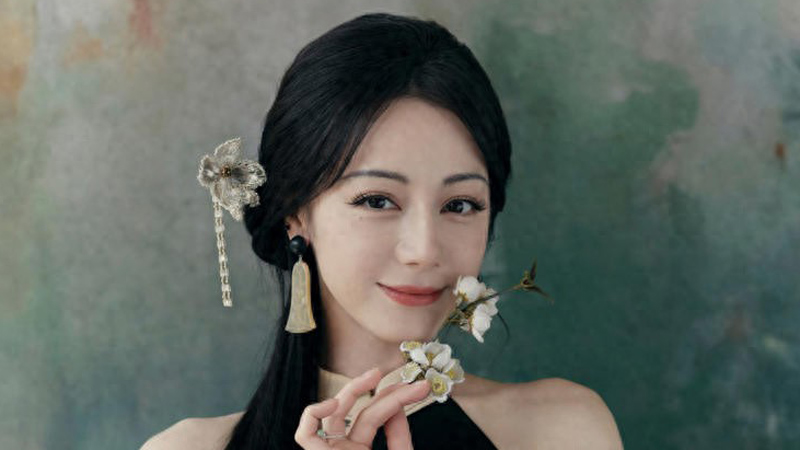
As Chinese cultural aesthetics gain global traction, actress Dilraba (迪丽热巴) emerges as its most captivating ambassador. Her recent fusion ensembles—a deconstructed qipao and an ink-wash gown—transcend mere fashion statements, weaving historical reverence with contemporary audacity. This exploration delves into how her sartorial choices ignite cultural pride, challenge design boundaries, and crystallize a new era of "Eastern Glamour."
The Revolutionary Qipao Rebirth
Dilraba’s black-and-gold qipao shattered conventions at a recent gala. Its asymmetric silhouette—featuring a single sculpted sleeve and strategic cutouts—balanced tradition with rebellion. Gold embroidery snaked across midnight silk, evoking dynastic opulence while the exposed shoulder whispered modernity. This architectural masterpiece proved heritage wear needn’t be archival.
The ensemble’s genius lay in its disciplined restraint. Unlike ornate historical qipaos, Dilraba’s version used negative space as artistry. A solitary golden phoenix clasp anchored the neckline, while the split skirt revealed flashes of leg sans vulgarity. Every element served the garment’s narrative: China’s past reimagined for fearless futurists.
Her styling amplified the revolution. Matte crimson lips contrasted with ink-black hair swept into a low chignon. No jade bangles or dangling earrings distracted; instead, a single gold ring echoed the gown’s metallic threads. Minimalism magnified the garment’s structural audacity.
Social media erupted. Weibo praised her "qipao 2.0," while Instagram hailed "East-meets-West perfection." Design scholars noted how the deconstruction mirrored China’s evolving cultural identity—rooted yet fluid. Within hours, luxury brands scrambled to replicate the "Dilraba Effect."
Ink-Wash Poetry in Motion
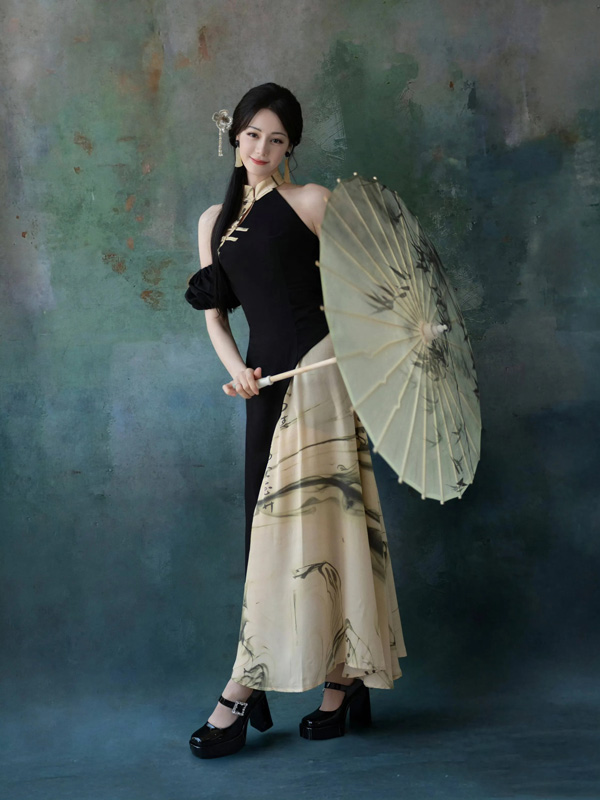
Days later, Dilraba transformed into a Song Dynasty muse. Her floor-length gown featured hand-painted mountainscapes fading into misty grays, resembling a scroll unfurling as she moved. Crafted from weighted silk, the fabric rippled like water disturbed by a brushstroke.
Traditional craftsmanship elevated this wearable art. Silver-threaded cranes soared near the hem—visible only when light caught their wings. The standing collar framed her jawline with calligraphic precision, while hidden side slits allowed graceful strides. This wasn’t clothing; it was kinetic landscape painting.
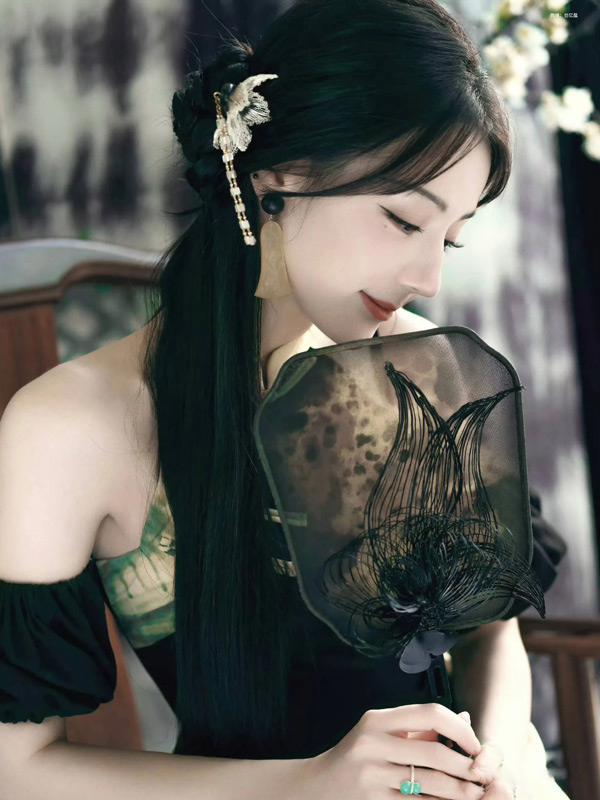
Accessories became cultural metaphors. A moon-white round fan shielded her gaze like a scholar’s parchment, its bamboo ribs echoing lattice windows. When paired with turquoise tassel earrings, the look whispered literati refinement rather than shouted imperial grandeur.
Photographers captured her mid-twirl, the gown blooming like ink dispersing in water. Vogue China declared: "She didn’t wear the dress; she became its poetry." The hashtag #LivingInkPainting trended globally, with art museums inquiring about displaying the gown.
Anatomy of a Cultural Phenomenon
Dilraba’s impact transcends aesthetics. Her Uyghur features—high cheekbones, almond eyes—subvert monolithic "Chinese beauty" stereotypes. When clad in these designs, she embodies a pluralistic China: diverse, dynamic, and defiantly modern.
Critics note her collaborations spotlight emerging Chinese designers. Unlike celebrities wearing Western couture, Dilraba champions local artisans. Her qipao’s embroidery took 300 hours by Suzhou masters; the ink-dress employed rare Jiangnan dye techniques. Each garment is a cultural preservation project.
The commercial ripple effect is staggering. E-commerce platforms reported 400% spikes in "new Chinese style" searches post-appearance. Traditional qipao tailors now offer "deconstructed" options, while high-street brands imitate the ink-wash prints. Even tourism boards leverage her looks to promote heritage cities.
Yet her greatest achievement lies in cultural recalibration. Teenagers who once associated qipaos with stiff formality now see them as empowerment armor. Design schools report surging enrollment in textile conservation programs. Dilraba hasn’t just worn clothes—she’s rewired generational perspectives.
Closing Resonance
Dilraba’s style alchemy—where dynasty motifs meet metropolitan edge—resonates because it mirrors contemporary China’s soul: honoring roots while forging new identities. Her ensembles aren’t costumes but cultural conversations stitched in silk. As borders blur in fashion’s global dialogue, Dilraba asserts Eastern narratives not as relics, but as blueprints for what’s next. In this sartorial renaissance, she isn’t just the muse—she’s the architect.