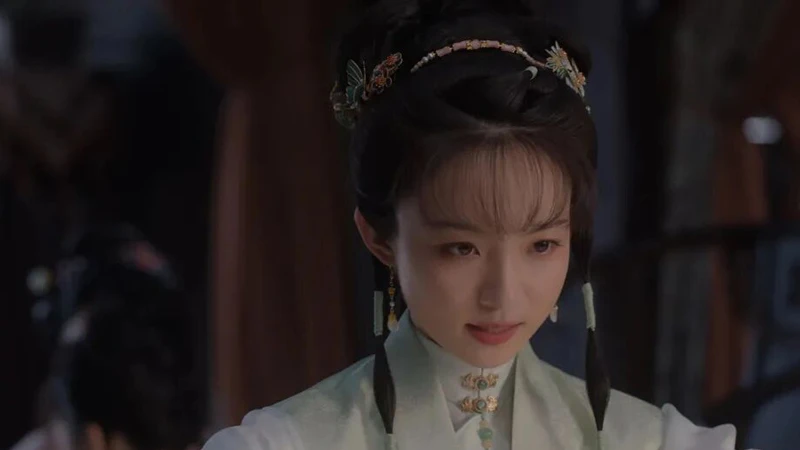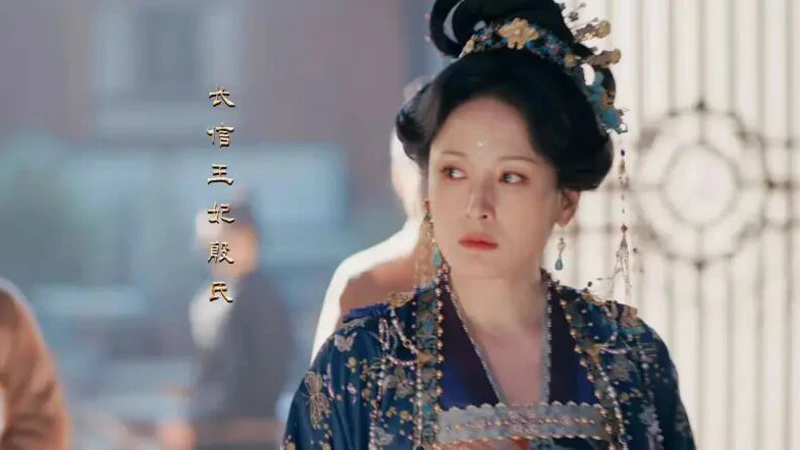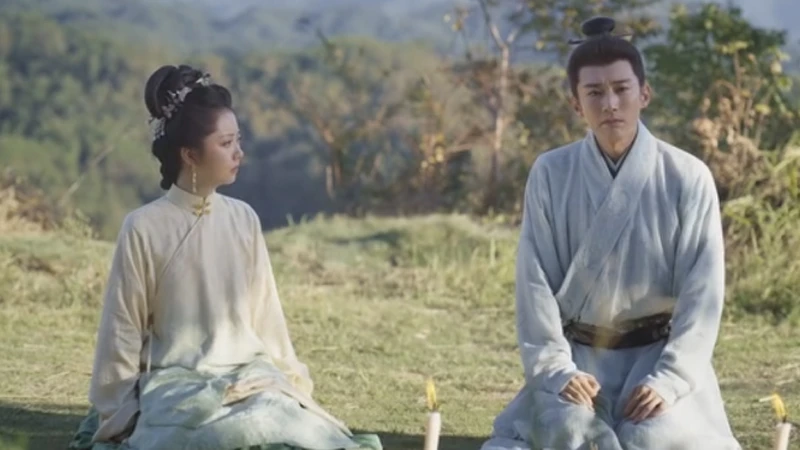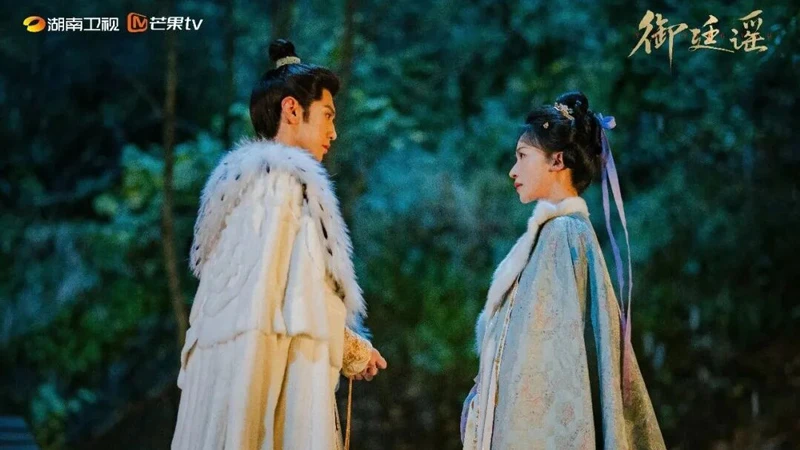
In the court drama Royal Betrothal (御廷谣), the relationship between Emperor Ying Gua (英寡) and his minister Meng Tinghui (孟廷辉) defies easy labels. Their connection, built on mutual use and shared danger, steadily transformed into something deeper. When she consumes a Hehuan fruit (合欢果)—a substance meant to boost fertility and desire—her actions cross a line.
Yet he, who only took a single bite and remained clear-headed, does not stop her or withdraw. He willingly steps into the ruinous path beside her, fully aware of the consequences. This moment forces a question that lingers throughout the narrative: why would a ruler, so cautious and strategic, let himself fall into such a trap when he could have easily prevented it? The answer lies not in the fruit but in everything that came before.
More Than Just Ruler and Subject
Their relationship never followed the standard script for a monarch and his official. Their exchanges were frequent, charged with an energy that set them apart from his interactions with anyone else. As they worked together, understanding grew into trust, and trust quietly bloomed into affection. No declarations were made, yet both knew. Even the people around them could sense the unusual bond. They operated in a space where words were unnecessary, a silence filled with shared glances and unspoken concerns. This foundation of quiet certainty made the later events almost inevitable.

Before the fruit incident, their dynamics were already shifting. When court officials pressured Ying Gua to marry Lady Wen Ruomei (闻若玫), Tinghui immediately changed the subject, refusing to engage in the discussion. She rarely avoided talk of state affairs, yet this topic she flatly shut down. He mirrored her behavior. When a minister mentioned selecting imperial concubines, he abruptly cut off the conversation. These were not random moments of discomfort. They were deliberate acts of avoidance, signaling that the topic of marriage struck a nerve for both. Their emotional world was already overlapping, and they were trying to keep it hidden.
The tension escalated when rumors spread that he intended to make Wen Ruomei a consort. While investigating a case together, Ying Gua brought up the matter himself. He did not simply mention it; he offered a solution and asked Tinghui for her opinion. He actively sought her reaction, testing her response. These exchanges were careful probes, each one revealing how much the other’s judgment meant to them. They both knew the boundaries their positions demanded, but the lines were blurring faster than they could redraw them. The trust they had built was now complicated by emotions neither wanted to name outright, though both felt their weight.
A Release, Not a Cause
This was not a case of a demonic plant overriding rational minds. When Meng Tinghui ate the Hehuan fruit, she did not lose her sense of reason. She experienced a loosening of restraint, an amplification of feelings already present. She knew her actions were bold, even treasonous, but her awareness did not disappear. Ying Gua, having consumed only a small amount, was fully in control. He could have dismissed her advances or physically stopped her. He did not. Instead, he made certain she understood who he was and what she was doing. His questions about her memory and awareness show he valued her consent and her clarity. The fruit became a vehicle, not a villain.
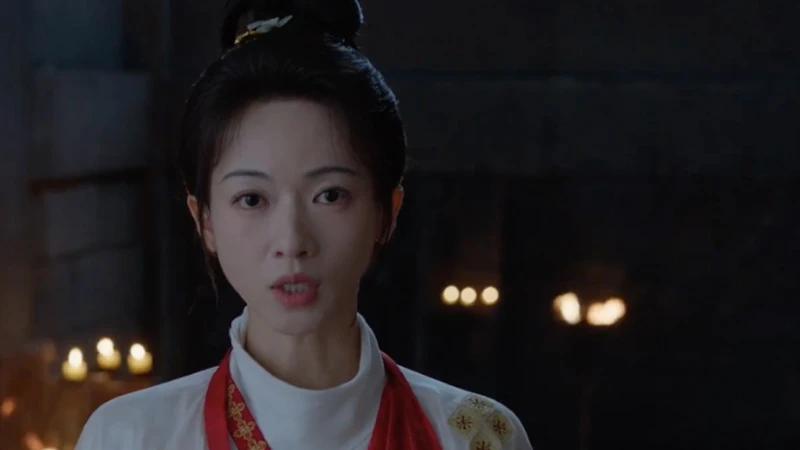
Both characters are driven by a fierce independence. Ying Gua, as the sovereign, was already consolidating power with aggressive policies. He was not a man who bowed to pressure. Meng Tinghui had survived the harsh streets as an orphan, clinging to life by her own will. She never learned to fear rules or hierarchies. Their previous restraint stemmed from the practical awareness that their current roles required stability. The court was unstable, their positions uncertain, and their ambitions hung in the balance. They chose safety over passion because it was the smarter play. The Hehuan fruit did not create new feelings; it dissolved the need to hide them.
Why the Fall Felt Inevitable
Their downfall, in the sense of a ruinous scandal, was already waiting in the wings. The fruit merely moved the timeline forward. For two people with such strong wills, the act of denial could not last forever. They were not afraid of public opinion or the court’s reaction. Their deepest fears were more personal: they worried about the other’s commitment. They feared that one might be less sincere than the other. They also feared that their growing feelings would sabotage the political ambitions each had worked so hard to achieve. The cost of admitting love seemed too high until the fruit made denial impossible. Once the truth was spoken, there was no taking it back.
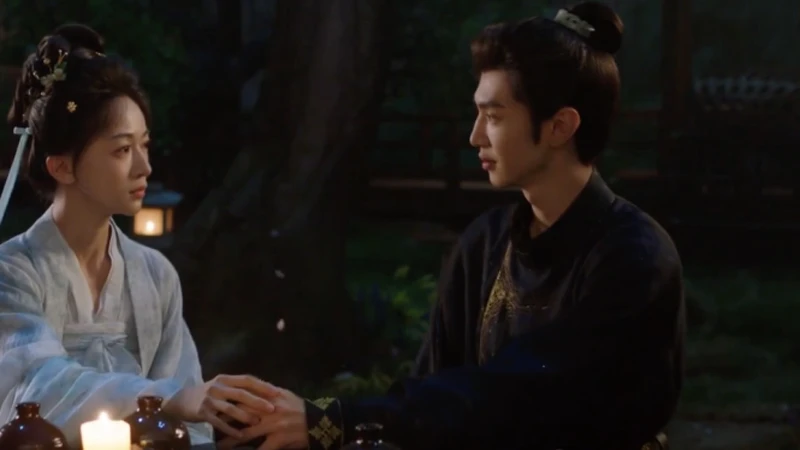
Even if the Hehuan fruit had never appeared in the story, their journey was heading to the same destination. Emotions like theirs, built on respect and shared danger, cannot be suppressed indefinitely. Repression works for a short while, but it is not a permanent solution unless the feelings are shallow. For Ying Gua and Tinghui, the depth of their connection ensured that a breaking point would come. The explosion might have taken a different form—a confession during a crisis, a slip in a vulnerable moment, or a choice that forced a public reckoning. The fruit simply provided the catalyst. Its role was to reveal what was already true. Their willingness to accept the end of their careful arrangement shows that, for them, the gamble was always worth the potential ruin. They chose each other not because of a magical fruit, but because in each other, they saw a reflection of their own untamed nature.