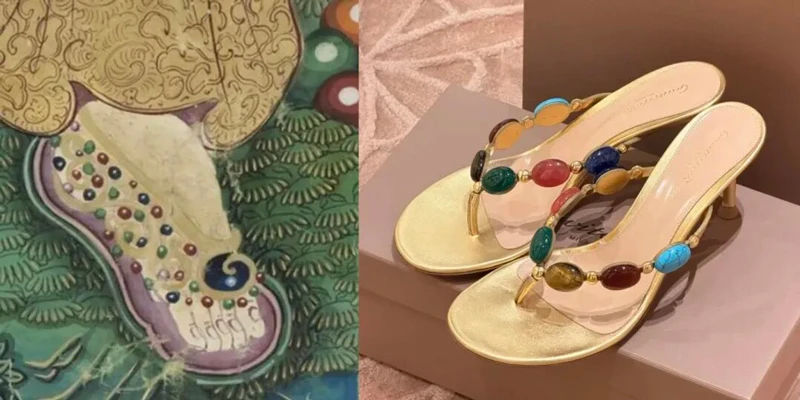
Before global luxury houses slapped retro labels on chunky sandals and woven slides, your ancestors had already perfected every silhouette—from jeweled court slippers to mountain-climbing clogs with detachable teeth. Yet period dramas rarely show them, and most fashion followers assume flip-flops are a modern import from tropical beaches or Japanese ryokans. The truth is far more dazzling: ancient Chinese footwear, collectively called Sa Xie (靸鞋) or simply worn “sà” (slip-on without heel-fastening), spanned 5000 years of continuous evolution.
They weren’t lazy-day afterthoughts; they were statement pieces, utilitarian marvels, and even dance props. One line from the classic novel Dream of the Red Chamber (红楼梦) casually mentions the hero “tying his robe and slipping on his sa shoes” while visiting a sick cousin—proof that these open-back designs were everyday staples in aristocratic chambers. So before you pay a premium for that “cutting-edge” gladiator sandal, consider this: the original blueprint has been under our feet all along, and it’s time we reclaimed the narrative.
Prehistoric Roots
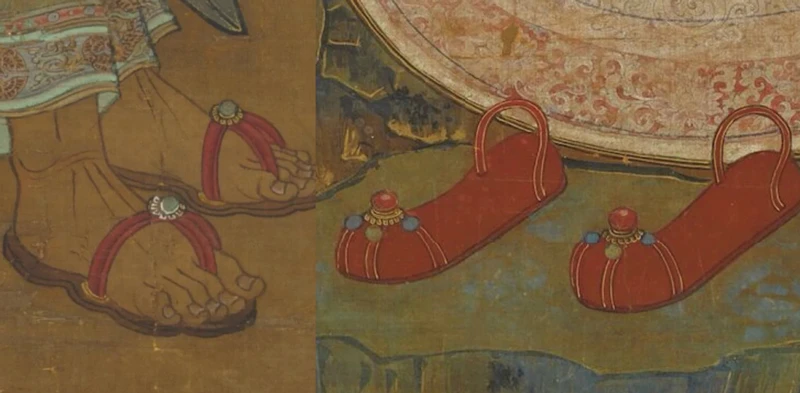
Archaeology shatters the myth of the modern flip-flop. The earliest surviving specimen—a pair of wooden clogs unearthed from the Liangzhu Culture (良渚文化) site—dates back nearly 5,000 years, making them the oldest known sandals on the planet. That’s millennia before Rome’s caligae or Japan’s geta. Early versions were pragmatic: woven from cattail grass or leather, they were breathable, lightweight, and easy to replace. The Eastern Han scholar Liu Xi (刘熙), in his etymology work Shi Ming (释名), explained that the term “ji” (屐) meant “support,” because it kept feet above muddy ground—a humble but clever solution for rainy rice paddies.
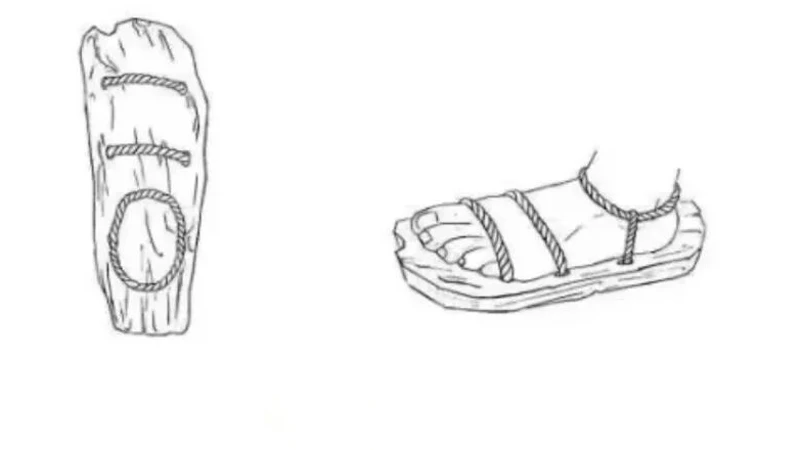
By the Qin dynasty (circa 200 BCE), records show that imperial workshops mass-produced grass sandals for soldiers and laborers, valuing utility over ornament. Yet even then, craftsmanship mattered. The woven patterns on those grass soles were tight and uniform, revealing an early sense of aesthetic order. Ordinary folks called them “bu jie” (不借)—literally “no need to borrow”—because they were so cheap and ubiquitous that everyone owned a pair. This wasn’t poverty; it was democratic design. Think of it as the ancient equivalent of everyday sneakers, but with zero plastic and full biodegradability.
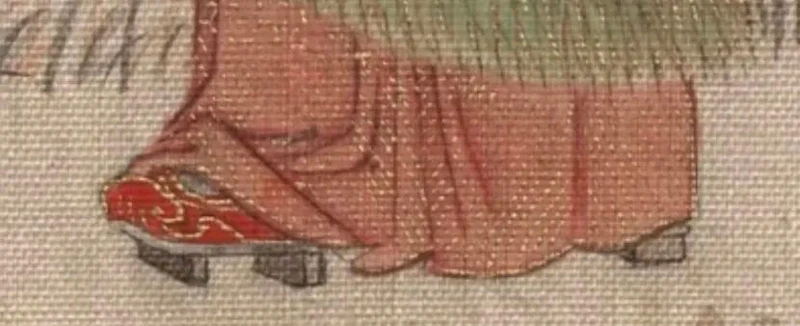
What’s striking is the parallel evolution of luxury. While commoners wore grass or hemp, noblewomen of the Warring States period painted their wooden clogs with vermillion lacquer and adorned them with rainbow silk tassels. Each step sent ribbons fluttering, turning a walk into a performance. So from the very beginning, the sandal family split into two branches: one for the field, one for the feast—a duality that modern brands still chase today.
Wei-Jin Craze
The Wei-Jin and Northern-Southern dynasties (220–589 CE) unleashed an explosion of sandal creativity. This era’s aristocrats and literati didn’t just wear clogs—they obsessed over them. Palm-fiber clogs and woven straw sandals became the hottest casualwear, prized for their delicate uppers and durable wooden soles that gripped rocky paths with ease. Their price remained low, yet their social signal was high: wearing a finely braided pair signaled refined taste without ostentatious wealth. It was the original “quiet luxury” movement, long before the term existed.
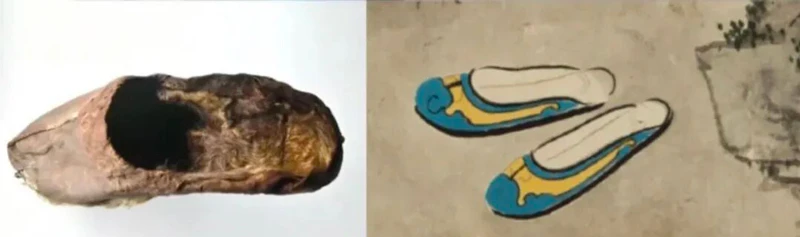
For noble ladies, the lacquered clog evolved into a kinetic accessory. They painted floral motifs on the soles, strung tiny bells or colored cords across the instep, and practiced the “Xiangji Dance” (响屐舞)—a rhythmic performance where the clogs’ wooden heels clicked against stone floors like percussive instruments. Contemporary chroniclers described the sound as “crystal clear,” and the visual of trailing ribbons against flowing robes became a hallmark of feminine elegance. This wasn’t mere footwear; it was wearable music, blending choreography with couture.
But the true icon of this period was the Xie Gong Ji (谢公屐), named after the poet-adventurer Xie Lingyun (谢灵运). He modified traditional clogs with removable front and rear teeth—detach the front teeth for uphill climbs, the rear for downhill descents, ensuring a flat, stable tread on any slope. Centuries later, the Tang dynasty poet Li Bai (李白) immortalized it in his verse: “Wearing Xie’s clogs, I step onto the blue-green ladder of clouds.” This was functional footwear as a status symbol among the scholarly elite—the ultimate “outdoor tech” gear, predating Vibram soles by over a thousand years.
And it carried emotional weight too: historical records mention that Jin Wen Gong (晋文公) once carved a clog from a tree to mourn his loyal retainer Jie Zitui (介子推), turning a simple shoe into a vessel of gratitude and remembrance. So a pair of clogs could tell stories of adventure, loyalty, and grief—far more than any modern sneaker can claim.
Tang-Song Refinement
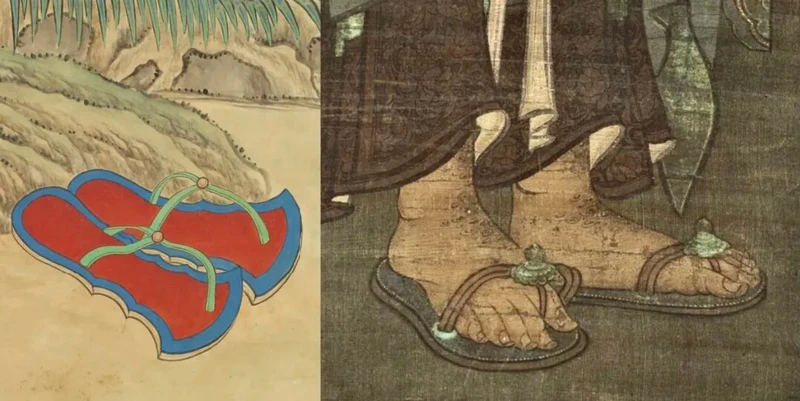
By the Tang and Song dynasties (618–1279 CE), sandals had fully permeated daily life—from palace corridors to market streets. Silk brocade clogs, known as “bo ji” (帛屐), became the rage among imperial concubines, their soft satin uppers embroidered with gold thread and peony patterns. Meanwhile, common folk favored heel-less, pliable slippers made of hemp or cotton, perfect for leisurely strolls through temple fairs or tea gardens. The range expanded exponentially: there were single-toe thong styles reminiscent of modern flip-flops, multi-strap gladiator designs, and even pointed-toe variants for formal banquets.
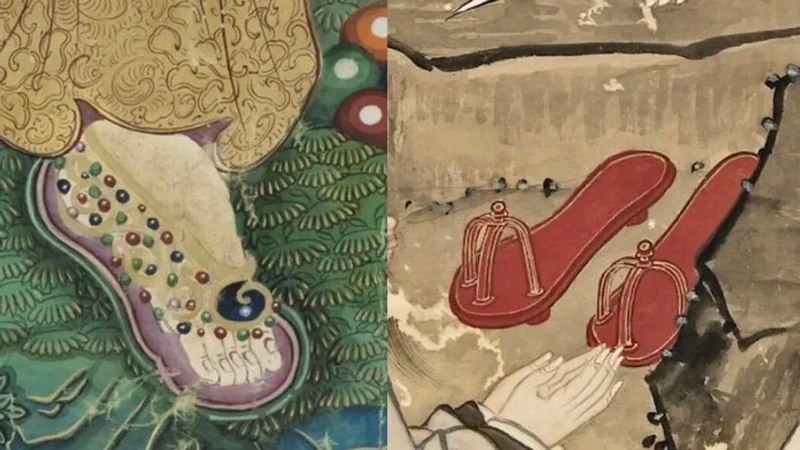
Unlike today’s sandals, which are largely relegated to casual contexts, ancient versions served multiple roles. You could hike mountains in Xie’s detachable clogs, dance in lacquered heeled pairs, lounge at home in soft fabric slippers, or attend a poetry gathering in embroidered silk slides—all without switching categories. They blurred the line between indoor and outdoor, work and play, utility and adornment. This versatility wasn’t accidental; it reflected a holistic worldview where every object must adapt to human needs across different spheres of life, rather than being confined to a single function.
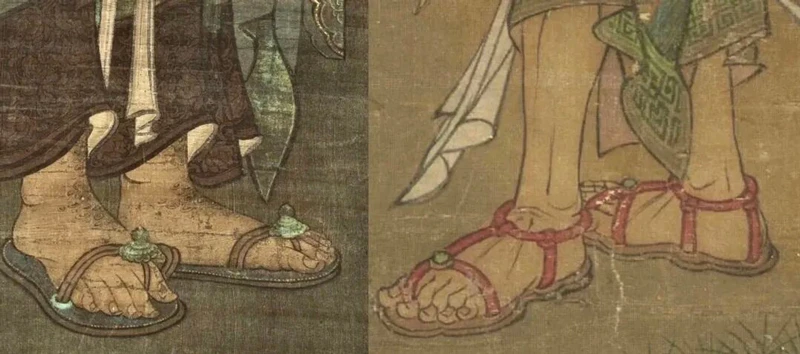
Looking back at this millennium-long evolution, one thing becomes crystal clear: every design principle that modern fashion celebrates—chunky platforms, woven textures, minimalist thongs, ornate embellishments, even “athleisure” functionality—was already mastered in ancient workshops. The so-called global trends are merely rediscoveries of a heritage we left unattended.
For too long, Western luxury houses have mined these motifs without credit, while some domestic consumers dismissed traditional silhouettes as outdated or provincial. Yet the truth is humbling: our ancestors didn’t follow trends; they set them. And they did so with a lightness of touch, a sense of humor, and a deep understanding that what you wear on your feet carries not just weight but identity. So next time you slip into that expensive retro sandal, remember—you’re not catching a wave; you’re coming home.