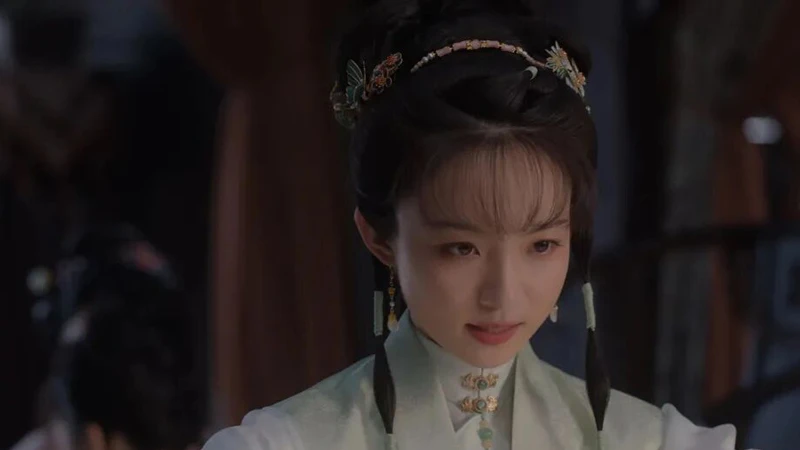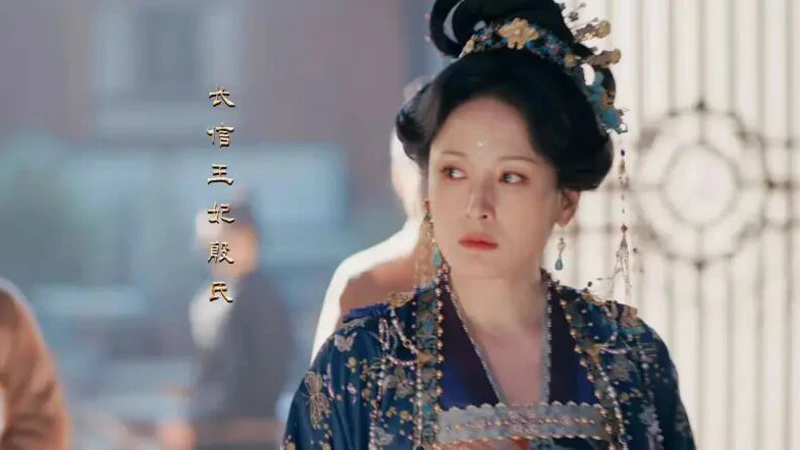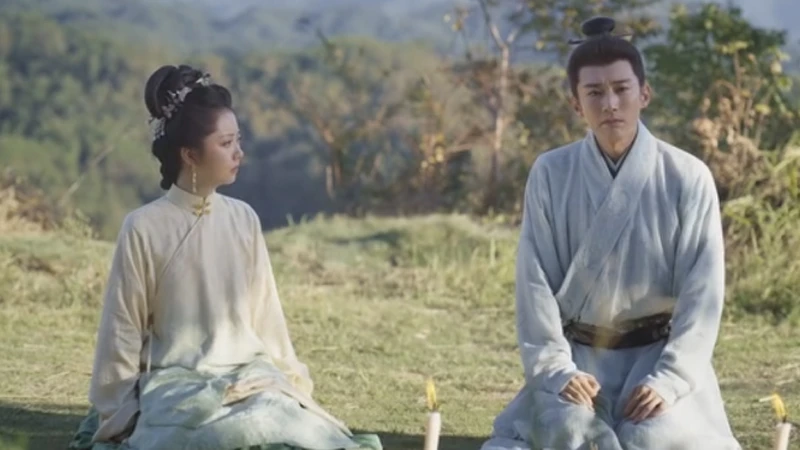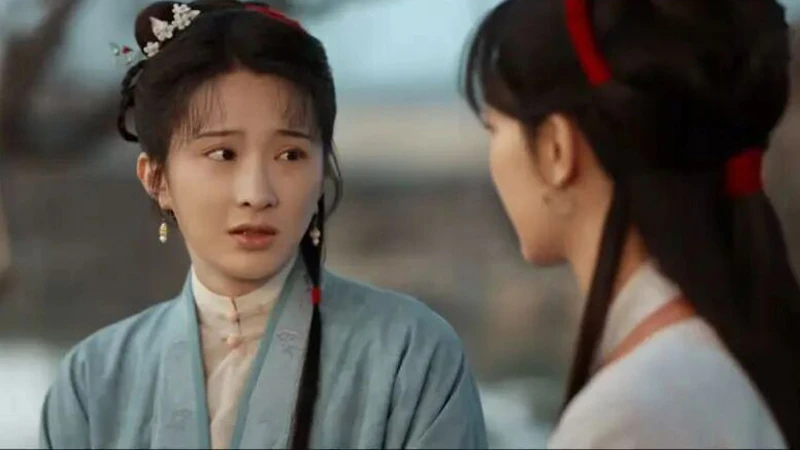
In the bustling ink-making world of She County (歙县), a young woman’s betrayal shocks everyone. Tian Ronghua (田荣华), once seen as gentle and obedient, helps her ruthless family win the coveted tribute ink right by manipulating an old Taoist priest. She breaks her bond with Li Zhen, a true friend who trusted her. But was this simply greed for power, or did something far darker twist her heart? Behind her soft smile lies a story of exploitation, silent suffering, and a revenge that reeks of desperation. Let us peel back the mask.
The Master Manipulator
When Tian Ronghua first appears, she seems like a fragile doll—shy, weeping for her cruel father and brothers who trade her marriage for their freedom. Viewers pitied her. Yet after she secures the tribute ink right for the Tian family using Qinghe Xianren (清鹤仙人), she returns home and sits directly in the master’s chair, ordering her parents and siblings around. This is no victim. She has planned every step, hiding her sharp teeth behind a tearful face.
At a family feast, she insists on delivering the tribute ink to the capital herself, blocking her brothers from going. Why? Because if they find other powerful backers, she loses control. By making the Tian family rely solely on her connection to Qinghe Xianren, she turns them into puppets. Her kindness earlier was not weakness—it was patience. She waited until her value became undeniable, then struck. Her real nature mirrors her family’s: calculating and cold.
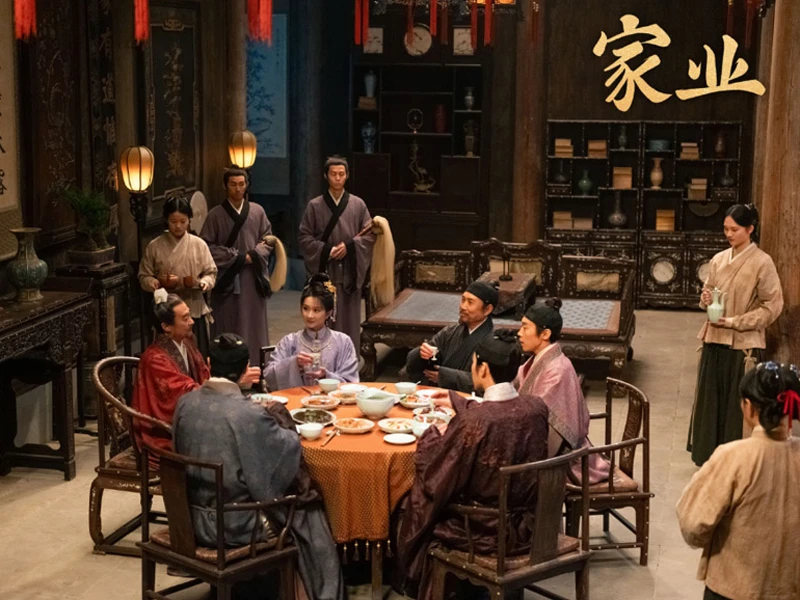
She fooled everyone, including Li Zhen (李祯). When Tian Ronghua once said, “This might be the Tian family’s karma,” she was not lamenting. She was foreshadowing her own revenge. The gentle girl who cried over marrying an idiot son was a lie. Beneath that silk robe beats the heart of a strategist who learned that in the Ming Dynasty, only the ruthless survive.
The Dirty Deal
During the same feast, Tian Ronghua’s mother suggests begging Madame Hu (胡) to bring her back from the Xu (徐) family. Tian Ronghua replies coldly, “Do you think the Xu family’s gate opens and closes as you wish?” This line reveals a nightmare. After Young Master Xu died, she did not choose to stay with Madame Hu. She had no choice. Madame Hu then gave her away again—this time to Qinghe Xianren, a bearded old Taoist who spends his days on Qiyun Mountain (齐云山).
The drama hints at the unspeakable. When Tian Ronghua offers to accompany Qinghe Xianren for a walk, he grabs her hand and mutters, “Good child.” That gesture, even by today’s standards, is offensive. In the Ming Dynasty, it was a public shame. No decent elderly man touches a young woman like that. The relationship is clear: she has become his companion, his plaything. Madame Hu, who promised to treat her like a daughter, sold her for influence. There is no escape.
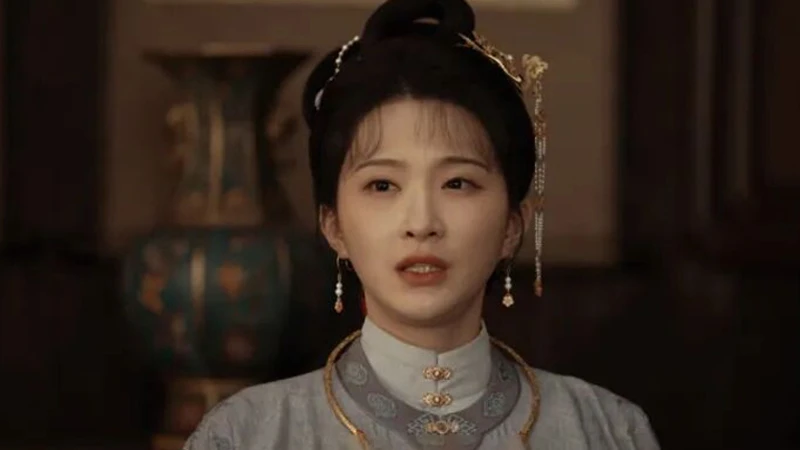
What makes it worse is that Tian Ronghua never agreed to any of it. Her father sent her to the Xu family to free her brothers from prison. After her husband’s death, she thought she could hide in a corner. Instead, Madame Hu passed her to an old lecher. Her body, her dignity, her future—all taken. This is not hardship. This is systematic violation. And it transforms her. The soft girl dies on that mountain path, replaced by someone who vows to never be used again.
Her Bitter Revenge
From that moment, Tian Ronghua embraces her sharp edges. Betraying Li Zhen? A small price. Fixing the tribute ink competition? A necessary move. She needs the Tian family strong—not because she loves them, but because she wants to crush them from within. By making them dependent on her, she can eventually humiliate them just as her father, her mother, and Madame Hu humiliated her. She becomes what they made: a monster wearing silk.
Her anger is justified. Her parents sold her twice. Her brothers never lifted a finger. The Xu family treated her as a leftover object. Then Hu family gave her to an old man. Every adult in her life saw her as currency. So now, she sees them as obstacles. When she takes the master’s seat at the Tian family table, she is not just seeking power—she is announcing that she will never kneel again. Even if it means betraying the only friend who ever showed her kindness.
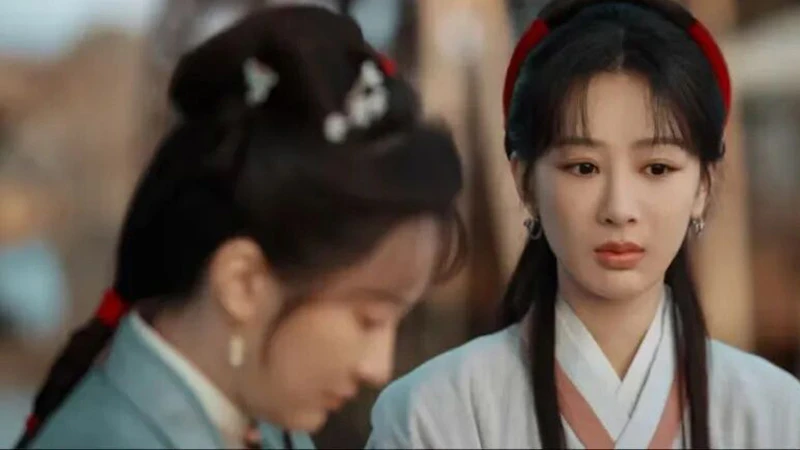
Tian Ronghua’s story is not a simple fall into evil. It is a slow, painful hardening. She did not choose darkness for fun; she was thrown into it. And once inside, she decided to light a fire of her own. Whether you call her a villain or a survivor depends on where you stand. But one thing is certain: in The Mo (家业), she proves that the most dangerous person is not the one born cruel, but the one who has been broken and then rebuilt herself with nothing left to lose.