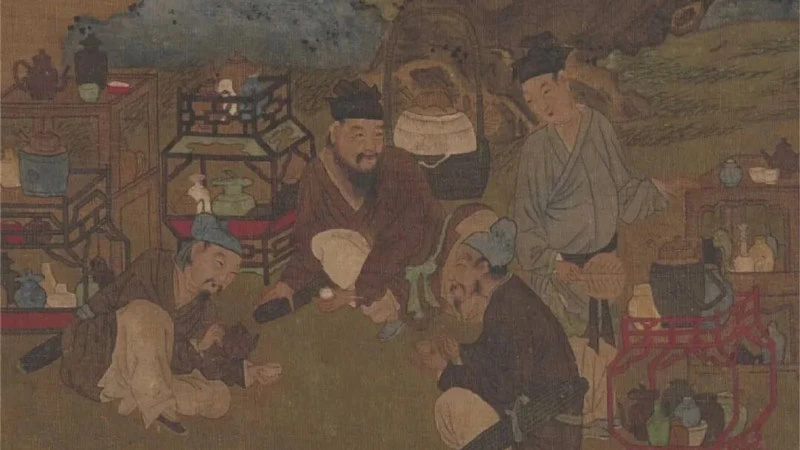
Pu Man (扑满): The Ancient Chinese Piggy Bank You Had to Break? Imagine a world with no banks, no digital wallets, no ATMs. Where did ordinary people in ancient China keep their spare copper coins? The answer hides inside a humble clay jar with a name that sounds like a warning: Pu Man. It means “smash when full.” There was only a slit to drop money in, no hole to take it out.
Saving meant one thing—you had to destroy the jar to get your wealth back. That design wasn’t a flaw. It was a brilliant trick of self-discipline. By forcing a person to break the pot, it turned saving into a commitment. This small object carried a big idea: control your desires, build your future, one coin at a time.
The Origin
Liu Xin (刘歆), a scholar of the Western Han Dynasty, wrote in his book Xijing Zaji (西京杂记): “A Pu Man is made of clay, used to store coins. It has an entrance but no exit. When full, you smash it.” Six words captured its entire purpose. Before the Han period, this object had a different name: Xiang (缿). But the Xiang wasn’t for ordinary families. It was a government tool.
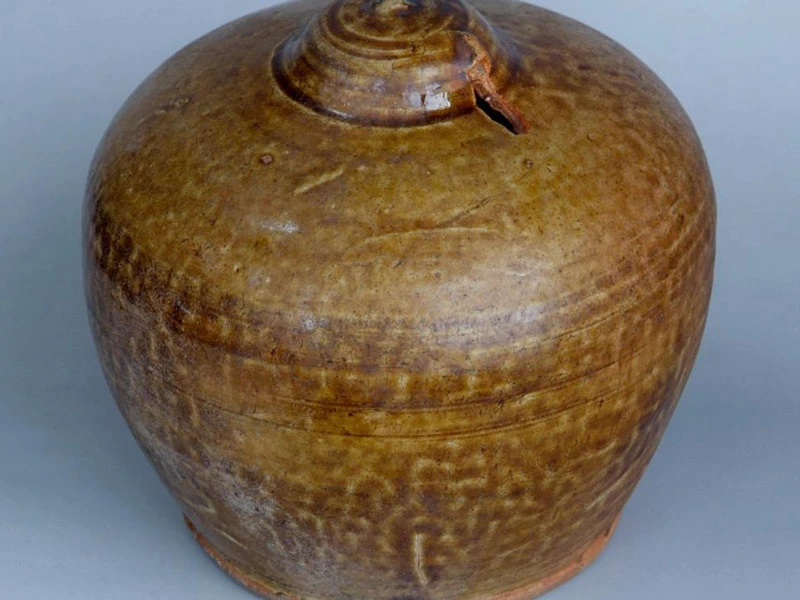
By the Han Dynasty, the jar had moved from official offices to common homes. Its material changed too. Instead of bamboo or wood, potters used cheap clay. That made it affordable for everyone. The name shifted to Pu Man, a word that felt down-to-earth and honest. People also gave it playful nicknames. Some called it a “stingy jar”, laughing at their own reluctance to spend. Northerners said “mute gourd” because dropped coins made a dull thud inside its round body. Southerners preferred “dumb jar”), since the pot never spoke back—it just swallowed every coin you fed it.
Official to Personal
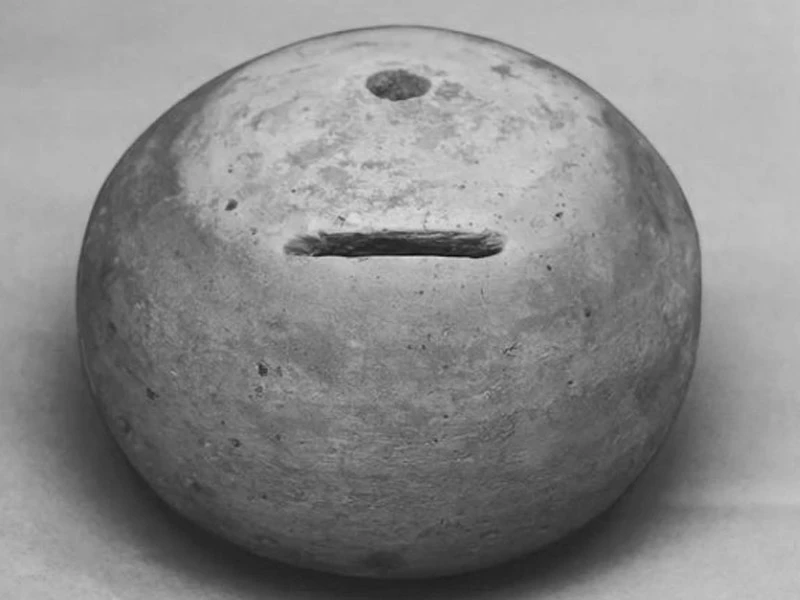
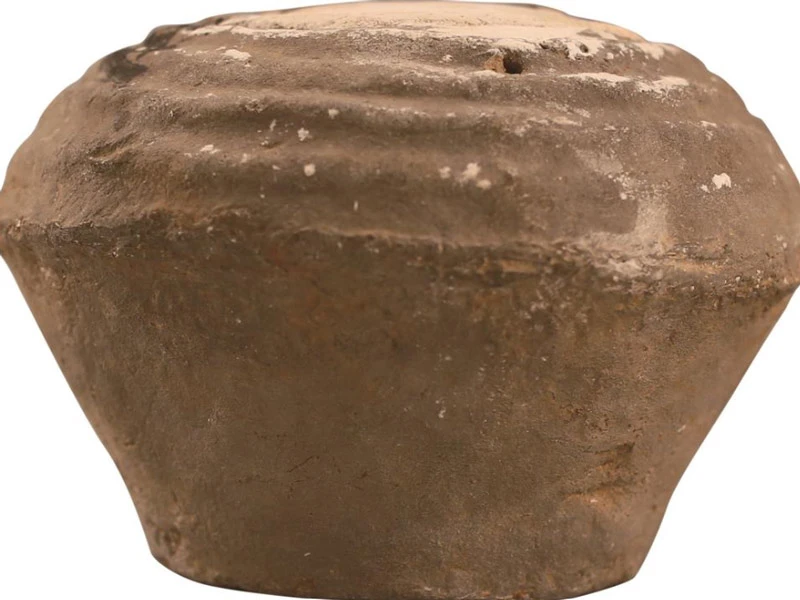
What did these ancient piggy banks actually look like? Museums hold the answers. One Han Dynasty pottery Pu Man from Sulin (苏蔺) Cemetery in Jiaozuo (焦作), Henan stands just 9.5 centimeters tall but measures 14.5 centimeters across. It’s a squat, round ball—wider than it is high. A long, narrow slit sits on the top side, just wide enough for a square-holed copper coin. Another piece from the Shanxi Mayi (马邑) Museum shows clear wear around the coin slot. Its owner must have pushed coins in day after day, year after year, until the clay surface grew smooth from use. You can almost hear the quiet clink of each saving moment.
The Tang Dynasty brought prosperity, and the Pu Man became more decorative. A piece now kept at the Xi’an Tang West Market Museum has a plump, rounded top that narrows to a small flat base. One cultural relic blogger described it as “a one-eyed mythical beast”—the round coin slot like an eye, the narrow opening like a mouth. During the Song and Yuan dynasties, these jars spread even wider. An example excavated in Quanzhou’s Qingjing (清净) Mosque (where Arab merchants once prayed) has a small knob on top for tying a rope and a round hole for hanging it on a wall. It was unglazed, simple, and practical. That single find proves that people from all walks of life—and many different cultures—used the same humble saving jar.
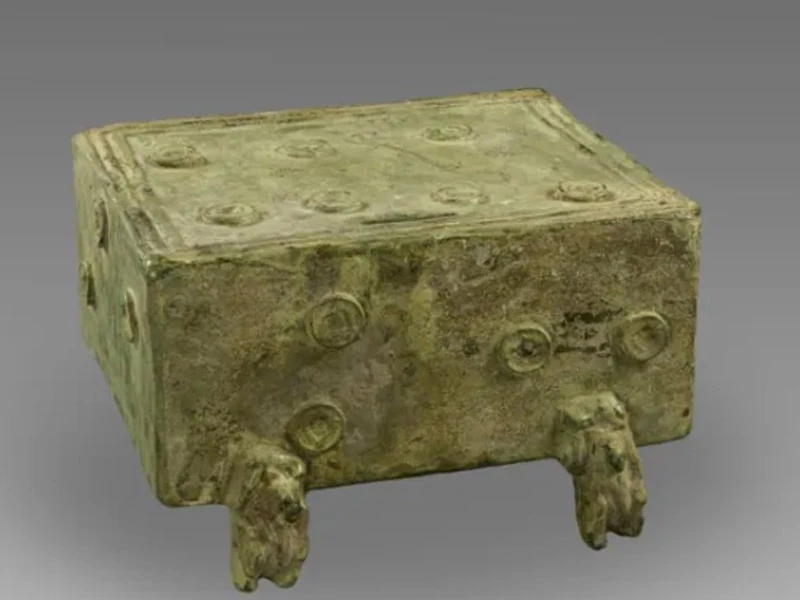
But not everyone saved copper coins. In the ancient Dian (滇) Kingdom of southwest China, nobles had a more extravagant version: the bronze shell container. Instead of copper, they stored cowrie shells from the Indian Ocean. Those shells were hard currency—a jar full of them represented international wealth. It shows that the habit of saving crossed all social levels, from the poorest peasant to the richest aristocrat. Only the container changed. The idea stayed the same.
Life Lessons
A famous Han Dynasty story teaches the deepest lesson of the Pu Man. Gongsun Hong (公孙弘), who later became prime minister under Emperor Wu of Han, grew up poor. When he left for the capital to take office, his friend Zou Changqian (邹长倩) gave him a special gift—a Pu Man. Zou explained: clay is a humble material, money is a precious thing. A jar that only takes in but never gives out, that only gathers but never spends, will eventually be shattered. If a person hoards wealth without using it wisely, he will suffer the “defeat of the Pu Man.” The phrase Pu Man Zhi Bai (扑满之败) entered Chinese idiom as a warning against greedy accumulation.
Tang Dynasty poets turned the piggy bank into philosophy. Prime Minister Yao Chong (姚崇) wrote Pu Man Fu (扑满赋), saying: “Stay humble and guard yourself; stay empty and you can receive.” The Buddhist monk Qi Ji (齐己) composed Pu Man Zi (扑满子): “I only love to fill my belly / How could I know fullness harms me? / In the end I must be smashed and broken / Scattered into others’ hands.” In just twenty characters, he captured greed’s trap. You think fullness is winning—but fullness is what destroys you. That echoes the ancient wisdom: “Pride brings loss; humility receives benefit.”
A Pu Man survives because it stays empty. The moment it fills up, it must be broken. The same applies to a person. These tiny clay jars weren’t just money boxes. They were daily reminders etched into the fabric of ordinary life. Save bit by bit. Stay humble. Don’t hoard. Spend wisely. Every coin dropped in was a small act of self-control. And every shattered jar was a teacher. The broken pieces said: you saved well, now use what you have gathered. Don’t let the money—or your ego—become so full that you break.
Legacy
From the Qin Dynasty’s Xiang to the Han’s Pu Man, from Tang’s decorated pottery to the Yuan’s everyday unglazed jars, this saving tool lasted over two thousand years in China. Today, our piggy banks look different. They come as little pigs, cats, robots—made of plastic or metal. Most have a rubber stopper on the bottom. You don’t have to smash them anymore. But the core idea hasn’t changed. The wisdom of “many a little makes a mickle” still guides how families teach children about money.
Next time you drop a coin into a piggy bank and hear that clear “ding (叮)” , think about this: two thousand years ago, an ordinary person in ancient China did the exact same thing. They saved one coin at a time, just like you. They watched the jar grow heavier, just like you. And when it was full, they learned the same lesson—that saving requires patience, that wealth is a tool not a master, that emptiness has its own virtue. A small clay pot carried a civilization’s understanding of thrift, humility, and moderation. That’s not just history. That’s a habit worth keeping.