When Bailu (白鹿) stepped onto the set of Keep Running (奔跑吧) in Handan (邯郸), she wasn’t just chasing variety show thrills. Dressed in a deep crimson robe from the Warring States period, she stopped the scroll. The wide sleeves, the crossed collar, the jade pendants—it all looked startlingly correct. Fans who had cringed at countless earlier attempts finally breathed relief: “After a thousand wrong tries, someone finally got it right.” But what exactly makes a Warring States robe real, and why does it matter on a modern game show?
The Authentic Robe
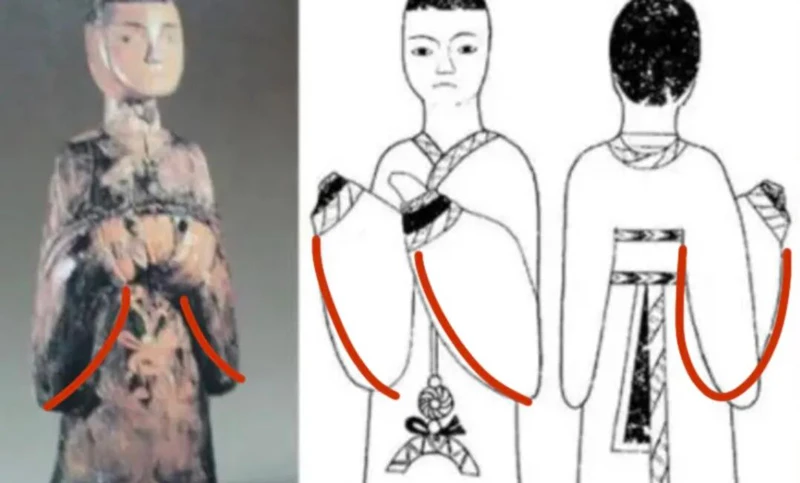
Most people call it “Warring States Robe,” but its proper name is the Zhiju Robe (直裾袍). It was the core formal wear for nobility during the Spring and Autumn and Warring States periods. Key features include a crossed collar that folds to the right, a straight hem that touches the floor, and sleeves that fall in generous, flowing arcs. Unlike later Han dynasty styles, this one has a distinct pre-Qin flavor—less structured, more naturally draped.
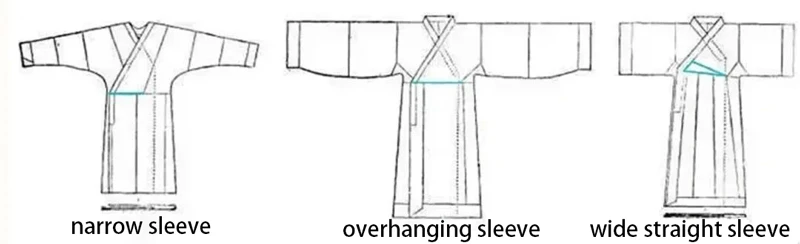
Where does this shape come from? Most reproductions today trace back to a single archaeological treasure: item N15 from the Mashan Chu Tomb (马山楚墓) in Hubei. That tomb, dated to the Warring States period, yielded dozens of garments, almost all of them straight-hem robes. N15 became the gold standard because it was so well preserved. Its wide collar, ample fabric, trailing hem, broad belt, and hanging sleeve cuffs have been meticulously copied by serious designers. Minor variations exist—N10 and N14 have slightly different sleeve shapes—but the core structure remains identical.
It’s worth noting that while the physical evidence comes from Chu territory, the resulting silhouette closely matches murals and figurines from other Warring States kingdoms. So in everyday conversation, it’s acceptable to treat the Chu-style straight robe as the general noble attire of the era. The look is austere, elegant, and unmistakably ancient—not a single pinch at the waist, no fancy tailoring tricks. Just straight, generous fabric that wraps the body like a scroll unrolling.
Fake or Real?
Walk into any costume photo studio today, and you’ll see racks of so-called “Warring States robes.” Most are fake. The easiest giveaway is the collar. A real Zhiju robe has a clean, sharp Jiaoling Youren (交领右衽)—the left side crosses over the right, forming a firm V-neck that sits flat against the chest. Fake versions often loosen the collar, slant it sideways, or even reverse the cross direction. Some expose the collarbone for a “sexy” look, which would have been unthinkable for pre-Qin aristocrats. Right over left was not a style choice; it was a ritual rule.
Next, check the body shape. An authentic robe falls straight like a cylinder. No waist darts, no side seams that pull in. When tied with a belt, the fabric naturally wraps around the torso, creating soft, organic folds. Fakes, catering to modern beauty standards, add waist cinching. They hug the hips, taper the hem, and eliminate the trailing length. What you get is a tight, “slimming” dress that has nothing to do with ancient tailoring. The original robe was meant to drape, not cling.
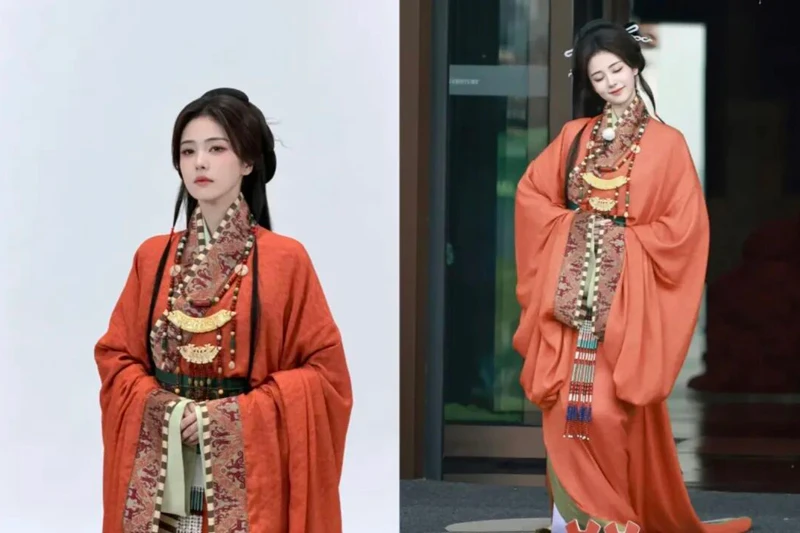
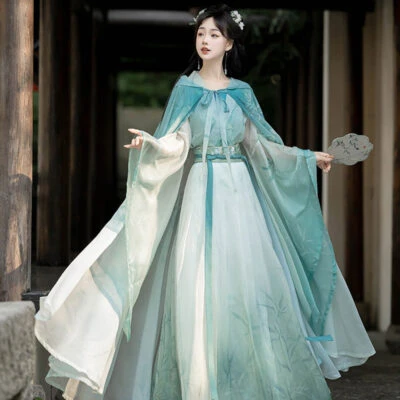
Finally, look at fabric and patterns. Real reproductions use matte, textured materials like linen, twill with hidden patterns, or old-style silk gauze. Decorations are sparse and deliberate—bronze-style motifs or dancer figures from Warring States art. Fakes, however, reach for cheap chiffon, shiny polyester, or printed synthetics. The colors are garish, the patterns chaotic, and the overall effect is more “fantasy cosplay” than archaeological witness. A true Warring States robe feels heavy, quiet, and dignified. It never screams for attention.
Beyond the Look
The reason Bailu’s outfit went viral isn’t just aesthetics. That crimson robe, paired with jade pendants at the neck and waist, carries a message. During the Warring States period, jade was not decoration—it was a moral compass. Confucius said a gentleman compares his virtue to jade. The crossed collar symbolized order and propriety. The wide, hanging sleeves reflected the belief in Tianren Heyi (天人合一,harmony between heaven and humanity). Every stitch, every fold, every pendant whispered the values of a civilization that took clothing as seriously as statecraft.
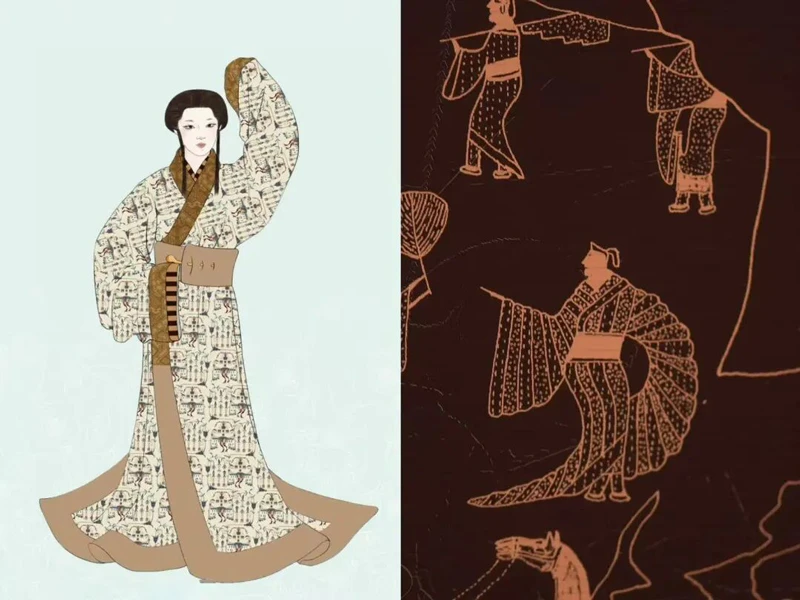
For decades, authentic Warring States garments lived only in excavation reports and museum glass cases. Most people had never seen one, let alone understood its rules. So when bad imitations flooded marketplaces and period dramas, viewers accepted them as “ancient enough.” Bailu’s team broke that cycle. They went back to the Mashan tomb records, checked the N15 dimensions, and built a robe that obeys the original logic. The result is not just a pretty costume—it’s a mobile textbook. Millions saw it, liked it, and unknowingly learned how to spot a fake.
This is where variety shows and historical dramas can do real good. They reach more eyes than any museum exhibit ever could. But with that power comes responsibility. Every time a production team cuts corners—using a polyester “ancient” robe with a zipper up the back—they teach the audience the wrong lesson. Bailu’s success shows that accuracy doesn’t bore viewers; it excites them. People want the real thing. They just need someone to show them what real looks like. So here’s hoping more creators follow suit. Because a thousand wrong robes will never beat one that gets it right.