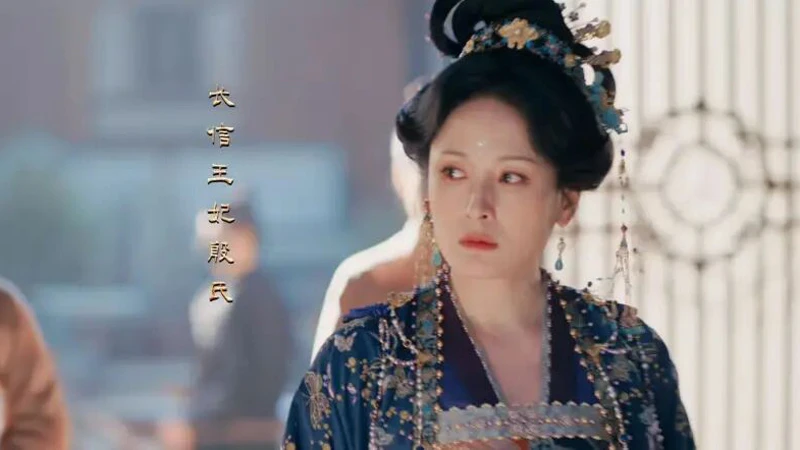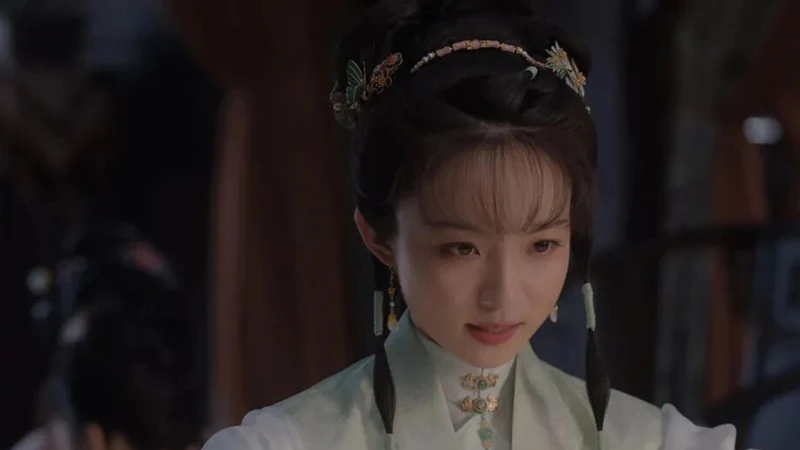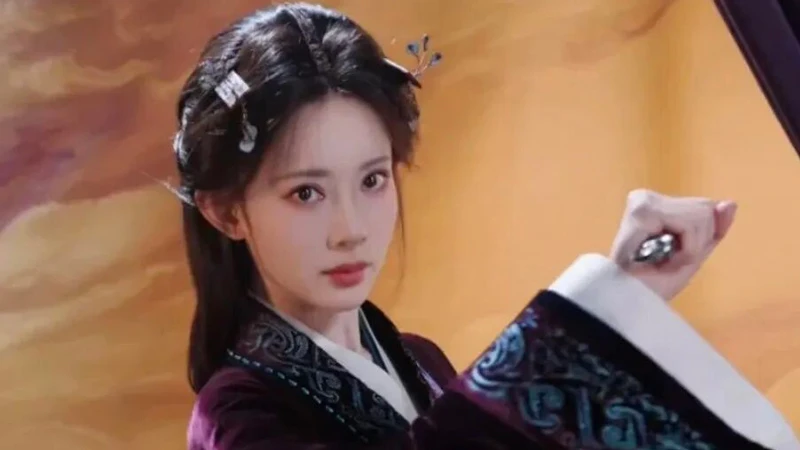
What if a tiny hairpin could bridge two thousand years of beauty? In the historical drama Jiangmen Duhou (将门独后), actress Meng Ziyi (孟子义) appears as Shen Miao (沈妙) with a striking headpiece that has sent fans into a frenzy. Unlike the usual ornate crowns or dangling tassels seen in most period shows, her pair of slender hairpins looks refreshingly unfamiliar. Why? Because it is not a costume designer’s fantasy—it is a quiet tribute to a real artifact from the Western Han (汉) Dynasty.
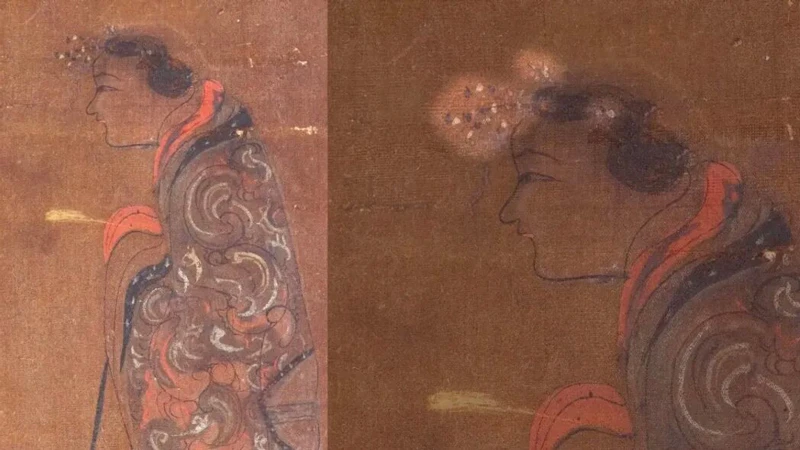
The inspiration comes from a silk painting found in Ma Wang Dui (马王堆), the tomb of Lady Xin Zhui (辛追). In that painting, a noblewoman wears almost identical pins. This small detail reveals how ancient Chinese aesthetics understood movement, symmetry, and the poetry of everyday life. To truly appreciate it, we must first understand what a Buyao (步摇) is—and why it was never just a decoration.
Two Ancient Forms
The Buyao, or “step-shake” hairpin, got its name from a simple, beautiful action: when the wearer walked, the ornament trembled. Historical records describe two main types. The first is the “flower-tree” style. It consists of a base (often a long comb called Zhi (擿)) from which small branches extend upward. On those branches, artisans hung tiny round jade pieces or little animal shapes. This early version appeared in the early Western Han and looks very similar to what Meng Ziyi wears in the drama—clean, uncluttered, and elegant.
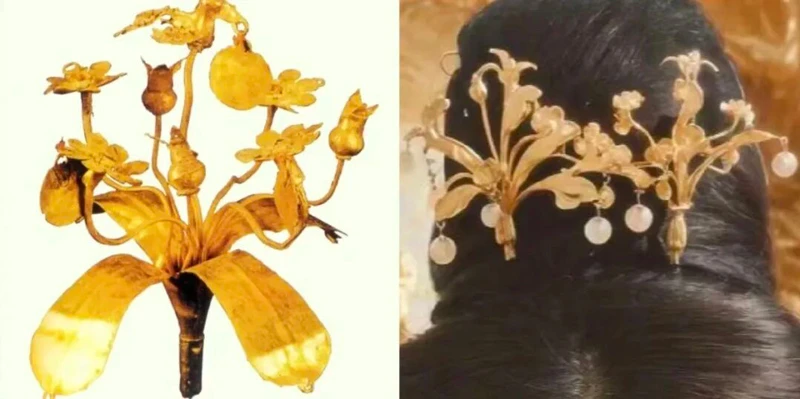
By the Eastern Han Dynasty, the flower-tree style became much more complex. The base changed; the Zhi was no longer used. Instead, jewelers added golden mountain-shaped platforms, strings of white pearls, and small carvings of bears, tigers, deer, and mythical beasts. According to the Xu Han Shu (续汉书), one such Buyao featured “a single noble bird and nine flowers,” with all animals covered in kingfisher feathers. It was dazzling, heavy with meaning, and reserved for the highest ranks.
The second type is what most people imagine today: a pin with a decorative head and a long dangling tassel of pearls or gems. The Eastern Han scholar Liu Xi (刘熙) wrote in his book Shi Ming (释名), “Buyao has hanging pearls above; when one steps, they shake and move.” Those ten characters perfectly capture its essence. So by the late Han, both flower-trees and hanging tassels coexisted, each serving different tastes and occasions.
The Secret of Zhi
Now, what exactly is a Zhi? It is a long, tooth-shaped hair accessory, usually about 20 centimeters in length, with a small hole at the top. In its simplest form, it worked like a modern hair fork—people used it to secure a bun or braid. Archaeological finds from Ma Wang Dui show that women often pinned their hair from behind using a Zhi. But the clever part? The hole allowed them to attach extra ornaments, turning a practical tool into a piece of art. Some Zhi were decorated with gems; others became the base for a full Buyao.
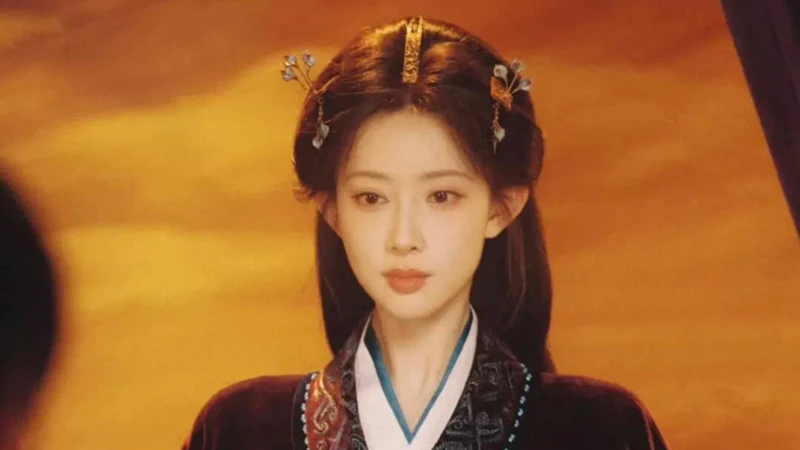
Here is a tricky point: the character 擿 has three possible pronunciations—zhì, zhāi, and tī—but when it refers to a hairpin or a hair ornament, only zhì is correct. It can also be written as 揥 (tì) or 摘. Because ancient paintings are mostly flat, two-dimensional depictions, we cannot see the exact three-dimensional structure of how these pins were worn. Most scholars infer that a pair of Buyao pins sat symmetrically on both sides of the wearer’s bun, perhaps slightly forward. This symmetrical arrangement created a balanced, harmonious look that the Han people deeply valued.
However, we should be honest: this is still an educated guess. No complete physical pair has survived intact with clear instructions on placement. So when modern costume designers “recreate” these hairpins, they rely on paintings and logical deduction. That does not make them fake—it makes them an interpretation, a conversation with history. And as Meng Ziyi’s look proves, even an interpretation can feel surprising and new because it is rooted in real research, not fantasy.
What Not to Wear
Before you get too excited, here is a warning for historical purists. Many Chinese TV dramas set in the Qin or Han periods show female characters wearing crescent-shaped hairpins made of Miao (苗) silver. Those curved, moon-like pins have become almost a cliché. But according to archaeological evidence, this crescent style did not appear until the Ming or Qing dynasties—more than a thousand years after the Han. It is common today in ethnic Miao costumes, but it has no place in a serious Han Dynasty reconstruction.
Does that mean it is always wrong? It depends on your goal. If you are making a documentary or a historically accurate film, skip the crescent pins. Stick to the straight, paired Buyao pins inspired by Ma Wang Dui. But if you are designing for a modern drama where the look only needs to feel “ancient” rather than be perfectly accurate, then the crescent pin is just a stylistic choice. After all, drama is art, not a textbook. The problem arises when the same incorrect item is copied so often that audiences start believing it is authentic.
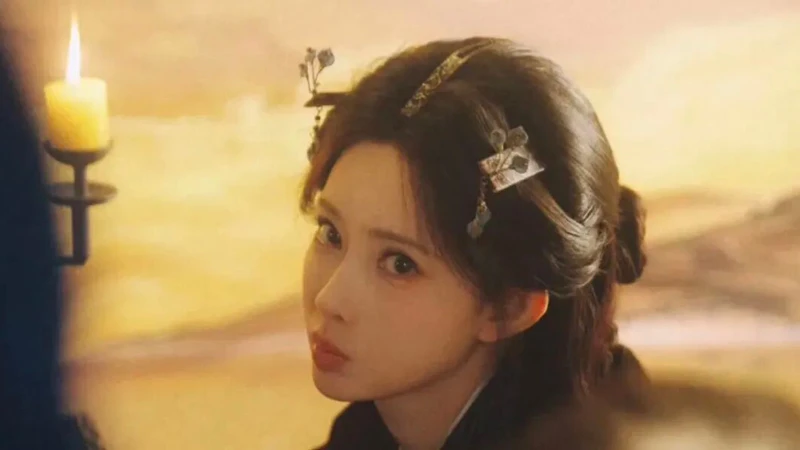
The tiny Buyao on Meng Ziyi’s head offers a better path forward. It respects the original shape, understands its origin, and brings it back with care. Traditional beauty does not need exaggerated or weird designs to impress. It needs respect for historical forms, a willingness to dig into old texts and tomb paintings, and the courage to let those quiet, elegant details speak for themselves. When a single hairpin can carry the weight of two thousand years—and still look fresh—that is when ancient aesthetics truly come alive on screen.