Did ancient Chinese nobles really fall into their own toilets? You might imagine that before modern plumbing, people simply dug a hole and squatted. But archaeology tells a much stranger, funnier, and more ingenious story. From a pit that killed a king to a pigsty that saved the planet, and from a jade-and-ruby toilet fit for an empress to a name change that cursed a horse for centuries – the truth about ancient Chinese bathroom habits is anything but boring. Buckle up for a journey through 5,000 years of human necessity, where practicality, royalty, and a little bit of stink come together.
Deadly Pits
Around 5,000 years ago, Neolithic people in Banpo Village (半坡村), near today’s Xi’an, did something simple but world-changing. They dug a hole outside their houses just for bodily waste. Some historians argue that civilization didn’t start with writing, but with the first fixed toilet. Why? Because when people stopped wandering away from their own filth, they could settle down and build villages. That humble pit was humanity’s first real step toward staying put.
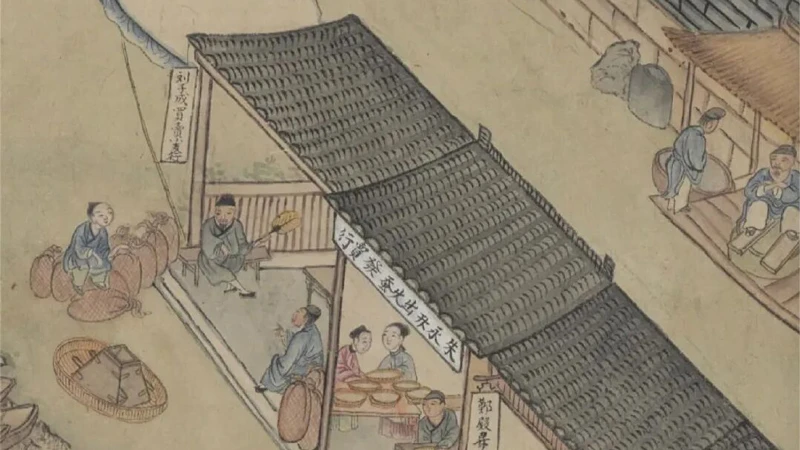
But early toilets were dangerously crude. During the Western Zhou (周) dynasty, slaves dug deep holes. When one filled up, slaves covered it and dug another. The holes were so deep that a terrible accident happened. The Zuo Zhuan (左传), a classic historical text, recorded the death of Duke Jing of Jin (晋景公) in just eight characters: “The duke was about to eat, felt the call, went to the latrine, fell in, and died.” He drowned in his own toilet. That’s how a ruler of a major state met his end – not in battle, but in a cesspit.
After that humiliation, nobles finally began thinking about safety. They raised platforms, added railings, and moved toilets away from deep holes. A king’s death was a powerful lesson: even the most powerful man on earth could not escape the hazards of a badly designed pit.
Pig-Power Loop
By the Han (汉) dynasty, toilet design took a brilliant turn. The Chinese combined the latrine with the pigsty, calling it a Hun (溷). The character itself shows a pig inside an enclosure. How did it work? Build a raised platform above the pigpen. You squat up there, and your waste drops straight down to the pigs below. The pigs ate some of it, and the rest mixed with pig manure to ferment into rich fertilizer for crops.
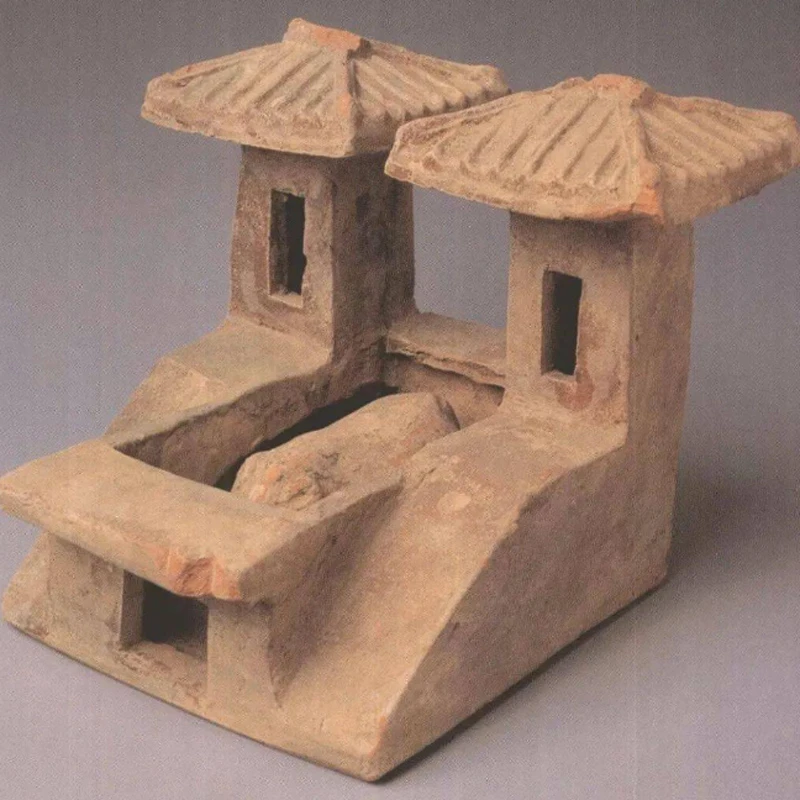
This was green technology before anyone knew the word. It saved space, reduced smell and disease, and turned waste into treasure – all in one simple structure. Museums today display Han dynasty pottery models of these pig-toilets. One famous piece from the Palace Museum in Beijing shows a chubby pig in a rectangular pen, with a tiny house above as the toilet and steps leading up to it. These clay miniatures were buried with the dead, proving how common and important this design was in daily life.
Here’s a fun language fact: why do Chinese say “go up to the toilet” but “go down to the kitchen”? Because the toilet was above the pigsty – you literally went up to it. The kitchen was in a lower area of the courtyard, so you went down. That ancient pig-powered loop shaped the way people speak even today.
Flushing Wonders
In early 2023, archaeologists in Xi’an (西安) unearthed a 2,400-year-old toilet from the Warring States period. It had a ceramic squatting pan inside a building, with a drainage pipe leading to an outdoor pit. Yes, you read that right – a flush toilet in ancient China, two and a half millennia ago. It was found in the ruins of the Yueyang City (栎阳) palace, making it the only known toilet of its kind from any ancient Chinese capital excavation.
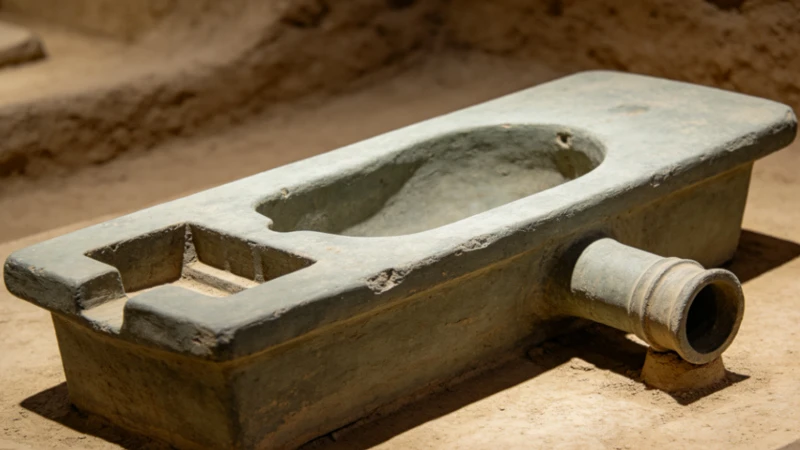
Even more shocking: in a Han dynasty tomb at Mangdang (芒砀) Mountain in Henan (河南), researchers found a 2,000-year-old stone toilet that looks almost modern. It had a wide, comfortable seat, armrests, and a built-in water pipe running from the back wall to flush waste away. This is the oldest known water-flushing sitting toilet in the world. The craftsmanship was so advanced that it resembles what you might see in a luxury bathroom today.
So why didn’t everyone use these? Simple: cost. Flushing toilets needed pipes, drainage, and a steady water supply. Only emperors and top nobles could afford them. Common farmers kept their pig-toilets because they were cheap, sustainable, and worked fine. The flush toilet was a palace miracle, not a village necessity. Still, it proves that ancient Chinese engineers were thinking about comfort and hygiene thousands of years before modern plumbing.
Palace Potty Tricks
The Forbidden City in Beijing has nearly 10,000 rooms, yet not a single formal toilet. Why? Two reasons. First, face – the emperor could not live where foul smells lingered. Second, technology – without a modern sewage system, a fixed toilet would only create a stinking, disease-ridden mess. So how did thousands of people inside the palace handle their business? They all used chamber pots and portable toilets.
The emperor and his consorts used a special device called a Guan Fang (官房), which means “official vessel.” It was not kept in the bedroom. Instead, a dedicated eunuch brought it when needed. The most famous Guan Fang belonged to Dowager Empress Cixi (慈禧). It was carved from fragrant sandalwood in the shape of a giant gecko. The gecko’s four clawed feet formed the base. Its swollen belly was the bowl. Its tail curled into a figure-eight handle. Its mouth held toilet paper, and its eyes were inlaid with rubies. Inside the belly was fine, scented wood powder. When waste fell, it was instantly wrapped in fragrance – no smell at all.
Ordinary servants and maids had rough porcelain pots. Their waste was mixed with ash and straw, loaded onto night-soil carts, and hauled out of the palace every day by a dedicated team. No pipes, no pumps – just human labor and careful scheduling. That system kept the Forbidden City clean for nearly 500 years. It was messy, but it worked.
Tiger to Horse
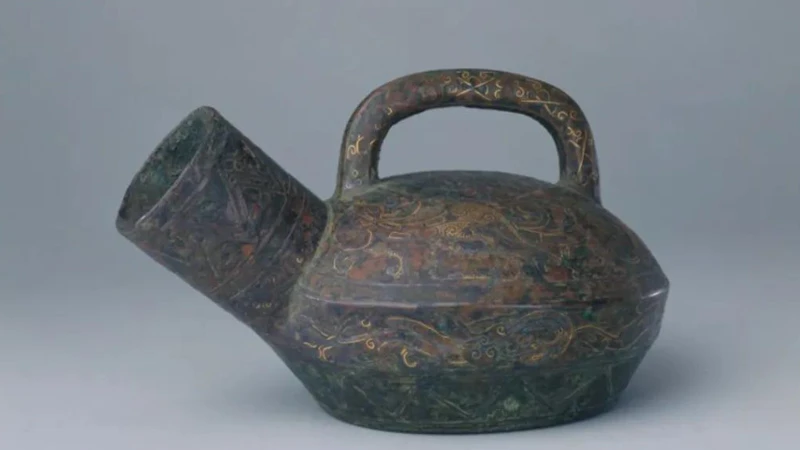
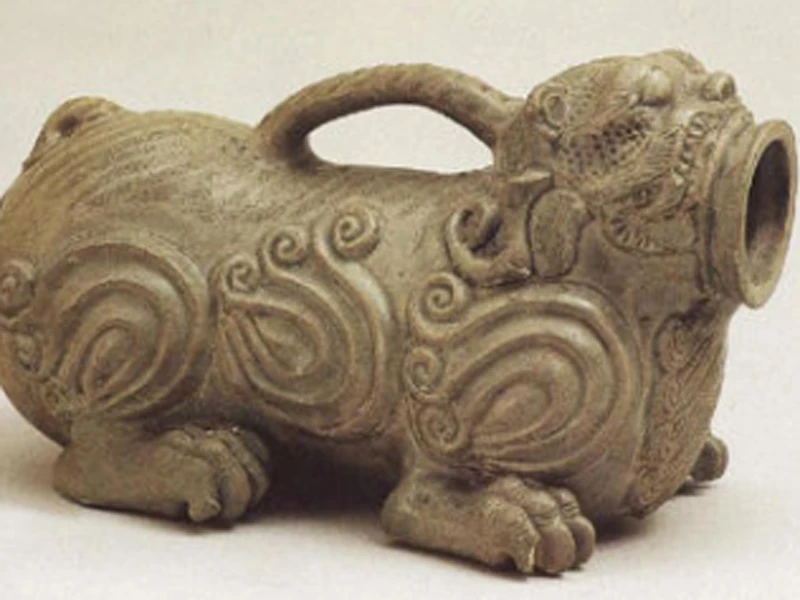
Portable urinals in ancient China were first called Hu Zi (虎子), or “tiger cub.” Legend says that the famous general Li Guang (李广) of the Han dynasty shot a dead tiger, then ordered a bronze vessel shaped like the beast to show his contempt for the animal. So people called it the tiger. But then came the Tang dynasty. The founding emperor, Li Yuan (李渊), had a grandfather named Li Hu (李虎). The character for “tiger” became a royal taboo.
Nobody could say or write “tiger” anymore. So the humble urinal needed a new name. They changed it to Ma Zi (马子), meaning “horse cub.” Later, the shape grew larger into a bucket, and “horse cub” became Ma Tong (马桶) – the modern Chinese word for toilet. A tiger’s disgrace turned into a horse’s eternal burden. It might be the most ridiculous name change in history. The tiger escaped a legacy of stink, and the poor horse got stuck with it for a thousand years.
From a 5,000-year-old pit that killed a king, to pig-powered eco-loops, to a gem-encrusted gecko throne for an empress, and finally to a tiger that became a horse – China’s toilet history is a wild ride. Next time you sit on a clean, flushable toilet, scrolling through your phone, take a second to appreciate it. You are living in a golden age. And no, you won’t fall in.