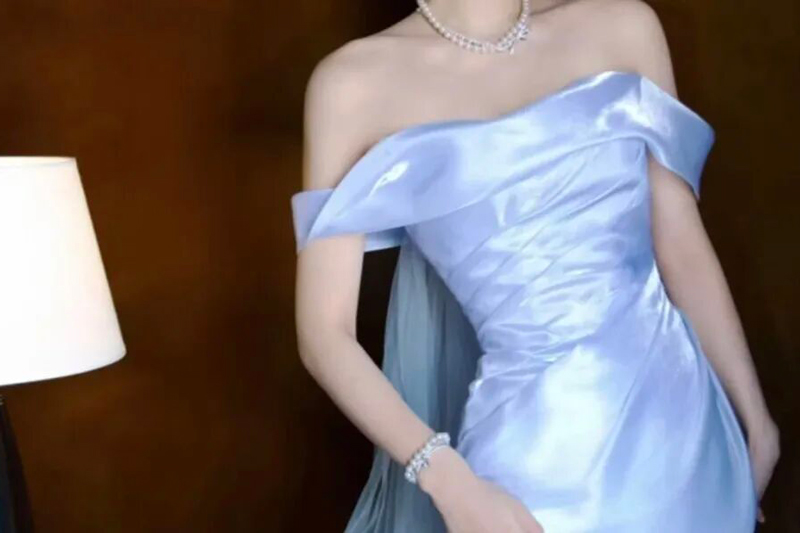
Did a Tang dynasty novel trick millions into believing in a mythical million-dollar fabric? Recently, Chinese social media exploded over actress Yao Anna’s (姚安娜) red carpet gown. Bloggers claimed it was made of “Floating Light Brocade” – an ancient, non-heritage silk supposedly worth over ten thousand yuan per meter. The same material appears in hit period dramas like Empresses in the Palace (甄嬛传) and Legend of Zang Hai (藏海传), where concubines fight for it as a symbol of ultimate luxury. But here’s the twist: this so-called lost treasure might never have existed.
The only historical record comes from a 9th-century novel filled with ghosts and exotic tributes. And that novel contains a glaring chronological error – a dead kingdom that couldn’t have sent any tribute. So what is Floating Light Brocade? A real fabric, a literary invention, or a modern marketing scam? Let’s unravel the threads.
The Literary Origin
It all begins with Du Yang Za Bian (杜阳杂编) during the late Tang dynasty. This book mixes historical anecdotes with outright fantasy – talking mirrors, immortal herbs, and tributes from mythical lands. One entry describes how the Gaochang (高昌) Kingdom presented Emperor Jingzong (敬宗) with a robe made of “Floating Light Brocade” and matching silk threads. According to the text, the garment shimmered with five-colored dragon and phoenix patterns, embroidered with nine types of pearls. When the emperor wore it hunting, morning sunlight made it dazzle spectators. Then a sudden rainstorm hit – and the robe stayed completely dry. The author calls it a “strange object.” But nowhere does he mention its price or call it a “non-heritage craft.” He’s just telling a wild story.
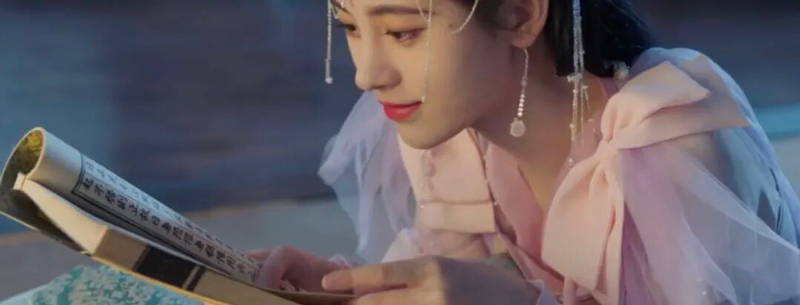
Here’s where things get fishy. Gaochang was a real Buddhist kingdom in today’s Xinjiang. But history records that the Tang army destroyed it in AD 640 – 185 years before Emperor Jingzong’s reign (AD 825). The territory became a county under the Anxi Protectorate (安西都护府). Later, the Uyghurs took over. So in AD 825, there was no Gaochang Kingdom to send any tribute. Su E either made up the name or relied on outdated hearsay. If the donor country didn’t exist, neither did its fabulous fabric. This isn’t a minor slip – it’s a smoking hole in the whole legend.
Some defenders argue that “Floating Light” could be a poetic adjective, not a literal name. But the novel describes it as a brocade – a complex patterned silk usually produced in central China, not Central Asia. Why would a dead kingdom from the Tarim Basin send a distinctly Jiangnan-style textile? The logic collapses. What we have is likely a writer’s invention, later romanticized by modern novelists and screenwriters. They turned a fictional prop into a buzzword for “lost luxury.” And once a phrase enters pop culture, it takes on a life of its own – especially when influencers smell a profit.
Historical Contradictions
Even if we ignore the dating error, the fabric’s claimed “waterproof” property raises eyebrows. Ancient Chinese aristocrats did have rainwear – but it was called oilcloth garment, made by coating silk or hemp with tung oil. That creates a water-resistant layer. However, oilcloth is stiff and heavy, not the shimmering, lightweight brocade described in the novel. Could ordinary silk stop a downpour without treatment? Unlikely. Silk fibers absorb moisture; they swell and lose luster. To repel heavy rain, the weave would need to be impossibly dense – far beyond ancient looms.
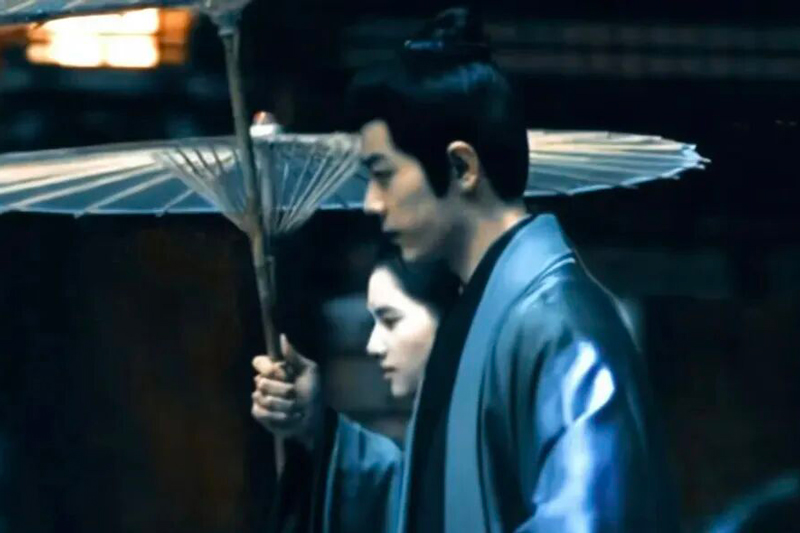
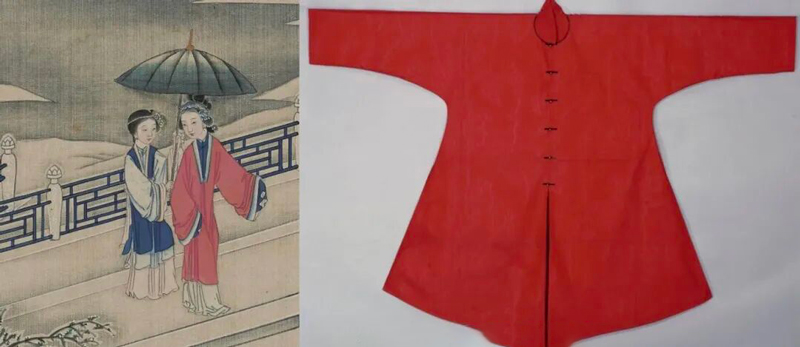
Then what about later dynasties? By the Ming and Qing, a woolen textile called feather satin appeared – despite the name, it contained no feathers. Feather satin was either 100% wool or a wool-silk blend. Thin versions resemble modern wool gauze; thick ones feel like coat fabric. Wool naturally repels water due to its scaly surface and lanolin content. The Palace Museum holds a Kangxi-era (康熙) “big red water-ripple feather satin single raincoat.” Raindrops bead up and roll off. In The The Dream of Red Mansions (红楼梦), Lin Daiyu (林黛玉) wears a “big red feather-satin cloak with white fox lining.” So waterproof luxury fabrics did exist – but they were wool-based, not silk-based, and never called Floating Light Brocade.
Could the Tang have imported a similar woolen fabric from Central Asia and misnamed it “brocade”? Possibly. The novel mentions “purple sea” silk that doesn’t take dye – a bizarre claim since all natural fibers can be dyed. It also describes “crimping” (a gold-thread embroidery technique) and pearls. That sounds more like a ceremonial costume than practical rain gear. And no archaeological evidence supports such a material. No tomb, no hoard, no fragment. For a “non-heritage” craft, the silence from actual heritage sites is deafening. The most logical conclusion: the Tang author invented a dazzling object to impress readers – and succeeded beyond his wildest dreams.
Marketing vs. Reality
Fast-forward to today. On Chinese social platforms, dozens of “fabric experts” sell Floating Light Brocade at astronomical prices. One meter for 10,000 yuan? Some claim 100,000. They show videos of iridescent cloth shifting colors under studio lights. But read the fine print: most are polyester blended with metallic or iridescent threads. That’s not silk, let alone brocade. Polyester can be engineered to create holographic effects – cheap and flashy. What you see on TikTok or Red Note is usually chemical fiber yarn, not a single strand of mulberry silk. It’s the textile equivalent of costume jewelry.
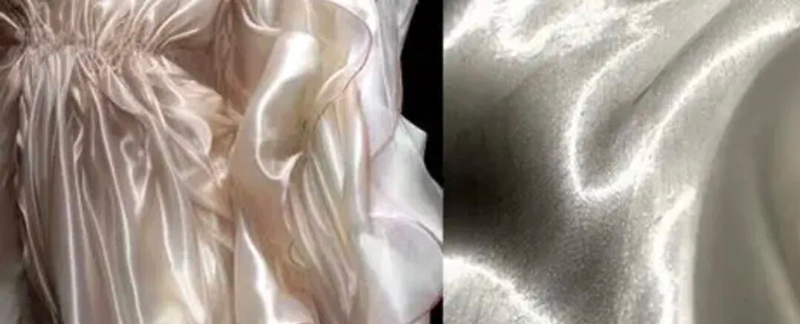
This matters because real cultural heritage gets drowned out. China has authentic ancient silk techniques – Yunjin (云锦) from Nanjing, Song brocade (宋锦) from Suzhou, Shu brocade (蜀锦) from Chengdu. Each has millennia of history, excavated specimens, and living inheritors. But they don’t have viral legends about million-dollar rainproof robes. So marketers latch onto a fictional name from a novel, slap it on factory-made polyester, and invent a “lost craft.” It’s not preservation – it’s profiteering. And it misleads consumers who genuinely want to support traditional arts.
Does that mean Floating Light Brocade is 100% fake? Not necessarily. Absence of evidence isn’t evidence of absence. A future excavation might uncover a Tang-era wool-silk blend with water-repellent properties, adorned with gold and pearls. But until then, treat every “million-dollar meter” claim with skepticism. The next time you see a drama where concubines poison each other over a bolt of magical fabric, remember: that’s fiction imitating fiction. The real beauty of Chinese textile heritage doesn’t need invented hype. It has its own shining threads – grounded in history, not in a novelist’s fantasy.
Did Fuguang Jin Exist? Unraveling China’s Glittering Fabric Myth