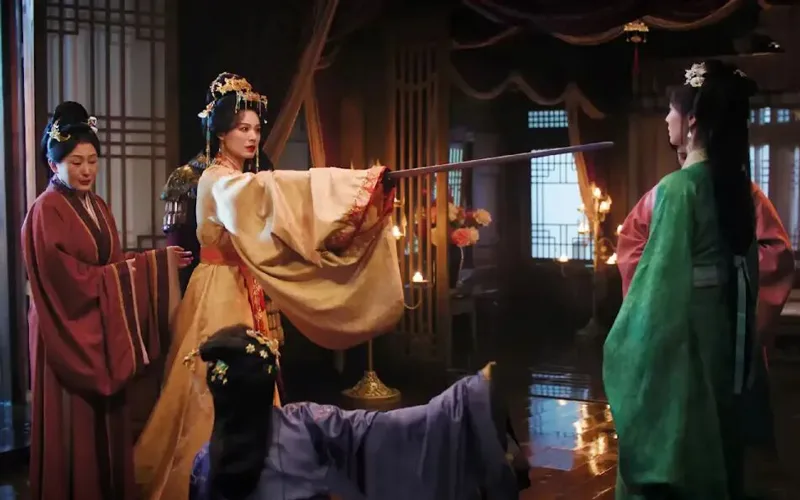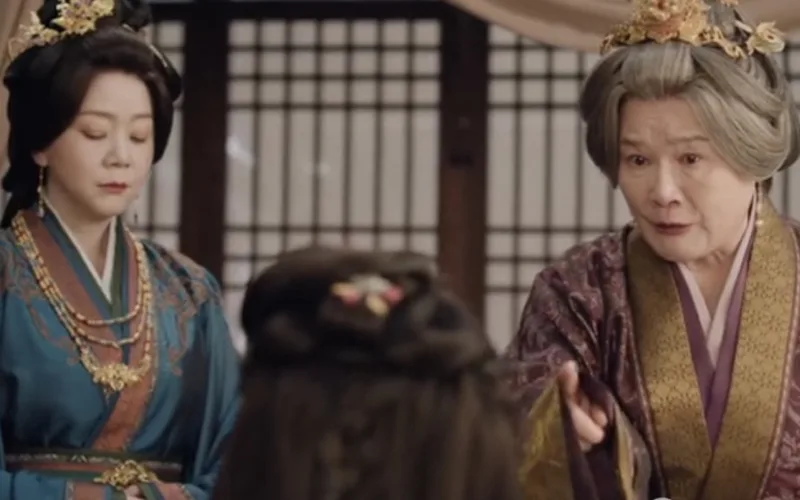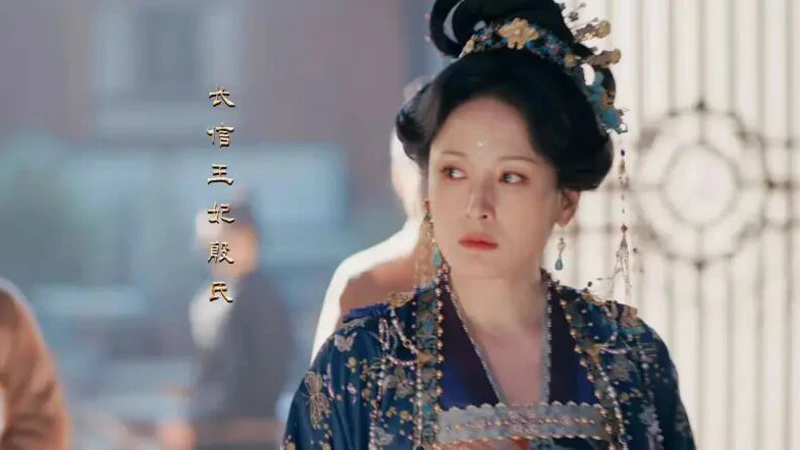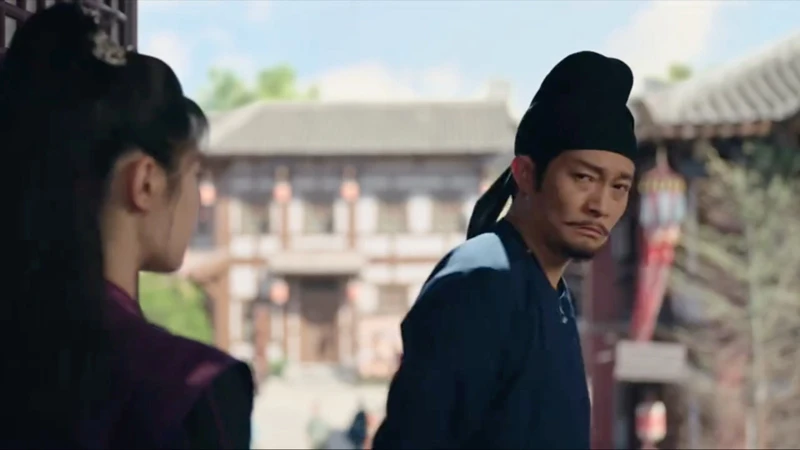
The fifth case in Strange Tales of Tang Dynasty Ⅲ: Chang’an (唐朝诡事录之长安), titled “A Foot Away from Heaven,” closes with a somber revelation. The mastermind behind the merchant killings is finally unmasked, representing the last person Detective Lu Lingfeng (卢凌风) wished to confront. This resolution is not a triumphant capture but a poignant exposure of deep-seated societal decay festering beneath the glitter of the Tang capital. The investigation, beginning with a missing merchant’s servant, peels back layers of charity, ambition, and ancestral pride to reveal a bitter core of class hatred and violent desperation.
Charity and Suspicion
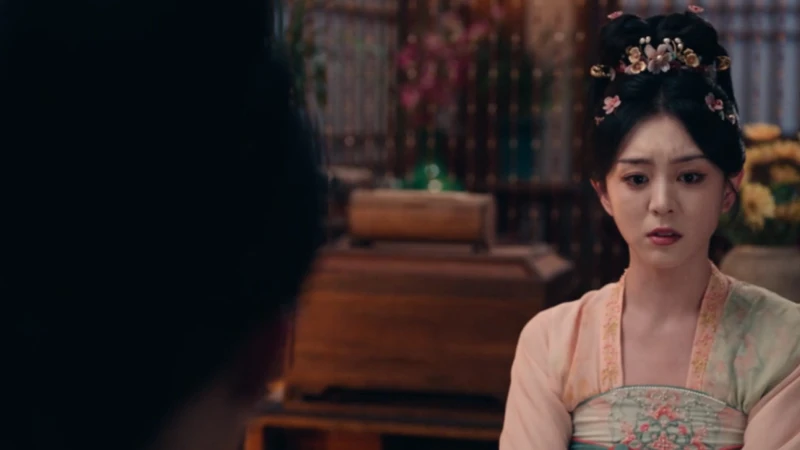
Lu Lingfeng’s inquiry into a missing servant leads him to the Jinguang Hui (金光会), an exclusive guild for immensely wealthy merchants. Simultaneously, he observes the activities of Anshe (安社), an organization distributing relief supplies. This charity, however, comes with a pointed condition: it is offered only to commoner families, deliberately excluding the established aristocratic Shizu (士族). This calculated slight ignites visible social friction. Du Yu (杜玉), an official from a prestigious family, can only issue weak reprimands to impoverished scholars who renounce their high-born clans for an extra bag of grain. The relief’s organizer, He Bi, coolly states that districts dominated by aristocrats are ineligible. The tension is a ticking bomb, and the emerging link between the victims—all members of the Jinguang Hui(金光会)—transforms this social conflict into a potential murder motive.
The discovery at the guild’s new construction site sends the first major tremor through the case. Workers unearthed two stone pillars: the Fa (阀) of the Wei family and the Yue (阅) of the Du family. These pillars, inscribed with ancestral merits and honors, were the ultimate symbols of a clan’s prestige and history in Tang society. Their desecration—being dug up from a merchant’s property—was an unimaginable insult to these elite houses. For Lu Lingfeng, this find connects the physical evidence to a powerful emotional catalyst for violence. The merchants’ world, represented by He Bi’s guild, and the aristocrats’ world, built on ancestral glory, were now on a direct collision course.
Parallel to this, Su Wuming’s (苏无名) sidekick, finds himself in a comical yet dangerous pursuit of the elusive Song Weng (松翁). The chase leads to a shrine where Song Weng traps Fei (费), threatening him with a Fengli (风狸) cane. This mythical creature’s medicinal derivative, Fengli (风狸) liquid, later becomes a crucial scent clue. Meanwhile, Pei Xijun’s (裴喜君) portrait work identifies a key figure: Ju Niang (橘娘), who purchased Fengli liquid. The lethal weapon in the murders—a heavy, blunt object—and the distinct scent clue begin to weave a tighter net around the perpetrators, even as the social landscape grows more treacherous.
Pride and Prejudice
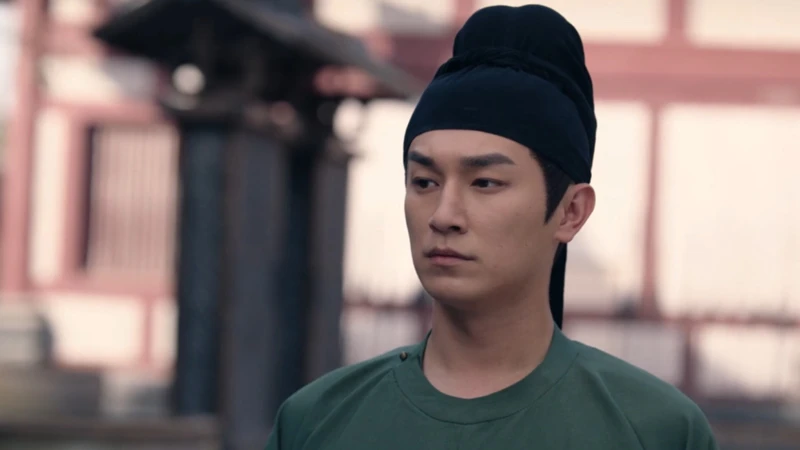
The final act unfolds at a banquet hosted by Du Yu. Unlike typical aristocratic gatherings, this one features Persian dancers and guests like senior eunuchs and close aides to the Emperor, signaling Du’s pragmatic, if cynical, approach to power. He even produces his family’s damaged Yue pillar, reciting its inscription from memory—a display of wounded pride. The true confrontation, however, happens elsewhere. Chen Chong, a descendant of the official who created the Nine-rank system that empowered the Shizu, lures He Bi and a foreign Dasabao (大萨宝) to his ancestral temple, only to have them bound in a fit of class contempt. Here, the killers reveal themselves.
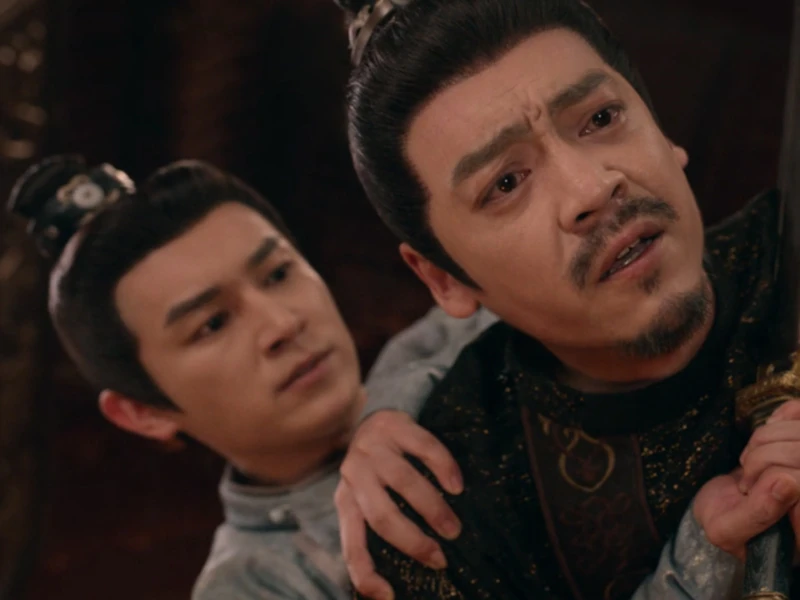
Wei Tao (韦韬) and Du Yu arrive separately, each carrying a cloth bag. They intend to execute the two captives, completing their mission of “erasing” the merchants who dared disrespect their heritage. Their confession is swift. They acted in unison to eliminate the rising “merchant threat” of the Jinguang Hui, viewing it as a purge of irreverent upstarts. The murder weapons were the missing stones from their own family pillars—Wei Tao used the Du family’s stone, and Du Yu used the Wei family’s. This twisted exchange of ancestral relics as tools of murder is the case’s darkest irony. The physical strength needed for the blows matched Du Yu’s martial prowess, while Wei Tao’s debilitating headaches explained the need for Fengli liquid, found at a crime scene.
In the ensuing standoff, Du Yu’s willingness to sacrifice his honor and hostage-take Su Wuming shows how far he has fallen. Lu Lingfeng’s final combat with the pair is less about physical subduing and more about forcing a reckoning. He prevents Wei Tao’s suicide and halts Du Yu’s dishonorable sneak attack. Their arrest is a scene of profound tragedy, not victory. Two scions of the greatest families, guardians of a thousand-year legacy, became common murderers, their sense of superiority corroded into violent paranoia. The stones meant to immortalize their ancestors’ glory became instruments of their own moral annihilation.